

 ELECTRIC
Avoid Overpaying! State-Wise RC Transfer Charges in India for 2026
 Add CarBike360 on Google
Planning to buy or sell a used vehicle? Discover the latest RC transfer charges state-wise in India, additional ownership transfer costs, required documents, and key factors affecting the final amount.

By Swati Tomar
Jun 02, 2026 11:47 am IST
Published On
Jun 02, 2026 11:29 am IST
Last Updated On
Jun 02, 2026 11:47 am IST
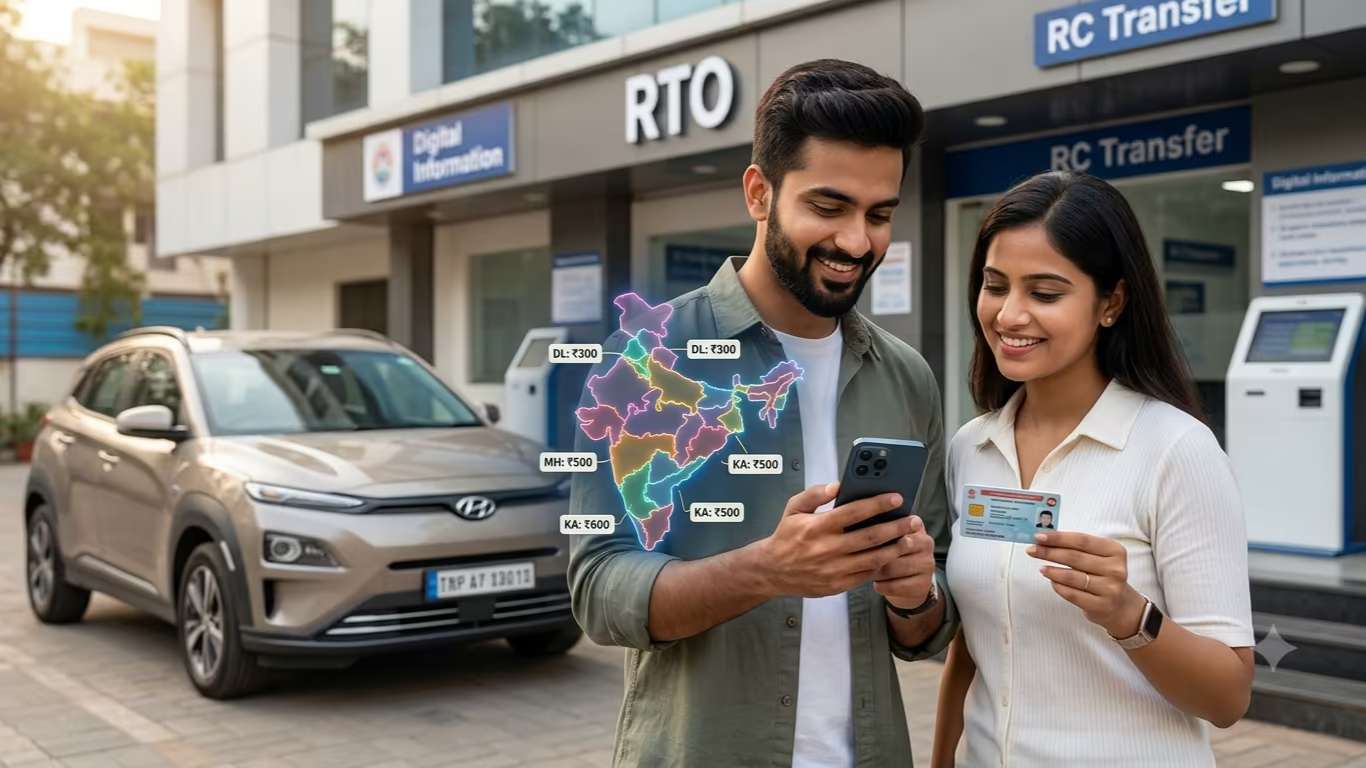
Buying a Used Car? Here's What Vehicle Ownership Transfer Will Actually Cost You
A used car may look like a great deal on paper, but the purchase isn't truly complete until the Registration Certificate (RC) is transferred to the new owner's name. Yet, RC transfer remains one of the most misunderstood aspects of buying and selling a vehicle in India. Many owners are aware of the basic transfer fee but often overlook additional costs such as smart card charges, hypothecation removal fees, NOC expenses, and state-specific administrative charges.
India's used vehicle market has evolved significantly over the past few years, driven by digital marketplaces, organized retailers, and rising demand for affordable mobility. While buyers today have more choices than ever, one aspect of the transaction continues to cause confusion: vehicle ownership transfer.
Industry experts often point out that incomplete RC transfers remain one of the most common reasons for disputes involving used vehicles, making it essential for buyers and sellers to understand both the process and the costs involved. A delay or mistake in the RC transfer process can lead to insurance complications, traffic challan disputes, and even legal liabilities.
Why an RC Transfer Is More Than Just a Paperwork Formality
For many used vehicle transactions, the focus stays on negotiation, vehicle condition, and insurance. Ownership transfer often becomes an afterthought.
That's a mistake.
From a legal standpoint, the Registration Certificate is the single most important document linking a vehicle to its owner. Until the ownership records are updated with the RTO, the vehicle continues to remain associated with the previous owner in government databases. This can have serious implications in cases involving unpaid traffic violations, insurance claims, criminal investigations, or accident-related liabilities.
Automotive legal experts and insurance professionals have repeatedly advised used vehicle buyers to treat RC transfer as a priority rather than a post-purchase formality. In practical terms, ownership transfer is what officially completes the sale.
In the event of unpaid challans, criminal investigations, accidents, or insurance disputes, incomplete ownership records can create complications for both parties.
Simply put, the sale isn't truly complete until the RC transfer is complete.
RC Transfer Charges in India: The Basic Government Fees
Under the Central Motor Vehicle Rules, the ownership transfer fee itself is standardized across India.
Vehicle Type | Government Transfer Fee |
Motorcycle | ₹150 |
Three-Wheeler | ₹300 |
Private Car or SUV | ₹300 |
Commercial Vehicle | ₹500 |
However, these figures only tell part of the story.
In reality, buyers often encounter additional expenses ranging from smart card fees and hypothecation removal charges to interstate road tax adjustments. Depending on the state and vehicle category, the total cost can be significantly higher than the base transfer fee.
RC Transfer Charges State-Wise in 2026
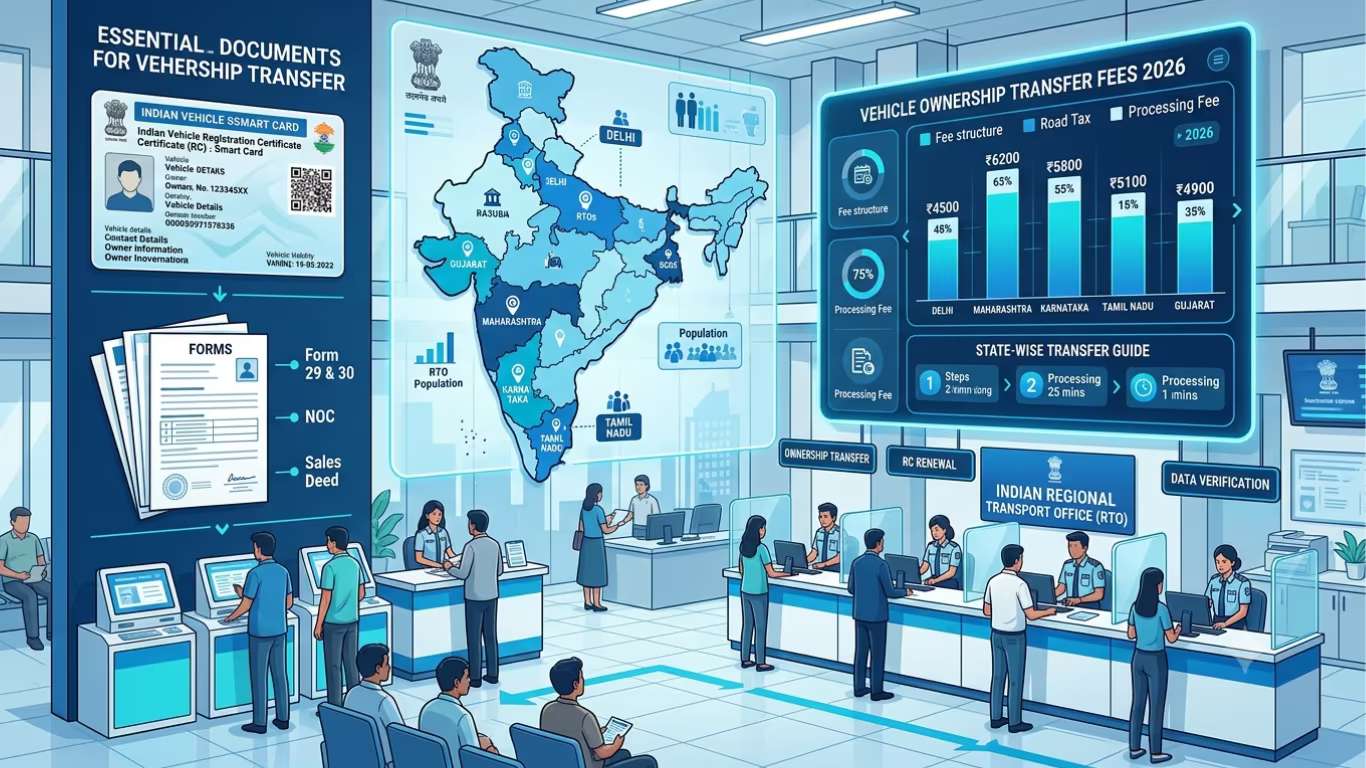
Although ownership transfer fees are centrally regulated, administrative costs and related charges can vary from one state to another.
State | Typical Ownership Transfer Cost |
Delhi | ₹300–₹1,000 |
Maharashtra | ₹300–₹1,200 |
Karnataka | ₹300–₹1,500 |
Tamil Nadu | ₹300–₹1,000 |
Telangana | ₹300–₹1,200 |
Andhra Pradesh | ₹300–₹1,000 |
Gujarat | ₹300–₹1,000 |
Rajasthan | ₹300–₹1,000 |
Uttar Pradesh | ₹300–₹1,200 |
Haryana | ₹300–₹1,000 |
Punjab | ₹300–₹1,000 |
West Bengal | ₹300–₹1,000 |
Kerala | ₹300–₹1,500 |
While the base ownership transfer fee remains largely uniform across India, the overall cost can vary considerably depending on local administrative charges and vehicle-specific factors. States with higher vehicle registration volumes and more extensive digitization often have additional service-related costs, while interstate transfers can introduce entirely separate expenses such as fresh road tax assessments and NOC requirements.
As a result, buyers should treat the figures above as indicative estimates rather than fixed charges and verify the latest fee structure with their local RTO before initiating the transfer process.
Why Does RC Transfer Often Cost More Than Expected?
Ask anyone who has purchased a used vehicle recently and they'll tell you the government fee is rarely the only expense.
Smart Card Issuance
Many states now issue registration certificates in smart card format rather than traditional paper records.
Typical Cost: ₹200–₹500
Loan Closure and Hypothecation Removal
If the vehicle was financed, the lender's name must be removed from the registration record after the loan is repaid.
Typical Cost: ₹100–₹300
Interstate Transfers
Interstate transfers are often where ownership transfer costs increase significantly. While buyers are typically attracted by better pricing or vehicle availability in neighboring states, many underestimate the paperwork and tax implications involved.
Depending on the destination state, owners may need to obtain an NOC from the original RTO, undergo vehicle verification, pay fresh road tax, and submit additional documentation. In some cases, these expenses can outweigh the savings achieved through the original purchase price, particularly for older vehicles.
This is why industry experts recommend calculating the complete transfer cost before purchasing a vehicle registered outside your home state.
Professional Assistance
Many buyers choose to hire agents to avoid repeated visits to the RTO.
Typical Cost: ₹500–₹5,000 depending on location and vehicle type.
Interstate Transfers Can Be Surprisingly Expensive
If you're purchasing a vehicle registered outside your state, budget for more than a simple ownership change.
Interstate transfers typically require:
NOC from the original RTO
Road tax reassessment
Vehicle inspection
Address verification
Additional documentation
These cases often take longer to process and can involve significantly higher costs than standard ownership transfers within the same state.
For buyers hunting for attractive deals in neighboring states, this is an important factor to consider before signing the purchase agreement.
Before You Buy: A Quick RC Transfer Checklist
You can expand this section into a more authoritative buyer's checklist while maintaining readability:
Before You Buy: A Quick RC Transfer Checklist
Before making the final payment for a used vehicle, take some time to verify all ownership and registration-related documents. A vehicle may appear mechanically sound, but incomplete paperwork can delay the RC transfer process and create legal or financial complications later.
Make sure you check the following:
✓ Original RC is available and in the seller's name
✓ Insurance policy is active and valid
✓ PUC certificate is up to date
✓ No pending traffic challans or court notices
✓ Loan or hypothecation status is clear
✓ Chassis and engine numbers match official records
✓ Seller's identity details match registration records
✓ Road tax dues, if any, have been cleared
✓ Vehicle registration details match the information available on the Parivahan portal
✓ No ownership disputes or duplicate RC applications are pending
It is also advisable to request service records and verify the vehicle's accident history wherever possible. If the vehicle is being purchased from another state, confirm whether a No Objection Certificate (NOC) will be required before initiating the ownership transfer process.
A thorough document check may take only a few minutes, but it can save buyers from weeks of paperwork, unexpected expenses, and potential legal disputes after the purchase. When it comes to used vehicles, verifying the paperwork is just as important as inspecting the vehicle itself.
Common RC Transfer Mistakes That Buyers Make
Delaying the transfer process after purchase
Purchasing a vehicle with an active loan
Ignoring pending traffic challans
Failing to verify the seller's identity
Buying interstate vehicles without checking tax implications
Relying solely on verbal assurances instead of documented proof
CarBike360's Analysis
As India's used vehicle ecosystem becomes increasingly organized, ownership transfer is emerging as a critical component of vehicle transactions rather than a routine administrative task. While the government-prescribed transfer fee remains relatively modest, associated expenses such as hypothecation removal, interstate compliance requirements, smart card issuance, and road tax adjustments can significantly influence the final cost.
For buyers, the key takeaway is simple: evaluate the total ownership transfer expense before finalizing the deal. A lower purchase price may not always translate into a lower overall acquisition cost, especially when interstate paperwork and tax obligations are involved.
In an increasingly regulated automotive environment, timely RC transfer is not merely advisable—it is essential for ensuring legal ownership, protecting insurance interests, and avoiding future liabilities.


अपनी परफेक्ट कार खोजें

Budget

Brand

Body Type

Fuel

Mileage

More
अन्य कार लेख


Vihan AI - Your Car assistant
Ask me anything about cars, prices, and comparisons.