

 ELECTRIC
2026 Volkswagen Taigun Review: A Compact SUV That Puts Driving First
 Add CarBike360 on Google
The new Taigun is focussed on being the best drivers car in the segment.

By Ashish Masih
May 02, 2026 09:05 am IST
Published On
May 02, 2026 09:05 am IST
Last Updated On
May 02, 2026 09:05 am IST

What buyers should know?
The compact SUV space in India is crowded, competitive and increasingly feature-heavy—but the new Taigun takes a slightly different approach. Instead of chasing gimmicks or headline-grabbing features, it leans into core engineering strengths: chassis balance, steering feel and a sense of structural integrity that you can feel from the driver’s seat. After a proper drive across urban roads, broken patches and open highways, it’s clear this update is about polishing an already solid package rather than attempting a dramatic overhaul.
What’s New for 2026?
Volkswagen has taken a measured approach with the update, focusing on areas that needed improvement rather than redesigning the car entirely. Visually, the changes are subtle but effective. The front end now gets slimmer LED headlamps integrated with a light bar that stretches across the grille, giving it a wider and more contemporary look. At the rear, a connected LED tail-lamp setup adds some visual sophistication, especially at night.
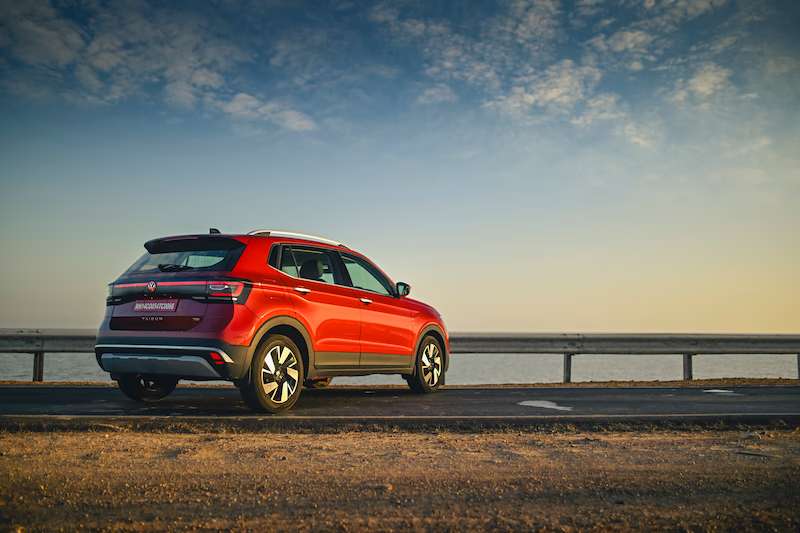
Inside is where you notice the bigger shift. The dashboard layout remains familiar, but the integration of a larger, sharper infotainment screen and a fully digital instrument cluster brings it closer to segment expectations. The UI feels smoother, with fewer lags than before, and touch responses are more consistent.
Feature additions like ventilated front seats and a panoramic sunroof are clearly aimed at Indian buyers who expect a certain level of comfort and perceived luxury in this price bracket. These aren’t just checklist items either—the ventilated seats, in particular, make a noticeable difference in hot conditions.

How It Drives
This is where the Taigun continues to differentiate itself in a meaningful way.
Engine Options
- 1.0-litre turbo-petrol: 114 hp, 178 Nm
- 1.5-litre turbo-petrol: 147 hp, 250 Nm
The 1.0-litre engine feels more refined than before, especially when paired with the updated automatic transmission. In city conditions, it delivers power in a linear, predictable manner, which makes it easy to drive in stop-and-go traffic. There’s enough low-end torque to avoid constant gear hunting, and the engine rarely feels strained unless pushed hard.
Step up to the 1.5-litre TSI, and the character changes noticeably. This engine feels stronger in the mid-range, pulling cleanly and quickly once you’re past the initial turbo lag. The DSG gearbox complements it well, offering quick shifts and keeping the engine in its sweet spot. On highways, overtakes are effortless, and there’s a sense of reserve performance that adds to driver confidence.
What stands out most is how cohesive the entire driving experience feels. The throttle response, gearbox calibration and chassis tuning all seem to work in sync, which is something many rivals struggle to achieve.
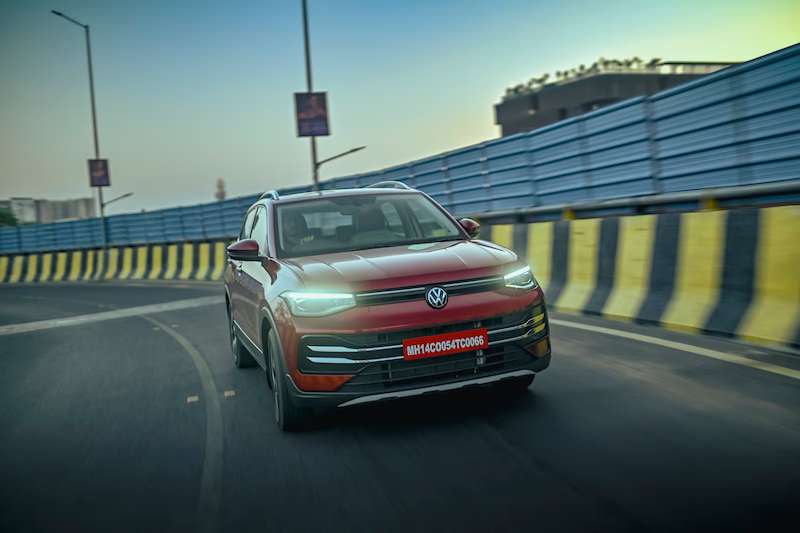
Ride and Handling
The Taigun’s ride and handling balance continues to lean toward drivers who value control and stability.
At lower speeds, particularly over sharp-edged potholes or broken patches, the suspension does feel slightly firm. You do notice the car reacting to imperfections rather than completely absorbing them. However, it never feels unsettled or noisy—just a bit taut.
As speeds increase, the setup starts to make more sense. On highways, the Taigun feels planted and composed, maintaining its line even over undulating surfaces. There’s very little vertical movement, and the body remains well-controlled.
Cornering is another highlight. The car resists body roll effectively, and the steering offers a level of feedback that’s rare in this segment. It’s not overly heavy, but it has enough weight to inspire confidence, especially when changing direction quickly. For enthusiastic drivers, this adds a layer of engagement that most other rival SUVs simply don’t offer.
Interior Quality and Comfort
The Taigun’s cabin focuses more on functionality and ergonomics than outright luxury.
The dashboard design is clean and intuitive, with controls placed exactly where you expect them to be. The driving position is easy to get comfortable in, and visibility all around is good, which helps in both city and highway driving.

Seat comfort is another strong point. The front seats offer good support, especially for longer journeys, and the addition of ventilation improves everyday usability in warmer climates. Rear seat space is adequate for the segment, with enough legroom and headroom for average-sized adults, though three passengers at the back could feel slightly cramped on longer trips.
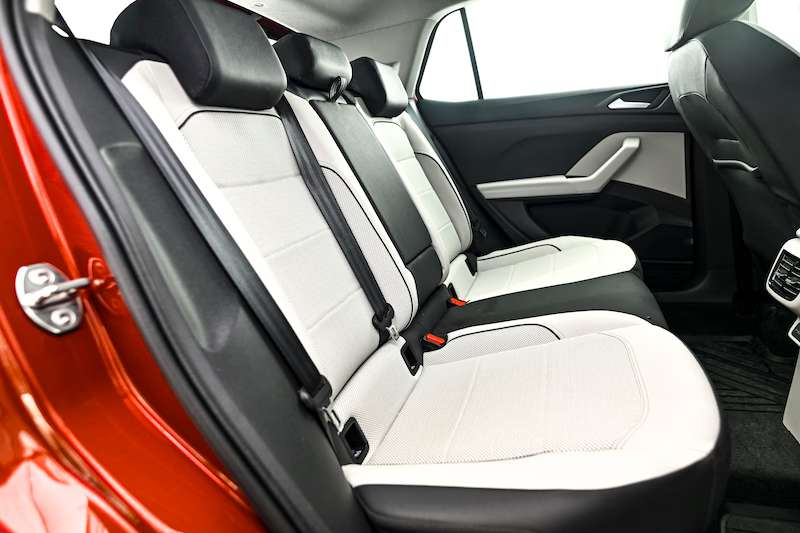
Where the Taigun doesn’t quite lead the segment is in material quality. While everything feels well put together and durable, there are noticeable hard plastics, particularly in lower sections of the cabin. It doesn’t feel cheap, but it doesn’t quite deliver the plushness that some competitors manage.
Technology and Features
With this update, Volkswagen has clearly tried to address one of the Taigun’s weaker areas—its feature list.
The infotainment system is now larger and more responsive, with improved graphics and quicker load times. Wireless smartphone connectivity works seamlessly, and the interface is intuitive enough for daily use without a steep learning curve.

The digital instrument cluster adds a modern touch, allowing for customizable displays that can show navigation, driving data or traditional dials depending on preference.
Other features like ventilated seats, a panoramic sunroof and enhanced connectivity options bring the Taigun closer to what buyers expect in this segment. However, the absence of ADAS features still stands out, especially as more competitors begin offering them even in mid-range variants.
Safety
Safety remains one of the Taigun’s core strengths and continues to be a key selling point.
The structure feels robust, and the car comes equipped with six airbags, electronic stability control and other essential safety systems as standard. There’s a reassuring sense of solidity when driving at speed, which isn’t just about numbers on a spec sheet but something you can actually feel from behind the wheel.

While it may not offer the latest advanced driver assistance systems, the fundamentals—braking stability, chassis strength and predictable handling—are all very well sorted.
Verdict : 92/100
Final Take
If you’re looking for a compact SUV that prioritizes comfort features and gadgetry, there are other options that may suit you better.
But if you care about how a car feels from behind the wheel—how it responds, how it holds the road, how confident it makes you feel at speed—the Taigun continues to stand out.
It’s not trying to be everything to everyone. And in a segment full of compromises, that focus might be its biggest strength.


अपनी परफेक्ट कार खोजें

Budget

Brand

Body Type

Fuel

Mileage

More
नवीनतम कार वीडियो




अन्य कार विशेषज्ञ समीक्षाएँ


Vihan AI - Your Car assistant
Ask me anything about cars, prices, and comparisons.