ELECTRIC
How to Check Used EV Battery Health Before Buying in India (2026 Guide)
 Add CarBike360 on Google
Learn how to inspect a used EV's battery health, warranty, charging history, and replacement costs with this comprehensive 2026 buyer's guide for Indian electric vehicle shoppers.

Jul 24, 2026 12:27 pm IST
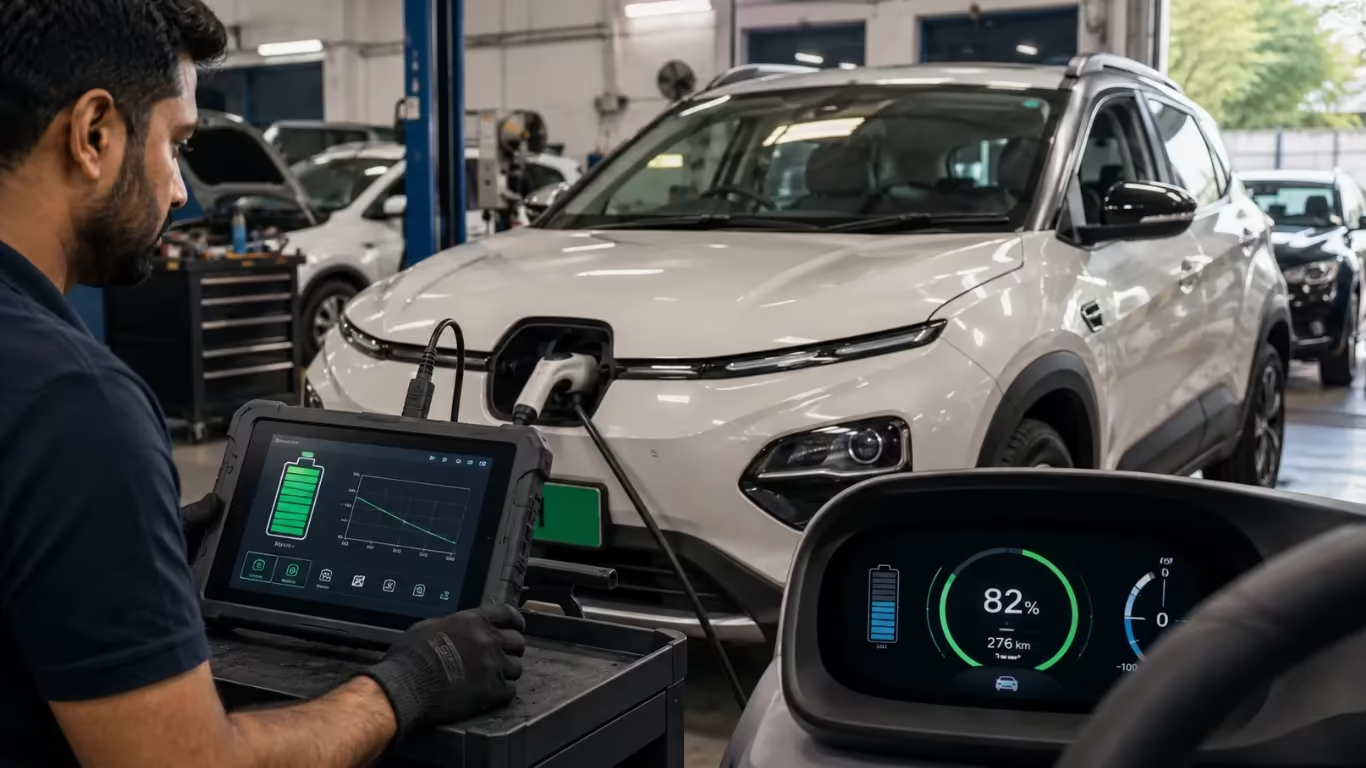
Buying a used EV in India can help you save lakhs while enjoying lower running costs and minimal maintenance. However, the biggest and most expensive component of any electric vehicle is its battery pack. A degraded battery can significantly reduce driving range and cost thousands, or even lakhs to replace.
Whether you're considering a used electric car or an electric scooter, checking the battery's health before purchase is essential. In 2026, as more first-generation EVs enter the resale market, understanding battery degradation and State of Health (SoH) has become more important than ever.
Here's a complete buyer's guide to checking used EV battery health before making your purchase.
Also read: Your Ultimate Guide to Buying Electric Car in India
What Is EV Battery Health (State of Health)?
State of Health (SoH) refers to the current condition of an EV's battery compared to when it was brand new. It is expressed as a percentage and indicates how much of the battery's original capacity remains.
For example:
100% SoH – Brand-new battery condition.
90%-100% SoH – Excellent condition.
80%-89% SoH – Acceptable for a 3- to 4-year-old EV.
Below 80% SoH – Significant degradation; negotiate heavily or avoid the purchase.
Battery health directly affects:
Driving range.
Charging performance.
Resale value.
Overall ownership costs.
Why Battery Health Matters in Used EVs
Unlike petrol or diesel vehicles, an EV's battery pack contributes a substantial portion of the vehicle's value. Buying a used EV without checking battery health can lead to unexpected repair or replacement costs.
Battery degradation depends on several factors, including:
Charging habits.
Driving patterns.
Climate conditions.
Maintenance history.
Battery management practices.
A visually well-maintained EV can still have a significantly degraded battery, making proper diagnostics essential.
Step 1: Request an Official Battery Health Report
The most reliable way to assess battery condition is through an official diagnostic scan conducted at an authorised service centre.
Ask the seller to provide:
Battery State of Health (SoH) report.
Battery Management System (BMS) diagnostic report.
Charging history (if available).
Service history records.
An official diagnostic report can provide valuable information such as:
Remaining battery capacity.
Battery cell health.
Charging cycles.
Potential battery-related faults.
CarBike360 Battery Health Benchmark
State of Health | Condition |
90%-100% | Excellent |
80%-89% | Good |
70%-79% | Fair |
Below 70% | Avoid or negotiate significantly |
Step 2: Perform a Real-World Range Test
Battery percentage alone doesn't tell the complete story. A real-world range test can reveal how the battery performs under everyday conditions.
Here's how to do it:
Charge the vehicle to 100%.
Reset the trip meter.
Drive under mixed conditions, including city traffic and open roads.
Note the distance covered and remaining battery percentage.
Watch out for:
Sudden battery drops.
Inconsistent range estimates.
Rapid discharge at lower battery levels.
Unexpected charging behaviour.
If the actual range is significantly lower than what is expected for the vehicle's age and condition, the battery may have experienced considerable degradation.
Step 3: Check Charging History
Charging habits play a major role in battery longevity.
Ideally, the previous owner should have primarily used:
AC slow charging for daily charging.
DC fast charging occasionally during long trips.
Potential red flags include:
Excessive reliance on fast chargers.
Frequent deep discharge cycles.
Lack of proper charging practices.
While fast charging is perfectly safe when used appropriately, heavy and frequent fast charging over several years may contribute to faster battery degradation.
Step 4: Verify Battery Warranty Coverage
Battery warranty coverage varies between manufacturers and vehicle models.
Before purchasing, confirm:
Whether the battery warranty is transferable.
Remaining warranty duration.
Mileage limitations.
Manufacturer-specific warranty terms.
Many electric cars in India offer battery warranties of approximately eight years, although mileage limits and coverage conditions differ by manufacturer.
Also ensure that:
Scheduled services were completed on time.
No unauthorised repairs have been carried out.
Warranty claims remain valid.
How Long Do EV Batteries Last?
Modern EV batteries are designed to last considerably longer than many consumers expect.
Typical battery lifespan:
Electric cars: 8 to 15 years.
Electric scooters: 5 to 8 years or more.
Most batteries retain a significant percentage of their original capacity after several years of use.
Battery degradation is generally gradual rather than sudden. With proper charging and maintenance, many EV batteries continue to perform reliably well beyond their warranty periods.
Battery Replacement Costs in India
Battery replacement remains one of the most important considerations when buying a used EV.
Approximate replacement costs include:
Vehicle Type | Estimated Replacement Cost |
Compact electric cars | ₹3 lakh - ₹5 lakh |
Premium electric cars | ₹5 lakh - ₹8 lakh or more |
Electric scooters | ₹50,000 - ₹1 lakh or more |
Replacement costs vary significantly depending on the battery size, manufacturer, and warranty coverage.
Used EV Battery Inspection Checklist
Before finalising the purchase, make sure you have checked the following:
Inspection Point | Ideal Condition |
Battery SoH | Above 85% |
Diagnostic Report | Available |
Real-world range | Matches expected performance |
Service records | Complete |
Warranty status | Verified |
Charging history | Mostly slow charging |
Battery condition | No reported faults |
Frequently Asked Questions
Is 80% battery health good for a used EV?
Yes. For a 3- to 4-year-old EV, 80% or above battery health is generally considered acceptable.
Can EV battery health be checked at home?
Basic checks can be performed through range tests and onboard information displays, but an official diagnostic report provides the most accurate assessment.
Is buying a used EV worth it in India?
Yes, provided the battery health, warranty status, and service records are thoroughly verified before purchase.
How many years do EV batteries last?
Most modern EV batteries are designed to last between 8 and 15 years, depending on usage and maintenance.
Can a degraded EV battery be repaired?
In some cases, individual battery modules may be repairable or replaceable. However, solutions vary by manufacturer and vehicle model.
Does EV mileage matter when buying a used vehicle?
Yes. High mileage may contribute to battery wear, although charging habits and maintenance often play a more important role than mileage alone.
CarBike Verdict
A used EV can be an excellent purchase in 2026 if you know what to inspect before buying. Battery health should always be your top priority, as it directly impacts range, reliability, and long-term ownership costs.
Before signing the deal, insist on an official battery diagnostic report, perform a real-world range test, verify warranty coverage, and review the vehicle's charging and service history. Spending a small amount on professional diagnostics today could save you lakhs in battery replacement costs tomorrow.
When it comes to used EVs, buying smart starts with understanding battery health.


You May Like






Find your perfect car

Budget

Brand

Body Type

Fuel

Mileage

More
Latest Car Videos




Other Car Articles



Listen to Car Audios