ELECTRIC
HPCL and Castrol India Team Up: Pioneering a Sustainable RRBO Ecosystem for Lubricants in India
 Add CarBike360 on Google
HPCL and Castrol India partner to build a sustainable RRBO ecosystem, re-refining used lubricants into high-quality base oil for eco-friendly products, reducing waste and virgin oil use across India.

Feb 26, 2026 01:25 pm IST

Key Highlights:
- Sustainable Lubricant Revolution - HPCL & Castrol join forces to create India’s first large-scale Re-Refined Base Oil (RRBO) ecosystem.
- Waste to Wealth - Used engine oil will be collected, re-refined into high-quality base oil, reducing virgin crude use and pollution.
- Greener Future - Aims to cut environmental impact by up to 85%, support the circular economy, and deliver eco-friendly lubricants nationwide.
Changing the oil in your car and knowing that the used lubricant isn't just waste, it's the start of a green revolution. That's the vision driving the recent partnership between Hindustan Petroleum Corporation Limited (HPCL) and Castrol India, announced on January 27, 2026. These two giants in India's energy and lubricants sector have signed a Memorandum of Understanding (MoU) to explore and develop a Re-Refined Base Oil (RRBO) ecosystem. For car owners, mechanics, and industries across Delhi, Mumbai, Bangalore, and beyond, this means more sustainable lubricants that reduce environmental harm while keeping engines running smoothly. In a country where millions of vehicles churn through billions of liters of oil annually, this collaboration couldn't come at a better time. It's not just about recycling; it's about creating a circular economy that turns waste into wealth.
The MoU focuses on evaluating a model for collecting used lubricating oil, re-refining it into high-quality base oil, and reusing it in new lubricant formulations. Castrol India, a subsidiary of global energy leader BP, brings its expertise in premium lubricants, while HPCL leverages its vast network of refineries and distribution channels. Together, they're aiming to cut down on virgin crude oil dependency, minimize waste, and align with India's sustainability goals like the National Green Mission and circular economy policies. For everyday Indians, this translates to eco-friendly engine oils that perform just as well, if not better, than traditional ones, potentially at competitive prices.
What makes this exciting? India generates over 1.5 billion liters of used lubricating oil each year, much of which ends up polluting soil and water if not handled properly. By re-refining it, HPCL and Castrol could recover up to 70-80% of that as base oil, saving energy and resources. Think of it as giving your old engine oil a second life cleaner, greener, and ready to protect your bike or truck again. This isn't pie-in-the-sky; similar models in Europe and the US have reduced carbon footprints by 80% compared to producing new base oil from crude. For businesses, it's a chance to go green without compromising quality, appealing to eco-conscious consumers in cities like Chennai or Hyderabad.
Read more: The "Semi-Synthetic" Middle Ground:
Here's a glimpse of the partnership in action, a historic handshake symbolizing India's shift toward sustainability:

And the team behind it, standing united for a greener future:

This collaboration builds on Castrol's global push for circularity and HPCL's commitment to innovation. As Sandeep Sangwan, Managing Director of Castrol India, put it, "This MoU allows us to explore a model that could reduce waste, lower environmental impact, and support India's growing focus on circularity." Similarly, HPCL's leadership emphasized creating a structured ecosystem for used oil collection and re-refining, recovering material value, and promoting sustainability. It's a win-win: better for the planet, smarter for business.
Unlocking RRBO: How Re-Refined Base Oil is Revolutionizing Lubricants
Ever wondered what happens to that black, grimy oil drained from your vehicle's engine? In the world of RRBO, it's not trash, it's treasure. Re-Refined Base Oil is essentially used as a lubricating oil that's collected, cleaned, and processed to meet the same standards as virgin base oil derived from crude petroleum. This process involves advanced techniques like hydrotreating, distillation, and additive blending to remove contaminants and restore performance properties. For India's lubricants market, valued at over ₹30,000 crore and growing at 5-7% annually, RRBO represents a seismic shift toward sustainability.
Why does RRBO matter? Traditional base oil production is energy-intensive, requiring about 42 gallons of crude to make one gallon of lubricant base stock. In contrast, re-refining uses just 1.4 gallons of used oil for the same output, saving massive energy and reducing greenhouse gas emissions by up to 85%. In India, where air pollution and waste management are pressing issues, this could prevent thousands of tons of hazardous waste from landfills or illegal dumping. Plus, RRBO-based lubricants perform equivalently in engines, offering the same viscosity, thermal stability, and protection against wear, as tested and approved by standards like API and BIS.
Let's break it down with a simple comparison table to see how RRBO stacks up against virgin base oil:
Aspect | Virgin Base Oil | Re-Refined Base Oil (RRBO) |
|---|---|---|
Source | Crude petroleum | Recycled used lubricating oil |
Energy Consumption | High (42 gallons crude per gallon) | Low (1.4 gallons used oil per gallon) |
Environmental Impact | Higher CO2 emissions, resource depletion | Up to 85% lower emissions, waste reduction |
Cost Effectiveness | Dependent on crude prices | Potentially cheaper, stable supply |
Quality Standards | API, SAE compliant | Same standards, often purer |
Availability in India | Imported heavily | Locally sourced from waste streams |
This table highlights RRBO's edge in sustainability without sacrificing quality. For fleet operators in logistics hubs like Gujarat or Tamil Nadu, switching to RRBO lubricants could cut costs and carbon footprints, aligning with corporate ESG goals.
Visualize the magic: Here's a diagram of the re-refining process, turning waste into high-performance oil:

The process starts with collection mechanics and service centers gathering used oil, followed by dehydration, distillation to separate fractions, and finally, hydro finishing for purity. In India, challenges like informal collection networks exist, but HPCL's 20,000+ retail outlets and Castrol's dealer partnerships can formalize this. Imagine your local garage in Kolkata contributing to national sustainability; it's empowering.
RRBO isn't new globally; countries like Germany re-refine 50% of used oil. India, with its Extended Producer Responsibility (EPR) rules for lubricants since 2022, is catching up. This partnership could boost re-refining capacity from the current 10-15% to over 30% in five years, creating jobs in green tech and reducing oil imports by millions of barrels. For consumers, it means lubricants labeled "eco-friendly" that actually deliver on the promise.
Read More: Transmission Repair vs. Replacement: What’s Right for Your Car?
The Road Ahead: Impacts, Opportunities, and India's Circular Lubricants Revolution
With the MoU in place, HPCL and Castrol are gearing up to build a robust RRBO ecosystem. This involves pilot projects for used oil collection, partnerships with re-refiners, and R&D for blending RRBO into Castrol's iconic products like EDGE or GTX. The focus is on creating a closed-loop system: collect from users, re-refine at facilities like HPCL's Mumbai refinery, and redistribute as new lubricants. This could integrate with government initiatives like the Swachh Bharat Mission, turning urban waste into rural economic boosters.
The impacts? Environmentally, it tackles India's 1 million tons of annual hazardous waste from lubricants, preventing soil contamination and water pollution. Economically, it saves on imports (India imports 70% of base oil), stabilizes prices amid global volatility, and fosters startups in recycling tech. Socially, it creates thousands of jobs from collection agents in villages to engineers in labs, empowering communities in states like Uttar Pradesh or Maharashtra.
Opportunities abound for stakeholders. Automakers like Tata or Maruti could adopt RRBO for factory fills, boosting their green credentials. Dealers and mechanics get incentives for collection, while consumers enjoy sustainable options without premium pricing. Challenges? Building awareness and infrastructure, but with HPCL's reach and Castrol's innovation, it's doable.
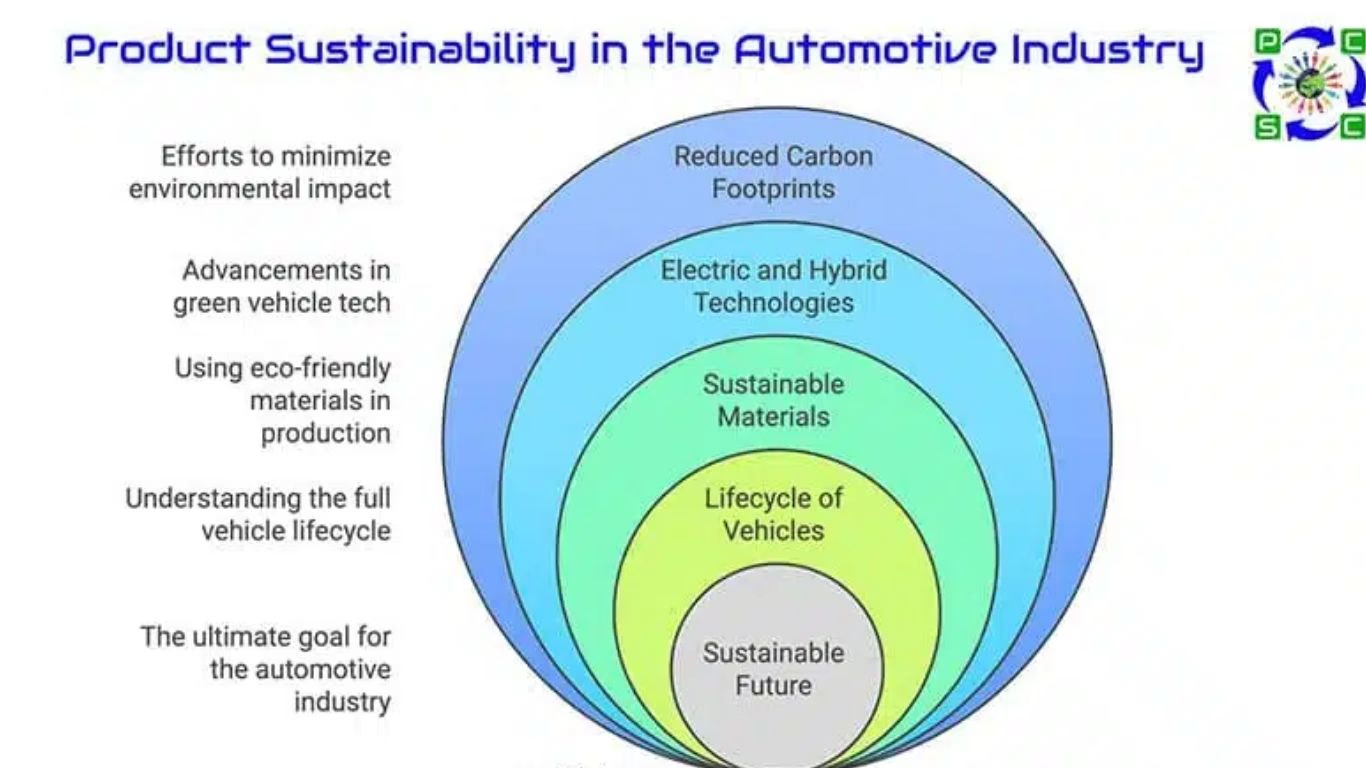
Here's an inspiring view of the circular economy in action for India's lubricants sector:
Conclusion
As India races toward net-zero by 2070, this partnership is a turbocharge. It's creative, collaborative, and crucial, proving that sustainability and performance can coexist in every engine. Whether you're a driver in Punjab or a fleet manager in Kerala, watch for RRBO lubricants hitting shelves soon. The future of India's roads is greener, thanks to HPCL and Castrol.


You May Like






Latest Lubricant Videos


Listen to Lubricant Audios