ELECTRIC
Why Are Top Car Engines Failing in 2026? Are Emission Norms Pushing Internal Combustion Tech Beyond Its Limits?
 Add CarBike360 on Google
Top brands' engine failures 2026: From machining debris to GDI carbon issues, how emission & efficiency demands are stressing ICE beyond limits. Full breakdown.

Feb 12, 2026 04:51 am IST

Frustrated seeing headlines about Toyota Tundra engines seizing, Honda V6 recalls, GM truck motors under investigation, or even Hyundai-Kia facing multi-billion-dollar headaches? You're not alone. In 2026, even legendary brands are grappling with unexpected engine failures, often in relatively low-mileage vehicles. Is the relentless push for lower emissions, better fuel economy, and stricter global norms (CAFE, Euro 7 equivalents, and more) forcing internal combustion engines (ICE) to the breaking point? Many experts say yes, modern engines are smaller, turbocharged, direct-injected, and run ultra-thin oils with razor-thin tolerances, leaving almost no margin for manufacturing imperfections or real-world stress.
This isn't about one brand "going bad," it's an industry-wide challenge. From machining debris contaminating oil passages to bearing wear under extreme pressures, the quest for cleaner, more efficient powertrains is creating unintended reliability headaches. Let's break it down with real data, comparisons, and what it means for buyers in Delhi and beyond.
The Core Culprit: Emission & Efficiency Demands Are Shrinking Margins
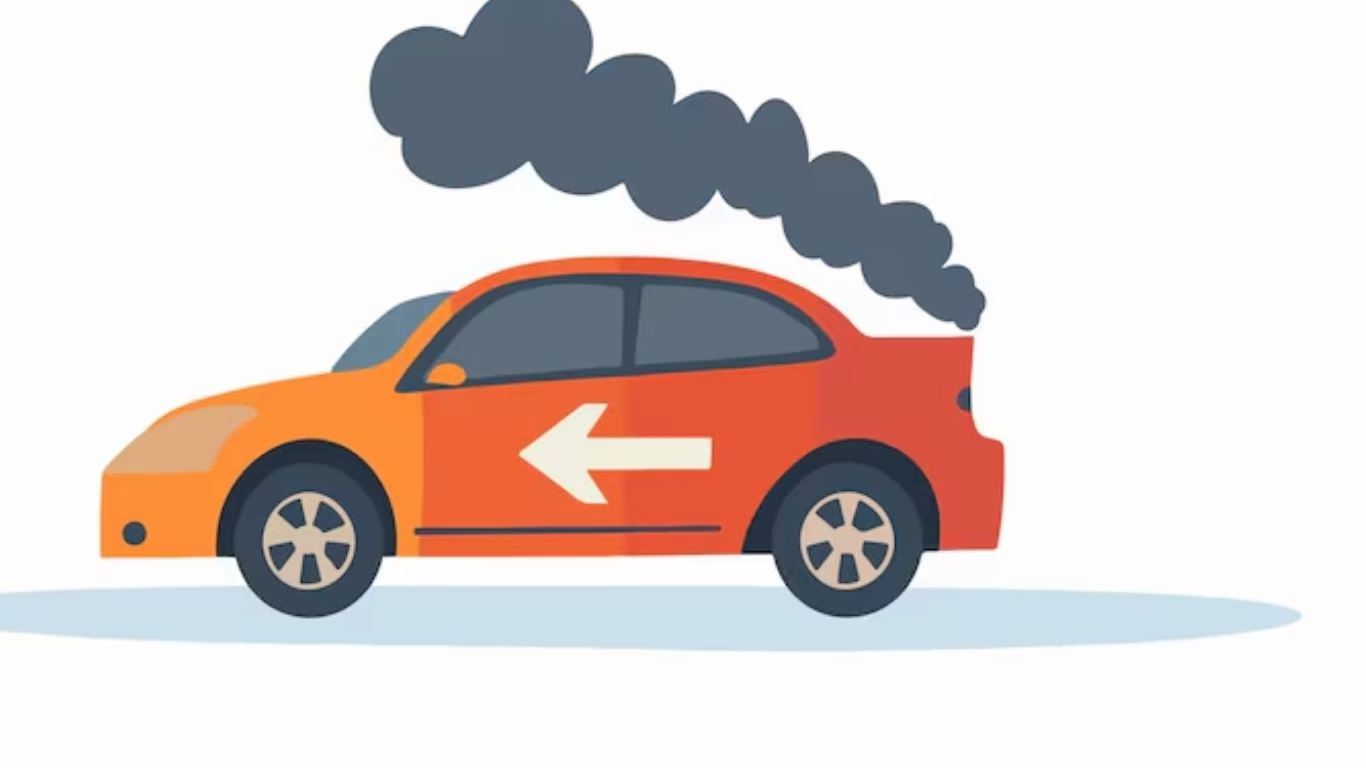
To meet tightening fuel economy and CO₂ rules (even as some regions like the US rolled back certain standards in late 2025), automakers downsized engines, added turbochargers, switched to Gasoline Direct Injection (GDI), and adopted thinner oils (0W-16, 0W-20) for reduced friction. These changes boost efficiency but stress components more.
Key Trade-Offs Table: Old vs Modern ICE Design
Aspect | Traditional Engines (Pre-2010s) | Modern Engines (2020s–2026) | Reliability Impact |
|---|---|---|---|
Displacement | Larger (e.g., 5.7L V8) | Smaller (e.g., 3.5L twin-turbo V6) | Higher specific output = more heat/load |
Boosting | Naturally aspirated | Turbocharged (often twin-turbo) | More boost pressure = bearing/rod stress |
Injection | Port injection | Direct injection (GDI) | Carbon buildup on valves, oil dilution |
Oil Viscosity | Thicker (5W-30/10W-40) | Ultra-thin (0W-16/0W-20) | Less forgiveness for debris/contamination |
Tolerances | Looser clearances | Extremely tight machining | Tiny debris causes catastrophic wear |
Peak Pressures | Moderate | Much higher | Increased wear on bearings, rods, pistons |
The result? Engines operate closer to their physical limits. A speck of machining residue (from rushed production or supply-chain shortcuts) can block oil galleries, leading to spun bearings or seized rods issues rare in older, "forgiving" designs.
Failure Causes Pie Chart Insight (Approximate Industry-Wide Split, 2025–2026 Recalls)
- Manufacturing Debris / Machining Issues: 45%
- Thin Oil + Tight Tolerances: 30%
- Carbon Buildup (GDI/Turbo): 15%
- Other (Overheating, Oil Dilution, etc.): 10%
This isn't speculation; reports from Automotive News, Hagerty, and recall data highlight how these factors affect Toyota, Honda, GM, Hyundai-Kia, and others.
Real-World Examples: Brands Hit Hardest in 2025–2026
Even "bulletproof" reputations are tested.
- Toyota: Massive twin-turbo V6 recalls (Tundra, LX600) due to machining contamination - over 100,000+ units at risk of total failure from debris in the crankcase.
- Honda: 250,000+ 3.5L V6s recalled for connecting rod seizures - bearing/rod issues under high loads.
- GM: L87 6.2L V8 (trucks/SUVs) under scrutiny - 721,000+ tested for machining flaws, debris, and thin-oil sensitivity; millions from 2015+ affected.
- Hyundai-Kia: Multi-million-engine probes (potential $5B+ cost) tied to similar tolerances and debris problems.
- Others: Volkswagen, Nissan, and Mercedes face related complaints - turbo failures, GDI carbon buildup causing misfires/rough idle, and oil-consumption woes.
GDI + turbo combo worsens carbon deposits on intake valves (no fuel washing them clean like port injection), leading to power loss, detonation, and eventual failure if ignored.
Common Modern Engine Failure Modes Table
Failure Type | Affected Brands (Examples) | Root Cause | Typical Mileage at Failure | Fix Cost (Approx.) |
|---|---|---|---|---|
Spun Bearings / Seizure | Toyota, Honda, GM | Debris in oil + thin-film lubrication | 10k–50k miles | ₹8–20 Lakh+ |
Connecting Rod Failure | Honda, GM | High loads + tight tolerances | Under 100k | Engine replacement |
Turbocharger Failure | Many turbo models | Carbon/oil coking + heat stress | 50k–120k | ₹2–5 Lakh |
Carbon Buildup (GDI) | VW, BMW, Hyundai | Direct injection + PCV vapors | 40k–80k | Walnut blasting ₹50k–1 Lakh |
Oil Dilution / Consumption | Turbo GDI engines | Fuel mixing with oil under cold starts | Varies | Oil changes + repairs |
These aren't isolated; over 5 million engines have been flagged in recent years, with warranty costs soaring.
Is ICE Tech at Its Breaking Point?
Yes, emission norms and efficiency targets have pushed internal combustion engines into a reliability crisis in 2026. Smaller, highly-stressed designs demand near-perfect manufacturing; any imperfection (debris, tolerances, thin oils) amplifies failure risk. While hybrids and EVs gain ground, millions still rely on ICE for affordability and range.
For buyers: Prioritize maintenance (frequent oil changes with the correct spec), consider extended warranties, and watch recalls. Brands are improving processes, but the "bulletproof" era feels distant.
Conclusion
At CarBike360, we’ve been tracking this trend closely, and here’s the straight talk: modern engines aren’t failing because brands suddenly forgot how to build cars; they’re failing because the world demanded cleaner, more efficient powertrains yesterday, and the industry tried to deliver it all while keeping the same basic internal combustion recipe. Smaller turbos, razor-thin oil films, zero-tolerance machining, and sky-high cylinder pressures have turned what used to be minor production flaws into catastrophic failures.


You May Like




Find your perfect car

Budget

Brand

Body Type

Fuel

Mileage

More
Latest Car Videos




Other Car Articles


Listen to Car Audios