ELECTRIC
Union Cabinet approves Semicon 2.0 With Rs 1,27,500 crore boost for India semiconductor mission
 Add CarBike360 on Google
India accelerates its semiconductor ambitions with a massive Rs 127500 crore push under Semicon 2.0, aiming to build a robust chip manufacturing ecosystem and reduce import dependency.

Jul 15, 2026 12:09 pm IST
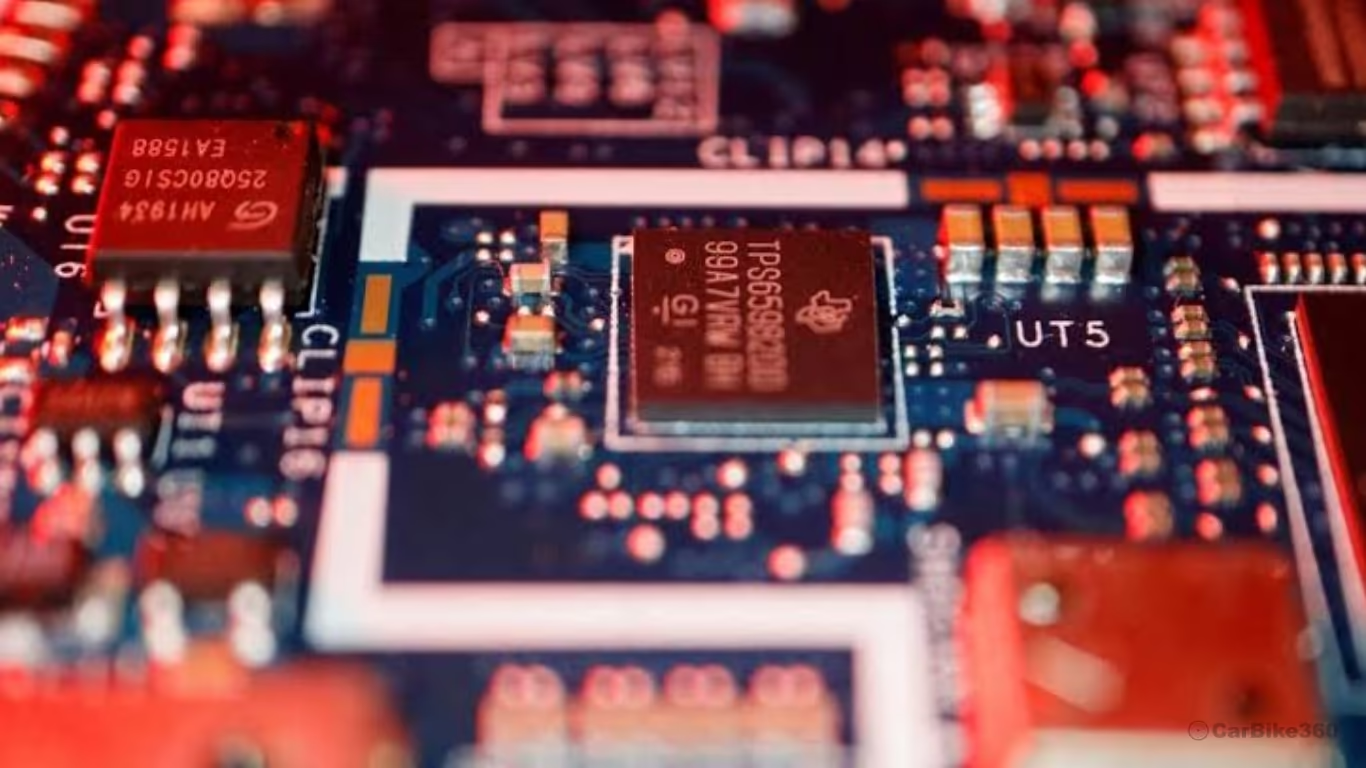
The Union Cabinet, led by Prime Minister Narendra Modi, has approved the Semicon 2.0 programme. This initiative aims to strengthen India's domestic semiconductor design and manufacturing ecosystem. The government has allocated a total budget of Rs 127,500 crore for this expanded policy framework.
Key Highlights
- The Union Cabinet approves Semicon 2.0 with a Rs 127,500 crore budget for semiconductor development.
- Policy allocates funds across six industrial areas, including design and fabrication incentives.
- First fabrication facility under the new policy expected to be commissioned by 2028.
- Previous mission approved 12 facilities with over Rs 1.64 lakh crore in investments.
Key Allocations and Industrial Focus
The renewed policy distributes financial resources across six main industrial areas. The first area focuses on semiconductor design. It shifts from initial prototyping to developing strategic commercial intellectual property and systems. This aims to boost India's capabilities in chip design and innovation.
The second and third areas introduce production incentives. These incentives target firms that manufacture specialised capital equipment, chemicals, and industrial gases. The policy also seeks to attract global fabrication plants for silicon, compound semiconductors, and discrete components. The government plans to commission the first such facility by 2028.
Background and Previous Approvals
This policy update follows the closure of the first India Semiconductor Mission. The earlier programme approved 12 production facilities, with a combined investment exceeding Rs 1.64 lakh crore. These approvals included one silicon fabrication plant and a silicon carbide facility. They also covered a specialised micro-LED display unit and nine packaging facilities. These facilities are intended to supply components to the automotive, telecommunications, and aerospace sectors.
Industry Developments and Future Plans
Recent industrial activity includes a Hyderabad-based firm signing a technology-transfer memorandum of understanding. The agreement targets a fully integrated 1,200 MTPA NdFeB magnet plant by the 2033 financial year. Additionally, Ather Energy plans to unveil the first scooter from its new EL platform at the upcoming Community Day event.
CarBike 360 Says
With the approval of Semicon 2.0, India takes a decisive step toward becoming a global semiconductor hub. The substantial Rs 12,75,000 crore investment is expected to accelerate domestic manufacturing, attract international players, and reduce reliance on imports. As the ecosystem develops, this move could reshape India’s technology landscape and strengthen its position in the global supply chain.


You May Like






Latest Battery Videos


Other Battery News
Tata Group prioritises cybersecurity and local battery production for EV growth

JSW Green Mobility invests in lithium urban technologies to accelerate electric fleet growth
India stationary energy storage market to grow thirtyfold by 2032
Tata AutoComp introduces performance incentives ahead of potential IPO
Listen to Battery Audios