इलेक्ट्रिक
Airless Tyres- The Future of Driving?
 CarBike360 को गूगल पर जोड़ें
Avoid a flat tyre situation with airless tyres. Zero punctures, lower maintenance, and longer life are some benefits of revolutionary airless tyres, but are they truly a replacement for conventional tyres?

By Swati Tomar
May 30, 2026 07:27 am IST
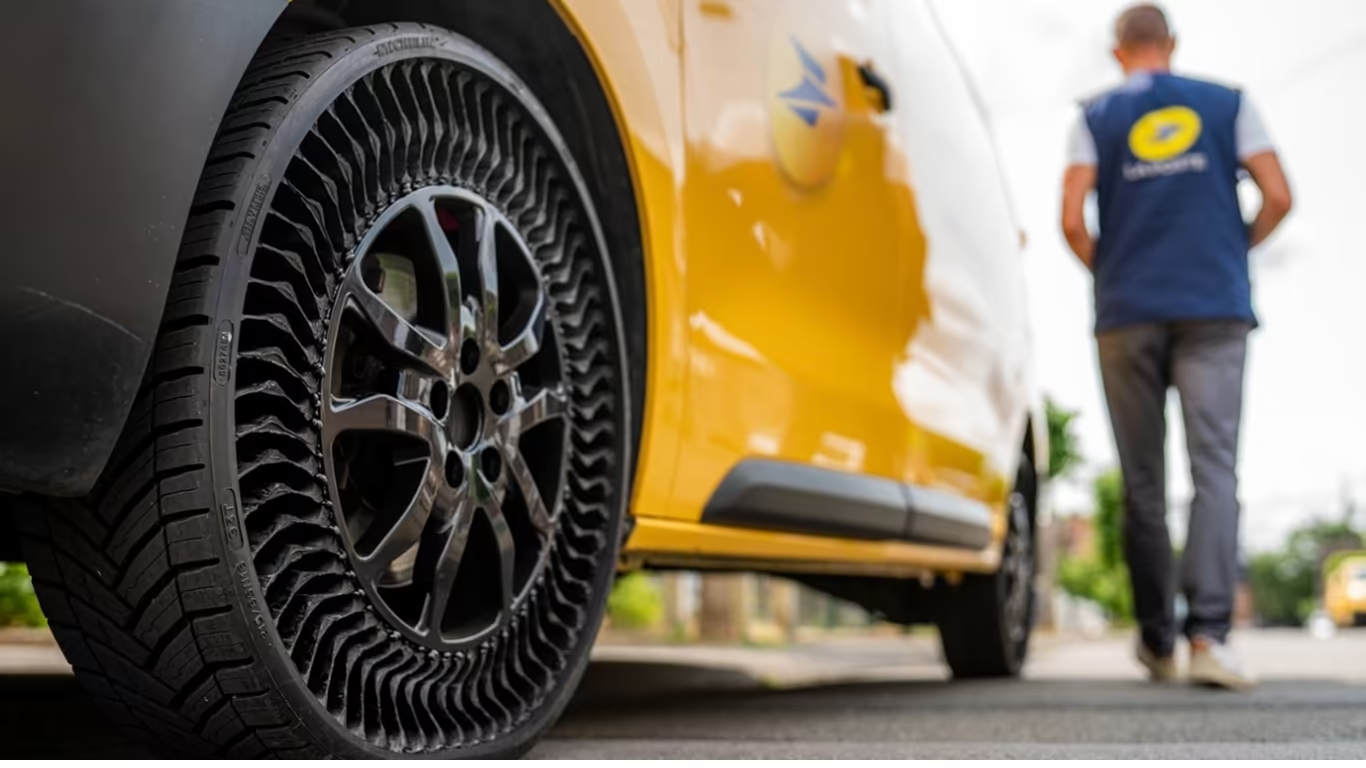
Imagine never pulling over for a flat tyre again. No roadside tyre change, no pressure checks, no slow leaks ruining your morning commute. That future is closer than you think, and it has a name: airless tyres.
Also called non-pneumatic tyres (NPT), airless tyres are engineered to deliver a puncture-free ride by eliminating the air-filled chamber that conventional tyres depend on. With major manufacturers like Michelin, Bridgestone, and Goodyear investing heavily in this technology, airless tyres are moving from concept cars and golf carts to the edge of mainstream roads. The global airless tyre market was valued at around $63 million in 2024 and is projected to reach $100 million by 2033, which is a clear signal of growing industry confidence.
In this article, you will get everything you need to know: how airless tyres are made, their real-world advantages and drawbacks, how they compare to traditional tyres, and whether they will replace conventional tyres in India anytime soon.
What Are Airless Tyres and How Do They Work?
Airless tyres replace the pressurised air chamber of a conventional tyre with a solid or structurally supported inner design that absorbs road impact on its own. Instead of relying on air pressure to carry the vehicle's load, these tyres use a network of flexible spokes, foam inserts, or polymer structures to do the same job.
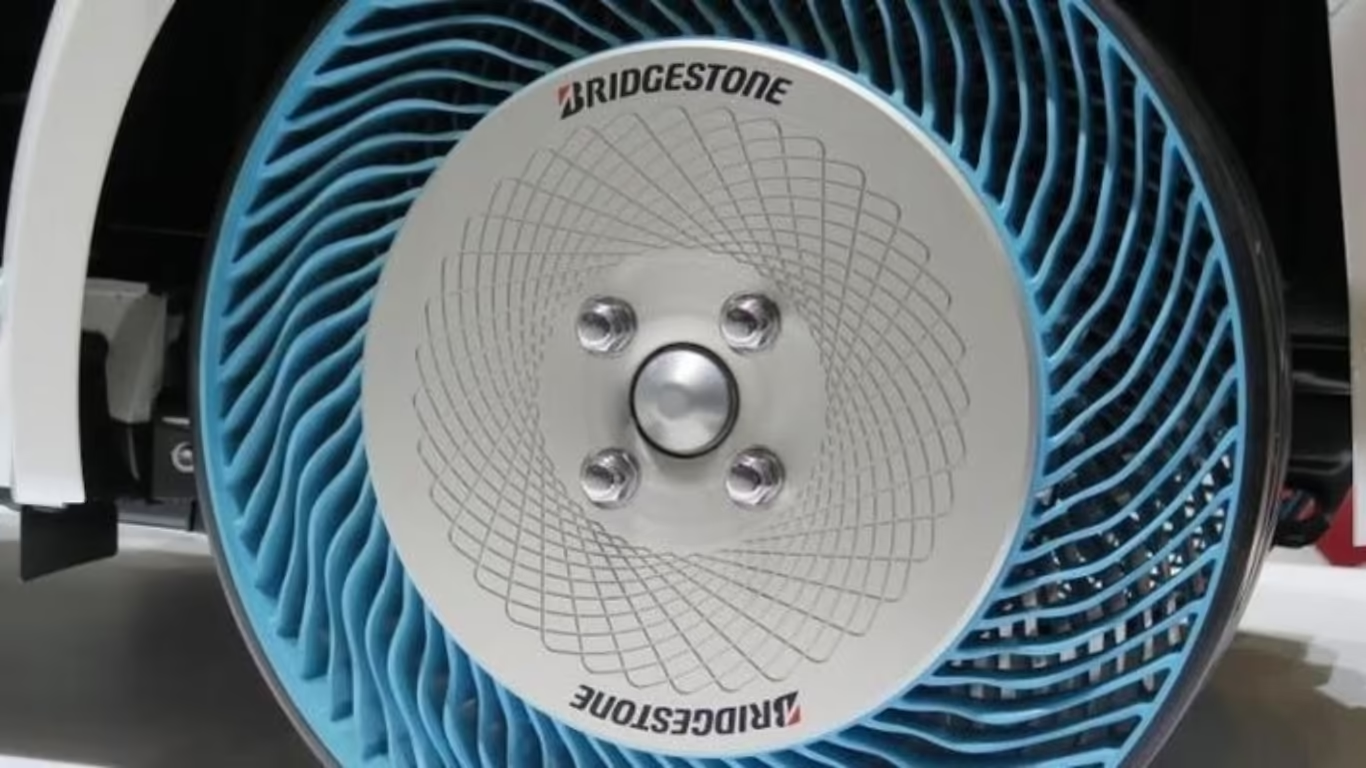
Bridgestone's "Air Free Concept" tyre uses a spoke structure that extends along the inner walls of the tyre to support the vehicle's weight without any inflation. Michelin's version called UPTIS (Unique Puncture-proof Tyre System) and it has been tested at speeds of up to 130 mph and has already been trialled on Toyota HiAce delivery vans in Singapore.
Because there is no air inside, there is nothing to leak, puncture, or blow out.
Key Insight
Michelin's UPTIS was first tested on a Chevrolet Bolt in 2019, then deployed on 30 Toyota HiAce DHL delivery vans in Singapore. European police agencies have also tested high-speed airless tyre performance specifically to counter criminals who deflate or shoot out tyres during pursuits.
How Are Airless Tyres Made? Key Materials and Components
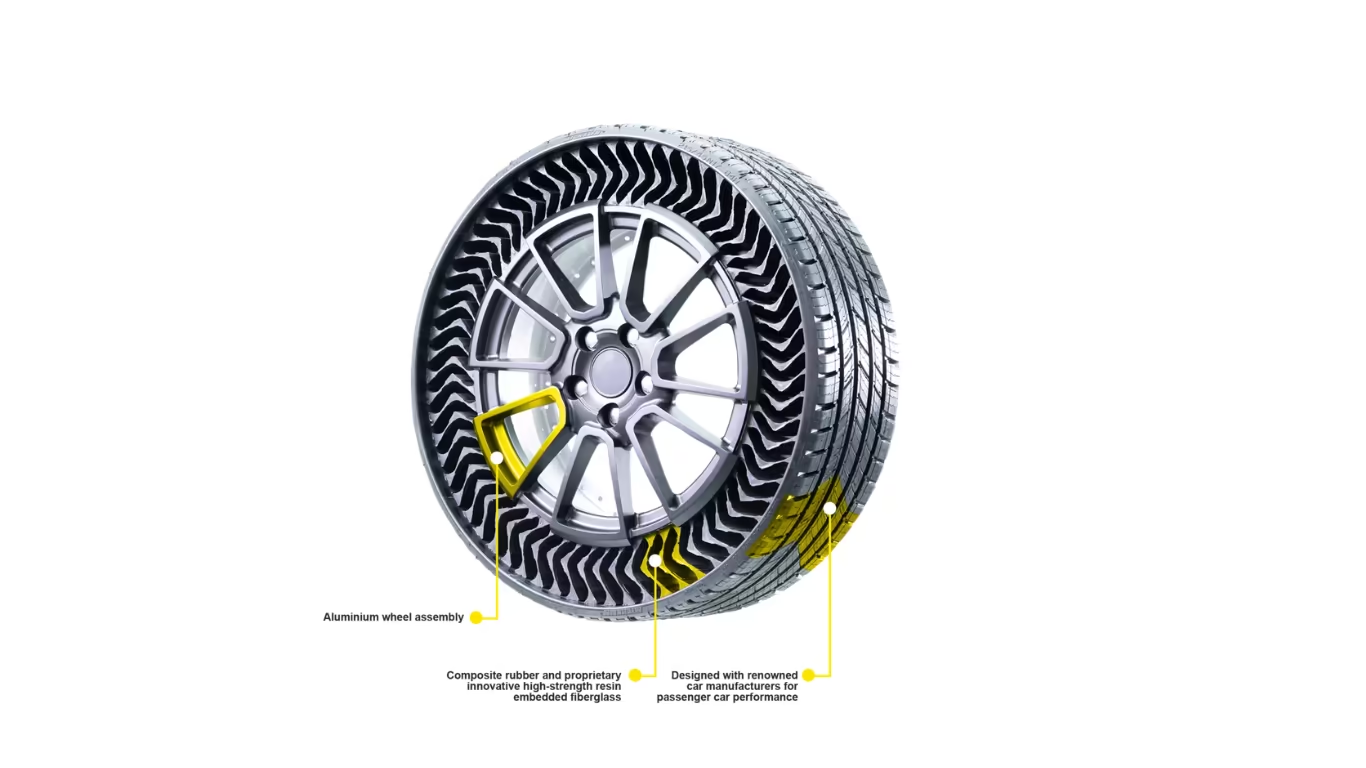
The construction of airless tyres varies by manufacturer, but most designs share a few core components:
Solid Rubber or Polymer Outer Layer
The outer tread is typically made from rubber or high-performance polymer compounds, providing road grip comparable to conventional tyres.
Flexible Internal Spoke or Lattice Structure
The load-bearing inner section, often a spoke-like or lattice design is made from thermoplastic resin, composite materials, or reinforced polymers. This is the component that replaces the function of pressurised air.
Steel or Composite Reinforcement
Some designs incorporate steel belts to improve load capacity and maintain tyre shape under heavy-duty conditions, particularly in commercial applications.
Foam or Elastomer Fillers
Certain airless tyre designs use foam or elastomeric material to cushion shocks and provide a smoother ride quality, partially compensating for the loss of air's natural cushioning.
India Insight: Bridgestone's airless tyre design uses fully recyclable thermoplastic resin in the spoke structure as part of its cradle-to-cradle sustainability goal, which means no part of the tyre needs to go to landfill.
Advantages of Airless Tyres
1. No More Punctures or Blowouts
The single biggest selling point. Without air inside the tyre, there is nothing to lose. Punctures, slow leaks, and blowouts eliminate a significant safety and convenience benefit, especially on the poorly maintained roads found across many parts of India.
2. Dramatically Lower Maintenance
Airless tyres require no pressure monitoring, no inflation top-ups, and no emergency spare. For fleet operators, cab aggregators, and commercial vehicle owners, this can translate to meaningful cost savings and operational efficiency over time.
3. Longer Tyre Lifespan
Built with structural durability as a core design principle, airless tyres are engineered to outlast conventional pneumatic tyres and thus, reducing the frequency of replacements and the total waste they generate.
4. Better Sustainability
Many airless tyres are manufactured using recyclable materials, and their longer lifespan means fewer tyres end up in landfill. This aligns with growing regulatory and consumer pressure on the auto industry to reduce its environmental footprint.
5. Consistent Handling and Performance
Conventional tyres lose pressure gradually over time, subtly degrading handling and fuel efficiency. Airless tyres maintain their structural integrity throughout their lifespan, delivering consistent traction and handling mile after mile.
Disadvantages of Airless Tyres
1. Firmer Ride Quality
This is the most commonly cited drawback. Compressed air acts as a natural shock absorber and removing it means the tyre's internal structure must compensate. Current airless tyre designs produce a noticeably stiffer ride compared to well-inflated pneumatic tyres, which can be a real concern on rough Indian urban roads and highways.
2. Higher Road Noise
Several early tests have found that airless tyres generate more road noise than conventional tyres, owing to the structure of their internal support systems. This is an area where manufacturers are actively working on improvements.
3. Higher Upfront Cost
The advanced materials and engineering involved mean airless tyres carry a higher purchase price than standard tyres. Reduced maintenance costs and a longer replacement cycle may offset this over the tyre's lifetime, but the initial outlay is steeper.
4. Limited Availability
As of 2026, airless tyres are not yet commercially available for standard passenger cars in most markets, including India. They are currently used in specific applications — construction equipment, military vehicles, golf carts, and limited commercial delivery fleet trials.
Airless Tyres vs. Conventional Tyres: Side-by-Side Comparison
Here is how airless tyres stack up against the conventional pneumatic tyres most Indian drivers use today:
Feature | Airless Tyres | Conventional Tyres |
Puncture Risk | None | High |
Maintenance | Minimal | Regular pressure checks |
Ride Comfort | Firmer | Softer (air cushioning) |
Road Noise | Higher | Lower |
Lifespan | Longer | Standard |
Upfront Cost | Higher | Lower |
Availability | Limited (2026) | Widely available |
Eco-friendliness | Recyclable materials | Rubber waste concerns |
The Future of Airless Tyres in India
India presents both a compelling opportunity and a unique challenge for airless tyre adoption. On one hand, the country's road conditions such as potholes, debris, and varied terrain make the puncture-free promise especially attractive for everyday drivers and fleet operators. On the other, the higher upfront cost and currently limited availability mean widespread adoption is still some years away.
The trajectory is clearly positive. Michelin, Bridgestone, and Goodyear are all deepening investment in this space. The rise of electric vehicles is further accelerating interest EVs benefit significantly from tyres that require zero maintenance and offer long-term durability, and major Indian EV manufacturers are watching this space closely.
As manufacturing scales up and unit costs come down, airless tyres are expected to move beyond industrial and commercial use cases and into passenger vehicles within the next decade. Whether they debut in India on delivery fleets, electric two-wheelers, or premium passenger cars remains to be seen but their arrival is no longer a question of if, only when.
India angle: With India ranking among the top countries globally for road accident fatalities linked to tyre blowouts, airless tyres could have an outsized safety impact on Indian roads once commercially available
Also read: Smart Tyres, Smarter Driving: The Power of TPMS Explained
Frequently Asked Questions About Airless Tyres
1: Are airless tyres available in India right now?
A: No. As of 2026, airless tyres are not commercially available for standard passenger vehicles in India. They are currently used in industrial and limited commercial fleet applications globally, with Michelin and Bridgestone conducting road trials.
2: Are airless tyres safe?
A: Yes. Michelin's UPTIS has been tested at up to 130 mph and trialled on real delivery vehicles. The elimination of blowout risk is actually a significant safety improvement over conventional pneumatic tyres.
3: How long do airless tyres last?
A: Airless tyres are engineered to outlast conventional pneumatic tyres, which typically last 40,000–60,000 km. Exact lifespan figures vary by manufacturer and application, but the design goal is a substantially longer service life.
4: Can airless tyres be repaired?
A: Traditional puncture repair is not needed as they cannot puncture. If the tread wears out, the outer layer or full tyre unit is replaced depending on the design.
5: Are airless tyres good for Indian roads?
A: Their puncture-resistance makes them well-suited to Indian road conditions. However, the firmer ride may be more pronounced on poorly surfaced roads, and limited availability is a practical barrier to adoption in India for now.
6: Which companies are working on airless tyres?
A: The leading developers include Michelin (UPTIS), Bridgestone (Air Free Concept), Goodyear, Continental, and Sumitomo. Apollo Tyres and MRF from India are also monitored players in the segment.