ELECTRIC
Government Addresses E20 Petrol Compatibility and Vehicle Impact in India
 Add CarBike360 on Google
The Indian government states E20 petrol is safe for vehicles, citing extensive testing and field data, but has not specified the percentage of vehicles fully compatible with E20. Over 20 crore two-wheelers and 3 crore petrol cars use ethanol blends.

Jul 28, 2026 10:35 am IST
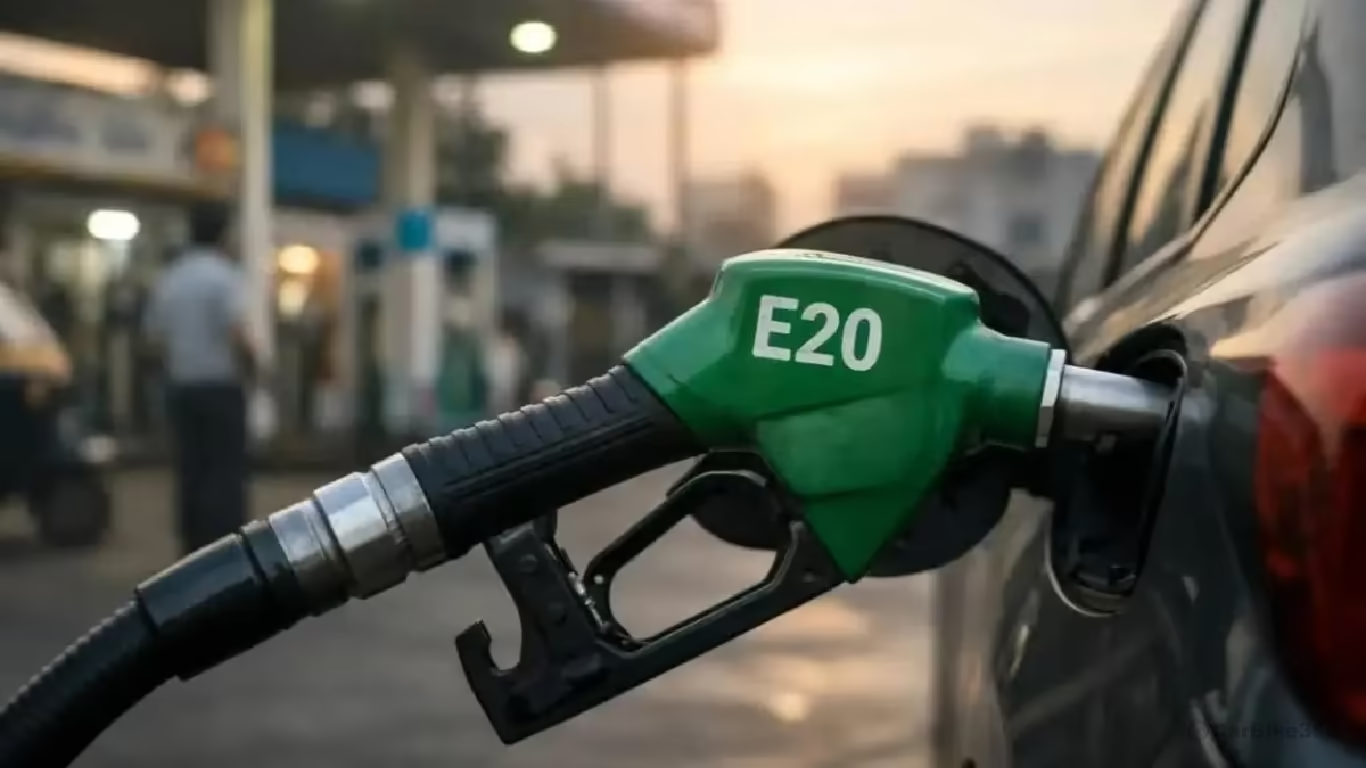
The Indian government has stated that E20 petrol is safe for vehicles, relying on laboratory and field data. The Ministry of Heavy Industries has not determined the exact percentage of vehicles fully compatible with E20 petrol. This information was provided in a written response to the Rajya Sabha by Suresh Gopi, Minister of State for Petroleum and Natural Gas.
Key Highlights
- Government confirms E20 petrol is safe based on laboratory and field data
- No official percentage of vehicles fully compatible with E20 petrol has been determined
- Legacy vehicles show no significant performance or component wear issues with E20 fuel
- Mileage drop for E10-calibrated vehicles using E20 is generally 3 to 5 percent
- Over 20 crore two-wheelers and 3 crore petrol cars use ethanol blends in India
The government response follows questions from consumer groups and opposition lawmakers. Concerns have been raised about possible performance issues and engine wear in older vehicles using E20 fuel. Despite these concerns, the government maintains that technical studies and field trials confirm E20 fuel meets established industry standards for safety and performance.
E20 Fuel Testing and Evaluation
The Ethanol Blended Petrol program was developed through a multi-stakeholder approach. Key participants include NITI Aayog, oil marketing companies, automobile manufacturers, the Automotive Research Association of India, the Society of Indian Automobile Manufacturers, and the Indian Institute of Petroleum.
Government-backed testing examined several factors. These included engine durability, drivability, startability, corrosion resistance, emissions, and material compatibility. The findings show that legacy vehicles do not experience significant performance changes or abnormal component wear when using E20 petrol.
Impact on Mileage and Vehicle Fleet
The government addressed concerns about fuel economy. Vehicles originally designed for E10 petrol may see a mileage drop of 3% to 5% when using E20 fuel. The ministry also noted that blends of E15 or higher have been distributed for over three and a half years. E19 and E20 blends have been in widespread use for more than two and a half years.
Currently, over 20 crore two-wheelers and 3 crore petrol passenger cars operate on these ethanol blends. The government has not provided a specific percentage of vehicles fully compatible with E20. However, it continues to monitor performance and safety through ongoing studies and field data.
Program Oversight and Future Outlook
The Ethanol Blended Petrol program remains under active review by multiple government and industry bodies. The government emphasizes that all findings to date support the continued use of E20 fuel under current standards. Further assessments may be conducted as new data becomes available.


You May Like




Find your perfect car

Budget

Brand

Body Type

Fuel

Mileage

More
Latest Car Videos




Other Car News

Listen to Car Audios