ELECTRIC
New GST Slabs For Cars, Bikes, Electric Vehicles, and How They Impact the Indian Customers—Explained
 Add CarBike360 on Google
The Indian government has revised GST slabs for vehicles starting September 2025—small cars and bikes get cheaper with lower tax rates; luxury vehicles see a new GST slab. This guide explains the implications for customers and the auto market.

By Utsav Chaudhary
Sep 04, 2025 01:11 pm IST
Published On
Sep 04, 2025 12:54 pm IST
Last Updated On
Sep 04, 2025 01:11 pm IST

The Government of India is ready to impose the revamped GTS tax, structured with three slabs under a different regime of 5%, 18%, and 40%. As per the reports published after the 56th Council meeting, Finance Minister Nirmala Sitharaman has announced that the revised GST will be a sign of relief for the middle-class family across the nation.
The new GST slabs for cars, bikes, and automotive accessories are organized, making all small cars or entry-level models and motorcycles below 350 cc cheaper with the tax reduction. This new tax regime will go into effect from September 22, 2025. The introduction of the new GST tax slab will certainly impact the dreams of many buyers who wish to own a certain type of motorcycle, scooter, or car. Let's look at the specifics of how the new tax slab will affect different types of cars and bikes for Indian customers.
Revised GST Slabs Overview
Items | Old GST Rate | New GST Rate |
Petrol & Petrol Hybrid, LPG, CNG Cars (<1200cc & <4000mm) | 28% | 18% |
Diesel & Diesel Hybrid Cars (<1500 cc & <4000mm) | 28% | 18% |
Motorcycles (<350 cc) | 28% | 18% |
Good Transport Vehicles | 28% | 18% |
The revamped GST slab system will eventually divide the vehicles under three different tax slabs of 5%, 18%, and 40%. Small cars or the entry-level models will now be placed under the 18% GTS slab instead of the previous 28%, according to the old regime.
Impact of New GST Slab on small/entry-level passenger vehicles

As per the latest GST rules and regulations, small petrol cars that measure under 4 meters in length and come with an engine dimension of about 1200 cc will now enjoy a lower tax of 18%. The same goes for the diesel cars that measure under 4 meters in length but have an engine displacement of about 1500 cc; they will come under the 18% tax slab, resulting in the price dropping by 8.5%.
- Examples included are the Maruti Suzuki Alto, Wagon R, Honda Amaze, Swift Dzire, Tata Nexon, Hyundai Venue, Skoda Kylaq, Kia Sonet, and many more.
In some cases, vehicles with an average wheelbase length being under 4m, such as the Maruti Suzuki Brezza, equipped with a 1.5L petrol engine, will be unable to be classified for the 18% GST tax regime.
Impact on motorcycles/scooters

The popular smaller and entry-level models, such as the Hero Splendor and Honda Shine, will become more affordable due to the tax rate drop from 28% to 18%. This reduction will likely lead to lower on-road prices and boost sales. The affordable vehicle segment directly benefits Indian middle-class consumers and first-time buyers. However, those bikes with an engine displacement of less than or up to 350 cc will remain under this tax regime.
- Examples included are the Hero Glamour, TVS Apache RTR 160, Bajaj Pulsar 200 RS, Hero Splendor, Honda Shine, and many more.
With the implementation of the new tax reforms, the prices of petrol-powered two-wheelers up to 350 cc will be reduced by 7.8%. On the other hand, the motorcycles and scooters above 350 cc will signify an increase in price by 6.9%.
Also Read: India’s GST Reboot Accelerates the Auto Industry: A Game-Changer for Cars, Bikes & EVs
Impact on Luxury and Premium Vehicles

All those vehicles, whether a four-wheeler having an engine displacement of more than 1200 cc in petrol and 1500 cc in diesel guise or all the motorcycles above 350 cc, will be classified under the 40% GST tax slab. This will eventually increase the price rise by 6.7% for premium cars, SUVs, and premium sedans, and 6.9% for premium bikes.
- Examples included are the Maruti Suzuki Grand Vitara, Skoda Kodiaq, Volkswagen Taigun, Royal Enfield Classic 350, KTM Duke 390 Adventure, BMW X5, Mercedes-Benz C53 Coupe AMG, and many more.

Although the GST rate has increased from 28%, the removal of additional cesses means the overall tax impact is somewhat reduced or similar, simplifying the tax framework and potentially making pricing more transparent for this category.
Electric Vehicles and Industry Implications

The electric vehicles (EVs), whether a 4W or a 2W, have retained their low GST rate of 5%. The tax slabs for the electric vehicles remain unchanged. This tax retention supports EV adoption by keeping upfront costs relatively lower, which is crucial for increasing market penetration.
- Examples included are Bajaj Chetak, TVS iQube, Ultraviolet F77, Tata Punch EV, Hyundai Creta EV, Maruti Suzuki e-Vitara, and many more.
Conclusion
For Indian customers, the new GST slabs create a dual effect: more affordability and accessibility for smaller, budget-friendly models versus a streamlined tax system for luxury buyers that could slightly adjust costs but without additional cesses. Overall, the GST revision simplifies taxation and provides direct financial relief for smaller vehicles while maintaining incentives for electric mobility.


You May Like


Find your perfect car

Budget

Brand

Body Type

Fuel

Mileage

More
Latest Car Videos


Top Auto News of the Week | Hyundai i20 Leak, Honda ZR-V, Tata Sierra EV, Skoda EV & More!

Talking about new Honda City and upcoming ZR-V SUV with Honda India’s Kunal Bahl!
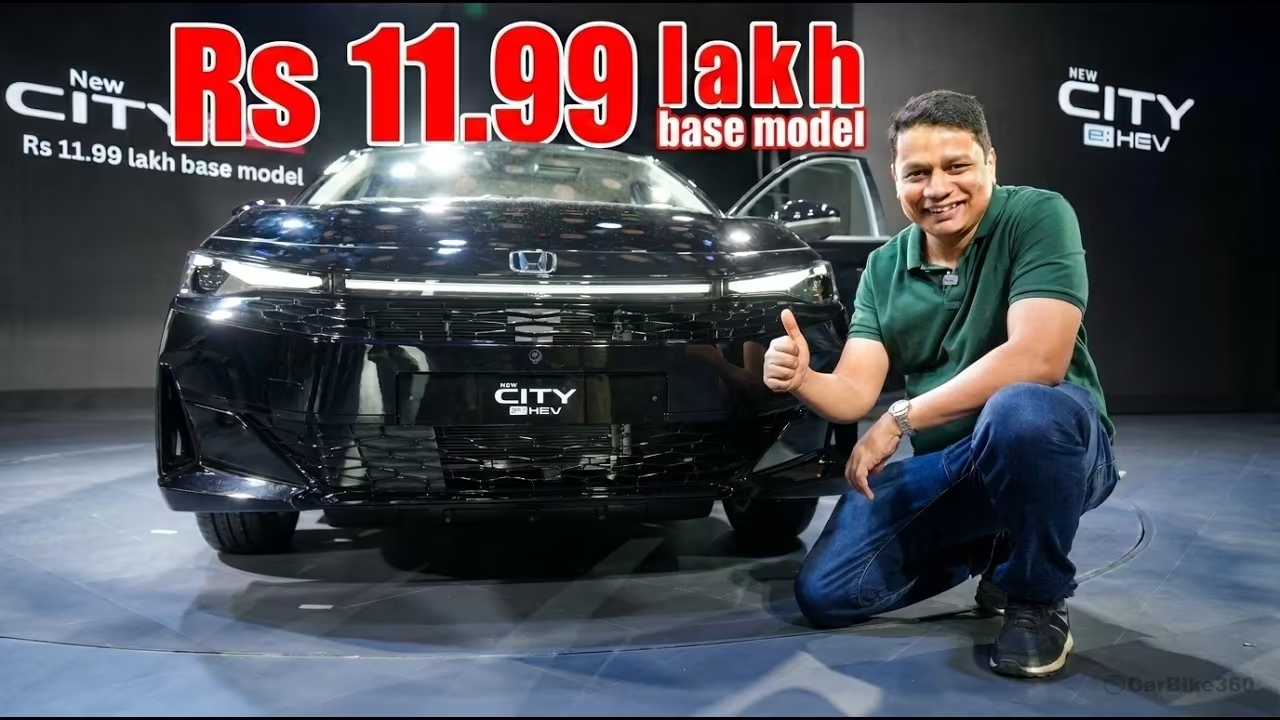
2026 Honda City Launched in India - Better than VW Virtus, Hyundai Verna & Skoda Slavia?

Weekly Auto & EV Wrap-Up: Luxury Launches, AI Tech & Big Industry Updates!
Other Car News
Listen to Car Audios