ELECTRIC
5 'Hidden' Fluids Every EV and Hybrid Vehicle Relies On (That Aren’t Engine Oil)
 Add CarBike360 on Google
Beyond the battery, specialized e-transmission oils, dielectric coolants, and high-performance greases form the silent backbone of India’s EV ecosystem, ensuring thermal stability and drivetrain longevity in the face of extreme tropical climates.

Mar 12, 2026 09:04 am IST
Published On
Mar 11, 2026 06:26 am IST
Last Updated On
Mar 12, 2026 09:04 am IST
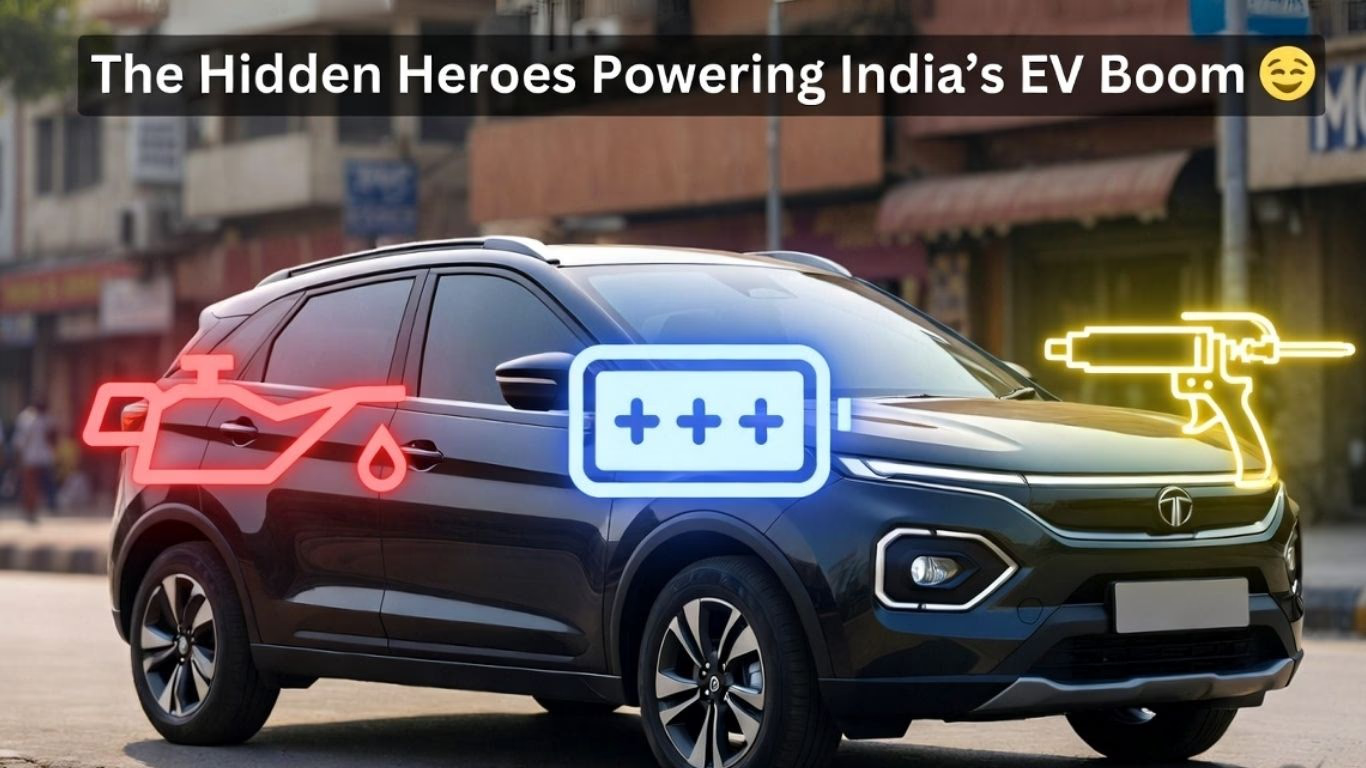
Key Highlights:
- Boost range by 2–5% with low-viscosity EV fluids despite Delhi heat & dust.
- Protect batteries from fast degradation in 45°C+ summers using dielectric thermal coolants.
- Extend component life & cut costs vs. traditional ICE maintenance ₹15k-25k over 5 years.
India’s electric mobility revolution is in full swing. With over 2.3 million EVs registered in 2025, a massive leap that pushed electric vehicles to around 8% of new registrations, families in Delhi, Mumbai, Bengaluru, and beyond are switching to models like the Tata Nexon EV, MG ZS EV, Mahindra BE 6, and hybrids such as the Toyota Innova Hycross and Maruti Grand Vitara Hybrid.
You’ve heard the big selling points: zero tailpipe emissions, lower running costs, and “no engine oil changes ever.” But here’s the truth most new owners miss: your EV or hybrid still needs specialised “hidden” lubricants. These aren’t the old engine oils of your petrol car. They’re advanced transmission fluids, dielectric coolants, greases, and brake fluids working silently inside the gearbox, battery pack, electric motor, and bearings.
In India’s brutal summers (45°C+), dusty highways, and monsoon floods, these hidden fluids are the difference between a smooth 400 km range and sudden power loss, between a 10-year battery and premature degradation, and between carefree ownership and surprise repair bills. Neglect them, and you risk reduced efficiency, higher energy consumption, and costly fixes. Use the right ones, and you can gain 2-5% extra range, quieter operation, and longer component life.
This 1,500+ word guide reveals exactly what these hidden lubricants are, why Indian conditions demand them, how much they cost, and how to maintain them like a pro. Whether you drive a pure EV or a hybrid, this is your complete 2026 playbook.
Unlocking Efficiency: The Hidden Transmission Fluids That Add Real Kilometres to Your EV Range on Indian Roads

Most people think EVs have 'no gearbox.' Wrong. Almost every electric car and hybrid uses a single-speed reduction gearbox (or e-axle) to convert the electric motor’s insane torque into wheel power. This compact unit spins at 10,000+ RPM and generates serious heat, especially in Delhi’s bumper-to-bumper traffic or while climbing the Ghats.
Traditional ATF simply won’t work. EV transmission fluids (also called e-axle or driveline fluids) are engineered with:
- Ultra-low viscosity for minimal energy loss (churning drag)
- Dielectric (non-conductive) properties to prevent short circuits
- Copper compatibility to protect motor windings
- Exceptional thermal stability for India’s 40°C+ heat
Real-world benefits for Indian drivers

Proper EV transmission fluid can improve drivetrain efficiency by 1.5-5%, giving you 10-20 extra kilometres per charge. It also dramatically reduces noise and vibration, making it perfect for the premium silence you expect from a Tata or MG EV. In dusty Rajasthan or humid Kerala conditions, these fluids resist oxidation and contamination far better than generic oils.
Popular India-ready options (2026 prices approximate):
- Castrol ON EV Transmission Fluid (D1/D2 series) ₹1,100 -1,350 per litre
- HP EV Transmission Fluid is a more affordable local favourite
- Gulf eLEC Driveline Advanced Axle Fluid
- TotalEnergies Quartz EV Fluid
Table: Traditional ATF vs EV Transmission Fluid (India Perspective)
Feature | Traditional ATF (ICE/Hybrid) | EV-Specific Fluid | Why It Matters in India |
|---|---|---|---|
Viscosity | Higher | Very low | Less drag = better range in city traffic |
Electrical Conductivity | Not critical | Dielectric (insulating) | Prevents short circuits near high-voltage parts |
Heat Resistance | Standard | Superior (higher flash point) | Survives 45°C summers without breaking down |
Service Interval | 40,000-60,000 km | 60,000-1,00,000 km or “lifetime.” | Fewer visits, but check in harsh conditions |
Cost per litre (India) | ₹500-800 | ₹900 -1,400 | Slightly higher but pays back in efficiency |
Staying Cool Under Pressure: Why Battery Thermal Management Fluids Are Lifesavers in Scorching Indian Summers
Battery packs are the heart of any EV. In India, they face extreme stress from fast charging in 40°C+ heat, long highway runs, and stop-start city driving. Without proper cooling, batteries lose power (derating), charge more slowly, and age faster.
Hidden thermal management fluids (dielectric coolants) circulate through or around the battery and motor to keep temperatures in the sweet 20-40°C zone. They are non-conductive, have high heat capacity, and are compatible with sensitive battery materials, features that standard radiator coolant lacks.
Indian EVs like the Tata Nexon EV, MG ZS EV, and Hyundai Ioniq 5 use advanced liquid cooling systems. The right fluid prevents thermal runaway risks and supports faster DC charging without throttling. In monsoons, it also protects against condensation and contamination.
Top India-specific choices:
- Gulf eLEC Advanced Coolant
- TotalEnergies Quartz EV Fluid range
- HP Koolgard EV Coolant
- Castrol ON Thermal Management Fluids
Maintenance tip: Many manufacturers recommend checking or replacing coolant every 40,000-80,000 km or 3-4 years. In India’s climate, inspect annually, especially before summer.
Impact of Proper Thermal Management in Indian Conditions
Condition | Without Optimised Coolant | With Right EV Coolant | Real Benefit for You |
|---|---|---|---|
Summer Range Loss | 15-25% | <5% | More km per charge |
Fast-Charging Speed | Throttled early | Sustained high rates | Less time at chargers |
Battery Lifespan | Reduced by heat cycles | Extended 20-30% potential | Better resale value after 5 - 8 years |
Complete 2026 Maintenance Guide: Brands, Costs, Schedules & Pro Tips for Indian EV & Hybrid Owners:
Many owners treat these fluids as “lifetime fill” and forget them. Big mistake in India. Dust, heat, and rough roads accelerate wear. Regular checks at authorised service centres (now widely available) are cheap insurance.
Recommended Intervals for Indian Driving (approximate, always check your manual)
Hidden Lubricant | Typical OEM Interval | India Recommendation (Harsh Climate) | Approx. Service Cost (Rs) |
|---|---|---|---|
EV Transmission Fluid | Lifetime or 80,000 -1,00,000 km | Inspect every 20,000 km; replace 60 -80k km | 3,000 - 8,000 |
Battery Thermal Coolant | 4 - 5 years or 80,000 km | Check annually; replace every 3 - 4 years | 2,000 - 5,000 |
Specialty Greases (bearings) | Sealed (lifetime) | Inspect during major service | 500 - 2,000 |
EV Brake Fluid | Every 2 years | Every 2 years (hygroscopic) | 1,000 - 2,500 |
Top Brands & Where to Buy (2026 India)
- Castrol ON - Official partner for many Tata & MG models; widely available
- HP Lubricants - Affordable, locally made, excellent for heat & dust
- Gulf Oil eLEC range - Strong focus on hybrids too
- TotalEnergies Quartz EV - Premium global tech now fully in India
The total 5-year maintenance cost for hidden lubricants in an EV is typically ₹15,000-25,000, still far lower than ₹60,000+ for a comparable petrol car’s engine oil, filters, and services.
Pro Tips from Indian EV Owners:
- Always use OEM-approved or certified EV-specific products to protect the warranty.
- Park in shade and avoid full fast-charging in peak afternoon heat.
- Watch for warning signs: reduced range, unusual motor noise, or dashboard alerts.
- Service at authorised centres, their technicians are now EV-trained.
- For hybrids (Toyota, Maruti): combine EV fluids with premium hybrid engine oil (0W-16 or 0W-20 grades).
- The Future is Bright and Even More Efficient
By 2030, India aims for 30% EV adoption. Lubricant makers are responding with multi-functional fluids (cooling + lubrication in one), longer-life formulations, and even bio-based sustainable options. Local manufacturing under PLI schemes is bringing prices down while improving performance.
Read More: How Post-Purchase Assurances are Changing Used Car Buying for Good
Conclusion
The 'hidden' lubricants in your EV or hybrid are no longer secret; they are the silent partners that deliver the range, reliability, and savings you bought the car for. In India’s unique conditions, choosing the right transmission fluid, coolant, and grease isn’t just maintenance; it’s smart ownership that pays you back every kilometre.
Next time you visit the service centre, don’t just ask for a 'service.' Specifically request a check on your EV transmission fluid and thermal coolant. Your wallet, your battery, and Mother Earth will thank you.
Drive electric. Drive informed. Drive India’s future.


You May Like



Find your perfect car

Budget

Brand

Body Type

Fuel

Mileage

More
Latest Car Videos




Listen to Car Audios