ELECTRIC
Car Insurance 101: What to Do in an Accident?
 Add CarBike360 on Google
Stay calm, ensure safety, call police/ambulance, document everything, exchange details without admitting fault, and inform insurer immediately.

By Bhumika Verma
Mar 13, 2026 06:45 am IST
Published On
Mar 13, 2026 06:25 am IST
Last Updated On
Mar 13, 2026 06:45 am IST

Key Highlights:
- Stop, hazards ON, move the car if safe, call 108 for injuries immediately
- Call 100/112 + file FIR (especially if injury/damage/third party involved) – no FIR = claim trouble
- Take 20+ clear photos/videos of the scene, damage (both vehicles), skid marks, witnesses & documents.
Picture this: You’re cruising through Delhi’s bustling streets on a typical Monday morning, chai in hand (safely, of course), when suddenly BANG! Another car clips yours. Heart racing, airbags may be deployed, and traffic honking like crazy. What now? Panic? Scream? Or follow a smart, step-by-step plan that protects you, your car, and your wallet? Accidents happen faster than you can say “insurance claim,” but knowing exactly what to do can turn a nightmare into a manageable (and fully covered) blip. In India, where roads mix scooters, trucks, and chaotic traffic, car insurance isn’t just paperwork it’s your safety net. Whether it’s a minor fender-bender in Mumbai or a serious crash in Delhi, the right actions right after the impact decide if your claim sails through or gets rejected.
This comprehensive guide (Car Insurance 101: What to Do in an Accident) walks you through everything. We’ll cover immediate life-saving moves, the exact insurance filing process under IRDAI rules, and insider tips to avoid common traps. By the end, you’ll feel confident, prepared, and ready to handle any road mishap like a pro.
Stay Calm & Capture the Chaos: Immediate Steps After a Car Accident in India
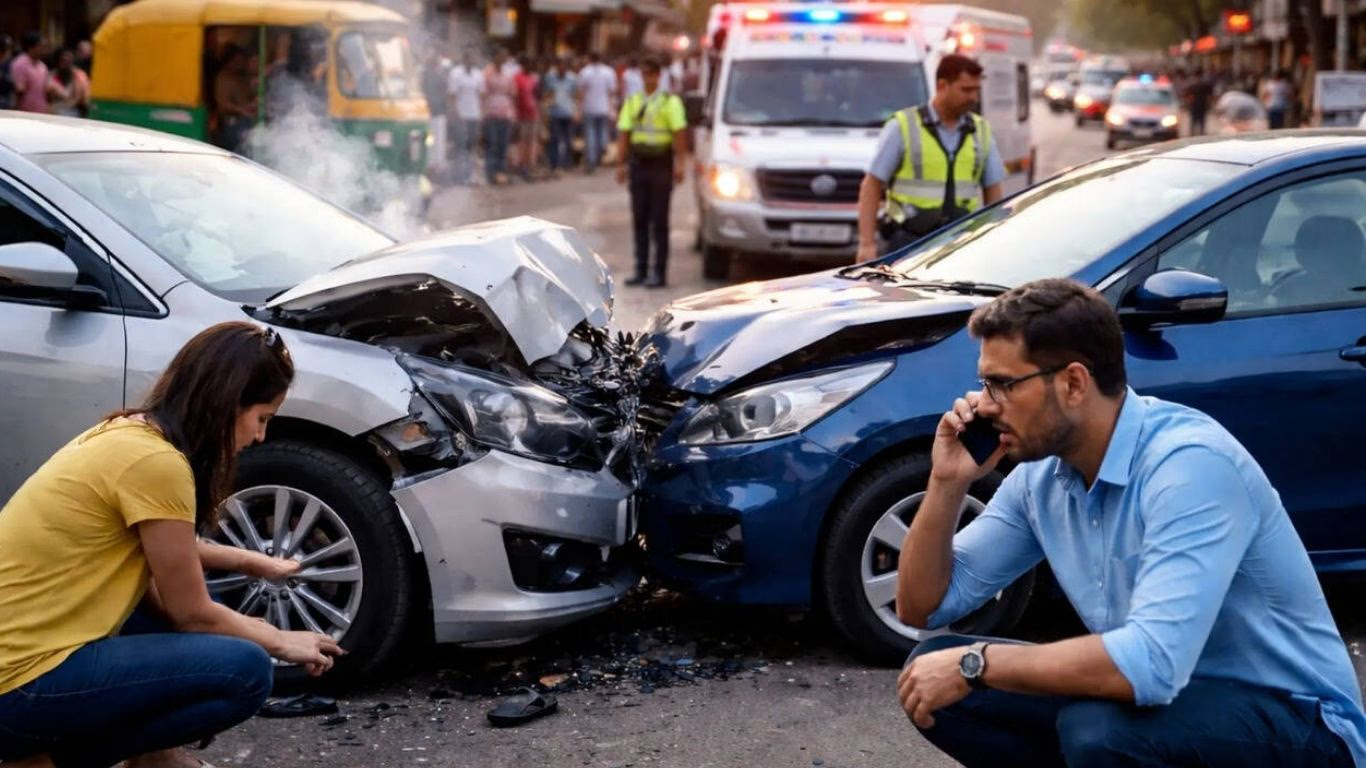
The first 10 minutes after a crash are pure adrenaline. But rushing or panicking can cost you big time legally, medically, and financially. Indian law (and smart insurance policies) demand specific actions to keep everyone safe and your claim valid.
Step 1: Prioritize Safety Yours, and Everyone Else’s
Stop the vehicle immediately (it’s legally required under the Motor Vehicles Act). Turn on hazard lights, and if the car is drivable and no one is badly hurt, gently move it to the side of the road to avoid blocking traffic. In Delhi or any crowded city, this prevents secondary accidents. Check for injuries your own, passengers, and the other driver. Dial 108 for an ambulance instantly if anyone is hurt, even if it looks minor. Minor bruises can turn serious, and medical records strengthen your claim later.
Step 2: Call the Police FIR is Your Best Friend
For any accident involving injury, death, or significant damage (especially if a third party is involved), call 100 or 112 right away. Don’t move the vehicles until police arrive unless necessary (and get their permission in writing). The First Information Report (FIR) is gold for insurance companies. Without it for third-party claims, your payout could be delayed or denied. Even in minor cases, filing an e-FIR via state police apps (like Delhi Police’s) is quick and smart.
Step 3: Exchange Details No Blame Game
Politely swap information with the other driver: full names, phone numbers, vehicle registration numbers, driving license copies, and, crucially, insurance policy details (company name, policy number, and agent contact). Take photos of their documents. Avoid admitting fault on the spot (“Sorry, my bad!”) that can haunt your claim. Let insurance experts decide liability later.
Step 4: Document EVERYTHING Your Phone is the Star Witness
This is where most people slip up. Grab your smartphone and snap 20-30 photos/videos from every angle: the accident scene, skid marks, traffic signals, damage to BOTH vehicles (close-ups and wide shots), number plates, and any injuries. Note down witness names and contacts. Time, date, location, weather, jot it all in your notes app. These visuals are irrefutable evidence that speeds up surveyor inspections.
Step 5: Inform Your Insurer Within Hours, Not Days
Call your insurance company’s toll-free number or use their app (most likely Bajaj Allianz, HDFC Ergo, or ICICI Lombard have one-tap intimation now) immediately, ideally within 24 hours. Delaying can lead to rejection. Provide basic details: policy number, accident location, and a quick description. They’ll guide you on the next steps and often send a surveyor.
Read More: EMI Plan for a 4-Wheeler
Here’s a handy Immediate Action Checklist to keep in your glovebox (or save this table on your phone):
Step | Action | Why It Matters |
|---|---|---|
1 | Ensure safety & call 108 if injured | Saves lives; medical proof needed for personal injury claims |
2 | Call police & file FIR (if required) | Mandatory for third-party claims; legal protection |
3 | Exchange info without admitting fault | Builds accurate claim file |
4 | Take 20+ photos & note witnesses | Evidence that prevents disputes during assessment |
5 | Inform insurer within 24 hrs | Starts the clock on the claim process; avoids rejection |
6 | Don’t repair without approval | The insurer must survey first for own-damage claims |
Follow these, and you’re already ahead of 90% of drivers. Remember: Never leave the scene, it’s illegal and voids your claim.
From Wreck to Wallet: Step-by-Step Car Insurance Claim Process in India (Own Damage vs Third Party)

Once the immediate chaos settles, it’s time to turn that accident into a smooth payout. India’s motor insurance (regulated by IRDAI) has two main claim types: Own Damage (for your car’s repairs under a comprehensive policy) and Third Party Liability (for damage/injury you cause to others, mandatory under law).
The Claim Journey Broken Down:
1. Intimation Done? Great, your insurer assigns a surveyor (usually within 48 hours). For cashless repairs, take your car to a network garage. They coordinate directly with the insurer.
2. Survey & Assessment: The surveyor inspects damage, verifies your documents, and estimates repairs. Be present or send clear photos if you can’t.
3. Document Submission: Upload or submit everything via app/email/branch.
4. Approval & Repair For cashless: Garage fixes it; you pay nothing (or just deductible). For reimbursement: Pay upfront, then get money back (usually 15-30 days).
5. Settlement IRDAI mandates quick payouts: most own-damage claims settle in 30 days if docs are complete.
Third-party claims work differently: The at-fault driver’s insurer pays the victim directly. If you’re the victim, collect the other party’s details and inform their insurer. FIR is almost always required here.
Read More: India’s Traffic Challans Explained
Documents You’ll Need: Don’t Miss These!
Here’s the ultimate table of required papers (based on standard IRDAI guidelines):
Document | Why Needed | Own Damage | Third Party |
|---|---|---|---|
Duly filled Claim Form | Official request | ✓ | ✓ |
FIR Copy | Legal proof of incident | Required if injury/damage | Mandatory |
Driving License & RC Copy | Vehicle & driver verification | ✓ | ✓ |
Insurance Policy Copy | Confirms coverage | ✓ | ✓ |
Photos/Videos of Damage & Scene | Evidence | ✓ | Helpful |
Repair Estimate/Invoice | For assessment | ✓ | Not for liability |
Medical Reports & Bills (if injured) | Personal accident cover | ✓ | ✓ |
Witness Statements | Extra support | Optional | Helpful |
Pro tip: Most insurers now accept digital uploads, so scan everything neatly.
Cashless is king for own-damage claims at authorized workshops, no upfront payment hassle. If your policy includes a zero-depreciation add-on, you get full repair cost without deductions for car age. Third-party claims can include legal fees if things go to court (rare but possible).
The entire process, when done right, feels surprisingly straightforward. Many drivers in 2025 use insurer apps for end-to-end tracking status updates that pop up like food delivery notifications.
Claim Denied? Avoid These 7 Deadly Mistakes & Grab Pro Tips for Lightning-Fast Payouts

Here’s the truth: 20-30% of claims face issues not because of bad luck, but avoidable errors. Don’t let yours be one.
Common Pitfalls to Dodge:
1. Delaying Intimation - Waiting a week? Claim rejected. IRDAI rules are strict; report as soon as possible.
2. Admitting Fault at the Scene - Words like “It was my mistake” can be used against you. Stay neutral.
3. Skipping FIR for Third-Party - No FIR = no payout for liability claims.
4. Moving Vehicles Prematurely - Police need the scene intact.
5. Poor Documentation - Blurry photos or missing witness details slow everything.
6. Unauthorized Repairs - Fixing at a random garage without a surveyor's approval? Reimbursement denied.
7. Ignoring Deductibles - Know your policy’s voluntary deductible to avoid surprises.
Pro Tips from the Trenches:
- Download your insurer’s app TODAY - features like instant photo upload and 24/7 chat save hours.
- Choose cashless garages listed in the app for hassle-free parking.
- Keep a “Car Emergency Kit” in your boot: phone charger, spare documents copy, and a printed checklist.
- Review your policy annually - add-ons like roadside assistance or personal accident cover are lifesavers.
- If the claim is delayed beyond 30 days, escalate to IRDAI’s grievance portal (igms.irdai.gov.in), which they resolve fast.
- For hit-and-run cases: File FIR and apply via the Solatium Fund, government steps in
Real story: A Delhi driver I know had a minor side-swipe last year. He followed these exact steps FIR in 30 minutes via app, photos uploaded instantly, and cashless repair done in 3 days. Total out-of-pocket? Just the deductible. Without the FIR and photos? He’d still be fighting for reimbursement months later.
Bonus: Quick FAQs Every Driver Should Know
Q: What if it’s a single-vehicle accident (no other car)?
A: Still inform the police if major damage, and your own insurer for own-damage claim. No FIR needed unless injury.
Q: Can I claim multiple times in a year?
A: Yes! No limit under IRDAI rules, but your No Claim Bonus (NCB) discount resets if you claim.
Q: What about electric vehicles or new-age cars?
A: Same process, but specialized EV repair networks are growing. Check your policy.
Q: How long until I get my car back?
A: Cashless claims average 3-7 days; reimbursement up to 30 days for settlement.
Conclusion:
Accidents are unpredictable, but your response doesn’t have to be. By staying calm, documenting like a detective, filing that FIR, and following your insurer’s process, you’ll turn “Oh no!” into “All covered!” Comprehensive car insurance isn’t an expense, it’s peace of mind on wheels. Review your policy today, download that app, and keep this guide bookmarked. Next time traffic gets tricky, you’ll know exactly what to do. Safe driving, friend! And if you ever need to refresh these steps, just search “Car Insurance 101: What to Do in an Accident” again. Your future self (and your bank account) will thank you.


You May Like






Find your perfect car

Budget

Brand

Body Type

Fuel

Mileage

More
Latest Car Videos




Listen to Car Audios