ELECTRIC
Honda Amaze 1st vs 2nd vs 3rd Generation: Comprehensive Comparison Review
 Add CarBike360 on Google
Honda Amaze: A detailed comparison of its three generations, highlighting key upgrades in design, features, safety, and fuel efficiency.

By Mohit Kumar
Dec 07, 2024 09:54 am IST
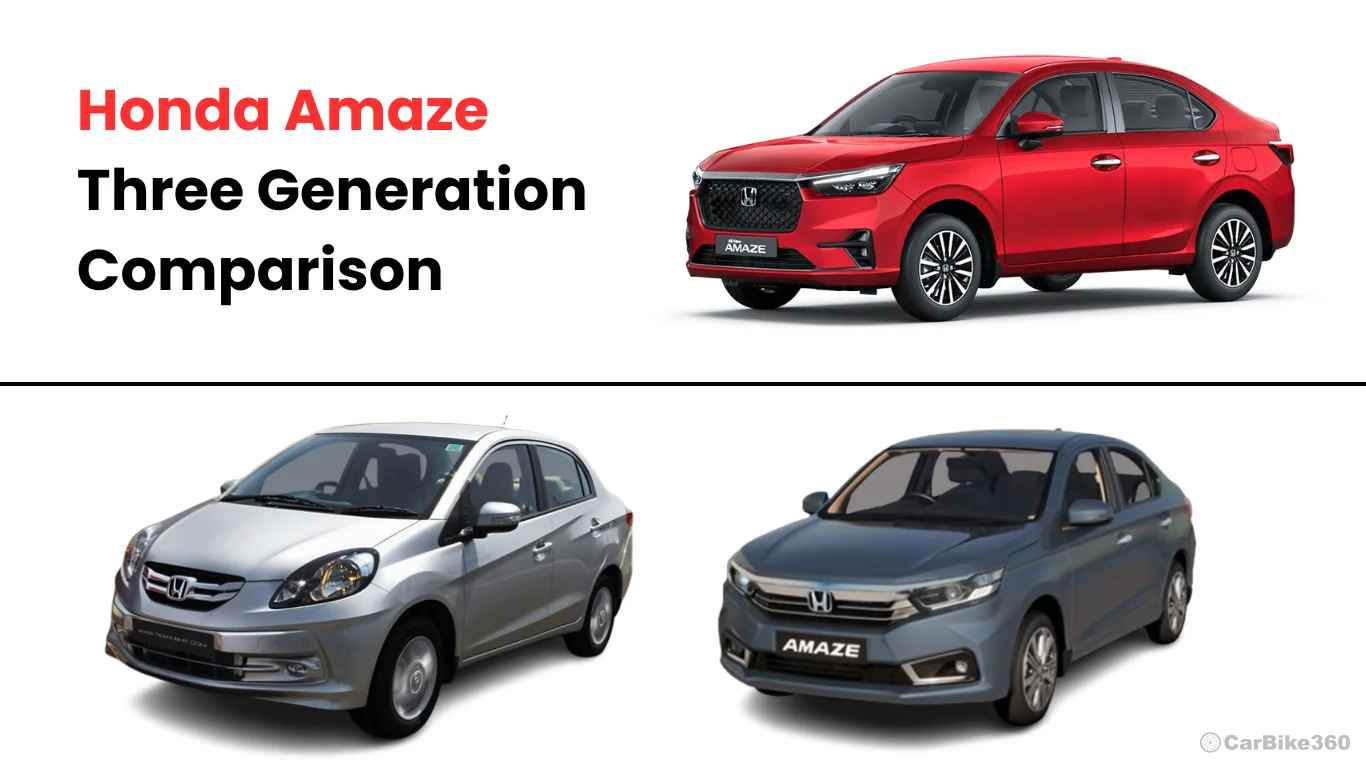
Recently Honda has launched its most awaited sedan, the third generation Honda Amaze. Since its 2013 debut, the Honda Amaze has been a major force in the small sedan market. The Amaze has undergone substantial design, feature, safety, and performance changes over the course of three generations. In the market for small sedans, the Honda Amaze has consistently upped the standard. With ADAS and a premium touch, the third generation has completely revolutionized the sector, while the first generation established the groundwork as a dependable and economical sedan. The second generation also offered substantial styling and technological advancements.
Here's an in-depth comparison of all three generations, highlighting how Honda has upgraded its popular sedan over the years.
Design Evolution
The Amaze transitioned from a practical design to a bold and stylish stance with contemporary elements like LED lighting and premium finishes.
First Generation (2013-2018)
- Exterior: A functional and compact design picked up from the Honda Brio hatchback. Its main highlight was bold chrome-accented grille and sharp headlamps were
- Rear: Clean tail lamp design and a sporty raised boot lid.
- Wheels: 14-inch steel wheels on lower trims and alloy wheels on higher variants.
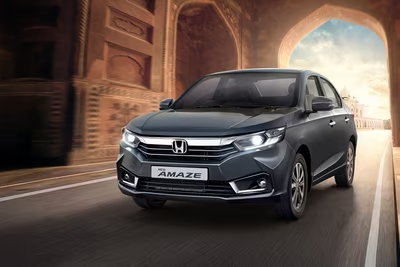
Second Generation (2018-2023)
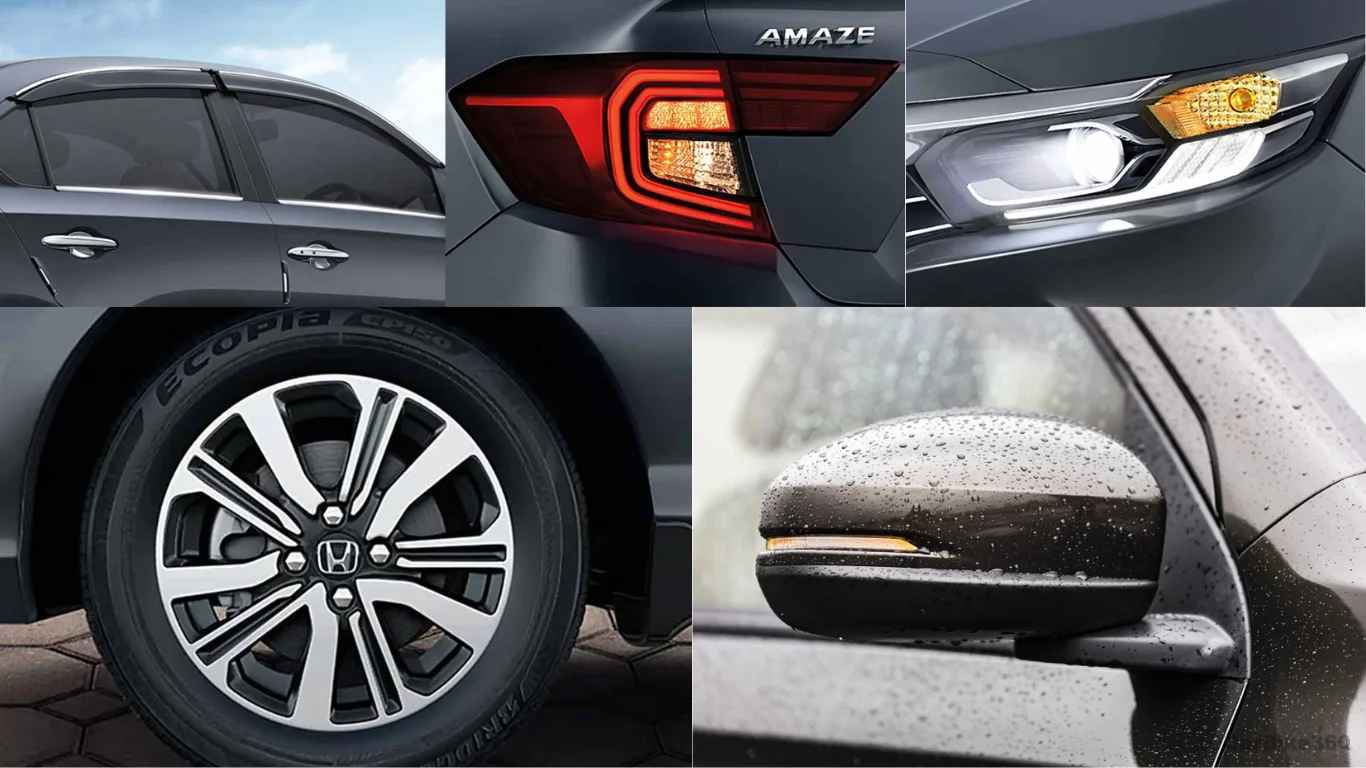
- Exterior: A bolder and more mature design, with a solid wing face grille and angular headlamps featuring LED DRLs. The sharp character lines gave it a dynamic look.
- Rear: Stylish C-shaped LED tail lamps and an integrated spoiler added flair.
- Wheels: Upgraded to 15-inch diamond-cut alloy wheels in higher trims.
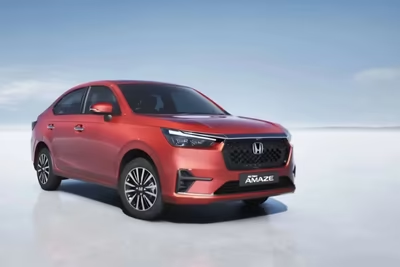
Third Generation (2024-Present)
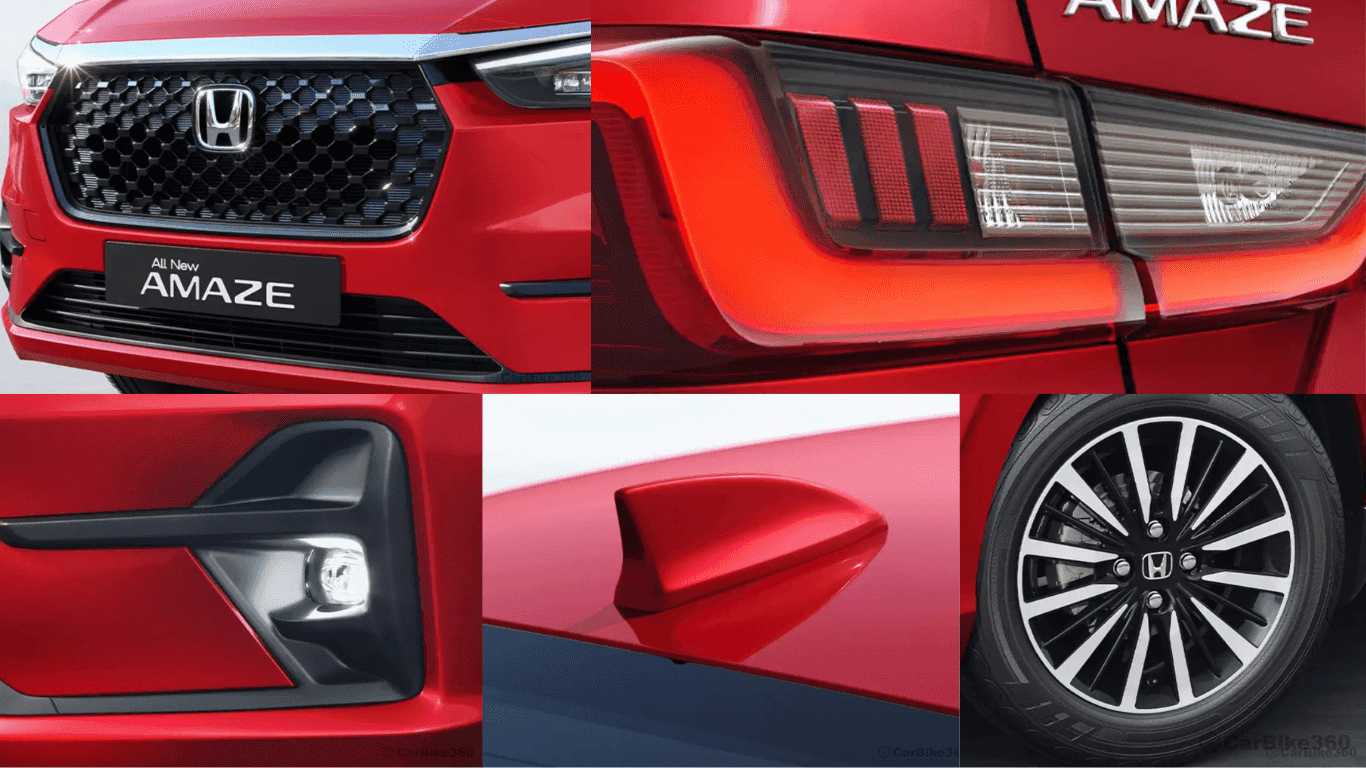
- Exterior: Modern and aggressive styling with a hexagonal grille, sleek LED projector headlamps, and U-shaped LED tail lamps inspired by the Honda City.
- Rear: Redesigned tailgate with a chrome strip connecting the taillamps.
- Wheels: 15-inch alloy wheels continue but with a refreshed design.
Interior and Features
Each generation introduced more premium materials, better technology, and user-friendly features, enhancing comfort and convenience for modern buyers.
First Generation
- Cabin Design: Dual-tone beige and black interiors offered a practical and spacious feel.
- Infotainment: Basic audio system with USB and AUX support; no touchscreen.
- Boot Space: 400 liters.
Second Generation
- Cabin Design: Soft-touch materials and a modern dashboard layout elevated the premium feel.
- Infotainment: A 7-inch touchscreen with Apple CarPlay and Android Auto in higher trims.
- Boot Space: Increased to 420 liters.
Third Generation
- Cabin Design: Enhanced dual-tone interiors with a revamped dashboard and premium upholstery.
- Infotainment: An 8-inch touchscreen with wireless Apple CarPlay and Android Auto.
- Boot Space: Slightly reduced to 416 liters due to structural changes.
Safety Features
Honda has progressively enhanced safety, with the third generation leading the pack by introducing segment-first ADAS features.
First Generation
Standard: Dual airbags and ABS with EBD on higher trims.
Structural Safety: Built with Honda’s ACE body structure.
Second Generation
Standard: Dual airbags, rear parking sensors, and ABS with EBD across all variants.
Advanced Features: Rearview camera and speed alert system in higher trims.
Third Generation
Standard: Six airbags across all variants.
Advanced Safety: Introduction of Honda Sensing ADAS, including Collision Mitigation Braking, Adaptive Cruise Control, Lane Keeping Assist, and Road Departure Mitigation.
Engine and Performance
While the diesel variant was discontinued in the third generation, the petrol engine was refined for better mileage and compliance with new emission norms.
First Generation
- Petrol: 1.2L i-VTEC, 88 PS, 109 Nm.
- Diesel: 1.5L i-DTEC, 100 PS, 200 Nm.
- Transmission: 5-speed manual and automatic (petrol).
- Fuel Efficiency: Up to 26 km/l (diesel).
Second Generation
- Petrol: 1.2L i-VTEC, 90 PS, 110 Nm.
- Diesel: 1.5L i-DTEC, up to 100 PS in manual and 80 PS in CVT.
- Transmission: Added CVT option for diesel variants.
- Fuel Efficiency: Diesel CVT offered up to 22 km/l.
Third Generation
- Petrol Only: 1.2L i-VTEC, 90 PS, 110 Nm.
- Transmission: Retained 5-speed manual and CVT.
- Fuel Efficiency: Slightly improved to 19.46 km/l (CVT).
Ride and Handling
All generations featured a McPherson strut front and torsion beam rear suspension, tuned progressively for better comfort and stability. In each generation Electric Power Steering (EPS) was standard, with improvements for sharper handling over the years.
Key Highlights Across Generations
First Generation
- Affordable and practical compact sedan with class-leading diesel efficiency.
- Simple yet effective features catering to first-time buyers.
Second Generation
- Bold design, better interiors, and the introduction of CVT in diesel variants.
- A more balanced offering for urban and family use.
Third Generation
- Cutting-edge design, advanced safety with ADAS, and premium features like wireless charging.
- Focused on offering a tech-driven and secure driving experience.
Verdict
The original generation is still a popular alternative for people who value affordability and fuel economy. The third generation is best suited for those looking for the newest features and cutting-edge safety, while the second generation offers the optimal mix of cost and modernity. Honda's reputation for quality has been maintained with each generation, making the Amaze a competitive and well-rounded vehicle.


You May Like


Find your perfect car

Budget

Brand

Body Type

Fuel

Mileage

More
Other Car Articles
Listen to Car Audios