ELECTRIC
Is Your Car Really Monsoon-Ready? Here's How to Find Out
 Add CarBike360 on Google
"Monsoon is here and most Indian cars aren't ready for it. Run through this simple checklist to protect your car from rains, waterlogging, and expensive repairs."

By Swati Tomar
Jun 18, 2026 12:40 pm IST
Published On
Jun 18, 2026 12:07 pm IST
Last Updated On
Jun 18, 2026 12:40 pm IST
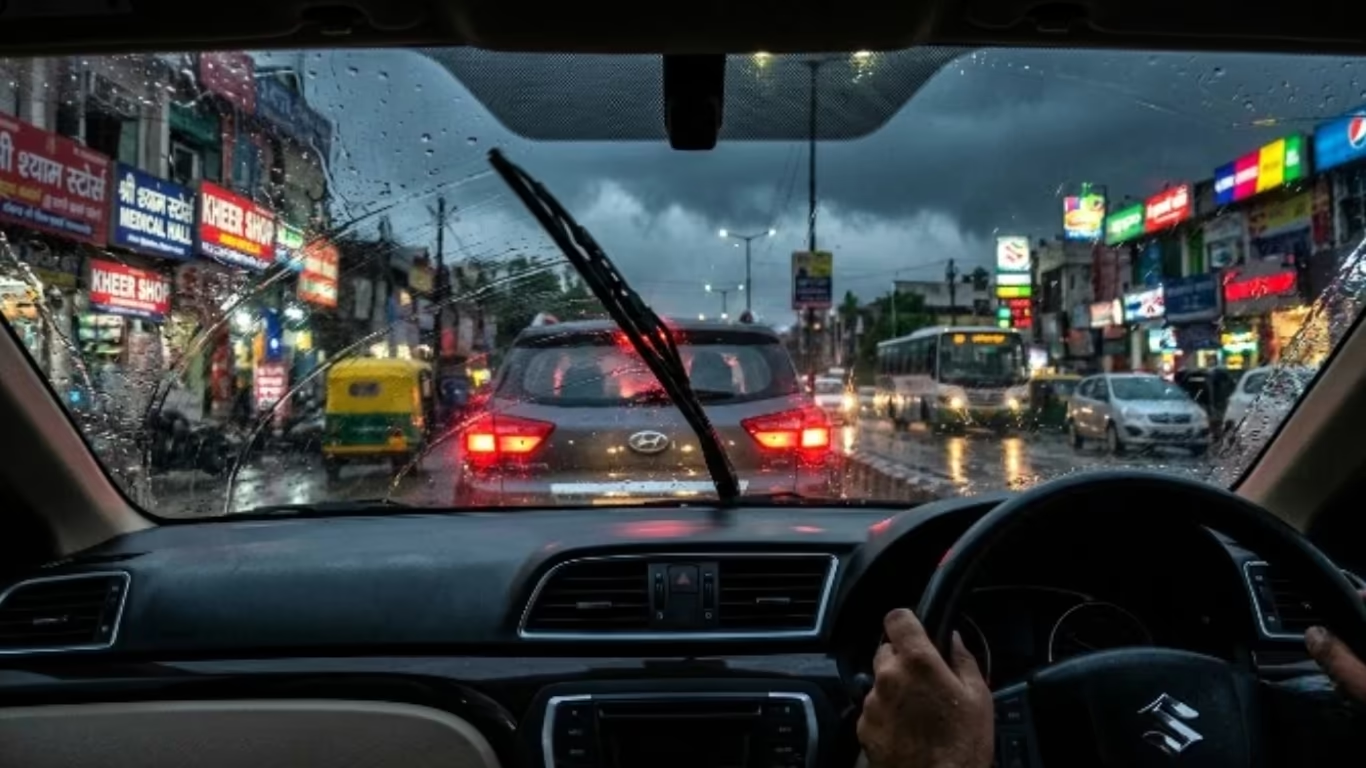
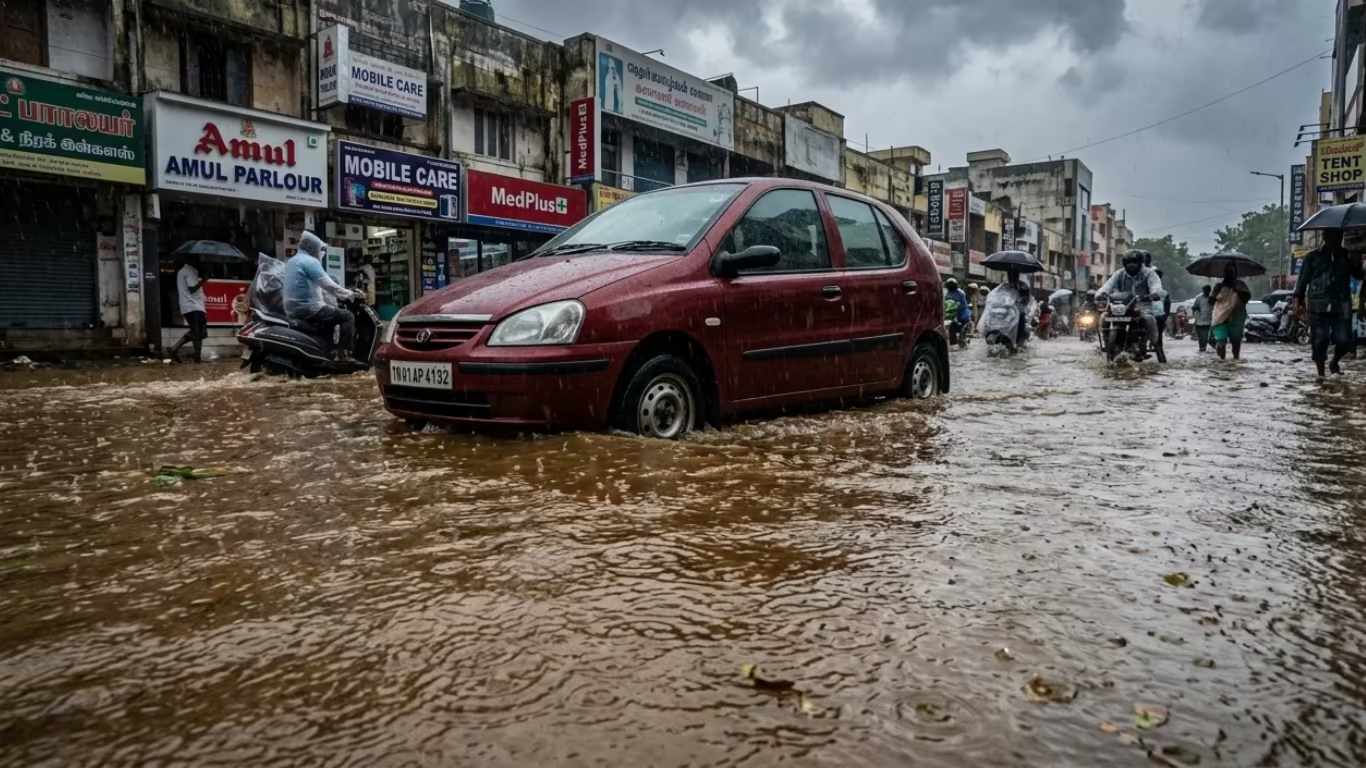
The rains have arrived. In the worst cases of drainage disaster, waterlogging can even impede road traffic in various Indian regions. As the months of monsoon move along, fog-obscured visibility and dangerously slick road conditions are to be expected country-wide. The unfortunate reality is, the majority of Indian automobiles are ill-equipped to deal with rainy season travel.
Not so much because the cars are bad, but because preventive maintenance is seen as an optional chore at the margins of people's busy lives. More often than not, breakdowns are this uncomfortable realization we were always dreading.
Don't be that person. Use this checklist.
Are Your Tyres Actually Safe for Wet Roads?
Checking your tyres might just be the most important step of every car check, but most people skip it.
Your tires are the only car component making direct contact with the road. Worn tyres are worse at grip, and on the road this can result in skidding, your car floating on a layer of water, or failing to stop in time.
How to check: look at the grooves in the tyre tread. Tyre tread below 1.6mm is not only illegal, but is dangerous as well. If they are flat or shallow, your tire tread is dangerously worn. As a quick test, place a one rupee coin in the groove. If you can see the entire rim of the coin, it is time to replace your tires.
Tyre pressure should also be checked. Rain cools the air, causing the pressure in your tires to drop. Under inflated tires can also cause skidding if the road is wet.
Are Your Wipers Doing Their Job or Just Smearing Water?
You'd think that people would take care of their wipers so they can drive safely in the rain but the opposite is true! People have the worst wipers that ruin visibility!
The Indian summer can cause rubber to degrade. The combination of the heat and the sun can cause the rubber to become hard. When it rains, that hard rubber just smears the water in a worse way than the water just would have.
How to check: Pour some water on your windshield and run the wipers. If you see streaks, skipping, or hear a scratching noise, and replace them immediately.
Wiper blades cost between ₹300 to ₹800 a pair. That's a small price to pay for being able to actually see the road.
Are Your Brakes Monsoon-Proof?
Braking distances increase significantly on wet roads. If your brakes are already worn, you're doubling your stopping distance in the rain.
What to check:
Do you hear a squealing or grinding noise when you brake? That means the brake pads are worn down.
Does your car pull to one side when you brake? That's a sign of uneven brake wear.
Does the brake pedal feel soft or go too close to the floor? That could be a brake fluid issue.
Get your brake pads and discs inspected at a service centre before the monsoon peaks. Brake pad replacement typically costs ₹1,500 to ₹4,000 depending on the car.
Is Water Getting Inside Your Car Without You Knowing?
This one catches people completely off guard. Water sneaks in through dried-out door seals, a cracked windshield rubber, or a blocked AC drain pipe — and you only notice it when the floor mat is wet or the car starts smelling like a damp room.
What to check:
Run your fingers along the rubber seals of all four doors. If they feel brittle, cracked, or loose, replace them.
Check the rubber seal around your windshield and rear glass.
Look under the dashboard on the passenger side. That's where the AC drain pipe runs. If it's blocked, condensation water builds up inside the car, leading to mould, bad smell, and electrical damage.
A blocked AC drain pipe cleaning costs almost nothing at a service centre but can save your car's entire electricals from water damage.
Are Your Lights Working Well Enough for Zero Visibility Rain?
In heavy monsoon rain in India, visibility can drop to just 20-30 metres. Your headlights, tail lights, and fog lights need to be in perfect working condition — both for your safety and for others to see you.
What to check:
Walk around your car and switch on all lights such as headlights, taillights, indicators, hazards, and fog lights.
Check if any bulb is out or flickering.
Check if your headlight lenses are yellowed and cloudy. This reduces light output by up to 70%. A headlight restoration kit (₹300-500) or professional polishing can fix this.
Also, clean the lights properly. Mud and grime on headlights are invisible during the day but catastrophic at night in the rain.
Is Your Underbody Protected Against Rust?
Every monsoon, millions of Indian cars take a silent hit underneath — rust. Road water, slush, and waterlogging all attack the underbody, and by the time you see rust bubbles on your body panels, the damage is already deep.
What to do:
Get an underbody anti-rust coating before the monsoon. Cost: ₹1,500 to ₹4,000.
If you've skipped it for two or more monsoons, get the underbody inspected at a service centre for existing rust.
This is especially critical if you live in a coastal city like Mumbai, Chennai, or Kochi, where salt in the air accelerates rusting massively.
Are You Ready to Conquer the Indian Monsoon?
At the end of the day, making your car monsoon-ready isn’t about giving it a fancy aesthetic polish, it is about basic survival on unpredictable Indian roads. The rainy season will test every single component of your vehicle, from the rubber on your tyres to the hidden sensors under your bonnet.
Ignoring a squeaking wiper blade or a spongy brake pedal might save you a quick trip to the mechanic today, but it could cost you your safety and a massive repair bill tomorrow.
Before the clouds open up completely, take an hour this weekend to walk around your car, run through these basic checks, and head to your nearest service station if anything feels off. Stay tuned to CarBike 360 for more practical maintenance tips, and ensure your rainy-day drives remain peaceful, pleasant, and completely safe. Happy and safe driving!
Also read: Monsoon Biking: How to Stay Safe and Comfortable on Wet Roads
FAQs: Everything You Need to Know About Monsoon Car Care
1. Is it safe to drive through waterlogged roads?
A. It is best to avoid them entirely. If you have no choice, gauge the depth by looking at other cars. If the water level is above the center of your wheels, do not enter. If you must drive through, stay in first or second gear, keep the engine revs high (slip the clutch slightly if needed), and move at a constant, slow speed to prevent water from entering the exhaust pipe.
2. What should I do if my car stalls in deep water?
A. Do not try to restart the engine. If your car stalls in deep water, trying to crank the engine can suck water into the cylinders. This causes a permanent engine failure known as hydro-lock, which can cost lakhs ofrupees to fix and is often not covered by standard insurance. Push the car to a dry spot and call a tow truck.
3. Does standard car insurance cover damage caused by flooding?
A. Standard comprehensive insurance policies often do not cover engine damage caused by water entry (hydro-lock). To protect your wallet from heavy monsoon damages, it is highly recommended to opt for an Engine Protect Add-On and a Return to Invoice cover with your insurance policy.
4. How often should I wash my car during the monsoons?
A. You should wash your car at least once a week. It sounds counterintuitive to wash a car when it's constantly raining, but rainwater is acidic and carries dirt and grime from the atmosphere. When this dries on your car’s paint, it can cause rust and ruin the clear coat. Always rinse off muddy water from the underbody to prevent rusting.


You May Like






Find your perfect car

Budget

Brand

Body Type

Fuel

Mileage

More
Latest Videos




Other Articles


Listen to Audios