ELECTRIC
Nissan Tekton Visia Vs Tekna Plus Variants: Differences Explained
 Add CarBike360 on Google
A clear variant comparison of the Nissan Tekton Visia and Tekna Plus, highlighting what you gain as you move from the base trim to the top-spec model.

Jul 13, 2026 04:22 am IST
Nissan Motor India has recently launched its latest player, the Nissan Tekton for the Indian automotive market. This Mid-size SUV is ready to fight as a contestant in the Indian mid-SUV space, where rivals like the Hyundai Creta, Kia Seltos, Honda Elevate, and Maruti Grand Vitara have already made their way.
With the introductory prices starting from Rs 10.49 Lakh, the Nissan Tekton is available in six variants such as Visia, Visia Plus, Accenta, N-Connecta, Tekna, and Tekna Plus. Some trim levels like the Visia and top Tekna Plus is huge, and that’s where buyer confusion typically starts. The Visia trim variant aims to pull in value‑conscious customers migrating from smaller SUVs, while Tekna Plus is targeted squarely at buyers who want a tech‑laden, premium family SUV with all the trimmings.
Let’s take a closer look at what these two different variants offer to the Indian customers and what differences they carry under the hood.
Nissan Tekton Visia Vs Tekna Plus: Design and Dimensions
Nissan has deliberately kept the core Tekton silhouette identical across the range, so both Visia and Tekna Plus share the same 4,349 mm length, 1,815 mm width, 2,657 mm wheelbase and a generous 212 mm ground clearance. That means road presence, cabin space and basic SUV proportions are inherently strong, whether you’re buying the most affordable variant or the flagship.
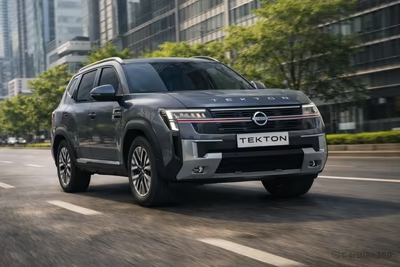
The differences in exterior styling splits are in the details. The Visia base trim gets LED headlamps and DRLs, Tekton badging on the hood and body‑coloured mirrors and door handles but rides on 17‑inch steel wheels with covers. They look proportionate to the body, yet clearly commutable but variant when parked next to the fully loaded Tekna Plus.
Tekna Plus, on the other hand, leans hard into the “Baby Patrol” positioning with larger 18‑inch diamond‑cut alloy wheels wrapped in 225/55 R18 tyres, aggressive silver accents and a more upmarket stance. The panoramic sunroof, roof rails and richer exterior detailing give it the kind of driveway appeal that buyers in the Rs 18 lakh band increasingly expect from a midsize SUV.
Interiors and Features
Talking about the interiors, the Nissan Tekton Visia tried to keep the basics solid even at the base price point. You get a modern semi‑digital instrument cluster, a height‑adjustable driver’s seat, a four‑speaker Arkamys sound system and rear AC vents, packaged in a cabin that feels more functional than flashy.
The Visia trim level offers a dedicated touchscreen infotainment system; audio and connectivity functions are controlled via the digital cluster rather than a central display. The materials and textures are honest and hard‑wearing, but clearly positioned to meet the expectations of buyers stepping up from compact SUVs rather than those chasing outright luxury.
In Tekna Plus, the story is very different. You’re greeted by a richer dashboard design, more premium upholstery, and a larger central touchscreen that anchors the cabin. Nissan loads this top trim with extras like a power tailgate, front passenger seat adjustment and a more sophisticated infotainment operating system. The result is a cabin that not only looks and feels more expensive but genuinely justifies the price jump for families spending long hours on the road.
Nissan Tekton Visia Vs Tekna Plus: Technology and Connectivity
Now let's move to the technology and connectivity department, the Nissan Tekton Visia comes with connected‑car features accessed through the digital cluster, all‑window one‑touch up/down with anti‑pinch, and a semi‑digital driver’s display with useful trip and vehicle information. It feels modern enough for buyers who primarily want solid basics plus some smart convenience.
Moving to the top variant, Tekna Plus, and you step into Nissan’s full connected‑SUV experience. The trim adds navigation on the instrument cluster, a more capable infotainment OS, a voice assistant, GPS navigation and pre‑loaded apps inside the infotainment system. Home-to-car connectivity and over‑the‑air (OTA) updates further future-proof the ownership experience, which is exactly what tech-savvy urban buyers now expect from a top-spec midsize SUV.
Tekna Plus also features a Surround View Monitor (SVM), giving a 360-degree camera view that dramatically simplifies tight parking manoeuvres in congested city spaces. It’s an example of the kind of advanced tech that simply isn’t available on the Visia base variant.
Engine and Performance
Under the hood, the Visia keeps things simple with a single 1.0‑litre turbo‑petrol engine (T160) delivering around 99–100 HP of power and 166 Nm of torque, paired only with a six‑speed manual gearbox. Nissan claims a mileage figure of 19.5 kmpl for this powertrain, making it attractive for buyers who prioritise efficiency and lower running costs.
On the road, this 1.0‑litre turbo doesn’t feel underpowered for the Tekton’s size. It offers a decent mid‑range punch, especially when driven with a light load and a conscious right foot.
The top trim, Nissan Tekna Plus, offers T280 powertrain upgrades to a larger 1.3‑litre turbo‑petrol engine delivering 161 HP and 280 Nm, mated to a six‑speed wet‑clutch DCT automatic. With a claimed 0–100 km/h time of 9.89 seconds and ARAI‑certified mileage of 18.5 kmpl, it combines strong performance with respectable efficiency. Dual drive modes (Eco and Comfort) and idle start‑stop further help tailor the driving experience to city and highway use.
Safety Suite
One of Tekton’s biggest selling points across the lineup is its safety features. Even the Visia base variant gets six airbags, ABS with EBD, electronic stability control (ESC), traction control, hill‑start assist, ISOFIX child‑seat mounts and rear parking sensors as standard. The model has also scored a five-star rating in the Bharat NCAP crash-test programme, giving buyers a strong confidence boost.
From Visia Plus upwards, a reversing camera is added, further improving low‑speed manoeuvrability and parking safety. That means buyers stepping up just one rung from the base trim already enjoy a slightly more complete safety package, which is important for families often driving in crowded urban conditions.
The Nissan Tekna Plus goes even further, offering Level‑2 ADAS along with advanced stability and braking aids. Combined with the strong underlying monocoque body structure that uses a high percentage of high‑strength steel, this makes the top variant especially compelling for highway‑heavy users.


You May Like



Find your perfect car

Budget

Brand

Body Type

Fuel

Mileage

More
Other Car Articles
Listen to Car Audios