ELECTRIC
Smart Tyres with Pressure Sensors (TPMS): The Future of Safe and Fuel-Efficient Driving
 Add CarBike360 on Google
Smart tyres with TPMS monitor pressure, temperature, and tread wear in real time, and are now mandatory on all new cars in India from November 2025.

By Swati Tomar
May 30, 2026 07:33 am IST
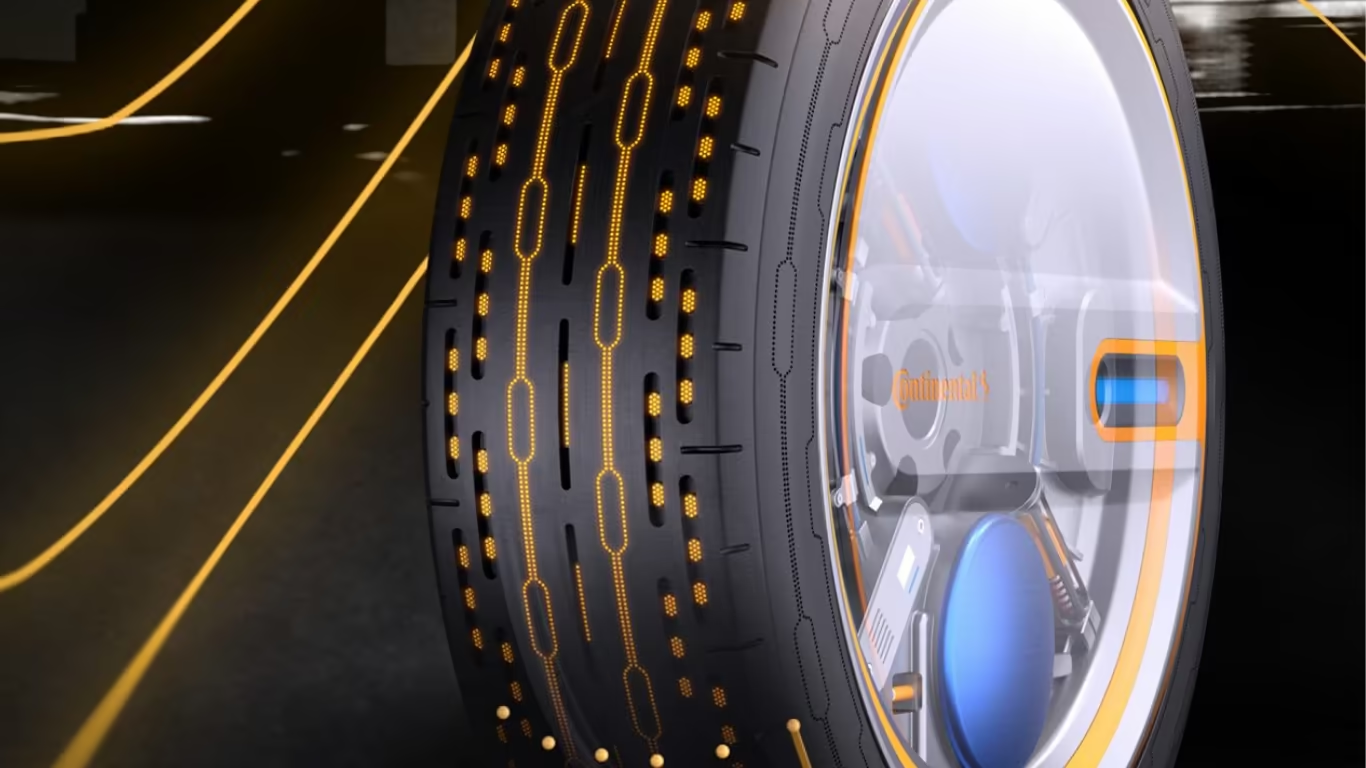
Every time you drive, your tyres carry the entire weight of your vehicle, absorb shocks from uneven roads, and determine how fast your car can stop in an emergency. Yet tyres remain among the most underestimated components in automotive safety, until now. With smart tyres equipped with TPMS (Tyre Pressure Monitoring Systems), your car can track its own tyre health in real time and alert you before a problem becomes a crisis.
A smart tyre is far more than a rubber casing filled with air. It is an intelligent system with built-in sensors that continuously measure tyre pressure, temperature, tread wear, and road performance. As India moves towards safer vehicles, TPMS became mandatory for all new passenger cars sold in India from November 2025 under MoRTH's updated safety regulations, understanding this technology has never been more relevant for Indian drivers.
In this guide, we cover everything you need to know: how smart tyres and TPMS work, the difference between direct and indirect TPMS, the real-world benefits, EV applications, next-generation innovations from Pirelli and Continental, and whether smart tyres are worth the investment in 2026.
Key Insight
Market context: The global Automatic Tyre Pressure Monitoring System market was valued at US$820 million in 2025 and is projected to reach US$1.09 billion by 2032 at a CAGR of 4.1%, driven by mandatory safety regulations and the rapid growth of electric vehicles
What Are Smart Tyres and How Does TPMS Work?
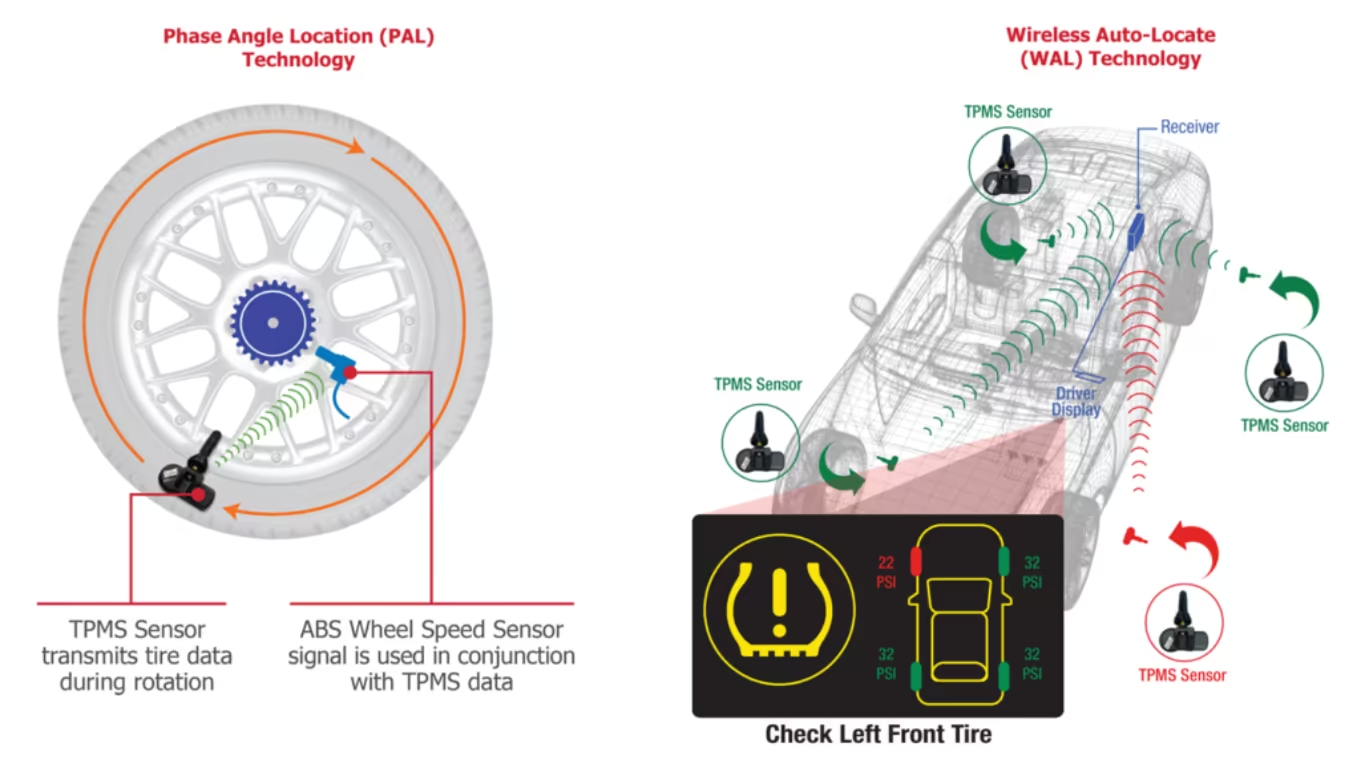
At the heart of every smart tyre is the Tyre Pressure Monitoring System (TPMS). This is a network of electronic sensors embedded within the tyre or valve stem that continuously measures air pressure and temperature. When a tyre's pressure falls outside safe parameters, the system instantly alerts the driver via the dashboard display or a connected mobile app.
Each TPMS sensor is a compact unit containing four key components:
Pressure transducer: Measures actual air pressure inside the tyre.
Thermometer: Monitors tyre temperature, critical in India, where road surface temperatures in cities like Delhi and Nagpur regularly exceed 50°C in May–June.
Microcontroller: Processes the data from both sensors.
Radio transmitter: Broadcasts readings at 315 MHz or 433 MHz to the vehicle's receiver unit, which displays data on the infotainment screen.
When tyre pressure falls below a safe threshold, which is typically 25% below the recommended level, the system triggers a dashboard warning light or message, giving the driver time to act before a blowout or accident occurs.
Direct TPMS vs Indirect TPMS: What's the Difference?
There are two fundamentally different approaches to tyre pressure monitoring, and understanding the distinction matters when buying a car or an aftermarket TPMS kit in India.
Direct TPMS
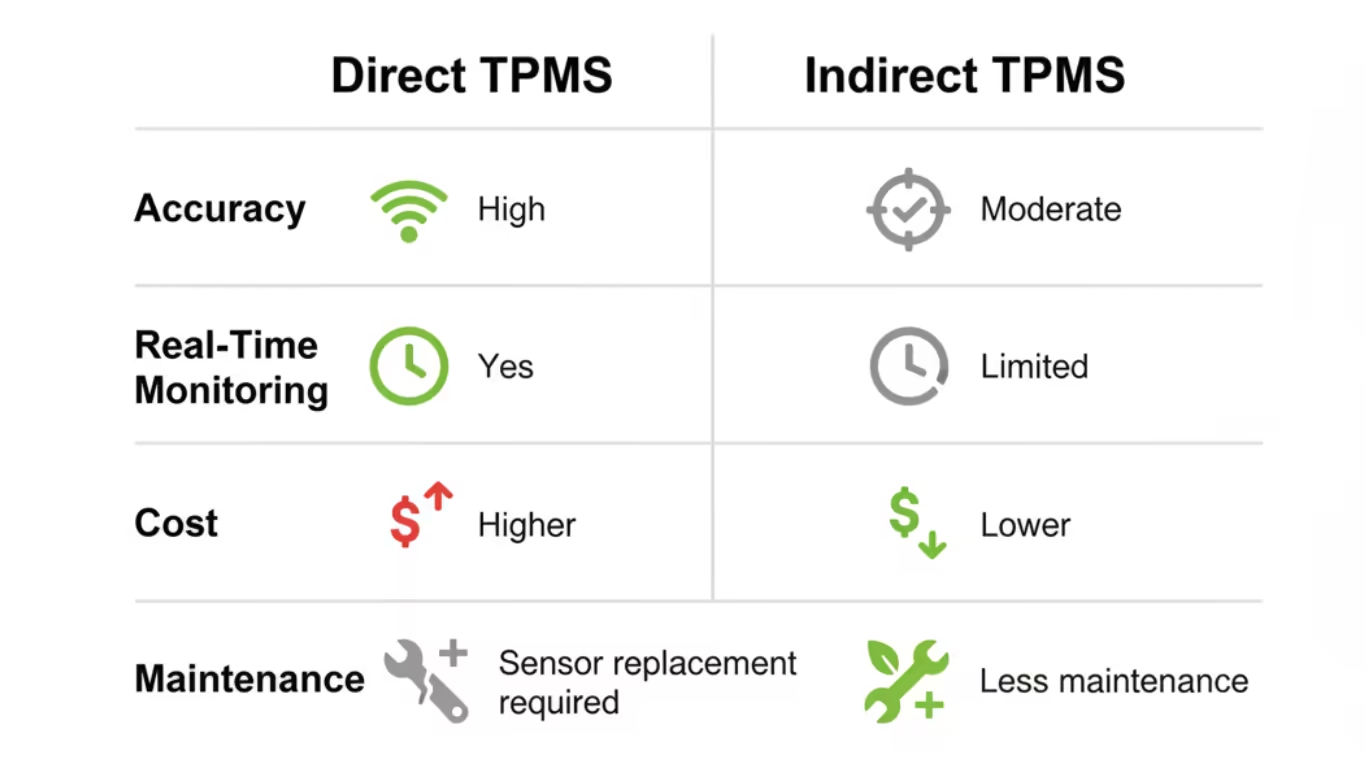
Direct TPMS uses physical sensors mounted inside each tyre to measure actual air pressure and transmit real-time data to the vehicle's computer. These systems provide accurate, per-wheel pressure readings at all times. Direct TPMS dominates the global market, holding 78% market share as of 2026, and is the system mandated for compliance with FMVSS No. 138 in the US and equivalent Indian regulations.
Indirect TPMS
Indirect TPMS does not use pressure sensors at all. Instead, it relies on the vehicle's existing ABS wheel speed sensors. The principle is simple physics: when a tyre loses air, its effective diameter decreases, causing it to rotate slightly faster than the others. The system detects this speed differential and infers a pressure loss. It is cheaper but less accurate, and it cannot display actual pressure values, only signal that something is wrong.
Feature | Direct TPMS | Indirect TPMS |
Accuracy | High- measures actual pressure | Moderate- inferred from wheel speed |
Real-Time Readings | Yes- per-wheel pressure display | No- only low-pressure warning |
Temperature Data | Yes | No |
Cost | Higher | Lower |
Maintenance | Battery/sensor replacement needed | Minimal- uses existing ABS sensors |
Best For | Premium cars, EVs, fleets | Budget and entry-level vehicles |
India Insight
In India, direct TPMS is increasingly standard in mid and premium segments (Hyundai, Kia, Toyota, MG). Indirect TPMS is common in affordable entry-level models. MoRTH's November 2025 mandate applies to both types, which qualifies for compliance.
Real-World Benefits of Smart Tyres with Pressure Sensors
1. Improved Road Safety
Smart tyres ensure proper inflation at all times, which directly improves traction, stability, and braking performance. Underinflated tyres are a leading cause of blowouts, particularly dangerous at highway speeds. By alerting drivers before pressure drops become critical, TPMS acts as an early-warning system that can prevent accidents.
2. Better Fuel Efficiency
Low tyre pressure increases rolling resistance, forcing the engine to consume more fuel. Properly inflated tyres can improve fuel efficiency by 3 to 5 per cent, meaningful savings for Indian drivers who cover long distances on highways or deal with stop-start city traffic daily.
3. Longer Tyre Lifespan
Uneven or incorrect tyre pressure leads to uneven tread wear, reducing tyre life significantly. Smart TPMS keeps pressure balanced across all four wheels, helping tyres wear evenly and last considerably longer, and thus, reducing replacement frequency and long-term costs.
4. Reduced Maintenance Costs
Smart tyres detect slow punctures and gradual pressure loss early, before they cause structural damage. Addressing a slow leak is far cheaper than replacing a damaged tyre or wheel rim or managing a roadside breakdown.
5. Enhanced Driving Comfort
Correct tyre pressure improves steering response, ride quality, and vehicle stability, especially noticeable on Indian highways and rough urban surfaces. Overinflated tyres create a harsh, bouncy ride; underinflated tyres make steering feel heavy and imprecise. TPMS keeps the car in its performance sweet spot.
Smart Tyres for Electric Vehicles (EVs): Why They Matter More
The rise of electric vehicles has made intelligent tyre technology more critical than ever. EVs are significantly heavier than equivalent petrol cars due to their battery packs, placing greater stress on tyres. At the same time, EVs benefit more from optimised tyre pressure because rolling resistance directly affects battery range.
As of early 2026, Continental AG has scaled production of its second-generation TPMS for commercial fleets, incorporating AI analytics that use machine learning to detect tread depth and carcass integrity from inside the tyre, and this is going far beyond basic pressure readings. This data feeds into Continental's ContiConnect platform for predictive maintenance.
EV Requirement | Role of Smart Tyres |
Range Optimisation | Correct pressure reduces rolling resistance and extends range |
Battery Efficiency | Less rolling resistance = lower energy consumption per km |
Weight Management | Sensors help tyres manage the added load of battery packs |
Vehicle Stability | Real-time grip data supports ADAS and stability systems |
Predictive Maintenance | Prevents costly tyre failures on long EV journeys |
India Insight
For Indian EV buyers: Tata Nexon EV, MG ZS EV, and Hyundai Ioniq 5 all feature TPMS as standard. With MoRTH's November 2025 mandate now in force, every new EV sold in India must include TPMS, making it a baseline safety feature rather than a premium add-on.
Next-Generation Smart Tyre Technology: Beyond Basic Pressure Monitoring
The dashboard TPMS warning light is just the beginning. The tyre industry is investing heavily in sensors capable of far more nuanced data collection. Continental, Michelin, Bridgestone, and Pirelli are all developing tyres with embedded chips that measure road surface conditions, tyre wear, load distribution, and road temperature, and not just air pressure.
Pirelli Cyber Tyre
Pirelli's Cyber Tyre technology embeds a chip in the inner liner of the tyre to capture data transmitted to both the vehicle and cloud-based platforms. This enables real-time analysis of tyre performance parameters including lateral and longitudinal forces during cornering and braking — data that can directly improve ADAS and autonomous vehicle decision-making.
Continental ContiSense
Continental's ContiSense takes a different approach, using electrically conductive rubber compounds to carry sensor signals through the tyre structure itself. This eliminates the need for a separate wireless transmitter and allows the tyre to detect cuts, punctures, and temperature anomalies in real time, and even before they affect pressure readings.
AI-Powered Fleet Management
For logistics companies managing large truck fleets, tyre pressure and wear data transmitted via cellular networks enable proactive maintenance scheduling, reduced blowout risk on long-haul routes, and optimised fuel costs across the entire fleet. Predictive maintenance models can identify tyres nearing the end of their safe service life before failure occurs, which is a major operational advantage.
Key Insight
India first: In 2022, Jaipur-based startup Fleeca India launched 'Fleeca Kawach' — India's first AI-driven smart truck tyre pressure monitoring system, targeting commercial fleet operators across the country. This signals a growing domestic smart tyre ecosystem alongside global OEM technology.
Challenges Facing Smart Tyre Technology
Despite their clear benefits, smart tyres face several real-world limitations that buyers and fleet managers should be aware of:
Challenge | Description |
Harsh operating conditions | Extreme temperatures, centrifugal forces, and chemical exposure inside tyres demand highly durable, miniaturised electronics |
Cybersecurity risk | Tyres acting as wireless transmitters could become entry points for cyberattacks targeting vehicle systems — a growing concern for connected and autonomous vehicles |
Lack of standardisation | Different sensor frequencies (315 MHz vs 433 MHz) and protocols make third-party aftermarket integration inconsistent across vehicle platforms |
Sensor battery life | Most TPMS sensors last 5–10 years before battery replacement is needed — an added ownership cost |
Higher upfront cost | Vehicles with direct TPMS carry a higher purchase price, though long-term maintenance savings often offset this |
Repair complexity | Advanced smart tyre systems require specialist equipment and trained technicians, which are not yet widely available in smaller Indian cities |
Are Smart Tyres and TPMS Worth It for Indian Drivers?
Yes. Especially now that TPMS is mandatory on all new Indian passenger cars from November 2025. The question for most Indian buyers is not whether to get TPMS, but whether to choose a vehicle with direct or indirect TPMS, and whether aftermarket upgrades are worthwhile for older vehicles.
Smart tyres deliver the most value for:
Long-distance and highway drivers: early pressure warnings are critical at high speeds
Fleet and logistics operators: bulk fuel savings and reduced breakdown risk have direct P&L impact
Electric vehicle owners: tyre pressure directly affects range and battery efficiency
SUV and MPV owners: heavier vehicles experience more pronounced handling issues from under-inflation
Urban commuters on rough roads: slow punctures from potholes are detected before they become dangerous
India Insight
Final Word
Smart tyres with TPMS are no longer a luxury feature; they are a mandatory safety standard in India as of November 2025, and a technology that is evolving rapidly toward AI-driven predictive maintenance, EV optimisation, and autonomous vehicle integration. For Indian drivers, the immediate benefits are straightforward: fewer blowouts, better fuel economy, longer tyre life, and real-time peace of mind.
As the technology matures and costs fall, smart tyre systems are expected to become as fundamental to vehicle safety as ABS and airbags. Whether you are buying a new car, managing a fleet, or upgrading an older vehicle with an aftermarket kit, understanding TPMS is now essential knowledge for every Indian driver.
Frequently Asked Questions (FAQs) — Smart Tyres and TPMS in India
1: Is TPMS mandatory in India in 2026?
A: Yes. From November 2025, TPMS is mandatory as standard equipment on all new passenger cars sold in India under updated MoRTH safety regulations. Both direct and indirect TPMS qualify for compliance.
2: What is the difference between direct TPMS and indirect TPMS?
A: Direct TPMS uses physical sensors inside each tyre to measure actual pressure, giving per-wheel readings in real time. Indirect TPMS estimates pressure by detecting speed differences between wheels using existing ABS sensors. Direct is more accurate; indirect is cheaper and requires less maintenance.
3: Do smart tyres improve fuel efficiency?
A: Yes. Research indicates properly inflated tyres can improve fuel efficiency by 3 to 5 per cent by reducing rolling resistance. TPMS maintains optimal pressure continuously, eliminating the gradual efficiency loss that comes from slow leaks and pressure drift.
4: How long do TPMS sensors last?
A: Most direct TPMS sensors last between 5 and 10 years, depending on battery type, driving conditions, and exposure to extreme temperatures. Sensor replacement is typically required when the battery depletes.
5: Are smart tyres good for EVs?
A: Yes, smart tyres are particularly valuable for electric vehicles. Correct tyre pressure directly affects range, battery efficiency, and handling. Many EV manufacturers now specify smart tyres as standard equipment to maximise these benefits.
6: Can TPMS detect a puncture?
A: Direct TPMS can detect the rapid pressure loss caused by a puncture and immediately alert the driver. It can also identify slower leaks that would otherwise go unnoticed for days or weeks. Indirect TPMS can detect significant pressure loss but is less sensitive to slow leaks.
7: What is Pirelli Cyber Tyre?
A: Pirelli Cyber Tyre is an embedded chip technology that monitors tyre performance data including lateral and longitudinal forces during braking and cornering, and transmits it to the vehicle and cloud platforms. It goes far beyond basic TPMS, providing data that supports ADAS and autonomous vehicle systems.
8: Can I add TPMS to my old car in India?
A: Yes. Aftermarket direct TPMS kits with valve-stem sensors are widely available in India, typically priced between Rs. 3,000 and Rs. 6,000 for a full four-wheel kit. These connect to a small dashboard display or mobile app and provide real-time pressure and temperature readings.


You May Like





Latest Tyre Videos



Other Tyre Articles


Listen to Tyre Audios