ELECTRIC
Will E20 Petrol Affect Your Bike's Mileage and Performance?
 Add CarBike360 on Google
Learn how E20 petrol affects your bike's mileage, performance, and engine health. Discover its impact on older and E20-compatible motorcycles, along with practical maintenance tips for Indian riders.

Jul 15, 2026 12:01 pm IST
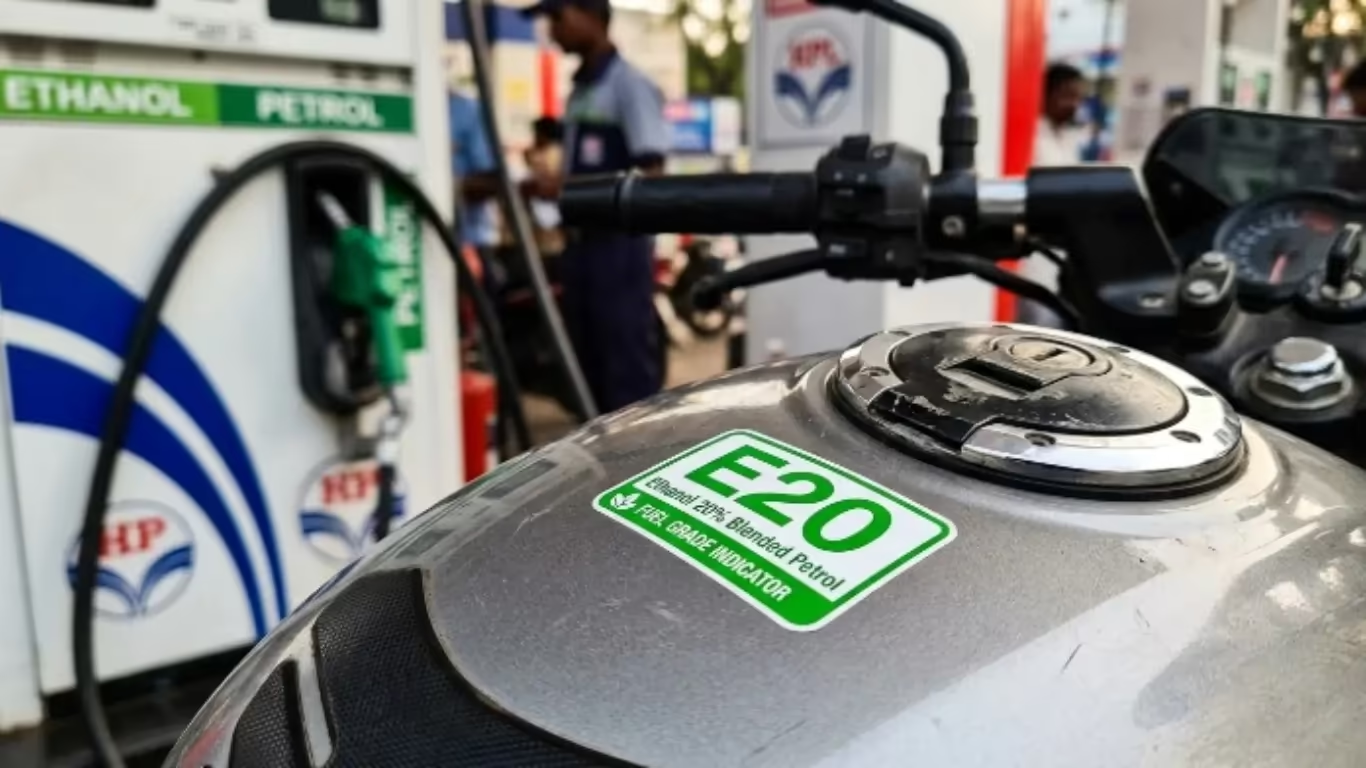
If you've recently noticed a small drop in your bike's mileage or a slight change in the way it performs, you're not alone. With E20 petrol becoming increasingly common at fuel stations across India, many riders are wondering whether this new fuel blend affects their motorcycle's everyday performance. Questions about bike mileage, throttle response, engine health, and maintenance costs are becoming increasingly common among Indian commuters.
The truth is that the impact of E20 petrol depends largely on the age of your motorcycle and whether it is one of the newer E20-compatible bikes available in the market. While modern motorcycles are better equipped to handle ethanol-blended fuel, older models may experience minor changes in mileage and motorcycle performance. In this article, we'll explain how E20 petrol affects your bike's mileage, engine performance, and what you can do to keep your motorcycle running smoothly for years to come.
Also read: India’s First Flex-Fuel Bikes: Will Other Brands Follow Hero MotoCorp?
Why Has E20 Petrol Become the Standard at Indian Fuel Pumps?
The government aggressively advanced its target to mandate E20 petrol as the standard base fuel across all bunks nationwide. The core logic is simple: ethanol is a renewable, oxygenated alcohol fuel derived right here at home from agricultural biomass like sugarcane and maize.
By substituting 20% of imported fossil fuel with domestic ethanol, the nation lowers toxic tailpipe emissions like unburnt hydrocarbons and carbon monoxide while pumping capital directly back into the Indian agricultural economy. However, while this macro-economic strategy functions beautifully on paper, it introduces direct chemical changes into the combustion chamber of your everyday motorcycle engine.
Does E20 Petrol Drop Your Bike's Real-World Mileage?
Yes, it does, and this is entirely driven by physics rather than an engine defect. The fundamental issue boils down to energy density. Ethanol carries roughly one-third less energy content (calorific value) than pure, unblended fossil petrol.
When your bike burns an E20 blend, the internal engine management system or carburetor has to inject slightly more fuel into the combustion chamber to match the power stroke of regular petrol.
For newer, post-2023 BS6 Phase 2 bikes: The mileage drop is minimal, hovering between a barely noticeable 3% to 5% because their engines are specifically factory-tuned to optimize this blend.
For older BS4, BS3, or early BS6 models: The mileage loss is more severe, frequently hitting 8% to 12% in stop-and-go city traffic. A reliable commuter bike that previously returned a stellar 60 kmpl on old fuel can drop down to the 53–55 kmpl range on E20.
How Does E20 Fuel Hurt Your Motorcycle's Throttle Pickup?
Ethanol possesses a much slower evaporation rate at low temperatures compared to traditional gasoline, which directly triggers hard cold starts and longer engine cranking times on chilly mornings.
Furthermore, because the fuel burns differently, many riders report a slight dip in initial throttle response and sluggish acceleration when trying to quickly dart into open gaps in heavy city traffic. On performance-oriented or higher-cc single-cylinder thumpers, this can occasionally manifest as minor jerky performance or increased engine vibrations when pushing steady triple-digit speeds on open expressways.
However, it isn't all bad news: ethanol has a higher natural octane rating than pure petrol, meaning that in modern E20-compliant engines, it actually creates smoother combustion and minimizes annoying engine knocking under heavy loads.
Is E20 Petrol Silently Corroding Your Older Engine Components?
The hidden enemy inside an ethanol blend is its hygroscopic nature, meaning it actively attracts and absorbs moisture directly from the surrounding air. If you leave your motorcycle parked unused for weeks at a time—like during monsoon season or extended vacations—the water-laden ethanol separates from the petrol and settles at the bottom of the fuel tank.
This phase separation causes major issues:
Rusting Fuel Tanks: Moisture buildup leads directly to localized corrosion inside older metallic fuel tanks.
Degraded Rubber and Plastics: Older two-wheelers utilize fuel lines, gaskets, and O-rings made from vintage rubber compounds. Ethanol acts as a mild solvent, slowly drying out, cracking, and corroding these parts over time, leading to sudden fuel leaks.
Clogged Jets and Injectors: In older carbureted bikes (like classic BS3 models), the drying ethanol leaves behind gummy, sticky deposits that clog up jets, resulting in rough idling and engine misfires.
How Can You Protect Your Bike and Recover Lost Efficiency?
You cannot stop the nationwide rollout of E20 fuel, but you can absolutely change how you maintain your two-wheeler to counteract its negative side effects.
Maintenance Focus | Action Plan for E20 Fuel Protection |
Fuel System Hygiene | Use a trusted, E20-compatible petrol fuel additive every 1,000 to 1,500 km to clean injectors and dissolve carbon deposits. |
Moisture Management | Avoid leaving the bike parked on empty. Keep the tank relatively full to minimize exposed air space where moisture can condense. |
Component Upgrades | If owning an older BS3/BS4 machine, replace aging factory fuel lines with modern fluorocarbon-lined rubber hoses built to resist ethanol decay. |
Periodic Overhauls | Clean the carburetor bowl or flush the fuel injector nozzle at every routine service interval. |
CarBike Verdict: Is E20 Petrol a True Deal-Breaker for Indian Bikers?
E20 petrol is undoubtedly an adjustment for the Indian two-wheeler market, bringing a minor but undeniable 5% to 10% drop in overall fuel efficiency alongside unique maintenance quirks.
If you own a modern, post-2023 E20-ready motorcycle, your engine handles this fuel seamlessly with no structural risk to its longevity or warranty safety. For owners of older heritage and commuter bikes, keeping the fuel system meticulously clean and using anti-corrosive fuel additives is all it takes to keep your engine running perfectly smoothly for years to come.
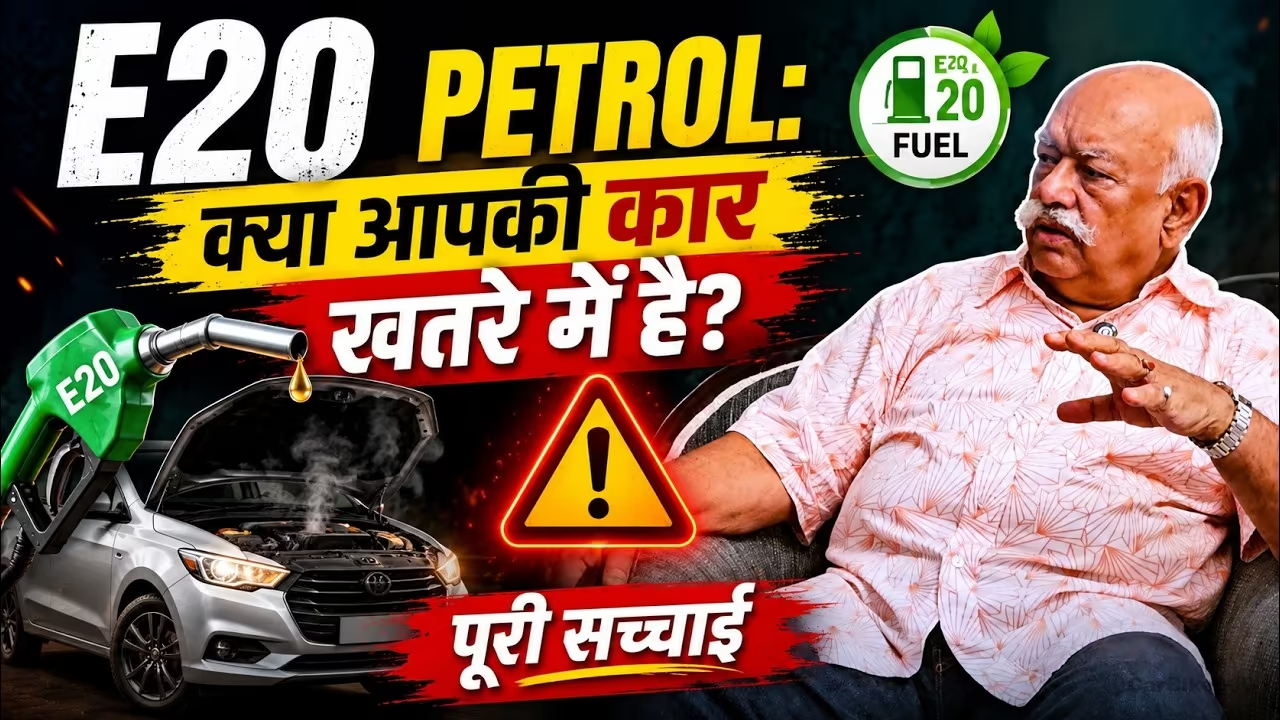
To see a live demonstration of how ethanol-blended fuel interacts with different motorcycle components and to get visual instructions on cleaning your fuel system, check out this comprehensiveE20 Petrol Problems and Solutions Video, which breaks down exactly how to shield your vehicle from moisture damage and performance drops.


You May Like




Find your perfect car

Budget

Brand

Body Type

Fuel

Mileage

More
Latest Videos


Other Articles
Nissan Tekton vs Toyota Urban Cruiser Hyryder: Price, Features, and Specifications Compared
Main Title: Nissan Tekton vs 2026 Volkswagen Taigun Price Features and Engine Comparison

Nissan Tekton vs MG Astor: Detailed Comparison of Features Performance and Value

Tata Nexon EV vs Petrol Running Cost Comparison for Long Distance Travel
Listen to Audios