ELECTRIC
India’s First Flex-Fuel Bikes: Will Other Brands Follow Hero MotoCorp?
 Add CarBike360 on Google
Hero MotoCorp’s historic launch of flex-fuel commuter bikes is shaking up the Indian two-wheeler market. Discover if other major brands will follow their green lead.

Jul 01, 2026 06:54 pm IST
Key Highlights
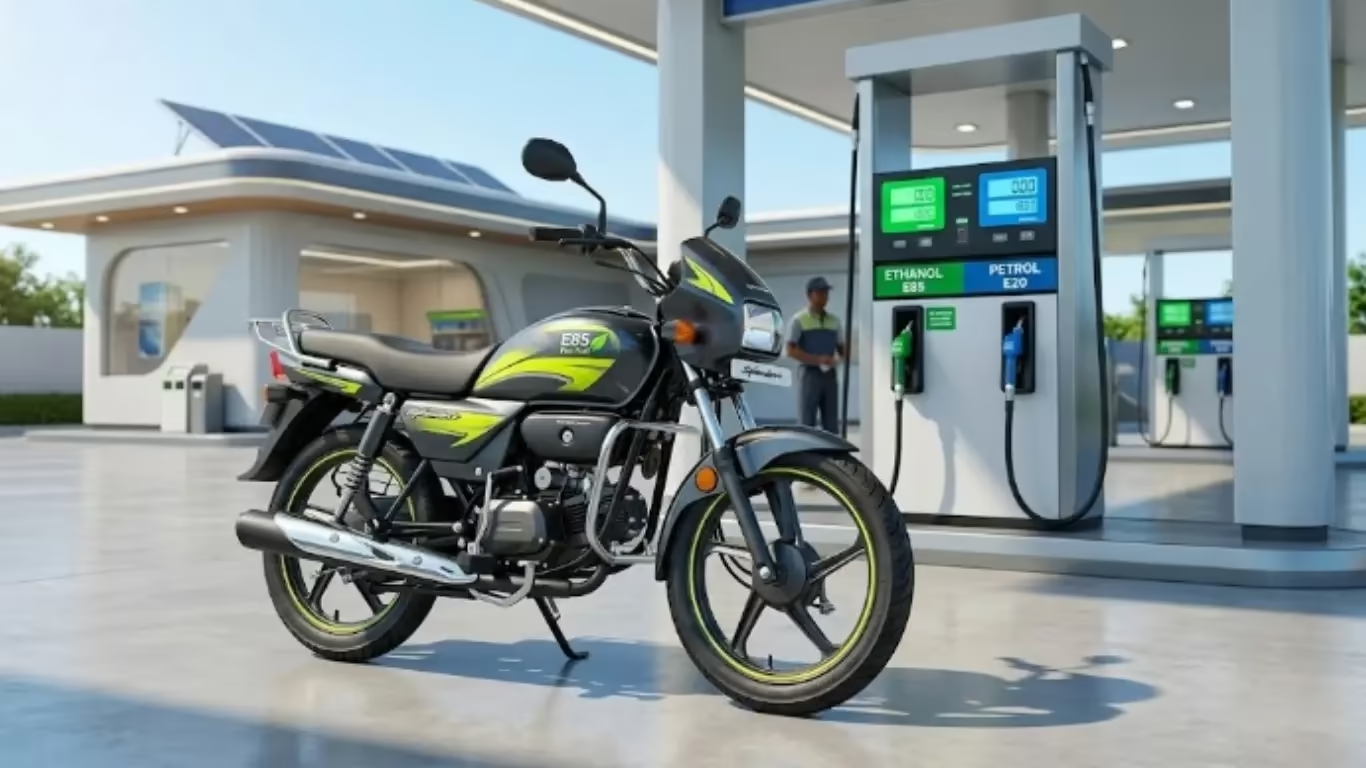
Historic Launch: Hero MotoCorp introduces India’s first mass-market flex-fuel bikes: Splendor+ Flex Fuel and HF Deluxe Flex Fuel.
Fuel Capability: Designed to run seamlessly on ethanol-blended petrol ranging from E20 to E85.
Mass Target: Hero targets the high-volume 100cc segment to capture the everyday budget commuter market.
Green Movement: The initiative directly supports India’s mission to slash carbon emissions and lower crude oil imports.
Industry Ripples: Major rivals like TVS, Bajaj, and Honda are feeling the heat to accelerate their flex-fuel plans.
Fuel prices in India have been unpredictable for years, and most daily commuters have learned to live with it as part of their routine. Against this backdrop, Hero MotoCorp has introduced a significant shift in the two-wheeler space with the launch of India’s first flex-fuel motorcycles.
The company has brought its popular models—the Splendor+ and HF Deluxe—into the flex-fuel segment, making them capable of running on ethanol-blended petrol of up to E85 (85% ethanol and 15% petrol). This move isn’t just a small upgrade; it signals a broader push toward alternative fuels in everyday mobility.
With Hero taking the lead in bringing flex-fuel technology to mass-market commuters, the bigger question now is whether other manufacturers will follow and how quickly India’s two-wheeler market will adapt to this change.
Why Hero MotoCorp Placed Its Bet on "Bharat"
While most manufacturers are heavily focusing on expensive electric vehicles (EVs) for urban riders, Hero MotoCorp did what it does best: it looked out for the heartbeat of the Indian masses. By embedding Hero MotoCorp flex-fuel tech right into their most trusted 100cc workhorses, they targeted the price-sensitive commuter segment.
The Splendor+ Flex Fuel and HF Deluxe Flex Fuel feature heavily recalibrated ECUs and upgraded fuel delivery systems to withstand the corrosive properties of ethanol. Running on E85, these eco-friendly motorcycles in India significantly cut down toxic carbon emissions. Better yet, ethanol is locally produced from sugarcane, which supports Indian farmers and reduces the nation's hefty reliance on imported crude oil.
The Big Question: Will Other Brands Follow?
Hero has officially thrown down the gauntlet. Now, the rest of the Indian two-wheeler giants have to decide how they will react.
1. TVS Motor Company
TVS is no stranger to alternative fuels; they famously showcased the Apache RTR 200 Fi Flex-Fuel concept a few years ago. Known for their tech-forward approach, TVS is highly likely to follow Hero's lead soon. However, instead of entry-level commuters, TVS might choose to target the 125cc to 160cc segments to appeal to younger, eco-conscious buyers.
2. Bajaj Auto
Bajaj is heavily expanding its clean-energy portfolio, evident from its Chetak EV line and the world’s first CNG motorcycle, the Freedom 125. Because Bajaj focuses deeply on lowering the running costs for consumers, it is highly likely we will see a Hero MotoCorp flex-fuel rival from Bajaj, potentially in their Platina or CT lineup, very soon.
3. Honda 2-Wheelers India
Honda already commands massive flex-fuel experience internationally, particularly in markets like Brazil where ethanol-powered two-wheelers are the norm. Honda has dropped hints about launching flexible fuel vehicles (FFVs) in India for a while. With Hero securing the first-mover advantage, Honda will likely accelerate the development of a flex-fuel variant for the iconic Activa or the Shine 100.
Roadblocks on the Ethanol Highway
While the prospect of upcoming flex-fuel bikes is highly exciting, it isn't entirely clear sailing just yet. The biggest challenge is infrastructure. While the Indian government is rapidly pushing for E20 availability nationwide, finding high-blend E85 ethanol pumps consistently in Tier-2, Tier-3, and rural areas is still difficult. Furthermore, flex-fuel variants command a slight price premium over standard E20 petrol models, meaning buyers must calculate long-term fuel savings against upfront costs.
CarBike Verdict
Hero MotoCorp has played a masterstroke by bringing India's first flex-fuel bikes to the 100cc segment rather than a premium niche. It makes green technology affordable, highly relatable, and ready for everyday use.
Will other brands follow? Absolutely. The government's aggressive push toward biofuels makes it a matter of when, not if. While infrastructure still has some catching up to do, Hero has officially fired the opening shot of the biofuel revolution. If you are looking for an ultra-reliable commuter that is completely future-proofed against volatile petrol prices, Hero's new flex-fuel lineup is an absolute winner.


You May Like


Find your perfect bike

Brand

Budget

Body Type

Fuel

Mileage

More
Latest Bike Videos


Other Bike Articles


Listen to Bike Audios