

 ELECTRIC
Honda Shine 100 DX First Ride Review: ₹6.5K premium over standard Shine Justifies?
 Add CarBike360 on Google
Honda Shine 100 DX offers better styling, features, and efficiency, making the ₹6.5K premium over standard Shine a practical and value-driven upgrade?

By Animesh Vatsa
Mar 18, 2026 01:58 pm IST
Published On
Mar 18, 2026 01:58 pm IST
Last Updated On
Mar 18, 2026 01:58 pm IST
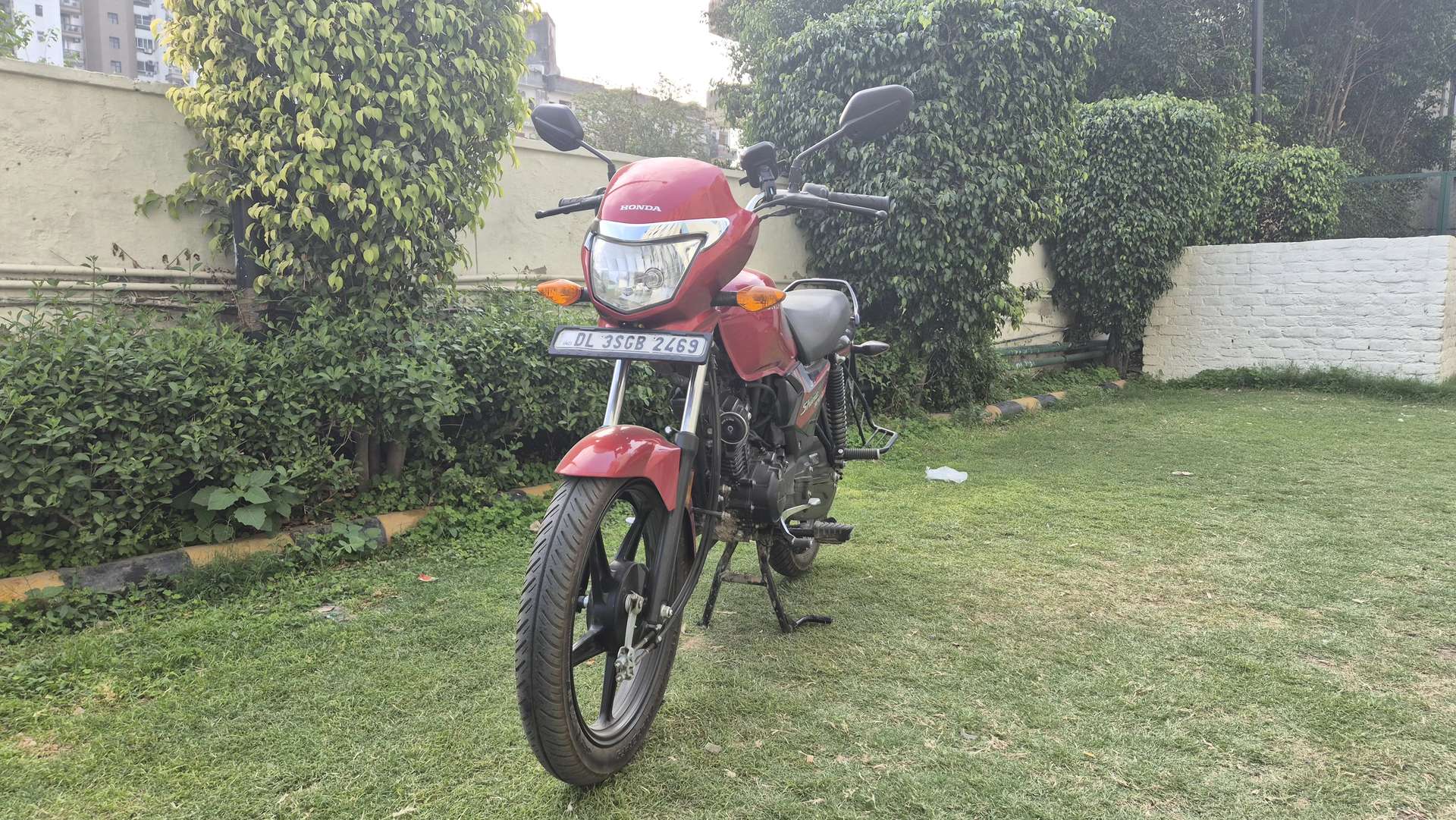
The Indian two-wheeler market is predominantly owned by 100cc entry-level commuter motorcycles. For an estimate, every year a figure between one to two lakh units is sold from this category, marking a contribution from 21% to 51% amongst overall two-wheeler sales individually. The surging graph comprises the collective role of several models belonging to different OEMs, which is ruled by Hero Motocorp with models such as the Splendour Lineup and HF Deluxe. However, the strongest contender to this brand, "Honda Two-Wheelers India", is not far behind in competition, driven by Shine. Honda Shine has been coexisting in the Indian market since 2023, and in the same year of launch, it recorded a sales number of three lakh.
Having said that, it has been more than three years, and the Shine has never sold less than thirty thousand units per month. Although, since it had been long overdue, the private as well as fleet-orientated Honda’s entry-level commuter received any updates given simplicity being its primary USP. The Honda Redwing recently introduced a higher variant of the Shine named DX, which stands for Deluxe, highlighting its premiumness. Therefore, does the addition of a new top-end trim really justify an increase of ₹6,500 over the standard? This first-ride review delves into the same aspects.
Design & Styling:
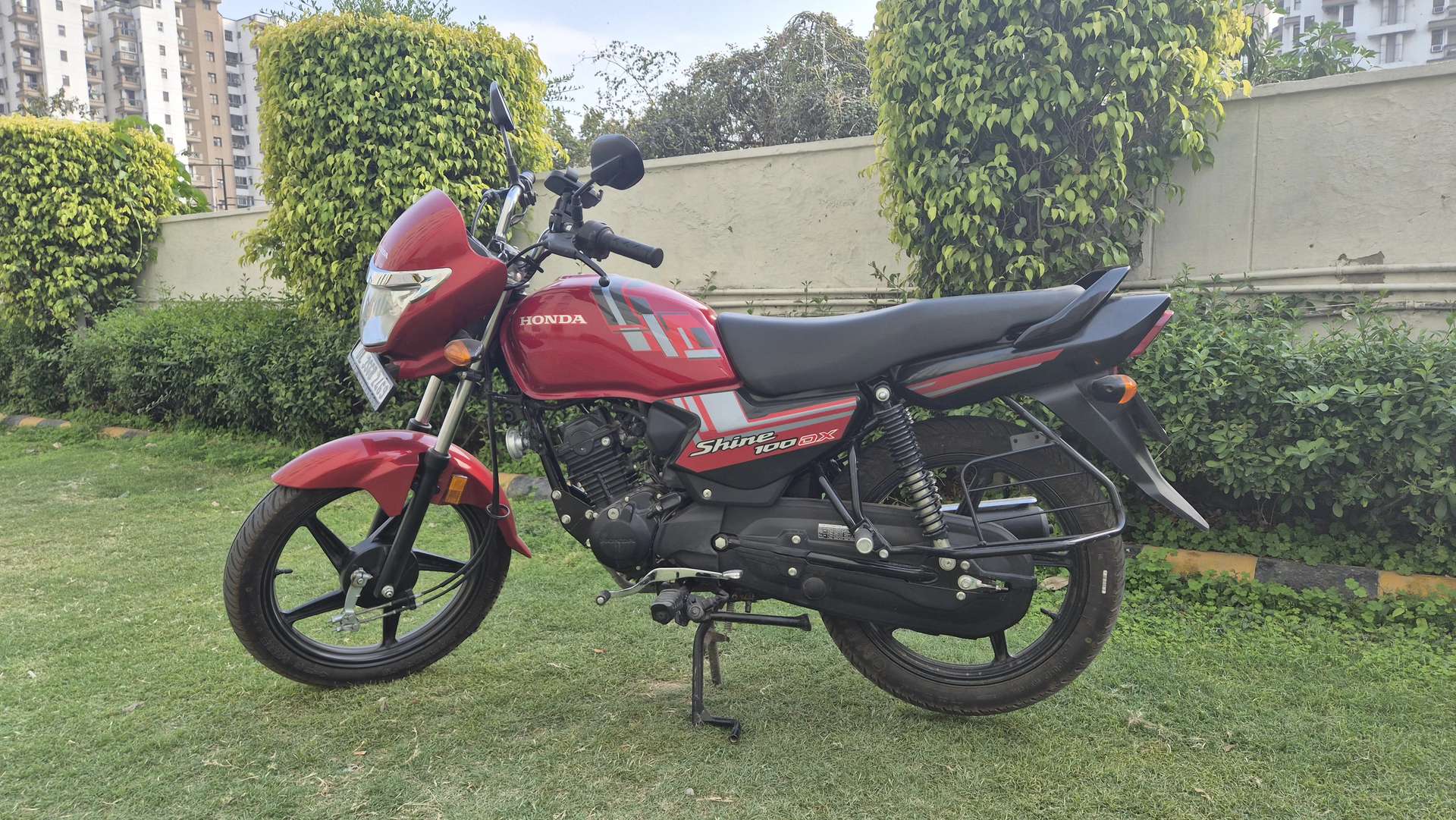
The Shine 100 DX surprisingly shows a portrayal similar to that of its successor, the Shine 125, highlighting the blacked-out engine case, a larger 10L fuel tank (1L more than the Shine 100), a chrome exhaust muffler, vibrant decals over the body panels, a digital negative LCD instrumentation, and a chrome strip over the headlamp cowl. Nevertheless, the halogen headlamp is the same piece incorporated from the Shine, and similar is the case with the compact squared tail-lamp setup alongside the orange-finished bulb-type turn indicators.
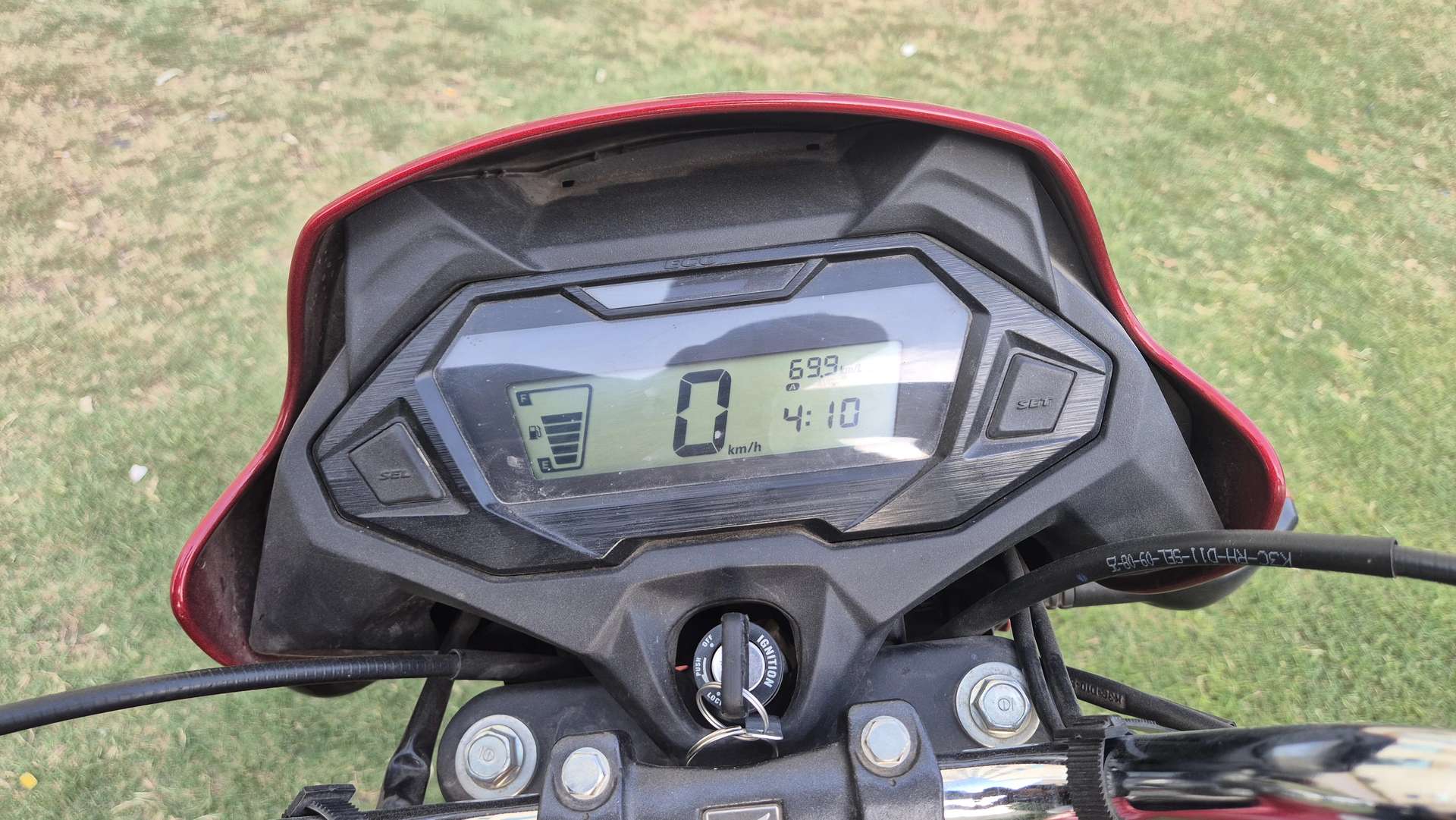
The LCD display lights yellow in the dark and represents the speedometer, tachometer and odometer alongside the timer, all digitally. In addition to this, there is an eco indicator, which helps the rider maintain a good average blinking green when the right speed is achieved at the right gear synced to an accurately constant throttle response. In terms of safety aid, the side stand cut-off is also on the package, ensuring the bike only starts when it is off the side stand.
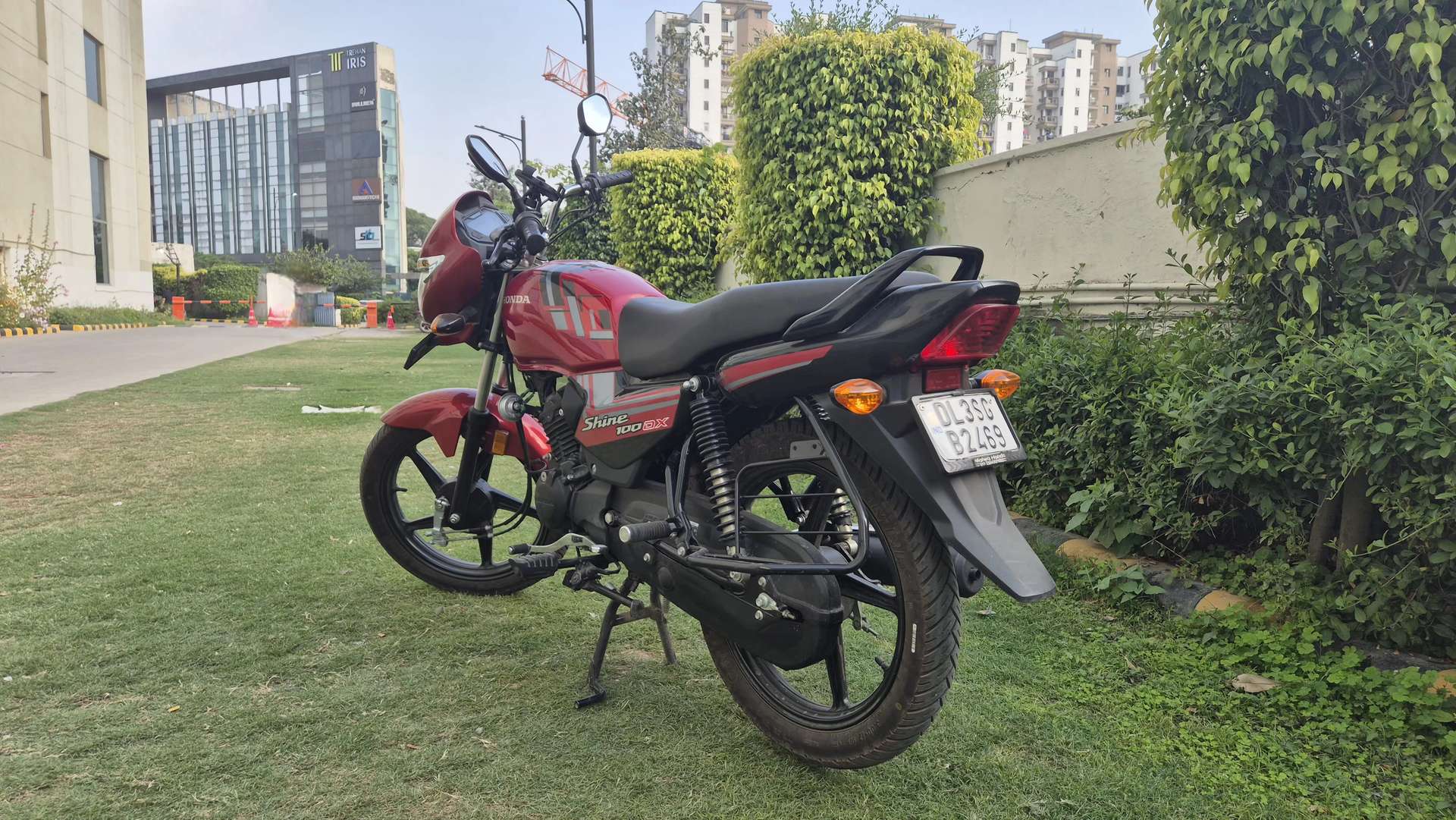
The Shine 100 DX is being offered in four different colour tones: Imperial Red Metallic, Pearl Igneous Black, Athletic Blue Metallic, and Geny Grey Metallic with vibrant decals to emphasise Gen Z character. The bike comes loaded with daily life practical features. However, if the brand could have added a charging port, it would have elevated the convenience factor. The switchgear along with the plastic quality does not feel compromised either. Concluding on the aesthetics, the bike in all proportions reflects a combination of both the Shine 100 and Shine 125.
Engine & Performance:
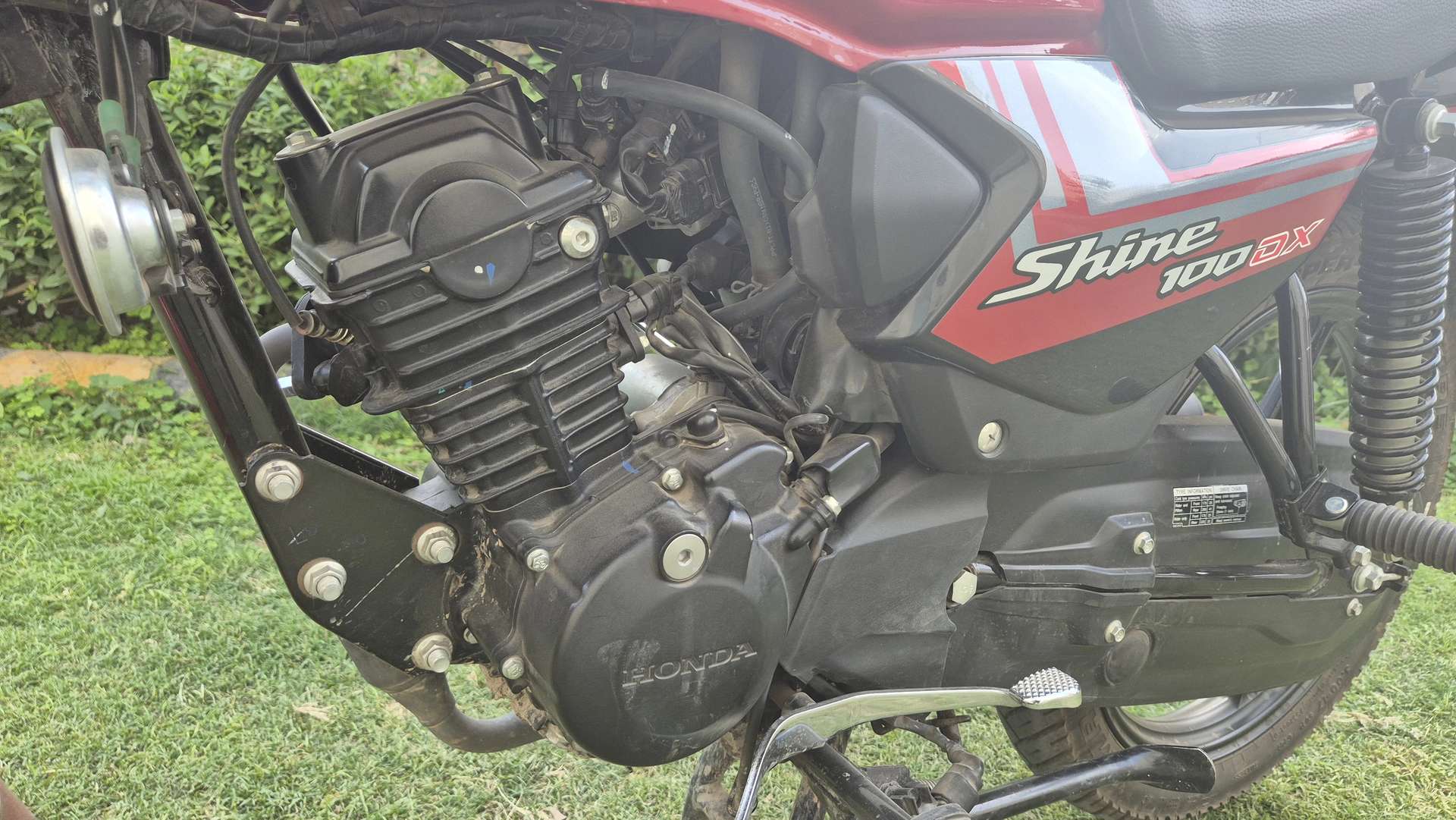
This 100cc commuter derives power from a 98.98cc air-cooled 2V displacement. This four-stroke engine produces a peak power output of 7.4 hp at 7,500 RPM and a torque figure of up to 8.05 Nm, redlining at 5,000 RPM, mated to a 4-speed transmission. The performance in person also feels adequate to the engine capacity and core purpose of this 4 kg heavier variant of the standard Shine. For a reference, the rear-wheel torque individually is enough to take the bike out of a dug hole without much pressure exerted on the engine unit.
The increased weight does not affect the equivalency of the power-to-weight ratio, allowing it to glide through different road conditions. Sharing the real-world experience, the bike glides through highway runs, delivering a continuous linear torque bandwidth, and easily manoeuvres through bumper-to-bumper traffic no matter if it is within cities or townships. The gear shifting is smooth, permitting the necessary overtakes. Moreover, the lower-speed-to-higher-gear combination is to the point and quite feasible for quick accelerations.
Therefore, the first three gears let you achieve a decent power delivery ratio, but the tall fourth gear keeps the engine in its sweet spot. Talking of the top speed, Honda Redwing claims a number of 85 km/h. Although digits beyond 75 km/h are unobtainable given the intrusive vibrations above 72 km/h, followed by wobbles. I rode it till 71 km/h and sensed very little vibrations, which were not even observable.
Barring this, the Japanese two-wheeler brand claims the bike is capable of hitting 0-40 km/h in 3.64 seconds, 0-60 km/h in 7.82 seconds, and 0-80 km/h in about 16.24 seconds. Now, coming to the USP, which is the mind-boggling fuel economy, due to a larger tank, this bike returns a mileage around 77 kmpl in mixed riding conditions, 80 kmpl on highway cruises, and not less than 68 kmpl in the harsh traffic conditions. This results in nearly an 800 km range on a single lap.
Ride & Handling:
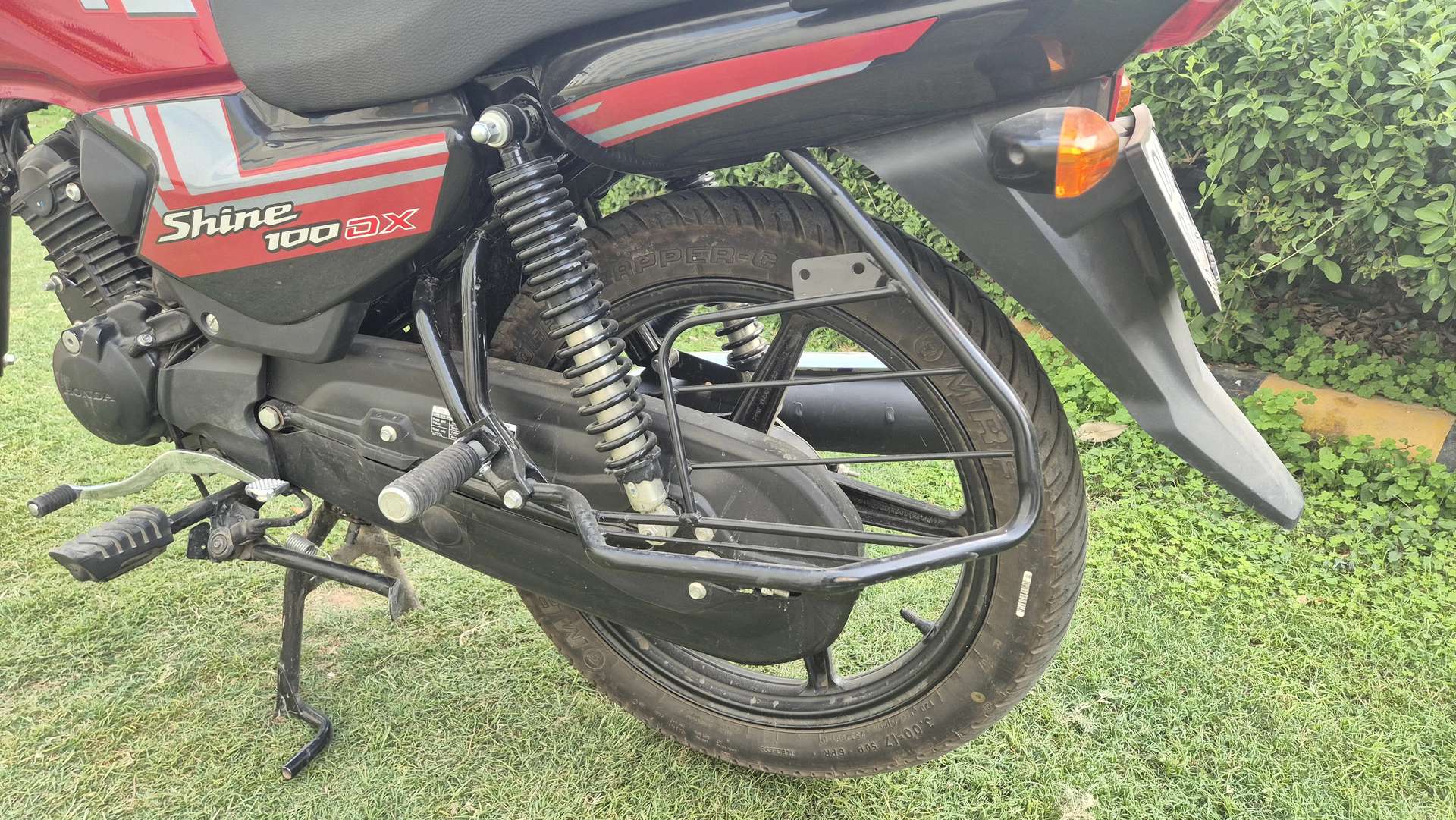
This lightweight commuter rides on 17-inch tubeless tyres, which is smaller as compared to some of its rivals; nonetheless, the rear 120-section profile maintains the stability on higher-speed tarmac sprints as well as traction on slippery surfaces. Thus, the bike feels planted on the go, complemented by a longer wheelbase of 1245 mm, which is accurate for short turning radius during both tight parkings and narrow passways. Meanwhile, pursuing a commanding road presence. The suspension, on the other hand, be it the front traditional telescopic forks or the rear dual-shock absorbers, soaks up the potholes, broken patches, and rural sandy roads, minimising the jolts and jerks.
Adding further, the rear suspension holds an applauding compression rate. The high ground clearance of 168 mm further improves the ability to tackle the speed bumps parallel to waterlogged areas. Additionally, the 786 mm of seat height and considerably large circumference grant a pillion confidence to complete a ride between 40 and 60 km comfortably, though as a result of upward rear-positioned footpegs, the seating position is a little knees up.
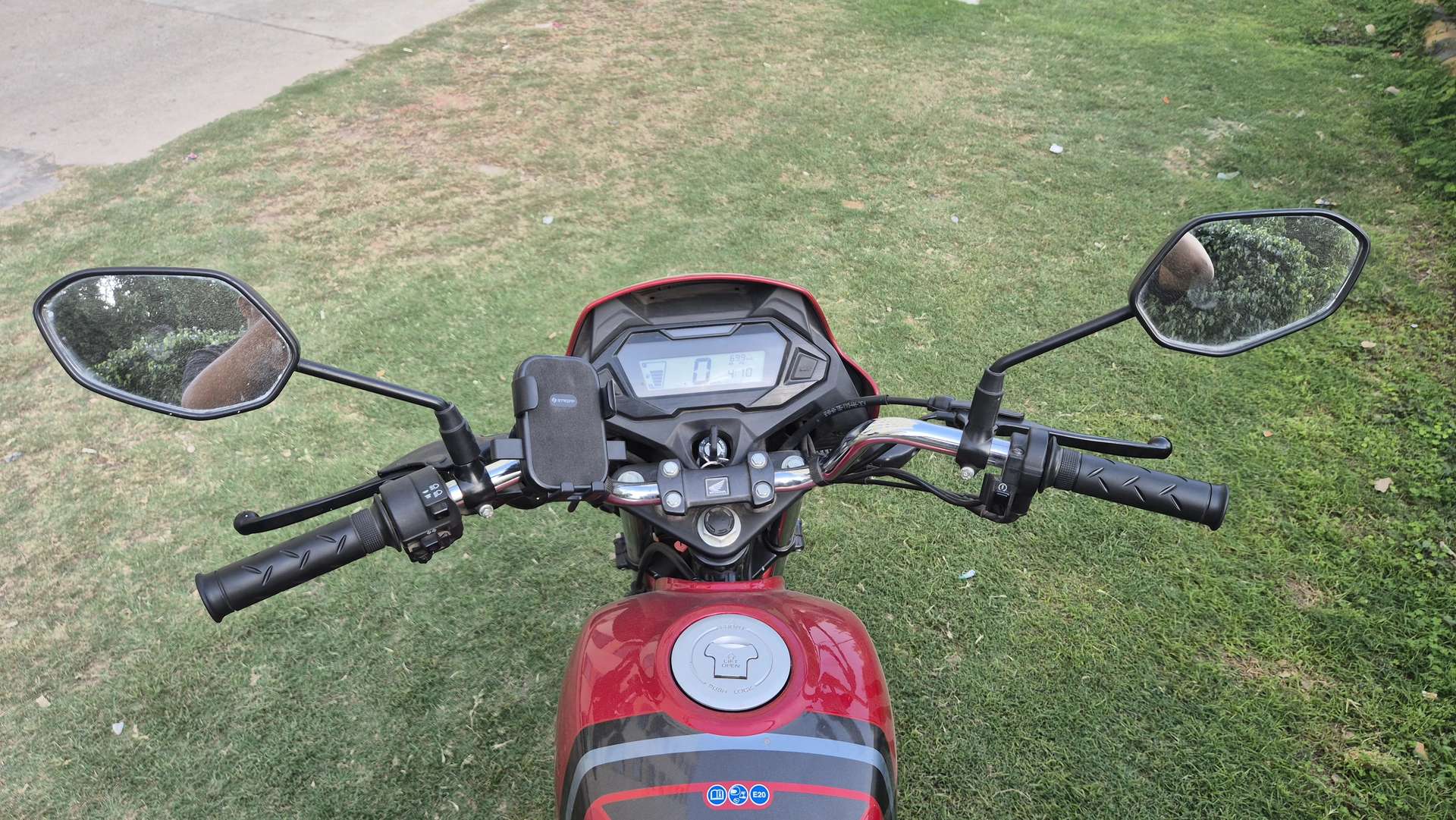
Talking of the rider’s triangle, the shorter handlebar authorises a painless short turning radius that also comes in handy while precise cornering, excluding the situation of a pillion onboard, comparing the overall kerb weight of the model to be overshadowed by the additional mass collectively applied by both the rider and the pillion. Into the bargain, an average-height person can easily flat-foot on this bike, whereas a person above 5 feet 9 inches might require some time to get used to it.
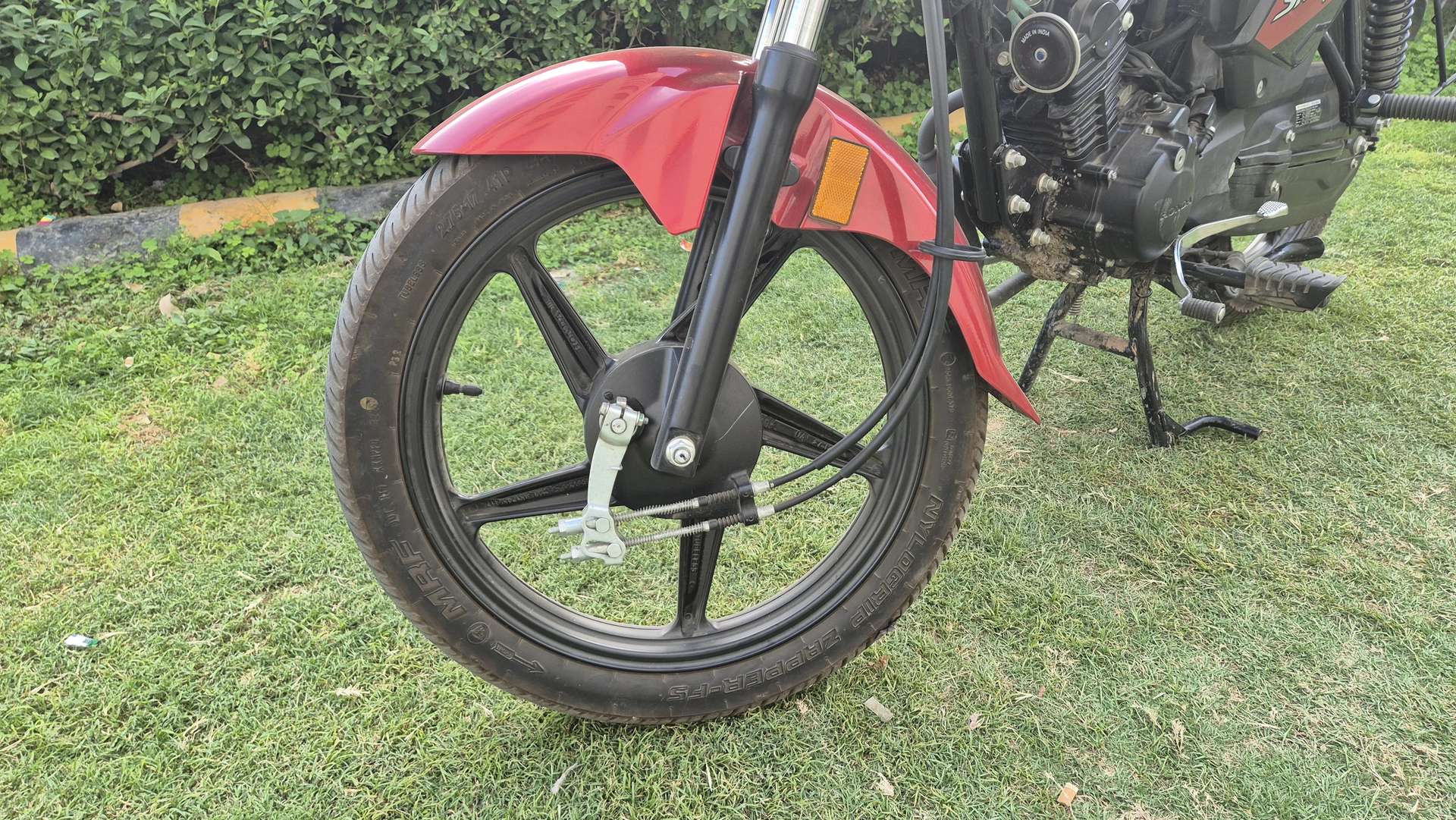
Jumping to the braking department, it utilises the same combi braking system (CBS) as the standard Shine, safeguarded by front 130mm and rear 110mm drums. The initial braking byte is a bit slower but acceptable, especially for the front brakes. However, the rear brakes are more responsive with a crisp and confident bite. I personally was able to brake instantly at 67 km/h, utilising firstly the handbrake, followed by the leg brake to slow down the bike. As feedback, I would have preferred at least a single-channel ABS instead of the conventional CBS system.
Conclusion:
The Honda Shine 100 DX really doesn’t give you much to complain about when you consider its price point, especially considering the government’s latest GST 2.0 price reduction below 350cc two-wheelers. Thanks to the same, the DX variant in the Shine lineup now sits at ₹69,694 (ex-showroom, New Delhi), which translates to ₹84,000 (on-road, New Delhi) cost. Mentioning the areas of improvement, the plastic panels, switchgear quality and general fit-and-finish make it clear the bike was engineered to hit a very tight cost target, but as said, they do not look compromised. Also, the lack of a charging port could also have been avoided, though again it is manageable. For anyone who just seeks the most affordable as well as dependable way to get around every day, the Shine 100 DX does the job brilliantly. Besides, for only ₹6,503 more than the base trim, you get upgrades that you can actually make up to the extra worth demanded.


You May Like


Find your perfect car

Budget

Brand

Body Type

Fuel

Mileage

More
Latest Videos




Other Expert Reviews


Listen to Audios


Vihan AI - Your Car assistant
Ask me anything about cars, prices, and comparisons.