ELECTRIC
Raptee.HV T30: High Voltage CCS2 EV Architecture Made Accessible & Affordable ?
 Add CarBike360 on Google
Raptee HV T30 introduces high-voltage tech, fast CCS2 charging, and strong performance, addressing EV pain points, though range, refinement, and ride quality still need improvement.
By Animesh Vatsa
Mar 19, 2026 11:42 am IST
Published On
Mar 19, 2026 11:38 am IST
Last Updated On
Mar 19, 2026 11:42 am IST
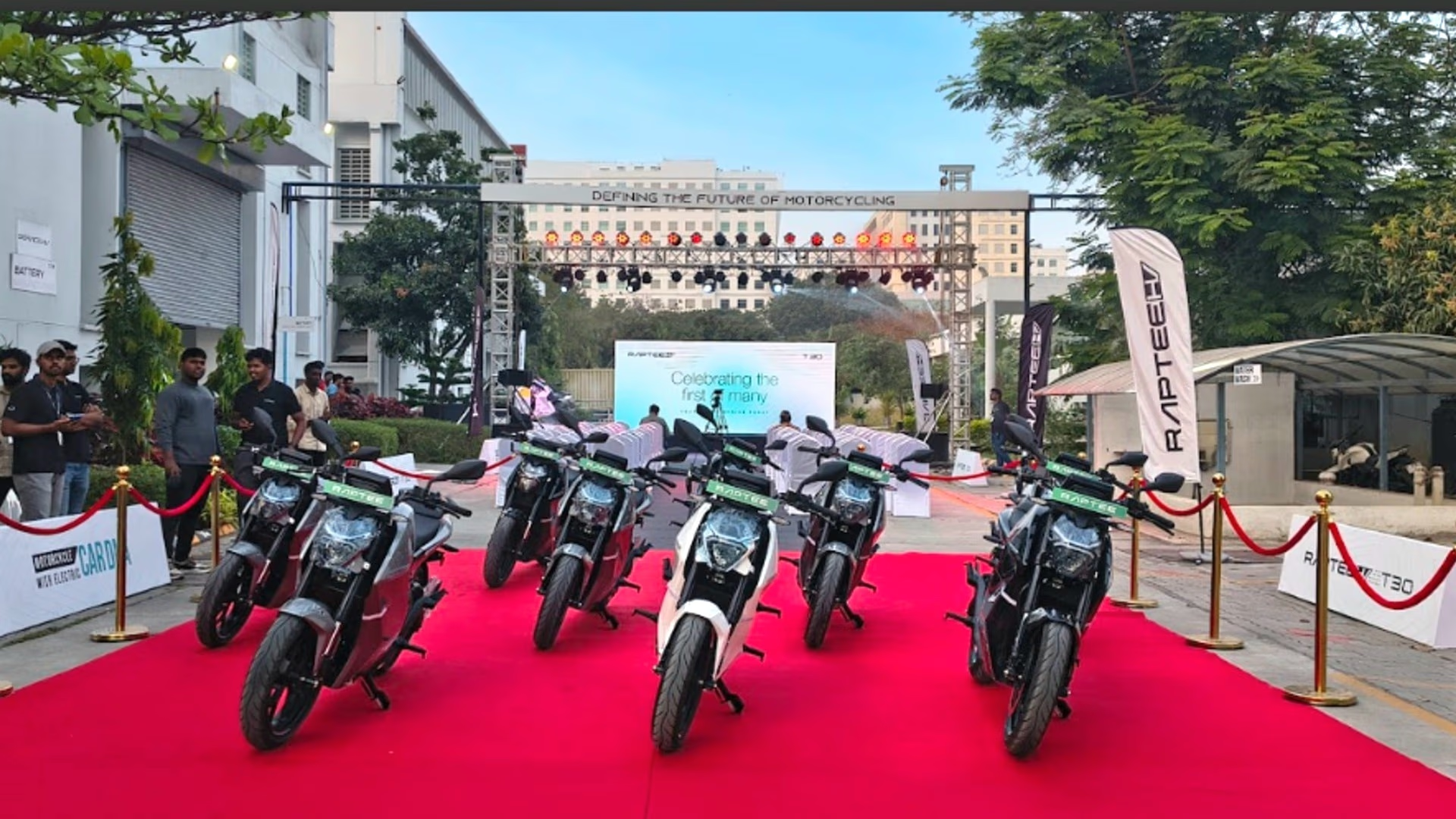
High-voltage electric motorcycles are merely not a new concept on the global stage. However, they’re offered at a premium price, and thus they’re unapproachable to the masses. In India, a Chennai-based startup, Raptee HV, is shifting trends with their debutant T30. The Raptee.HV T30 claims to solve the persisting pain points which always make a buyer hesitate in choosing an EV, such as range anxiety, performance, and most importantly the differentiated charging infrastructure.
To tackle the charging loophole, Raptee has introduced the ability to plug into almost any standard public car charging station for a fast top-up, something that could finally make longer rides or out-of-town trips far less stressful. Thus further ending up reducing the time period and comparatively increasing the charging rate from existing two-wheeler fast DC charging facilities. This written piece explores how the T30 tries to address those exact concerns within the 5 to 10% of individual penetration of electric motorcycles across the nation and whether it manages to deliver on the promise.
Advantages of High-Voltage EV Architecture:
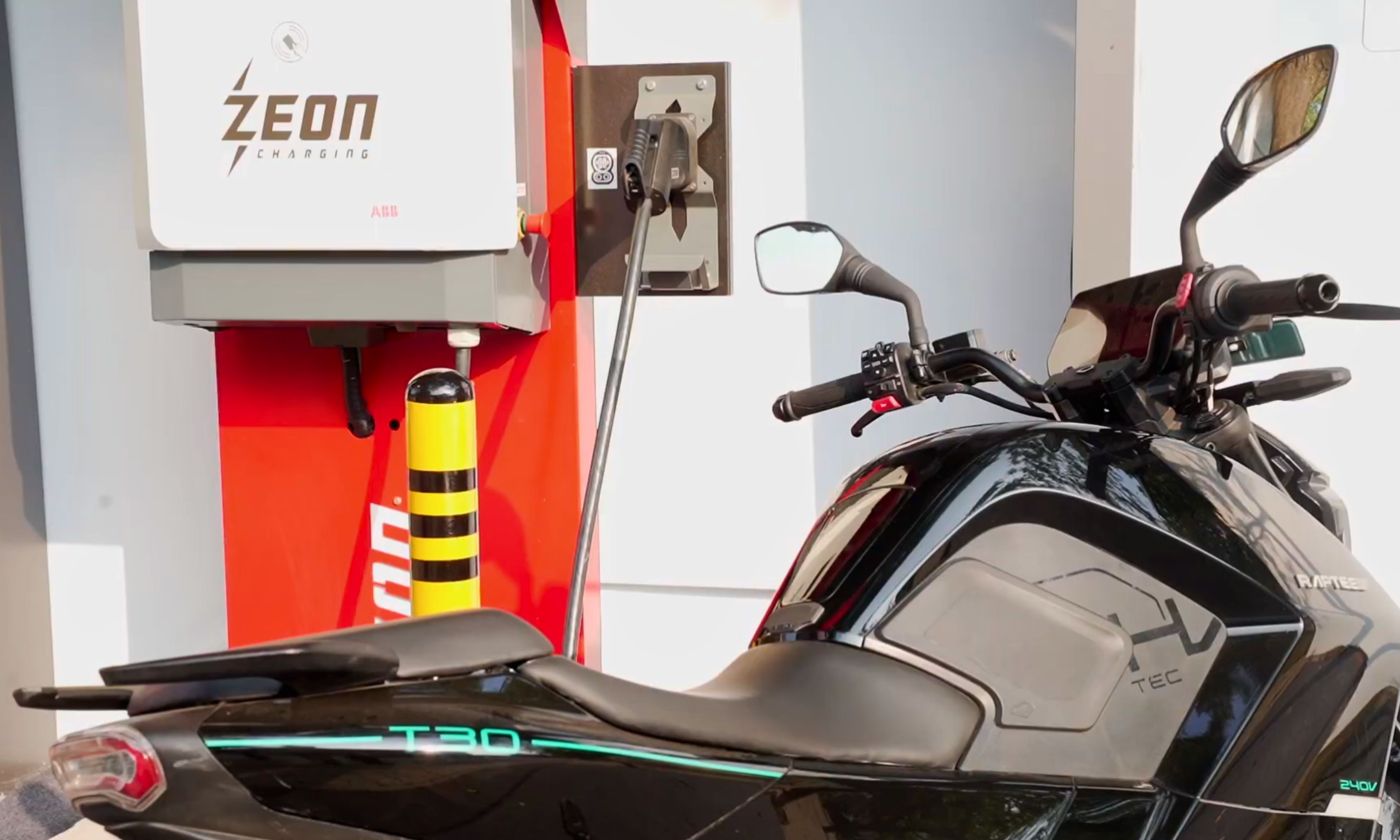
- The high-voltage tech in the Raptee T30 brings several clear benefits, though cost remains the biggest hurdle. At ₹2.40 lakh (ex-showroom), it still stands out as one of the more affordable high-voltage electric motorcycles available.
- Unlike conventional low-voltage electric two-wheelers, the T30’s 240V system produces dramatically less heat, roughly 25 times less for the same power output. This allows Raptee to use a smaller, lighter motor, thinner cables, and a more compact controller, all while improving overall efficiency.
- Charging is another strong advantage. The T30 accepts CCS2 connectors, so it can plug directly into standard electric car fast chargers. Raptee claims a 20 to 80% charge takes only 36 minutes on a DC fast charger, while home charging with the onboard unit takes just over an hour.
- Safety has clearly been a priority with the high-voltage setup. The battery stays fully isolated when the bike is switched off, and if the system detects any leakage, it instantly cuts power to eliminate risk.
- Maintenance is kept low thanks to a belt drive instead of a chain. Raptee says the specially formulated belt lasts around 40,000 km with almost no adjustment needed, which makes ownership noticeably more hassle-free.
Design & Styling:

The T30 instantly grabs attention with its sharp, aerodynamic styling and clear streetfighter DNA. Even at a standstill, it carries a strong sense of performance, almost like it’s ready to move any second. The overall design feels fresh and youthful, without going overboard on aggression, making it appealing to both younger riders and those who prefer a more mature look.
In terms of build quality, it’s fairly solid for a first product from a startup, though there’s still scope for improvement. Some minor panel gaps and slight inconsistencies in finish, particularly around the charging port and rear grab rails, are noticeable. That said, these are typical early-stage issues and are likely to get better as production evolves.
The bike is available in two variants: the standard T30 and the T30 Sport. Mechanically, both are identical, with differences mainly in styling. The Sport variant features a cleaner and more streamlined rear section, with the number plate and indicators mounted neatly on the tyre hugger for a sharper look.
Colour options are straightforward. Both variants come in black and white, while the standard version also gets a grey option. The Sport variant, on the other hand, stands out with an exclusive red colour.
Technology & Features:

The Raptee T30 is equipped with a 7-inch TFT touchscreen instrumentation that displays all the essential ride information in a clear, easy-to-read layout. The font size could have been a touch larger for even better legibility, especially in bright sunlight, but the user interface itself is smooth, quick to respond, and nicely laid out.
Turn-by-turn navigation is built in, using open-source maps that Raptee has integrated into their custom software, which is quite functional and practical for daily use.
Keyless ignition comes as standard, which feels like a premium touch on a bike in this segment. The switchgear is thoughtfully designed too, with a dedicated cruise control button already in place, even though the feature itself is still being finalised. Since the hardware is ready, it’s reasonable to expect cruise control will arrive later through an over-the-air update.
Performance & Range:

The Raptee T30 is powered by a 5.4 kWh battery pack working together with a motor that delivers 29.5 hp and 70 Nm of torque. It offers three riding modes: Comfort, Power, and Sprint. Comfort mode behaves much like an eco setting, capping speed at roughly 65 kmph. The acceleration in this mode feels quite sluggish and uninspiring, best saved for very slow-moving situations or when you really want to stretch every bit of range.
Power and Sprint modes are where the T30 comes alive. In power mode, it comfortably reaches around 100 kmph. Switch to Sprint, and it pushes toward its claimed top speed of 135 kmph. During our ride, we saw an indicated 133 kmph on the display, which is impressive for an electric motorcycle at this price point. Acceleration in the higher modes is strong, smooth, and linear, with throttle response that feels well-judged and predictable.
The claimed range figures look decent on paper: 150 km in Comfort mode, 100 km in Power, and 80 km in Sprint. In real-world riding, though, things are noticeably more modest. Using a blend of Power and Sprint for most of the ride, I was getting only 55 to 60 km before the battery dropped to 25 per cent.
At that 25 per cent threshold, the T30 automatically shifts into Comfort mode to stretch the remaining charge, which cuts performance sharply until you can plug in. For someone doing typical city commutes of around 30 km a day, that means charging every couple of days rather than once every few days, as the headline numbers might suggest.
Charging:

Charging remains as one of the key strengths of T30. It is because the battery utilises a standard CCS2 connector; you can simply plug it into any public electric car charging station, no special adapters or dedicated bike chargers required. On a DC fast charger, Raptee says you can go from 20% to 80% in just 36 minutes, which is genuinely quick for an electric motorcycle and makes longer rides far more practical. The home onboard charger takes a bit longer, about an hour for the same 20 to 80% top-up when plugged into a regular household socket.
Ride & Handling:

The Raptee T30 tips the scales at 177 kg, which isn’t excessive for a high-voltage electric motorcycle, but you definitely feel that weight when shuffling it around at walking pace or in tight spaces. The steel trellis frame gives excellent straight-line stability and confidence at speed. Cornering, however, demands more effort; the handlebar feels noticeably heavy, and the bike doesn’t tip into turns as naturally or willingly as lighter machines do.

It runs on MRF tyres that provide reasonable grip for the power on offer. Suspension is handled by upside-down forks up front and a monoshock at the rear. The setup is tuned on the firmer side, clearly trying to manage the bike’s mass. Small bumps and road ripples are dealt with smoothly, but bigger potholes and speed breakers send a sharp thud through the chassis. The thin seat cushioning does little to soften the blow, so you quickly learn to ease off on broken surfaces.

Braking is assisted by disc rotors at both ends, controlled by conventional handlebar levers. Stopping power is adequate overall, but the initial bite is weak, and then the response builds very suddenly, which can catch you off guard until you adapt to the feel. ABS intervention is quite noticeable during hard or emergency stops and could be smoother. Mentioning the rider’s ergonomics, a rider standing 5 feet 7 inches could flat-foot the Raptee T30 comfortably thanks to the 790 mm seat height, although a slight forward lean was required to reach the handlebars. Taller riders naturally settle into a more upright and neutral posture. The seat cushioning is decent and holds up well, staying comfortable even after 55 to 60 km of mixed city and highway riding. On longer stints, however, mild strain starts to appear in the upper back because of the slightly stretched, sporty reach to the handlebars. Footpegs are positioned rearward in a classic sporty layout, yet the overall ergonomics remain practical and well-suited for everyday commuting.
Conclusion:
The Raptee HV T30 marks a bold and genuinely promising first step from a new Indian brand. Its standout feature is the CCS2 fast-charging compatibility, which finally tackles one of the biggest frustrations in electric two-wheeler ownership: actually convenient charging. Raptee is starting rollout in Chennai, with Bengaluru, other southern capitals, and Pune lined up next. This indicates clear signs they’re thinking long-term and seriously about building a proper network. The T30 brings impressive tech and real innovation on the charging front, but it isn’t flawless. Build quality and panel fit-and-finish still show a few rough spots that stop it from feeling fully premium. Ride quality could be smoother too. These are small complaints, but they stand out on a bike carrying a ₹2.39 lakh (ex-showroom) price tag. At this level, most buyers expect a more polished package and perhaps a larger battery for extra range. Having said that, the performance, feature list, and especially the charging convenience more than offset the shortcomings. If easy, fast charging is your number-one priority, the T30 is easy to recommend. With a bit more refinement in fit, finish, and ride, Raptee HV already has a very strong electric motorcycle on its hands. The T30 is definitely worth serious consideration.


You May Like


Find your perfect car

Budget

Brand

Body Type

Fuel

Mileage

More
Other Expert Reviews
Harley-Davidson Breakout: Key highlights and real-world riding experience in India

Renault Duster 1.3L turbo petrol real-world mileage test: How efficient is it?

 2026 Volkswagen Taigun Review: A Compact SUV That Puts Driving First

BMW F450 GS First Ride: Does The Baby GS Outclass The Royal Enfield Himalayan 450 ?
Listen to Audios