ELECTRIC
Battery industry seeks clarity on HSN codes and manufacturer approval norms
 Add CarBike360 on Google
Lack of clarity on HSN codes and approval norms is creating hurdles for India’s battery sector, impacting compliance and industry growth.

May 04, 2026 05:56 am IST
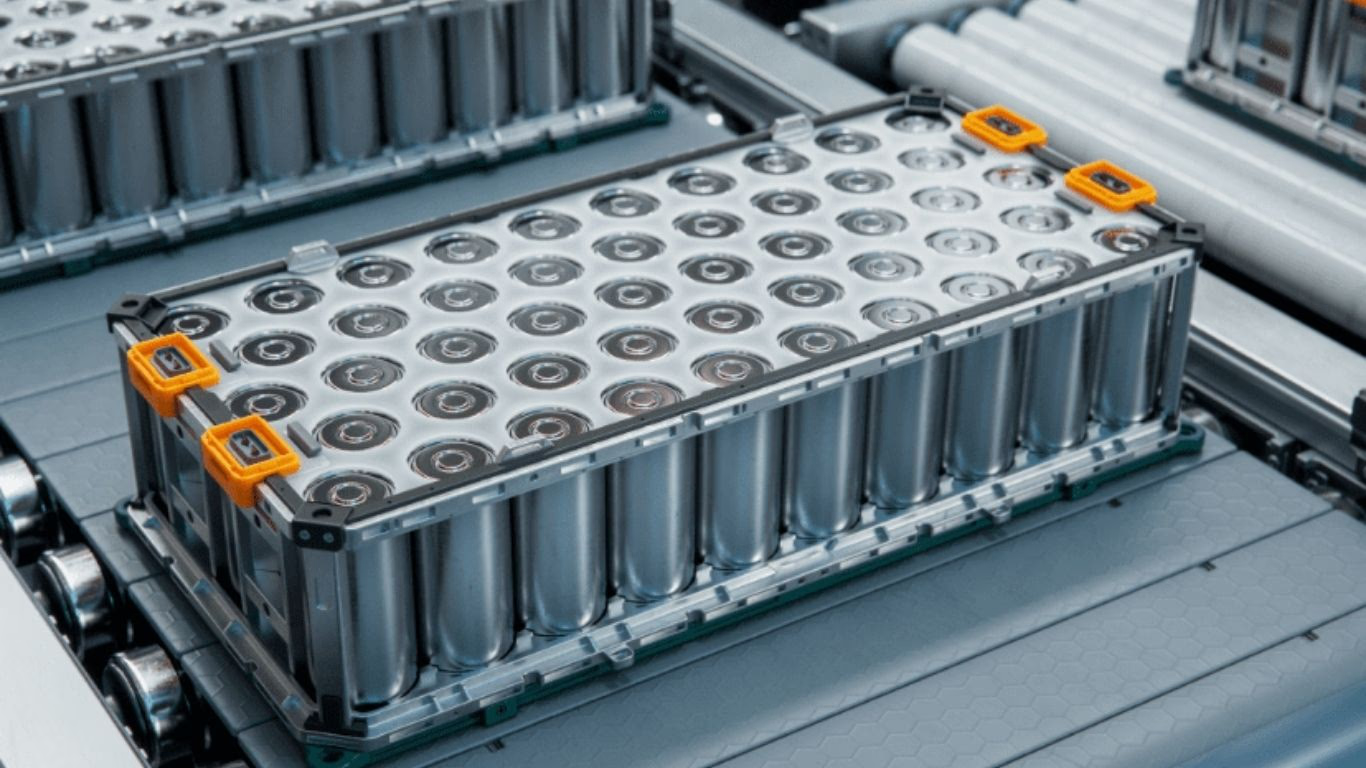
India's battery industry is urging the government to address classification issues and regulatory clarity to support domestic supply chains. Industry executives say a single Harmonized System of Nomenclature (HSN) code for batteries and battery packs leads to inconsistent interpretation at ports. This sometimes results in systems being classified as power banks, which attracts higher customs duties and complicates deployment.
Key Highlights
- Industry seeks separate HSN codes for cells battery packs and storage systems
- An approved list of battery manufacturers could support domestic supply chains
- Demand for stationary energy storage expected to grow at over 23 percent CAGR through 2035
- Industry requests customs duty deferment for 12-year project life under warehouse regulations
HSN Code Classification Issues

The HSN is a global system used to classify traded goods and determine tariffs. Industry representatives recently met with the power ministry to highlight the challenges caused by a single HSN code for different battery systems. They explained that this ambiguity leads to higher duties and delays at customs, affecting the rollout of energy storage projects.
Companies have requested the government to introduce separate HSN codes for cells, battery packs, and storage systems. This would help remove ambiguity and rationalize customs duties. The industry also wants an approved list of battery manufacturers, similar to the existing list for solar modules. Such a list would act as a non-tariff barrier and help build a domestic supply chain.
Regulatory and Policy Demands
Industry stakeholders have asked for tighter local content norms for storage projects. They also seek clarity on customs duty deferment under manufacturing and warehouse regulations. Currently, some battery energy storage system (BESS) developers are requesting customs duty deferment for the 12-year useful life of their projects, as allowed under existing warehouse rules.
Current regulations require storage systems to be charged only from co-located renewable energy sources. The industry wants permission to charge from other sources, including non-renewable power, to optimize system utilization and flexibility.
Growth Outlook for Energy Storage
India is scaling up grid-level storage to support renewable energy integration, grid stability, and peak power needs during non-solar hours. According to the India Energy Storage Alliance, stationary energy storage deployment is expected to accelerate between 2030 and 2035. Demand is projected to grow at over 23 percent compound annual growth rate (CAGR) through 2035. After 2035, growth is expected to moderate to about 12 percent annually as the market matures, but overall battery demand will continue to rise towards 2047.
An approved list of battery manufacturers is expected to be introduced in June. This move, along with clearer classification and regulatory norms, aims to support the domestic battery industry as India increases its focus on renewable energy and grid stability.
Also Read: Rocklink India inaugurates advanced battery and magnet recycling plant in Uttar Pradesh
CarBike 360 Says
As India’s battery ecosystem rapidly evolves, regulatory clarity will play a critical role in sustaining growth and ensuring compliance. Clear HSN classifications and streamlined manufacturer approval processes can reduce ambiguity, improve ease of doing business, and attract further investment. Addressing these concerns promptly will help the industry align with policy goals while supporting the country’s broader electrification ambitions.


You May Like





Latest Battery Videos


Other Battery News

Listen to Battery Audios