ELECTRIC
How New Electric Motor Designs Reduce Rare-Earth Material Dependence in EVs
 Add CarBike360 on Google
Electric vehicle motors often require rare-earth materials, leading to supply and price risks. New designs like induction motors reduce this dependence, benefiting manufacturers, governments, and consumers as EV demand grows.

Apr 20, 2026 12:36 pm IST

Electric vehicles (EVs) often use motors that require rare-earth materials such as neodymium and dysprosium. These materials are essential for efficient motor performance, but they are sourced from only a few countries. Limited supply can lead to sudden price increases, creating risks for both EV manufacturers and buyers.
Key Highlights
- EV motors often rely on rare-earth materials like neodymium and dysprosium
- Supply limitations can cause price volatility and risk for manufacturers and buyers
- New motor designs such as induction motors reduce rare-earth dependence
Rare-Earth Material Challenges
Rare-earth elements like neodymium and dysprosium are critical in many EV motors. These elements help motors achieve high efficiency and power. However, the global supply of these materials is concentrated in a small number of regions. This concentration increases the risk of supply disruptions and price volatility.
When rare-earth supplies become limited, the cost of these materials can rise quickly. This situation impacts the entire EV industry. Manufacturers may face higher production costs, and consumers could see increased vehicle prices. The reliance on rare-earth materials also exposes the industry to geopolitical risks.
Alternative Motor Technologies
Engineers are developing new motor designs to address these challenges. One important alternative is the induction motor. Unlike traditional motors, induction motors do not use rare-earth magnets. Instead, they generate magnetic force using electricity. This design reduces the need for rare-earth materials in EV production.
Companies such as Attron Automotive are creating systems that allow manufacturers to adopt these new motor technologies. These systems can replace existing motor designs with minimal changes to production lines. This flexibility helps manufacturers respond quickly to material shortages and price changes.
Benefits for Industry and Consumers
Adopting alternative motor technologies offers several advantages. EV manufacturers gain more secure supply chains and reduce exposure to rare-earth price fluctuations. Governments benefit from stronger local manufacturing, which supports industrial growth and job creation. Consumers also benefit from stable supply chains, as this helps keep vehicle prices predictable and affordable.
As global demand for electric vehicles continues to rise, the choice of motor technology will play a key role in the industry's future stability. Reducing dependence on rare-earth materials can help ensure a more resilient and sustainable EV market.


You May Like


Find your perfect car

Budget

Brand

Body Type

Fuel

Mileage

More
Latest Car Videos


Top Auto News of the Week: Tata Sierra EV, BMW X6, E85 Fuel & More - Weekly Wrap

Top Auto News of the Week | Hyundai i20 Leak, Honda ZR-V, Tata Sierra EV, Skoda EV & More!

Talking about new Honda City and upcoming ZR-V SUV with Honda India’s Kunal Bahl!

2026 Honda City Launched in India - Better than VW Virtus, Hyundai Verna & Skoda Slavia?
Other Car News
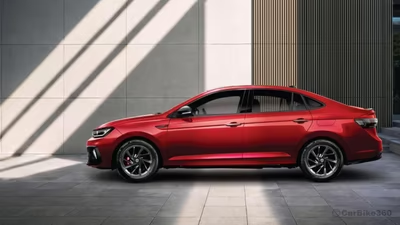
Volkswagen India introduces Virtus sedan anniversary offers with new finance schemes
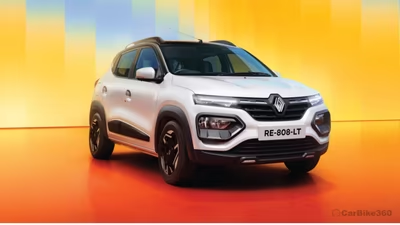
2026 Renault Kwid Facelift launched in India at Rs 4.53 lakh
2026 Renault Kwid Facelift launching today: Here’s everything you need to know
Maruti Suzuki XL7 Facelift India launch expected by year end with new design and features
Listen to Car Audios