ELECTRIC
Hyundai Exter vs Grand i10 Nios: Detailed Comparison After 2026 Facelift
 Add CarBike360 on Google
The Hyundai Exter, after its 2026 facelift, offers more features and space than the Grand i10 Nios, justifying its Rs 1.65 lakh premium. Both models share similar safety and infotainment features, with the Exter adding a sunroof and dashcam.

Mar 27, 2026 10:04 am IST

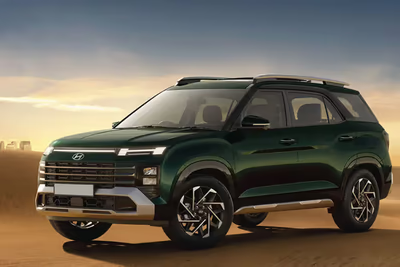
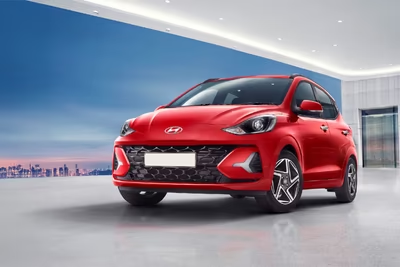
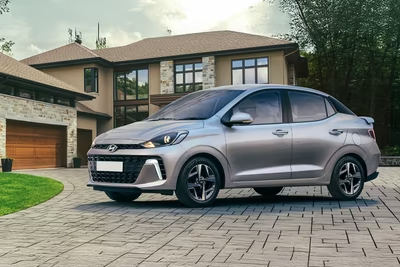
The Hyundai Exter, following its 2026 facelift, stands out in the sub-10 lakh price segment. It competes with models ranging from compact hatchbacks to entry-level SUVs. The Exter, based on the Hyundai Grand i10 Nios, now offers a more premium experience. This comparison examines how the updated Exter differs from the Grand i10 Nios and if its higher price is justified.
Key Highlights
- Hyundai Exter receives a facelift and now commands a Rs 1.65 lakh premium over Grand i10 Nios
- Exter is larger than Grand i10 Nios offering more headroom and shoulderoom for rear passengers
- Both models feature dual-cylinder CNG kits and similar infotainment and safety features
- Exter adds a sunroof an extra Type-C port and a dashcam over Grand i10 Nios
- Tata Punch offers a 120 PS turbo-petrol engine as a more powerful alternative in this segment
Price and Variant Differences
The top-spec Hyundai Exter commands a premium of Rs 1.65 lakh over the Grand i10 Nios. Both models target buyers seeking value and features in an affordable package. The Exter’s facelift has introduced new design elements and additional equipment, positioning it as a more upmarket choice within its segment.
Dimensions and Space
The Exter is larger than the Grand i10 Nios in length, width, and height. This increased size results in improved headroom and shoulderoom, particularly for rear passengers. However, the wheelbase remains unchanged, so legroom, kneeroom, and footroom are similar in both cars. The Exter offers a 391-litre boot, while Hyundai has not disclosed the Grand i10 Nios’s boot space. Both models use a dual-cylinder CNG tank setup, ensuring no compromise in boot space for CNG variants.
Features and Equipment

Both the Exter and Grand i10 Nios come with factory-fitted CNG kits featuring dual-cylinder technology. Their infotainment systems are identical, and they share most convenience and safety features. These include wireless Apple CarPlay and Android Auto (using a wired to wireless adaptor), keyless entry with push-button start/stop, electronic stability control (ESC), and tyre pressure monitoring system (TPMS).
The Exter offers several additional features over the Grand i10 Nios. These include a sunroof, an extra Type-C charging port, and a dashcam. These enhancements contribute to the Exter’s higher price point.
Performance Options
For buyers seeking more powerful engines, the Tata Punch is an alternative in this segment. It offers a 120 PS turbo-petrol engine, which neither the Exter nor the Grand i10 Nios provides. Both Hyundai models focus on practicality and everyday usability rather than high performance.
Conclusion
The Hyundai Grand i10 Nios remains a strong choice for city commuters who value essential features and reliability. It delivers consistent performance without major compromises. The Exter, meanwhile, appeals to those wanting SUV-like styling and slightly more cabin space. Its modern design and extra features help justify its price premium over the Grand i10 Nios.


You May Like


Find your perfect car

Budget

Brand

Body Type

Fuel

Mileage

More
Latest Car Videos


Top Auto News of the Week: Tata Sierra EV, BMW X6, E85 Fuel & More - Weekly Wrap

Top Auto News of the Week | Hyundai i20 Leak, Honda ZR-V, Tata Sierra EV, Skoda EV & More!

Talking about new Honda City and upcoming ZR-V SUV with Honda India’s Kunal Bahl!
2026 Honda City Launched in India - Better than VW Virtus, Hyundai Verna & Skoda Slavia?
Other Car News
Volkswagen India introduces Virtus sedan anniversary offers with new finance schemes
2026 Renault Kwid Facelift launched in India at Rs 4.53 lakh
2026 Renault Kwid Facelift launching today: Here’s everything you need to know
Maruti Suzuki XL7 Facelift India launch expected by year end with new design and features
Listen to Car Audios