ELECTRIC
India plans higher ethanol blending to cut oil import dependence
 Add CarBike360 on Google
India may increase ethanol blending beyond current levels to curb oil imports and strengthen energy security while supporting cleaner mobility.

By Utsav Chaudhary
May 07, 2026 10:54 am IST

India is reviewing its reliance on imported oil and gas as global conflicts, such as the US-Israel war on Iran, threaten energy security. The transport sector uses about half of India's oil, with nearly 90 percent of this oil imported. This sector presents the most significant opportunity to cut import dependence and emissions.
Key Highlights
- India proposes higher ethanol blends to reduce oil imports in transport sector
- Concerns raised over food security water use and land resources with increased ethanol production
- Importing GMO maize for ethanol may create new dependencies
- Vehicle design should support flexible ethanol blends without efficiency loss
Proposed Ethanol Blend Amendments
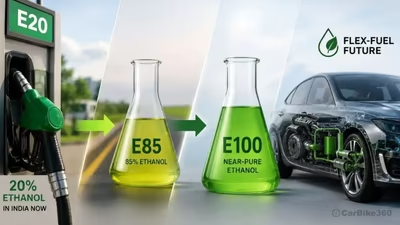
The Government of India has proposed changes to the Central Motor Vehicles Rules (CMVR) to allow higher ethanol blends in fuel. These amendments would formally enable the use of E85 (85 percent ethanol) and E100 (100 percent ethanol) in vehicles. This move aims to let vehicles run on near-pure ethanol, potentially reducing oil imports and transport emissions.
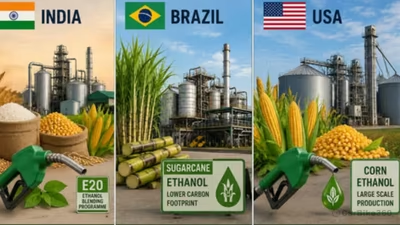
Creating regulatory space for higher ethanol blends is a practical step. However, it should not exclude other possible solutions. The optimal use of ethanol in India's fuel mix must be based on thorough life-cycle assessments. Current technology levels mean that scaling up ethanol production would require more sugarcane, rice, or maize. This raises concerns about groundwater depletion, land use, and food security.
Trade-Offs and Import Dependencies
Increasing ethanol production could lead to conflicts over crop pricing and broader social impacts. There are also proposals to import genetically modified (GMO) maize from the United States to support ethanol production. While this could ease supply constraints or aid trade negotiations, it may replace oil import dependence with dependence on imported maize.
The costs and emissions associated with transporting ethanol need careful evaluation. On the demand side, vehicle manufacturers should focus on designing engines that can use different ethanol blends without losing efficiency. Advances in second- and third-generation ethanol technologies could change the decision-making process for fuel choices in the future.
Future Pathways for Transport Fuel
The Government of India is currently seeking feedback from stakeholders on the proposed CMVR amendments. The central question remains: what are the best options to reduce both import dependence and the transport sector's carbon footprint? Ethanol is expected to play a role, alongside electric vehicles and fuel cell technologies. A comprehensive assessment is essential before final decisions are made.
Also Read: India keeps refineries running strong amid Strait of Hormuz crisis
CarBike 360 Says
India’s push toward higher ethanol blends signals a decisive shift toward energy security and sustainability. While challenges around infrastructure, vehicle compatibility, and supply remain, the long-term benefits could outweigh the hurdles. If executed well, this move can reduce import dependency, support farmers, and accelerate the country’s transition toward cleaner, more self-reliant mobility.


You May Like






Latest Lubricant Videos


Other Lubricant News
Listen to Lubricant Audios