ELECTRIC
Indian Government Offers Up to 100% Subsidy on EV Charging Stations under PM E-Drive Scheme
 Add CarBike360 on Google
The Indian government is ramping up efforts to boost electric vehicle (EV) adoption with the introduction of the PM E-Drive Scheme, a transformative initiative that offers up to 100% subsidy for establishing EV charging infrastructure.

By Jahanvi Soni
Jan 07, 2025 08:46 am IST
The Indian government is ramping up efforts to boost electric vehicle (EV) adoption with the introduction of the PM E-Drive Scheme, a transformative initiative that offers up to 100% subsidy for establishing EV charging infrastructure. This ambitious program aims to make EVs more accessible by addressing a critical barrier: the lack of reliable and widespread charging stations.
Overview of the PM E-Drive Scheme
Replacing the previous FAME (Faster Adoption and Manufacturing of Electric Vehicles) subsidies, the PM E-Drive Scheme has a ₹2,000 crore budget allocation dedicated to the development of EV charging stations.
Key highlights include:
- Financial Assistance: Up to 80% subsidy for general charging infrastructure costs, with up to 100% subsidy for upstream power infrastructure.
- Targeted Deployment: Focus on 40 cities with high EV concentrations for initial implementation.
- Upstream Infrastructure: Includes the essential components required to establish operational and accessible charging stations.
Planned Charging Points Across EV Segments
The PM E-Drive Scheme is set to deploy 72,300 charging points, strategically categorized to support various EV segments:
Two-Wheelers and Three-Wheelers:
- 48,400 public fast chargers to cater to urban and semi-urban commuters.
Four-Wheelers:
- 22,100 fast chargers to support electric cars, light passenger vehicles, and commercial EVs.
Buses and Trucks:
- 1,800 fast chargers to meet the growing demand for electric public transport and freight vehicles.
Compliance and Operational Standards
To ensure reliability and efficiency, all charging infrastructure must adhere to the Ministry of Power’s 2024 guidelines, which specify:
Minimum Charging Capacities:
- 12 kW for two- and three-wheelers.
- 60 kW for four-wheelers.
- 240 kW for buses and trucks.
Charging Configurations:
- Urban Areas: At least one fast charger for four-wheelers and two for two- and three-wheelers.
- Highways: One fast charger for buses and trucks and at least two for four-wheelers every 100 km.
City Selection and Targeted Deployment
The government has identified cities based on population to ensure equitable distribution of charging infrastructure:
- Population Over 4 Million: 9 cities.
- Population Over 1 Million: 44 cities.
- Satellite Towns: Additional strategically important locations.
This selection strategy ensures that high-density EV regions are prioritized for infrastructure rollouts.
Benefits of the PM E-Drive Scheme
The PM E-Drive Scheme offers several key benefits that will accelerate the adoption of EVs in India:
1. Boost Consumer Confidence
By expanding the availability of fast and reliable charging stations, the scheme alleviates range anxiety, encouraging more consumers to transition to EVs.
2. Encourage Private Sector Participation
The subsidies reduce the financial burden on private investors, promoting collaboration between the government and private enterprises to establish charging networks.
3. Support Sustainable Mobility
By facilitating EV adoption, the scheme aligns with India’s commitment to reducing carbon emissions and meeting global sustainability goals.
4. Enhance Urban and Highway Connectivity
The deployment of charging stations in urban centers and along highways ensures seamless travel for EV users, boosting the practicality of electric mobility.
5. Economic Growth and Job Creation
The establishment of charging infrastructure is expected to create job opportunities in the EV and renewable energy sectors, driving economic growth.
Implications for EV Adoption in India
The PM E-Drive Scheme marks a pivotal step in India’s transition to sustainable transportation. By addressing the lack of charging infrastructure, the initiative directly supports:
- Mass Adoption of EVs: Affordable and accessible charging solutions encourage more buyers to switch to electric vehicles.
- Government’s Net Zero Goals: EV adoption contributes to achieving India’s carbon neutrality targets by reducing reliance on fossil fuels.
- Technological Advancements: The scheme incentivizes innovation in charging technologies and EV designs.
Conclusion: A Game-Changer for India’s EV Landscape
The PM E-Drive Scheme represents a bold move by the Indian government to establish a robust EV charging network. With subsidies covering up to 100% of upstream costs, the initiative aims to eliminate key barriers to EV adoption and make sustainable mobility a reality for millions.
As the program progresses, it is expected to not only transform India’s transportation sector but also position the country as a global leader in the electric vehicle revolution.
Also Read: MG Motor Windsor EV Price Increased by ₹50,000: Everything You Need to Know


You May Like



Find your perfect car

Budget

Brand

Body Type

Fuel

Mileage

More
Latest Car Videos


Top Auto News of the Week: Tata Sierra EV, BMW X6, E85 Fuel & More - Weekly Wrap

Top Auto News of the Week | Hyundai i20 Leak, Honda ZR-V, Tata Sierra EV, Skoda EV & More!

Talking about new Honda City and upcoming ZR-V SUV with Honda India’s Kunal Bahl!
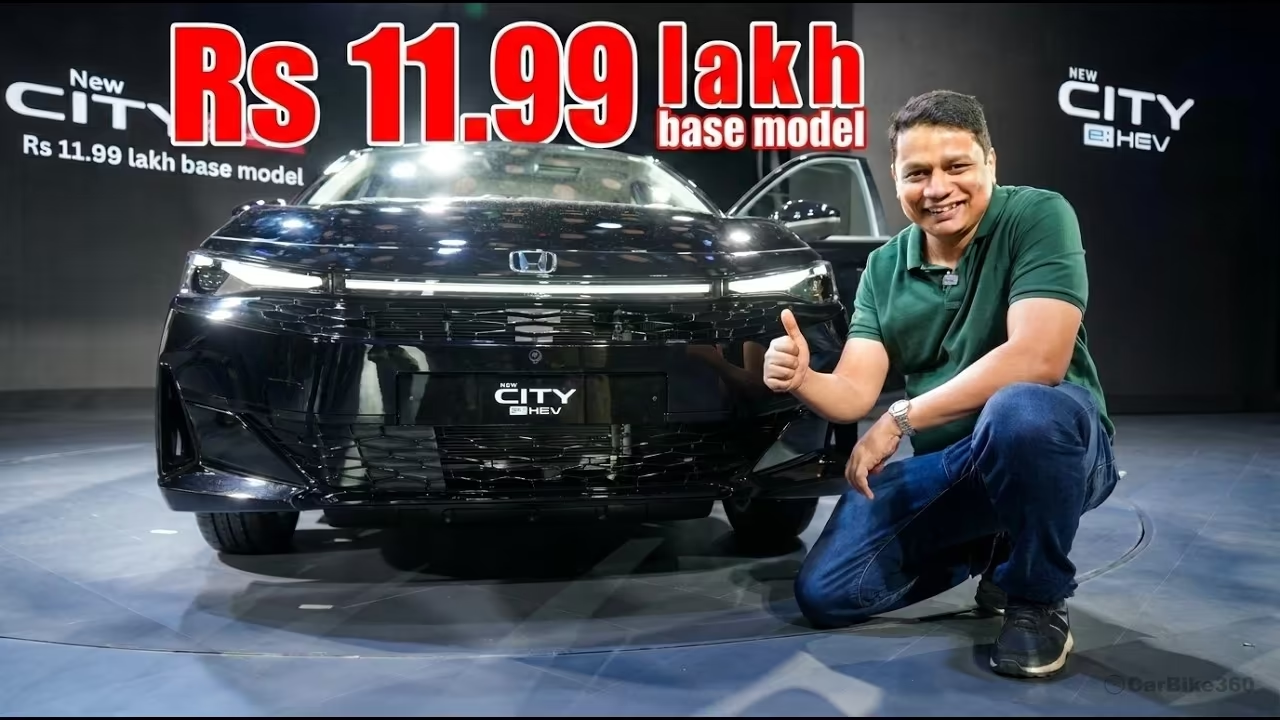
2026 Honda City Launched in India - Better than VW Virtus, Hyundai Verna & Skoda Slavia?
Other Car News

Listen to Car Audios