ELECTRIC
Upstream oil producers braced for robust Q1 earnings as OMCs Grapple with Margin Squeeze
 Add CarBike360 on Google
Rising crude prices are lifting upstream profits, but OMCs are seeing refining and marketing margins compress, reshaping Q1 2026 earnings trajectories.

Apr 23, 2026 05:19 am IST
Published On
Apr 23, 2026 05:00 am IST
Last Updated On
Apr 23, 2026 05:19 am IST
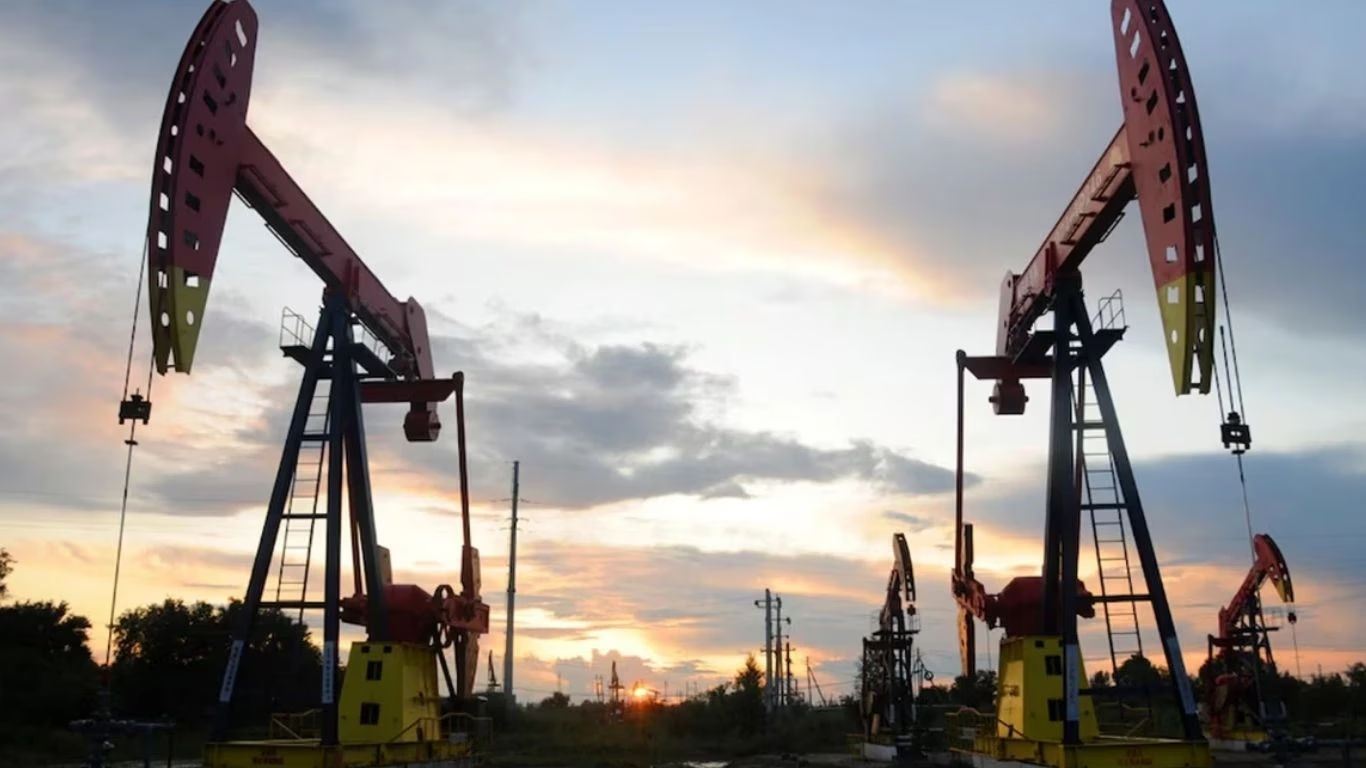
Upstream oil and gas producers are expected to report strong earnings growth for the March 2026 quarter. This growth is driven by a sharp rise in crude oil prices. In contrast, downstream oil marketing companies (OMCs) and city gas distribution firms are likely to see weaker results. Analysts project that operating profit before depreciation and amortization (EBITDA) for upstream companies will rise between 6 and 49 percent quarter-on-quarter. Revenue for these companies may grow by 17 to 22 percent.
Key Highlights
- Upstream oil producers expected to post 6 to 49 percent Ebitda growth in March quarter
- OMCs likely to see Ebitda decline by 8 to 50 percent despite revenue growth
- Brent crude averaged $81 per barrel in March 2026 quarter, up 28 percent sequentially
- LPG under-recoveries for OMCs projected to rise to Rs 10,000 crore due to global supply disruptions
- India's overall gas demand estimated to decline 10 percent sequentially, impacting gas utilities
Upstream Producers Benefit from Higher Prices
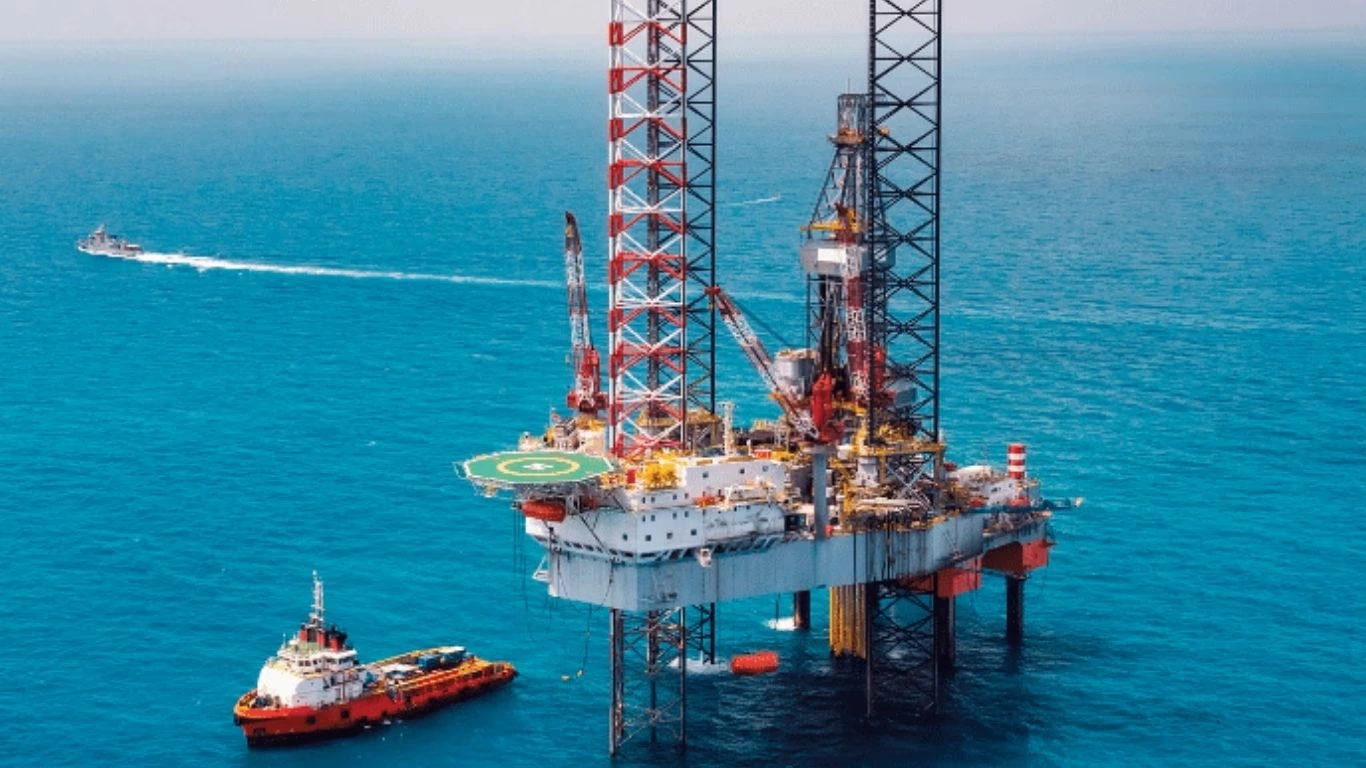
Brent crude averaged about $81 per barrel in the March 2026 quarter. This marks a nearly 28 percent increase from the previous quarter. The higher crude prices have boosted net crude realizations for producers. Nomura Financial Advisory and Securities expects EBITDA for ONGC to rise 23 percent and for Oil India to rise 49 percent compared to the previous quarter.
Upstream companies are expected to see marginal declines in oil and gas production and sales volumes. These declines are mainly due to natural field decline and maintenance shutdowns. However, the impact of higher crude prices is expected to more than offset these volume drops.
OMCs and Gas Firms Face Earnings Pressure
Oil marketing companies such as Indian Oil Corporation (IOCL), Bharat Petroleum Corporation (BPCL), and Hindustan Petroleum Corporation (HPCL) are expected to face sequential earnings pressure. This is due to lower product realizations, as fuel prices remained stable despite the spike in crude prices. Ebitda for OMCs is projected to decline by 8 to 50 percent quarter-on-quarter. However, revenue is expected to increase by 17 to 30 percent, reflecting ongoing margin pressure.
The weighted average gross marketing margins on auto fuel dropped sharply to about Rs 1.7 per litre in the March quarter. This is down from Rs 5.2 per litre in the December quarter and below the historical average of Rs 3.5 per litre. JM Financial Institutional Securities highlighted this trend in a recent report. LPG under-recoveries for OMCs are likely to rise quarter-on-quarter to around Rs 10,000 crore in the March quarter. This is up from about Rs 1,900 crore in the prior quarter. The increase is due to a sharp rise in global LPG prices caused by ongoing supply disruptions in West Asia.
Kotak Institutional Equities expects HPCL’s Ebitda to fall 51 percent quarter-on-quarter in the March quarter. BPCL and IOC are likely to report declines of 28 percent and 22 percent, respectively. Brokerages also expect Reliance Industries’ oil-to-chemical segment earnings to decline. This is due to higher crude costs, increased shipment and insurance costs, retail fuel segment losses, diversion of propane to LPG production, and higher Naphtha prices.
Gas utilities and city gas distribution companies are expected to report a soft quarter. LNG supply disruptions through the Strait of Hormuz, higher spot LNG prices, and rupee depreciation have impacted results. India’s overall gas demand in the March quarter is estimated to have declined by around 10 percent sequentially.
This decline is due to disrupted LNG imports, which weighed on volumes and profitability across the gas value chain. GAIL’s Ebitda is expected to drop by 12 to 38 percent sequentially, led by weaker gas trading margins, lower transmission volume, and losses in petrochemicals.
Also Read: Oil prices drop sharply as US-Iran peace talks advance amid Strait of Hormuz relief
CarBike 360 Says
The divergence between upstream resilience and downstream strain underscores the challenges OMCs face in a high‑cost environment. While robust crude realizations will likely amplify upstream bottom lines in Q1 2026, OMCs must navigate tighter margins, inventory headwinds, and policy dynamics to sustain profitability.


You May Like






Latest Lubricant Videos


Other Lubricant News

Petrol prices rise again in Delhi and Mumbai amid global supply disruptions

SBIS introduces E22–E30 ethanol fuel standards to accelerate flex-fuel mobility in India

Motul India to expand production as country becomes its largest global market

Oil prices surge as Trump-Xi talks coincide with Strait of Hormuz tensions
Listen to Lubricant Audios