

 ELECTRIC
BKT Tyres eyes B2C growth, targets Rs 23,000 crore revenue by 2030
 Add CarBike360 on Google
BKT shifts focus to B2C growth with an ambitious long-term revenue roadmap and enhanced brand strategy.

May 18, 2026 12:06 pm IST
Published On
May 18, 2026 11:00 am IST
Last Updated On
May 18, 2026 12:06 pm IST
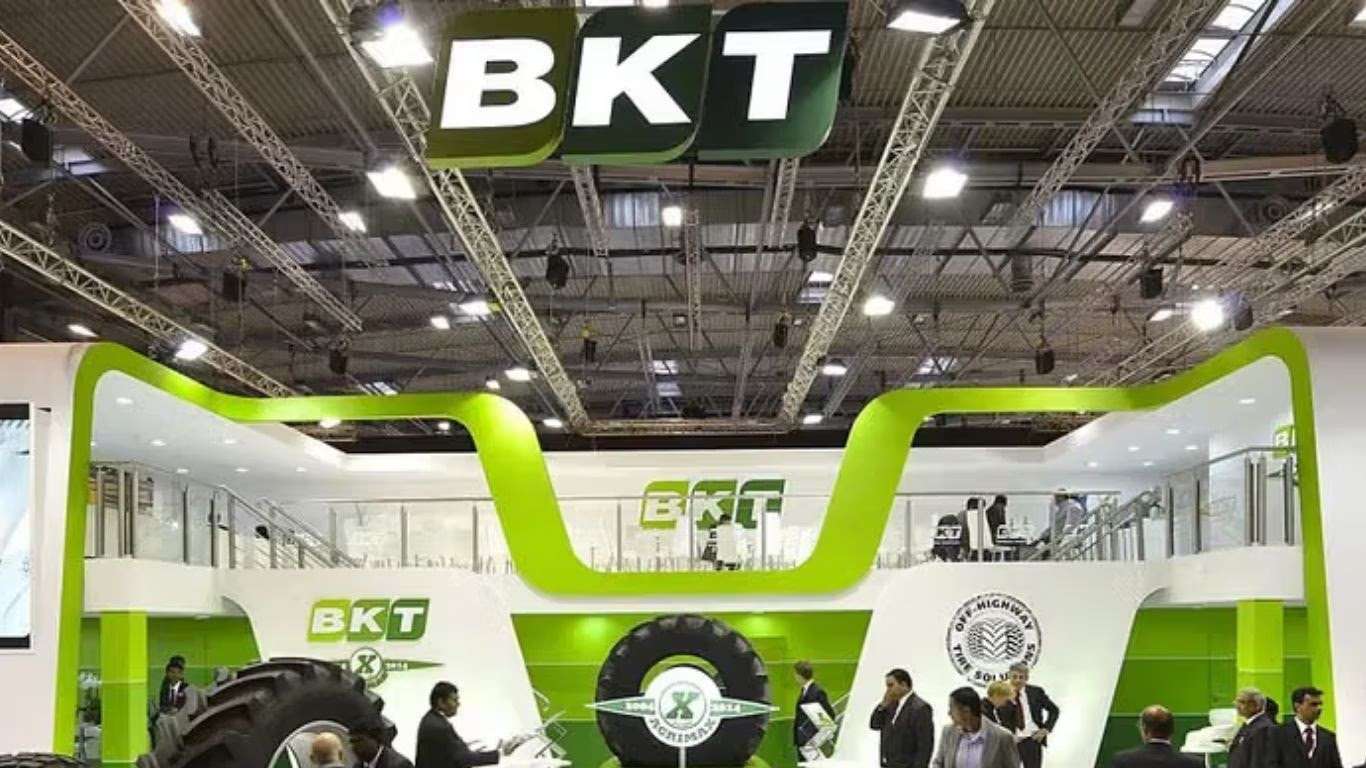
Balkrishna Industries (BKT), a leading Indian tyre manufacturer, is pursuing a major shift from its traditional B2B focus to build a strong B2C business. Satish Sharma, Senior President and Director (Business Development and Strategy), leads this transformation after decades at Apollo Tyres.
Sharma was tasked by promoters Rajiv and Arvind Poddar to create a lasting business with top-tier product quality. This new direction requires building the B2C business from the ground up, targeting the commercial vehicle radial (CVR) and two-wheeler segments.
Key Highlights
- BKT shifts focus from B2B to B2C targeting CVR and two-wheeler segments
- Vision 2030 aims for Rs 23,000 crore revenue with 17 percent CAGR
- FY26 standalone revenue at Rs 10,656 crore with 22.7 percent EBITDA margin
- BKT plans INR 6,800 crore capex through FY29 for expansion
- Brand recognition efforts include adding Tyres to the BKT logo
BKT’s Strategic Shift and Market Entry
BKT’s entry into the Truck Bus Radial (TBR) segment aligns with infrastructure growth and the increasing adoption of radial tyres in commercial vehicles. The company aims to leverage its global strengths in Off-Highway Tyres (OHT) while expanding into new markets. This move opens significant opportunities in the replacement market, which was previously outside BKT’s main focus.
Founded in Mumbai in 1987, BKT serves over 160 countries with more than 3,600 products and employs over 10,000 people. Its manufacturing facilities are located in Bhuj, Waluj, Bhiwadi, and Chopanki. In India, BKT competes with JK Tyres, CEAT, MRF, TVS Srichakra, Apollo Tyres, and Goodyear India. Globally, its competitors include Yokohama, Michelin, Bridgestone, Continental, and Alliance.
Under Vision 2030, BKT targets Rs 23,000 crore in revenue, up from Rs 10,600 crore in FY25, with a five-year CAGR of 17%. The company expects 70% of revenue from the off-highway business, 20% from new on-highway categories, and 10% from third-party carbon black sales. To support this growth, BKT has planned a capital expenditure of INR 6,800 crore through FY29.
Brand Recognition and Organizational Changes
Sharma identified a major challenge: despite BKT’s global presence, many consumers did not recognize it as a tyre company. To address this, BKT added "Tyres" to its logo for clarity and branded its carbon black business as "BKT Carbon." Sharma also ensured the new B2C division remained operationally distinct while leveraging existing infrastructure and resources.
To build a capable team, Sharma recruited a balanced mix of industry veterans and professionals from sectors like FMCG and durables. This approach aimed to combine established industry knowledge with fresh perspectives. Team-building retreats helped unify the diverse group and foster collaboration.
Sharma also reconsidered BKT’s distribution strategy. Instead of the traditional branch office model, BKT adopted a distributor-led system, dividing India into 43 regions, each managed by a single partner. This model supports higher channel profitability and efficiency.
Financial Performance and Future Plans
For Q4 FY26, BKT’s Off-Highway Tyre sales volume reached 85,820 metric tons, a 5% year-on-year increase. FY26 volumes totaled 317,356 metric tons. Stand-alone revenue for the quarter was Rs 2,894 crore, up 2% year-on-year, including a realized foreign exchange loss of Rs 47 crore. FY26 standalone revenue was Rs 10,656 crore, with a realized foreign exchange loss of Rs 164 crore.
EBITDA for the quarter was Rs 663 crore, with a margin of 22.9%. For FY26, EBITDA was Rs 2,423 crore, down 10% year-on-year, with a margin of 22.7%. Profit after tax for the quarter stood at Rs 295 crore, while FY '26 PAT was Rs 1,222 crore. BKT’s capex spend for the year was approximately Rs 2,800 crore. The company plans to invest nearly Rs 3,000 crore in India and Rs 500 crore in Europe for future growth. BKT has also announced 6-8% price hikes for Q1 FY27 and may implement further increases due to rising raw material costs.
Also Read: Balkrishna Industries to Invest Rs 6,800 crore to boost tyre and carbon black capacity by FY29
CarBike 360 Says
BKT’s pivot towards a stronger B2C presence marks a significant evolution in its growth strategy. By combining brand-building initiatives with its established B2B strength, the company is positioning itself for long-term scalability. If executed effectively, this dual-focus approach could help BKT not only meet its Rs 23,000 crore target but also strengthen its foothold in an increasingly competitive global tyre market.


You May Like


Latest Tyre Videos



Other Tyre News


Listen to Tyre Audios


Vihan AI - Your Car assistant
Ask me anything about cars, prices, and comparisons.