

 ELECTRIC
India auto component industry triples in a decade driven by diversified growth
 Add CarBike360 on Google
India’s auto component sector has witnessed remarkable growth over the past decade, fueled by diversified product portfolios, strong export demand, and increasing localization efforts across global supply chains.

Jun 11, 2026 06:55 am IST
Published On
Jun 11, 2026 06:00 am IST
Last Updated On
Jun 11, 2026 06:55 am IST

India’s listed auto component industry has nearly tripled in size, reaching Rs 5 lakh crore between FY16 and FY26, according to a new Equirus Securities report. The sector’s revenues grew at an 11 percent compound annual growth rate (CAGR) over the past decade. However, the report finds that growth was not uniform, with diversified companies consistently outperforming peers focused on a single product or customer.
Key Highlights
- India's listed auto component industry grew to Rs 5 lakh crore between FY16 and FY26
- Diversified companies outperformed single-product or single-customer peers across market cycles
- Electricals and Lighting segment led with 17 percent CAGR, while Batteries lagged at 8 percent
- The sector's net debt-to-EBITDA ratio improved to 0.18x in FY26 from 0.49x in FY22
- UNO Minda, Endurance Technologies, and Varroc Engineering named as preferred long-term ideas
Growth Patterns and Segment Performance
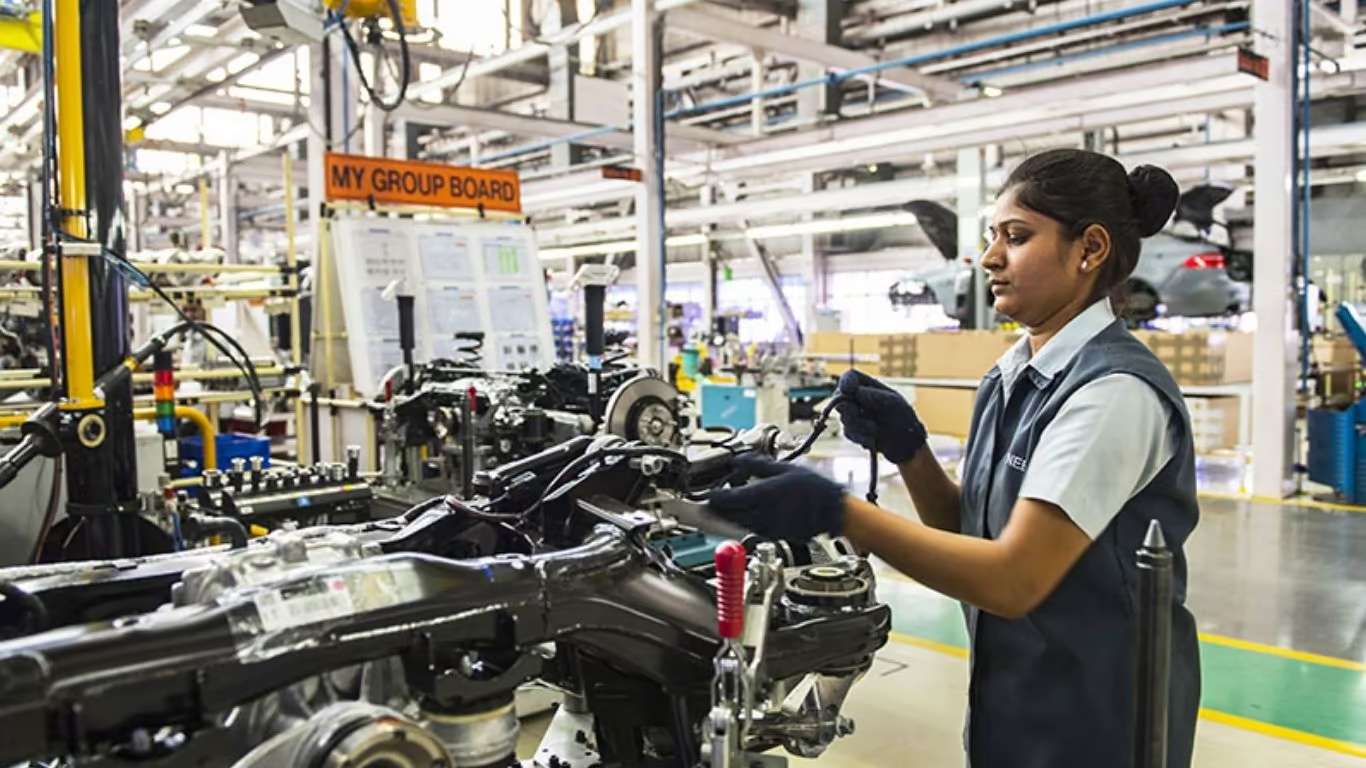
The report analyzed 52 listed auto component companies. Of these, 28 outpaced the sector’s average growth rate, while 24 lagged behind. The electrical and lighting segment recorded the highest CAGR at 17 percent. In contrast, the batteries segment posted the lowest CAGR at 8 percent. The study highlights that the breadth of a company’s revenue base, rather than its relationships with original equipment manufacturers (OEMs) or market share, was the key factor separating outperformers from laggards.
Companies that used multiple growth strategies—such as acquisitions, new product development, geographic expansion, and customer diversification—consistently outperformed those relying on a single approach. Firms concentrated in one OEM, product, or geography experienced sharper declines during sector downturns. Rising content per vehicle was the most durable growth driver, supported by trends like vehicle premiumization, electric vehicle (EV) adoption, and connected technologies. Regulatory-driven content additions provided a one-time boost before stabilizing.
Financial Health and Valuation Trends
The sector’s financial health improved significantly over the decade. The net debt-to-EBITDA ratio dropped to 0.18x in FY26 from 0.49x in FY22, marking the best level in ten years. Equirus projects a 21 percent profit after tax (PAT) CAGR for the sector between FY26 and FY28. The Body and Glass segment is identified as the most attractive valuation opportunity, with a projected 30 percent PAT CAGR and above-average growth at a below-average multiple. Electricals and lighting, along with suspension and chassis, are also highlighted as high-conviction segments due to EV content additions, premiumization, and improving free cash flow.
Market valuations in FY26 increasingly reflect future expectations. Companies delivering earnings upgrades for FY27 are seeing these narratives translate into returns. Firms facing earnings estimate cuts, despite previous re-ratings, are finding that optimism has already been priced in by the market.
Key Companies and Future Outlook
For long-term investment, Equirus names UNO Minda, Endurance Technologies, and Varroc Engineering as preferred companies. Apollo Tyres, CEAT, MRF, and Motherson Sumi Wiring India are considered tactical opportunities. The brokerage remains cautious on Bharat Forge and Sansera Engineering, noting that current valuations already reflect outcomes not yet visible in earnings. For Amara Raja and Exide, the report acknowledges their commitment to the lithium-ion transition but points out that execution timelines may be longer than the market expects.
Capacity expansion is underway at Apollo Tyres, CEAT, JK Tyre, and Balkrishna Industries across truck, passenger, off-highway, and carbon black segments. The report concludes that the next phase of growth for India’s auto ancillary sector will depend on companies adding new capabilities and adapting to changing market demands.
Also Read: India auto industry records strong May sales growth amid clean fuel push and new investments
CarBike 360 Says
India’s auto component industry stands as a strong pillar of the country’s manufacturing growth, with diversification and innovation driving its rapid expansion. As global supply chains evolve and demand for advanced components rises, Indian firms are well-positioned to capitalize on emerging opportunities. Sustained investments, technology adoption, and policy support will further strengthen the sector’s global competitiveness.


You May Like


Find your perfect car

Budget

Brand

Body Type

Fuel

Mileage

More
Latest Car Videos


Talking about new Honda City and upcoming ZR-V SUV with Honda India’s Kunal Bahl!

2026 Honda City Launched in India - Better than VW Virtus, Hyundai Verna & Skoda Slavia?

Weekly Auto & EV Wrap-Up: Luxury Launches, AI Tech & Big Industry Updates!

Weekly news wrap-up - CNG sales up, Fortuner prices raised, Hyundai completes 30 years
Other Car News

Listen to Car Audios


Vihan AI - Your Car assistant
Ask me anything about cars, prices, and comparisons.