ELECTRIC
Toyota Urban Cruiser EV vs Maruti Suzuki e Vitara: A Comprehensive Comparison
 Add CarBike360 on Google
Compare the Toyota Urban Cruiser EV and Maruti Suzuki e-Vitara in terms of design, performance, features, and pricing. Discover which electric SUV fits your lifestyle best.

By prayag
Mar 10, 2025 06:38 am IST
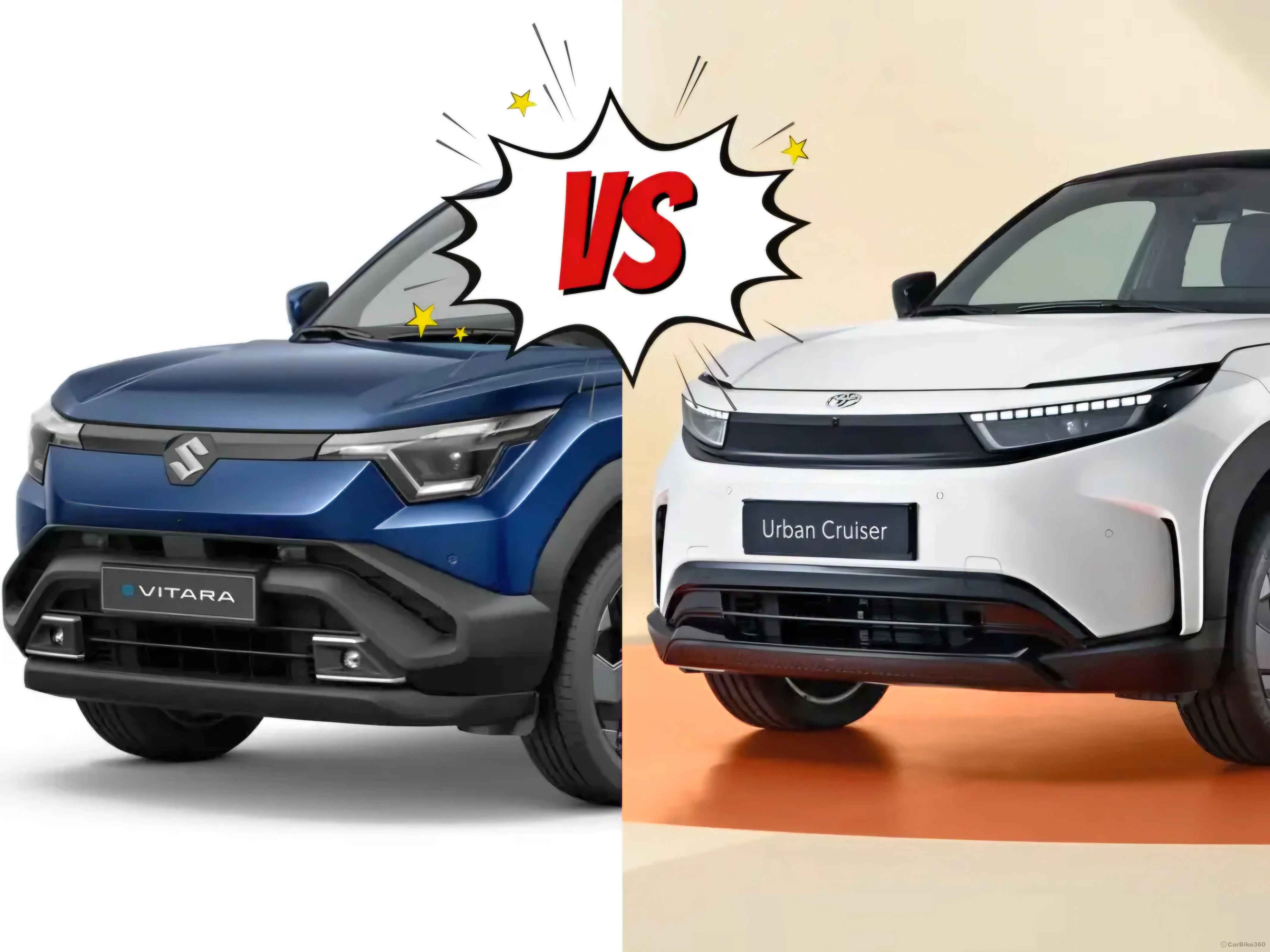
In a world swiftly transitioning to electric mobility, the Toyota Urban Cruiser EV and Maruti Suzuki e Vitara are two groundbreaking entries from the Japanese automakers, built to compete with established models like the MG ZS EV, Tata Curvv EV, the Hyundai Creta EV, and the Mahindra BE 6. Despite their shared DNA, these SUVs cater to unique audiences through subtle but meaningful differences in design, features, and performance.
Dimensions and Platform
Both SUVs sit on a 2,700mm wheelbase, which outclasses rivals like the MG ZS EV (2,585mm) and Tata Curvv EV (2,560mm). While the Urban Cruiser EV is 10mm longer and 5mm taller, their overall footprints remain nearly identical.
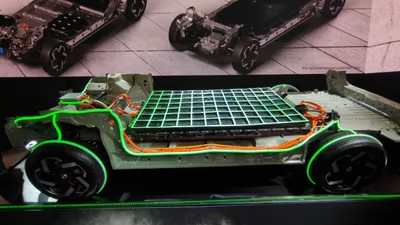
Maruti Suzuki’s proprietary Heartect-e platform, designed for Born Electric Vehicles (BEVs), serves as the foundation for both models. This skateboard architecture not only enhances stability and space but also supports advanced powertrain technology with e-axles (integrating the motor and inverter).
With a claimed ground clearance of 180mm, both SUVs promise decent off-road capabilities, although Toyota has yet to confirm exact figures. The dimensions suggest ample cabin space, giving them an edge over compact electric SUVs currently on the market.
Design and Styling
Despite their similar underpinnings, the two SUVs embrace distinct brand identities:
Maruti Suzuki e Vitara
Exterior Highlights:
- The e Vitara closely follows the eVX concept with sharp, tri-slash LED Daytime Running Lamps (DRLs) at the front and rear. Extensive dark cladding adds a rugged aesthetic, enhancing its SUV appeal.
- Rear Door Handles: Hidden in the C-pillar, a signature design first seen in the Swift.
- Wheel Options: Offers stylish alloy wheels up to 19 inches.
- Color Palette: 11 options to choose from.
Interior Details:
A dual-tone brown-black interior lends an upmarket feel, contrasting with Toyota’s single-tone cabin.
Toyota Urban Cruiser EV
Exterior Highlights:
- The Urban Cruiser EV opts for a more understated design. Slimmer headlights, a less angular bumper, and toned-down tail-lights provide a minimalist aesthetic.
- BEV Branding: Blue accents on the fender and charging cover, reminiscent of Toyota’s Camry Hybrid’s branding.
- Color Palette: A wider selection of 12 colors, offering more personalization options.
Interior Details:
Toyota differentiates itself with a sliding and reclining rear seat setup, a 40:20:40 split-folding function, and practical touches like larger door pockets.
Both SUVs feature flat-top and flat-bottom steering wheels, horizontally stacked dashboards with rectangular AC vents, and generously sized digital displays (10.25-inch instrument cluster and 10.1-inch infotainment system). Shared features include Android Auto, Apple CarPlay, and wireless charging.
Performance and Range
Maruti Suzuki claims a 500km+ range (MIDC), positioning the e Vitara as a class leader in this segment. While power outputs vary across trims, the front-wheel-drive models are expected to deliver 144hp or 174hp. Toyota is yet to disclose specific performance figures for the Urban Cruiser EV, but given their shared platform, similar configurations are anticipated.
ADAS and Safety Features
Both SUVs are equipped with Advanced Driver Assistance Systems (ADAS), featuring:
- Adaptive Cruise Control
- Lane Keep Assist
- Likely enhancements like Blind Spot Monitoring and Autonomous Emergency Braking.
- Physical HVAC controls in both models are a welcome feature, ensuring ease of use over touch-based alternatives.
Conclusion
The Toyota Urban Cruiser EV and Maruti Suzuki e Vitara share many similarities, but their distinct design philosophies and feature sets cater to different audiences. The e Vitara, with its bold styling and luxurious dual-tone interior, will appeal to buyers seeking a rugged yet upscale BEV experience. Meanwhile, the Urban Cruiser EV’s refined aesthetics and thoughtful rear-seat features make it a practical choice for family-oriented buyers.
Both SUVs bring serious competition to the compact electric SUV market, promising a blend of advanced technology, spacious interiors, and impressive range. Their sibling rivalry is set to elevate consumer expectations in the growing electric mobility segment.


You May Like


Find your perfect car

Budget

Brand

Body Type

Fuel

Mileage

More
Latest Car Videos





Other Car Articles
Main Title: Nissan Tekton vs 2026 Volkswagen Taigun Price Features and Engine Comparison
Nissan Tekton vs MG Astor: Detailed Comparison of Features Performance and Value
Tata Nexon EV vs Petrol Running Cost Comparison for Long Distance Travel
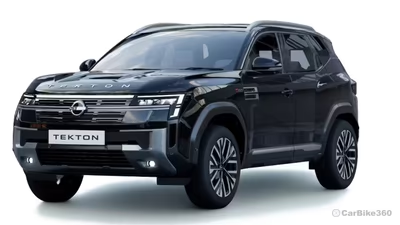
Nissan Tekton Visia Plus vs Acenta : Price, Features and Variants Compared
Listen to Car Audios