

 ELECTRIC
ऑस्ट्रो-डेमलर पैंजरऑटोमोबिल- पहली आधुनिक बख्तरबंद कार
 Add CarBike360 on Google
फ्रेंच चारोन के साथ ऑस्ट्रो-डेमलर पैंजरऑटोमोबिल को दुनिया की पहली आधुनिक बख्तरबंद कारों में से एक माना जाता है।

Mar 27, 2023 10:11 pm IST
Published On
Mar 09, 2023 07:29 pm IST
Last Updated On
Mar 27, 2023 10:11 pm IST
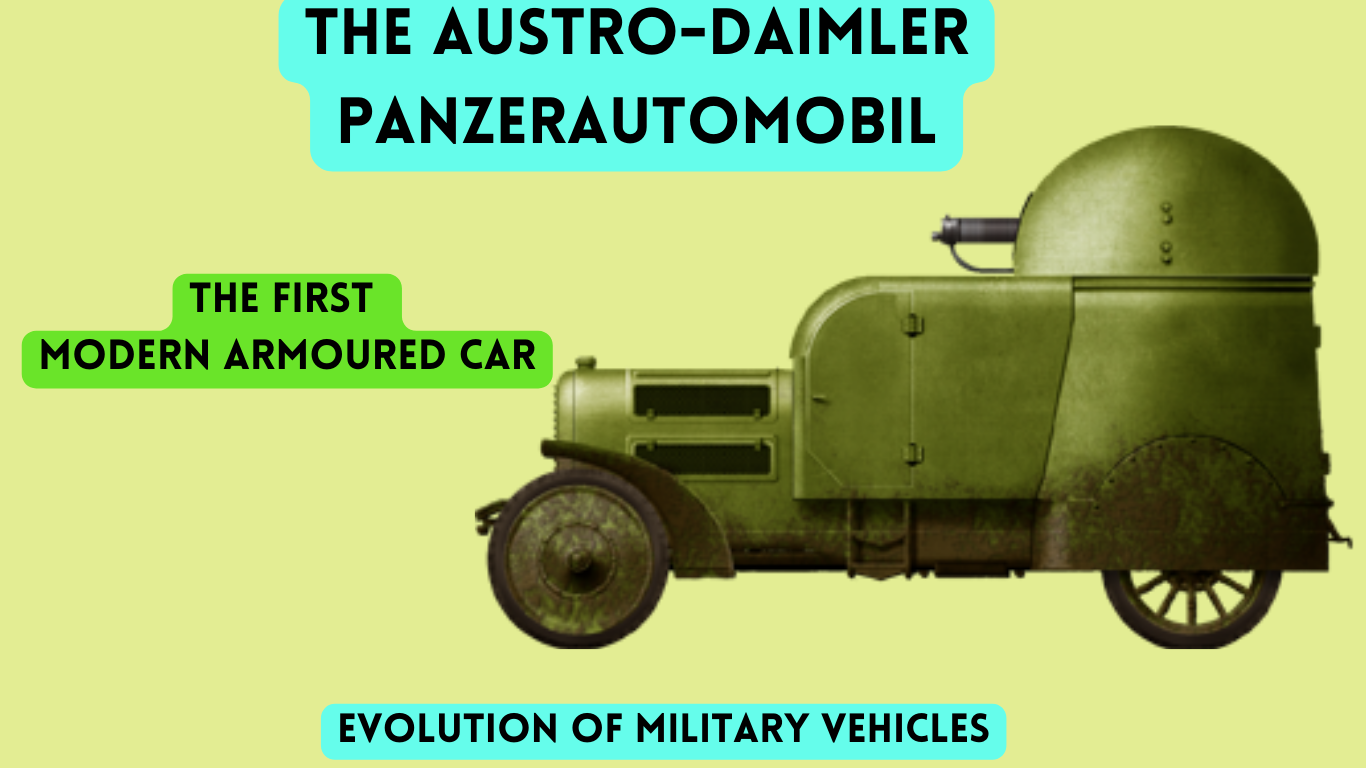
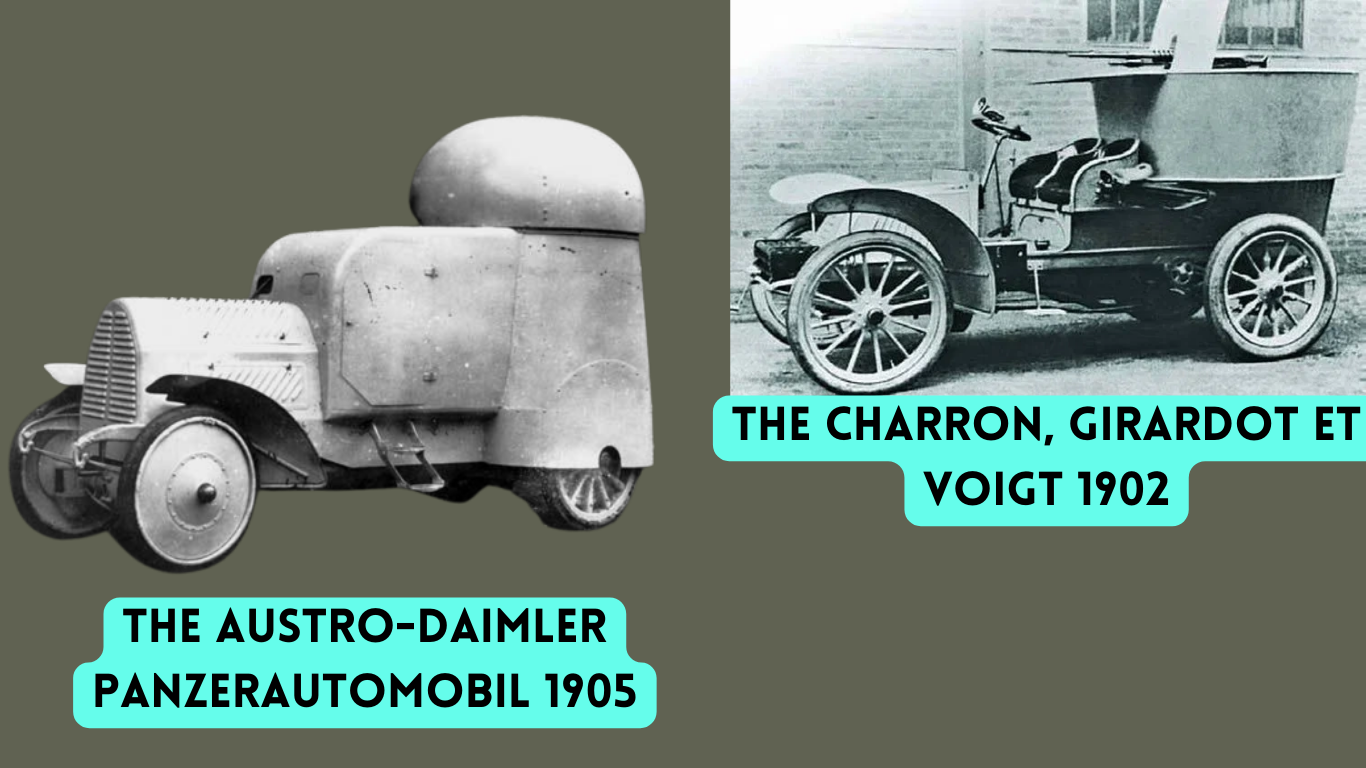
We have already discussed the French Charron in the last article. In this article we will find out more about the Austro-Daimler Panzerautomobil. The vehicle built in 1905 had a four wheel drive, a feature that was a revolutionary breakthrough for armoured vehicles during that time.
Early Development
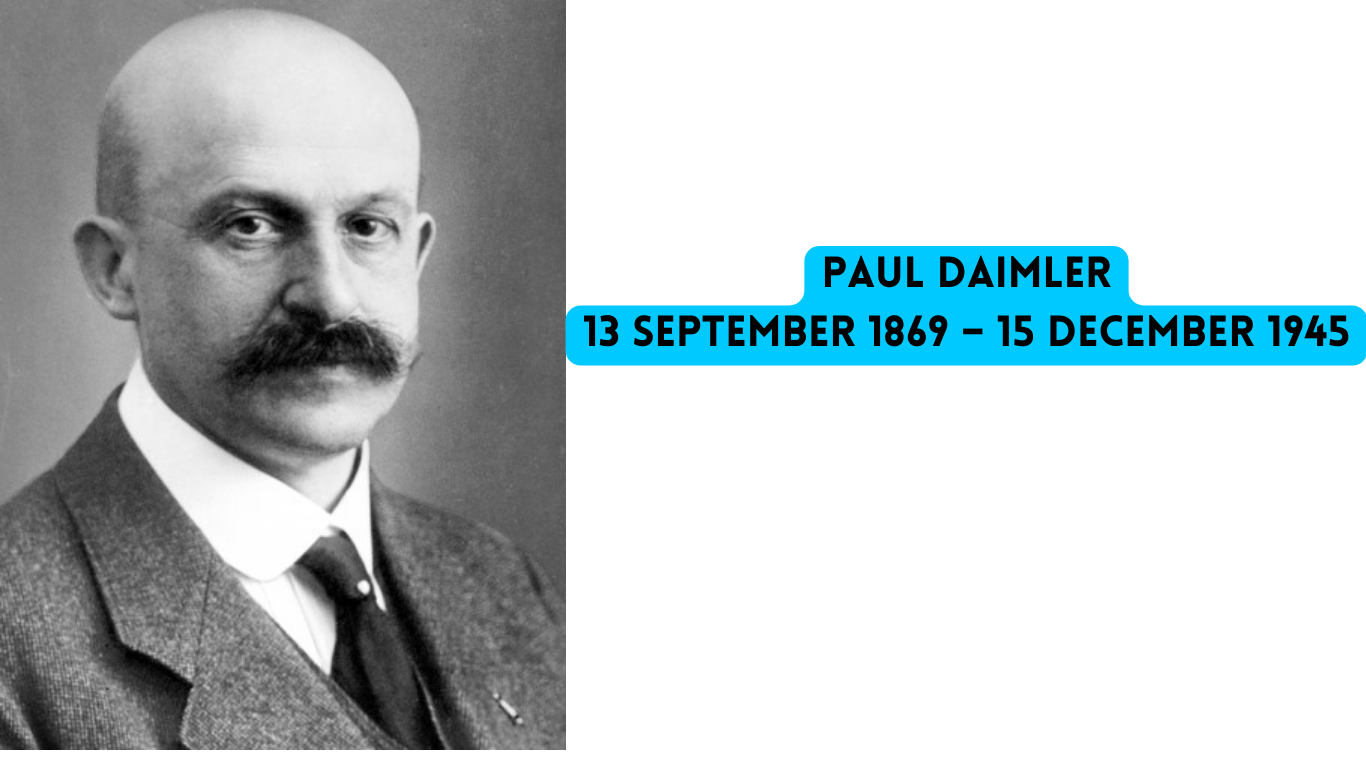
Paul Daimler, the eldest child of Gottlieb Daimler, was a mechanical engineer, who started working on the concept of a four-wheel-drive system for an armoured car around March 1903. In 1904, he started the process of designing the armoured car.
Design
The Austro-Daimler Panzerautomobil had a fully enclosed armoured body. The armour was made of 3 mm thick nickel steel and had rounded edges. The engine was mounted at the front and it had an armoured housing with a grill facing frontwards. Behind the engine was the crew compartment that could house two crewmembers, the driver and the gunner.
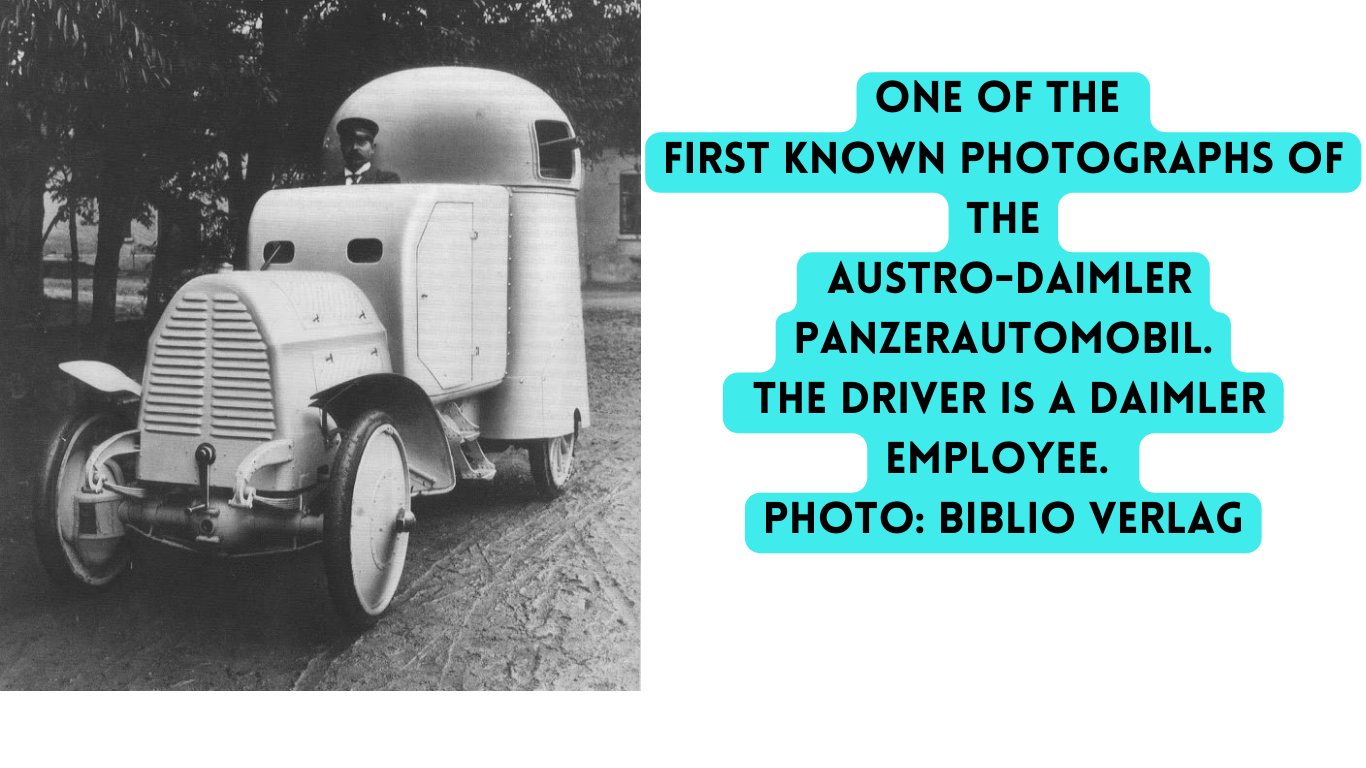
There was a door on the left side of the vehicle with a step mounted below to help the driver enter the vehicle. In the front armour plate there were two vision slits but there were no slits on the sides and that would limit the visibility of the driver. For better visibility, the driver’s seat and the steering could be lifted. There was a hatch in the roof and when lifted, the driver could poke his head out of the vehicle and get a clearer view of the surroundings.
On the back of the vehicle stood a tower-like hull that had an enclosed dome-shaped turret on top of it. The turret armour was 3.5 mm in thickness and there was room for one water-cooled 7.7 mm Maxim machine gun. There was a door in the back of the hull through which the gunner could enter.
Engine
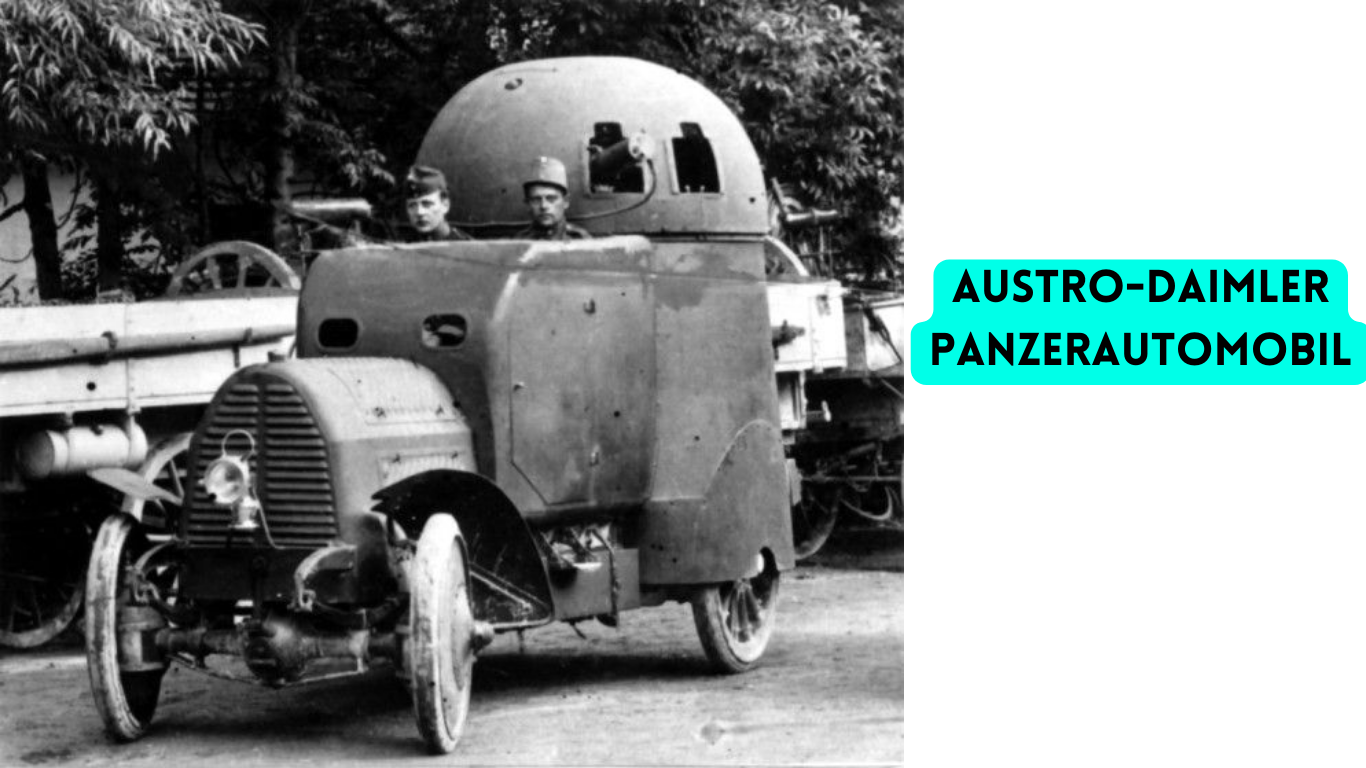
The vehicle was equipped with a Daimler 4-cylinder Piston Carburetor Engine. It had a capacity of 4.4 litres and produced 30 hp at 1050 rpm. The fuel tanks had enough capacity to drive for ten hours on the road. The vehicle featured a 4-speed cone clutch which was covered in leather.
Exhibition in Vienna
After all the hard work that was put in, the vehicle was finally ready to be displayed in the month of November, 1905. The vehicle was demonstrated for the first in front of the factory. The attendants got to witness the four-wheel drive of the modern armoured car and they seemed to be very impressed by this new feature.
After the trial, the vehicle was offered both to the German and Austro-Hungarian Empire, but the German War Ministry did not show much interest and politely turned down the offer. The vehicle remained confined to the factory. It was in March 1906 that Daimler got an opportunity to showcase the vehicle at Vienna’s National Automotive Exhibition.
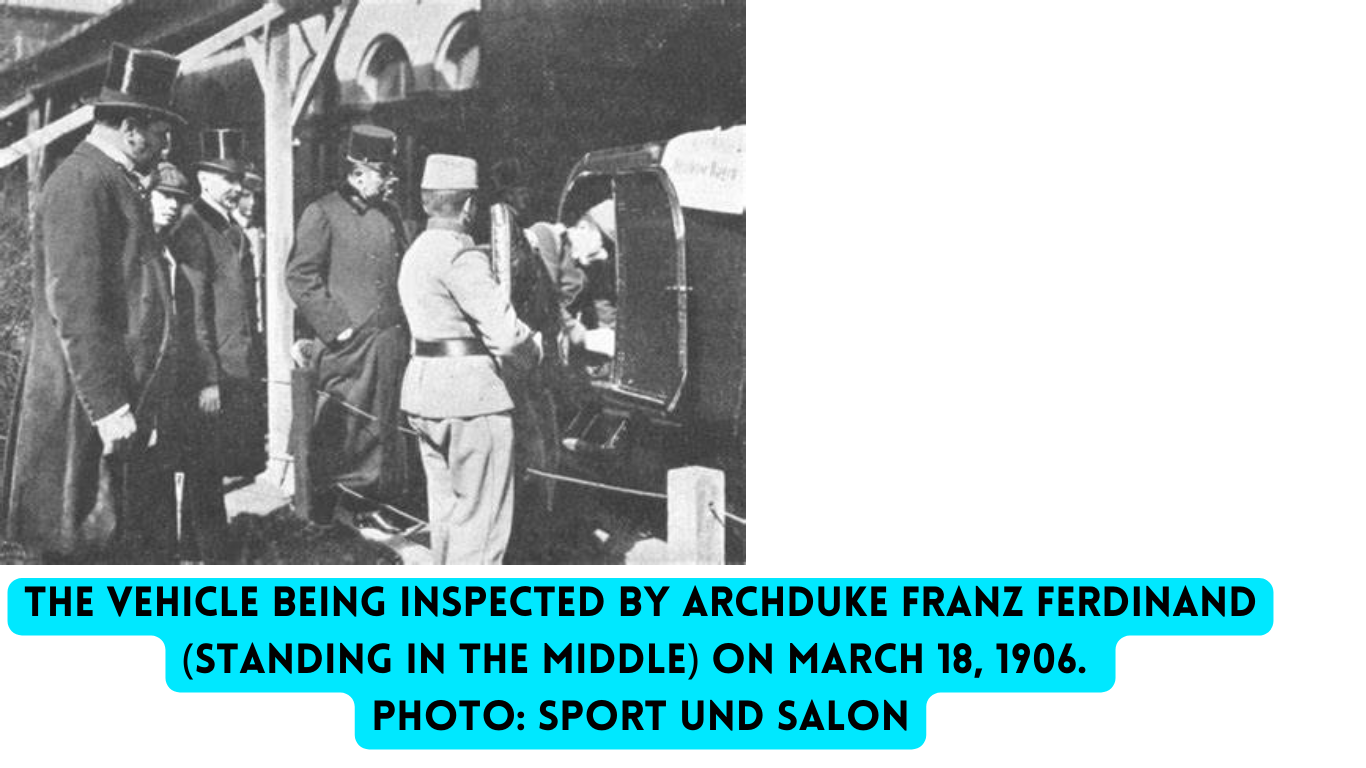
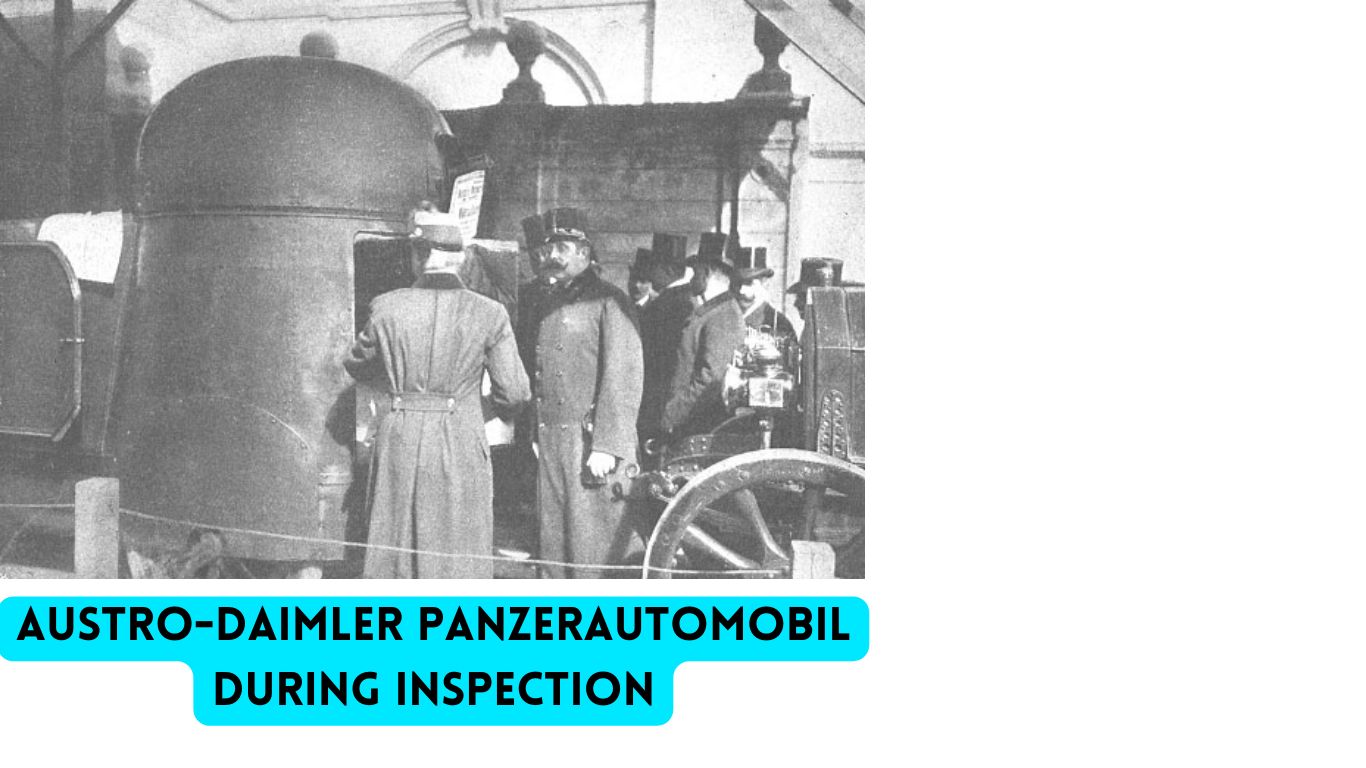
The 6th National Automotive Exhibition, Vienna was held in the building of the Gartenbau Gesellschaft (Horticultural Society). People had expected that the Panzerautomobil would serve as the main attraction of the Daimler Motoren-Gesellschaft booth. But there were challenges that could not be overcome in order to move the vehicle to the required location for display. On March 18, the Archduke Franz Ferdinand visited the exhibition. Due to the difficulties in moving the vehicle, The Panzerautomobil was displayed in the garden. The technical difficulties were explained to him and the Archduke went back satisfied with their answers. The following day, the challenges were overcome and the Panzerautomobil was brought inside the hall.
Emperor Franz Joseph, visited the exhibition on March 20. When he visited the Daimler booth, the technical details of the Panzerautomobil vehicle were explained to him. The Emperor examined the vehicle closely from various angles.
The annual war game Kaisermanöver ( Emperor Maneuvers, Annual wargames) was to be held in August- September of 1906. Between the exhibition in Vienna in March and the war games, heavy modifications were carried out in the vehicle.
The turret opened in the back and a second machine gun could be fitted in a newly added gun port. The thickness of the armour was increased to 4 mm from 3mm and the 30 hp engine was replaced by a more powerful 40 hp engine. Due to the changes, the combined weight of the vehicle increased to 3,200 kg.
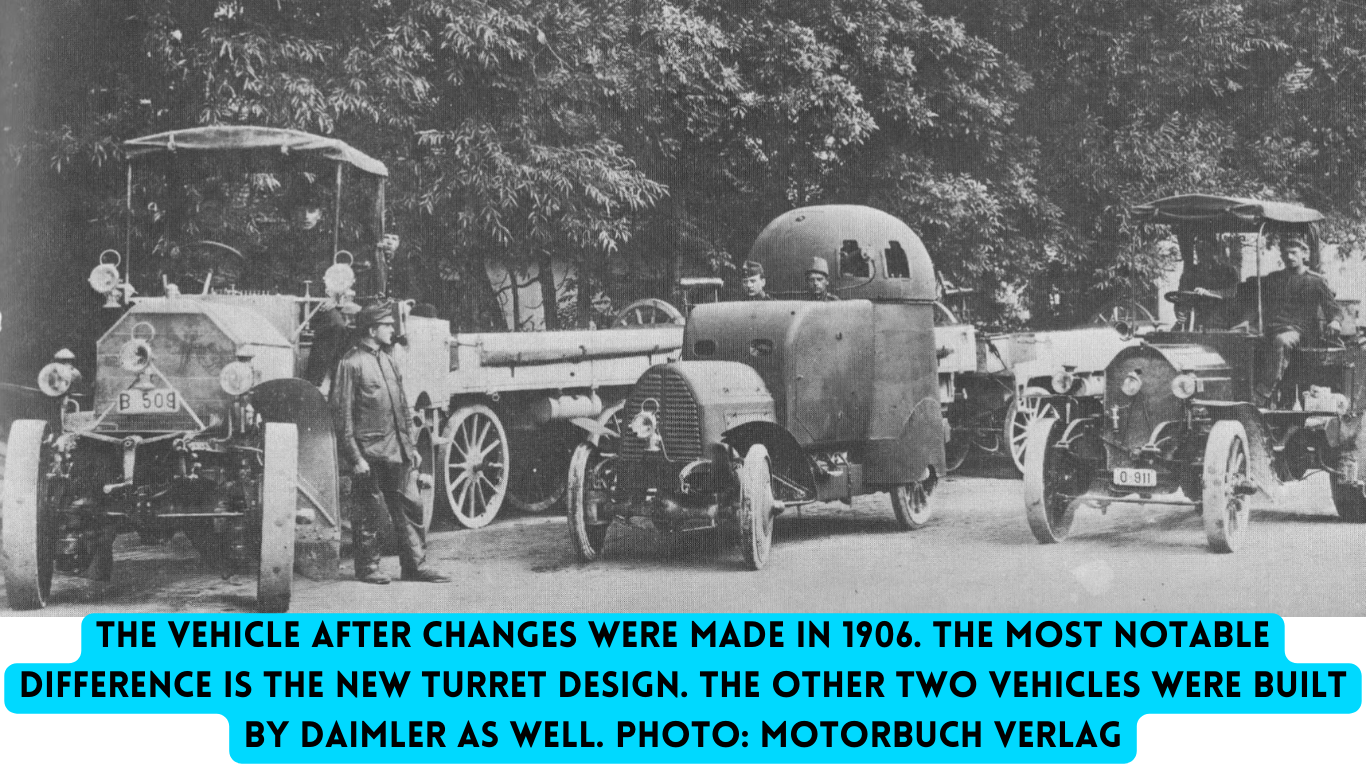
Kaisermanöver in Schlesien, 1906
In August 1906, the armoured car Panzerautomobil was moved from Vienna to Schlesien, the area where the Emperor manoeuvres and war games were to take place. This was the first time the armoured car was being displayed publicly after the heavy modifications were made.
During the manoeuvres, the car was under the command of Oberstleutnant Heinrich Graf Schönfeld and the 4-wheeled drive of the modern armoured car performed really well during the manoeuvres. The troops admired the vehicle and the press was enthusiastic in their reports about the manoeuvres. The vehicle drove back From Teschen (Cieszyn) to Vienna (roughly 250 km), after the manoeuvres ended, in just two days and that caused great excitement about the vehicle in the troops.
The vehicle was demonstrated to the Emperor on the last day of the manoeuvres, on August 4. He was accompanied by the archdukes Franz Ferdinand and Friedrich and the manoeuvre command.
According to a popular anecdote, the demonstration of the armoured vehicle did not go as planned. During the demonstration, the Emperor Franz Joseph and his generals were sitting on horses. The horses got petrified by the noise produced by the engine. They tried to flee and while doing so, one of the horses accidentally threw a general off its back. The emperor was not interested in the vehicle after the incident and decided not to order. Apart from that there could be many other reasons for the emperor for not accepting a modern armoured vehicle. It could be a result of a conservative mindset that people had during that time. The old strategy was working fine and there was no need to adapt to a new technology that had not been able to prove itself. Also introduction of a new technology would add extra cost. Introducing such a vehicle into the army would have needed a supply chain for gasoline, lubricating oil and spare parts. They would have also needed to hire new trained mechanics and crewmen.
Presentation to France
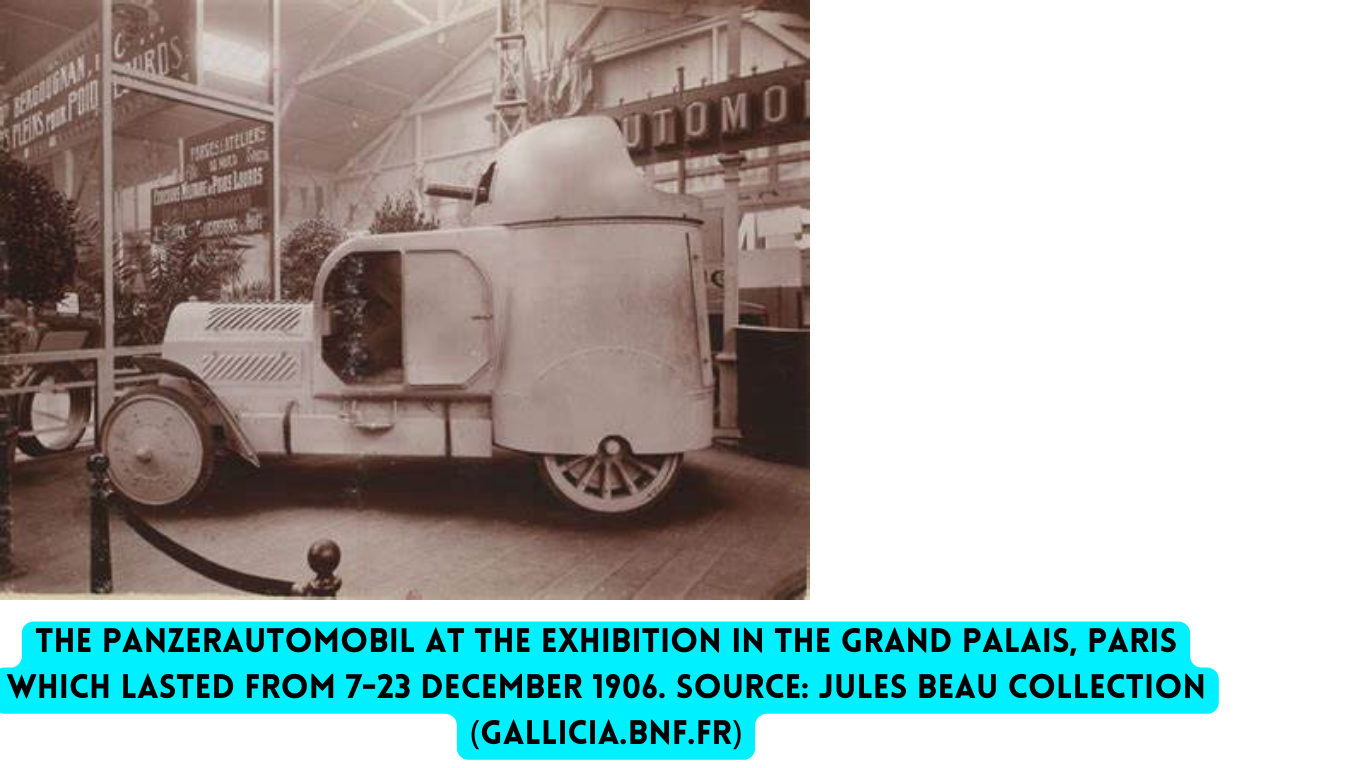
When it became clear that the Austro-Hungarian Army was not interested in ordering the vehicle, Austro-Daimler asked permission from the War Ministry to make an offer for the vehicle to France.
Daimler got an opportunity to display the car in the Grand Palais in Paris in December 1906.
France did show some interest in the vehicle but did not want to acquire it. France wanted to compare the modern armoured car to the domestically built French CGV armoured car.
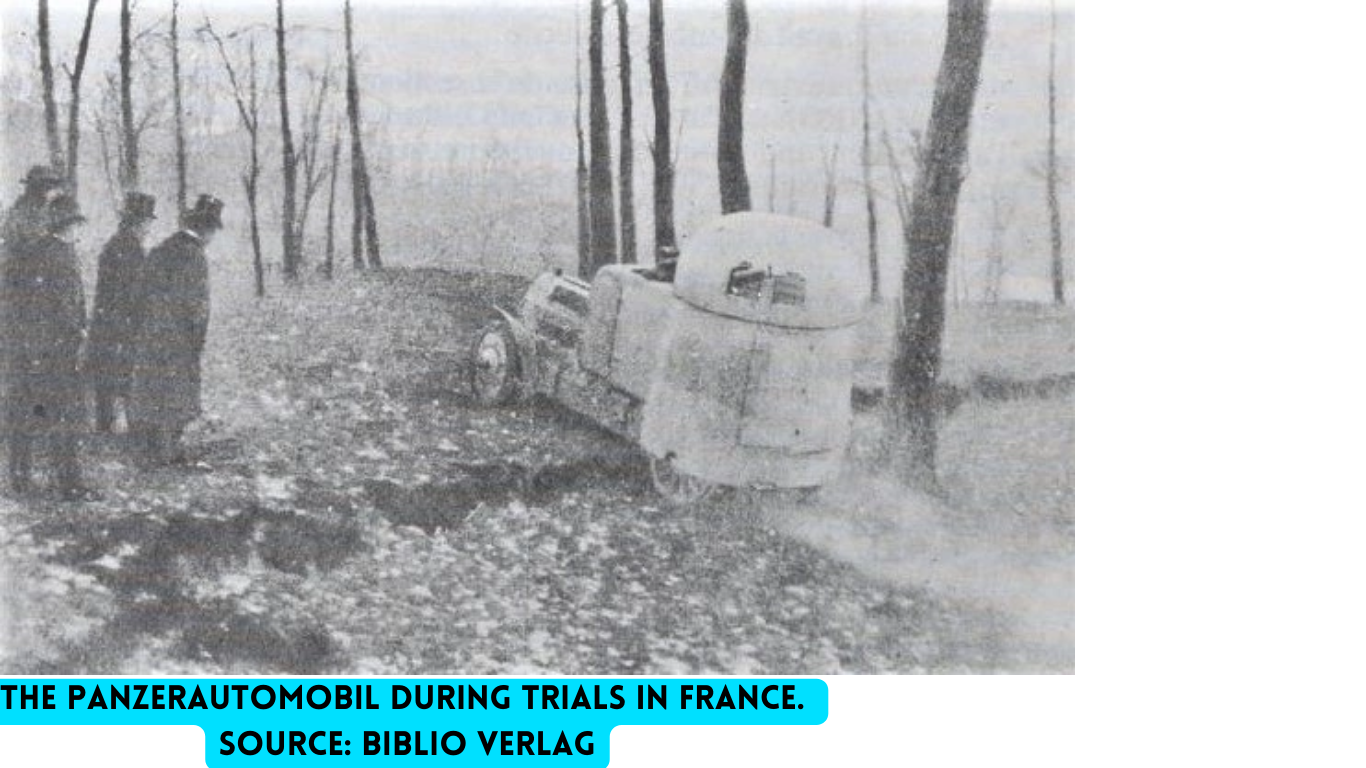
In January 1907, the armoured car was handed over to the French Army and it was first demonstrated in front of the French Minister of War. There were several experts present during the demonstration and the performance of the vehicle on rough terrain was impressive.
On May 4th, 1909, the Commision for the study of portable and small firearms, released a report that included information about the Austro-Daimler Panzerautomobil and Charron and the experience of the Generals with both the armoured cars.
The commission concluded that the two armored cars were not fit for military service and they were not equipped with the required off-roading capabilities. They also remarked that their cost of production was very high.
Fate of Austro-Daimler Panzerautomobil
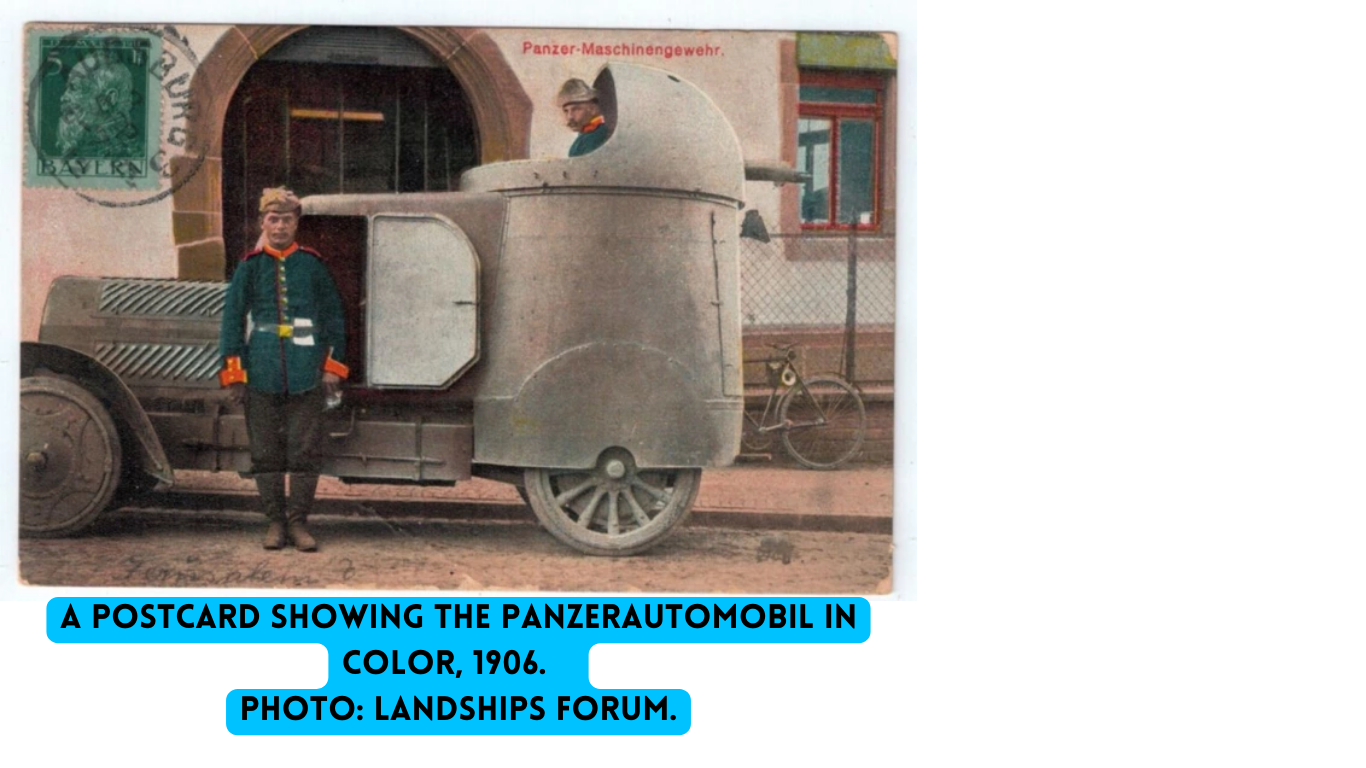
After the trials in France, as was expected, the vehicle returned to Austria.
When the armoured car was first displayed, the Austro-Hungarian press had shown great enthusiasm about the vehicle. In the military circles there was great excitement about the car. Even in France the vehicle was received well and the French Generals showed great interest in comparing the features of the panzerautomobil with French CVG.
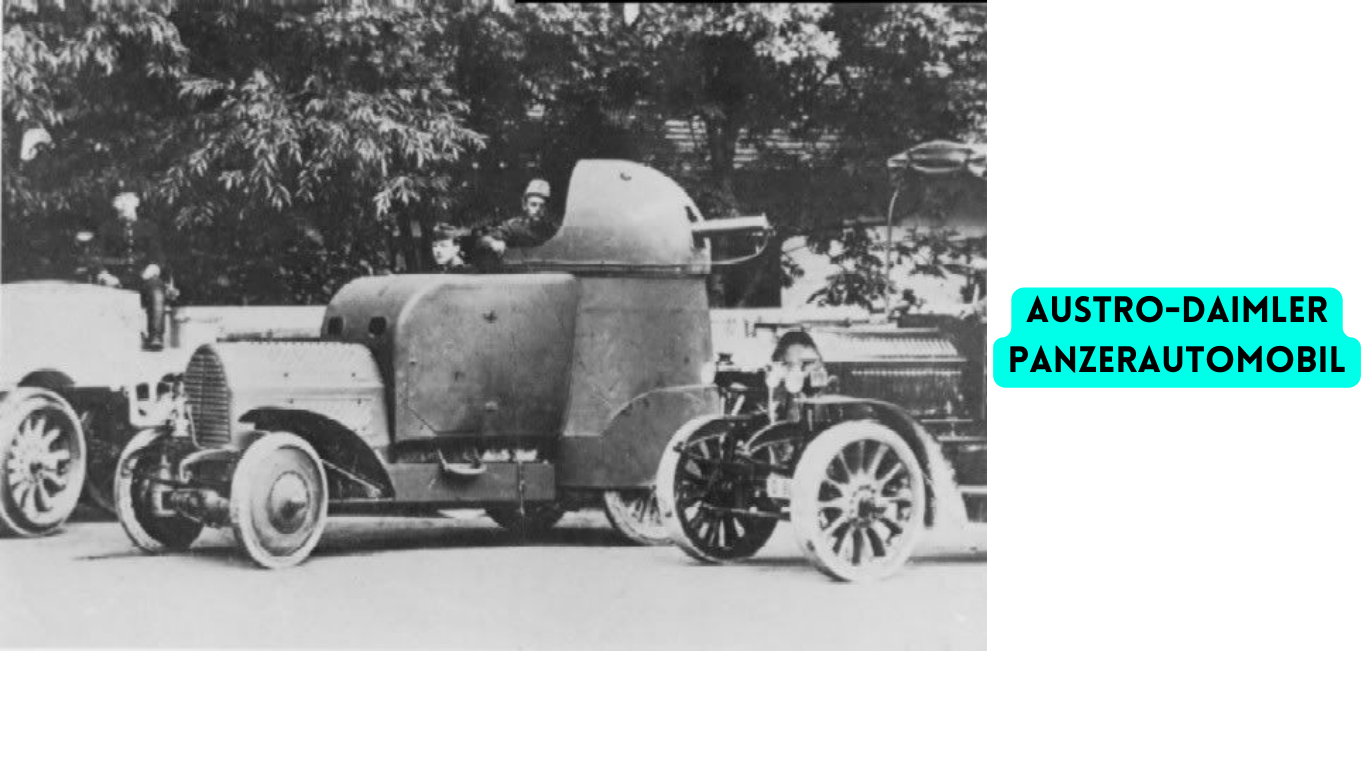
Though everyone seemed to be impressed with the vehicle, we can easily conclude that the time for armoured vehicles had not yet come.
World War I saw a massive increase in armoured car designs with but none seem to have taken an inspiration from the looks of the Austro-Daimler Panzerautomobil, except for the Belgian SAVA armored car which will be discussed in the upcoming chapters.
Through our article series Evolution of Military Vehicles, we bring out unique and interesting stories from the Military Automotive World. These stories will bring to the fore the colossal transformation that Military vehicles have undergone over the years. Keep checking our website for our latest stories and updates. If you have any query, feel free to contact us.





अपनी परफेक्ट कार खोजें

Budget

Brand

Body Type

Fuel

Mileage

More
नवीनतम वीडियो


Top Auto News of the Week | Hyundai i20 Leak, Honda ZR-V, Tata Sierra EV, Skoda EV & More!
Talking about new Honda City and upcoming ZR-V SUV with Honda India’s Kunal Bahl!
2026 Honda City Launched in India - Better than VW Virtus, Hyundai Verna & Skoda Slavia?

Weekly Auto & EV Wrap-Up: Luxury Launches, AI Tech & Big Industry Updates!
अन्य खबर
टाटा मोटर्स ने फ्लेक्स-फ्यूल वाहन अपनाने को बढ़ावा देने के लिए जीएसटी कटौती पर किफायती इथेनॉल का समर्थन किया

ARAI और प्राज उद्योगों ने भारत में 10 महीने का आइसोबुटानॉल-डीजल सत्यापन कार्यक्रम शुरू किया

MG विंडसर कम्यूट EV टैक्सी सेगमेंट के लिए 13.49 लाख रुपये में लॉन्च किया गया

चेन्नई उपनगरीय रेलवे ईवी बैटरी स्वैपिंग स्टेशन शुरू करेगा