ELECTRIC
CAQM targets mechanical sweeper shortage and better street design for cleaner Delhi air
 Add CarBike360 on Google
The CAQM is focusing on boosting mechanical sweeping capacity and redesigning streets to curb dust pollution and enhance Delhi’s air quality.

Jun 20, 2026 06:37 am IST
Published On
Jun 19, 2026 03:00 pm IST
Last Updated On
Jun 20, 2026 06:37 am IST
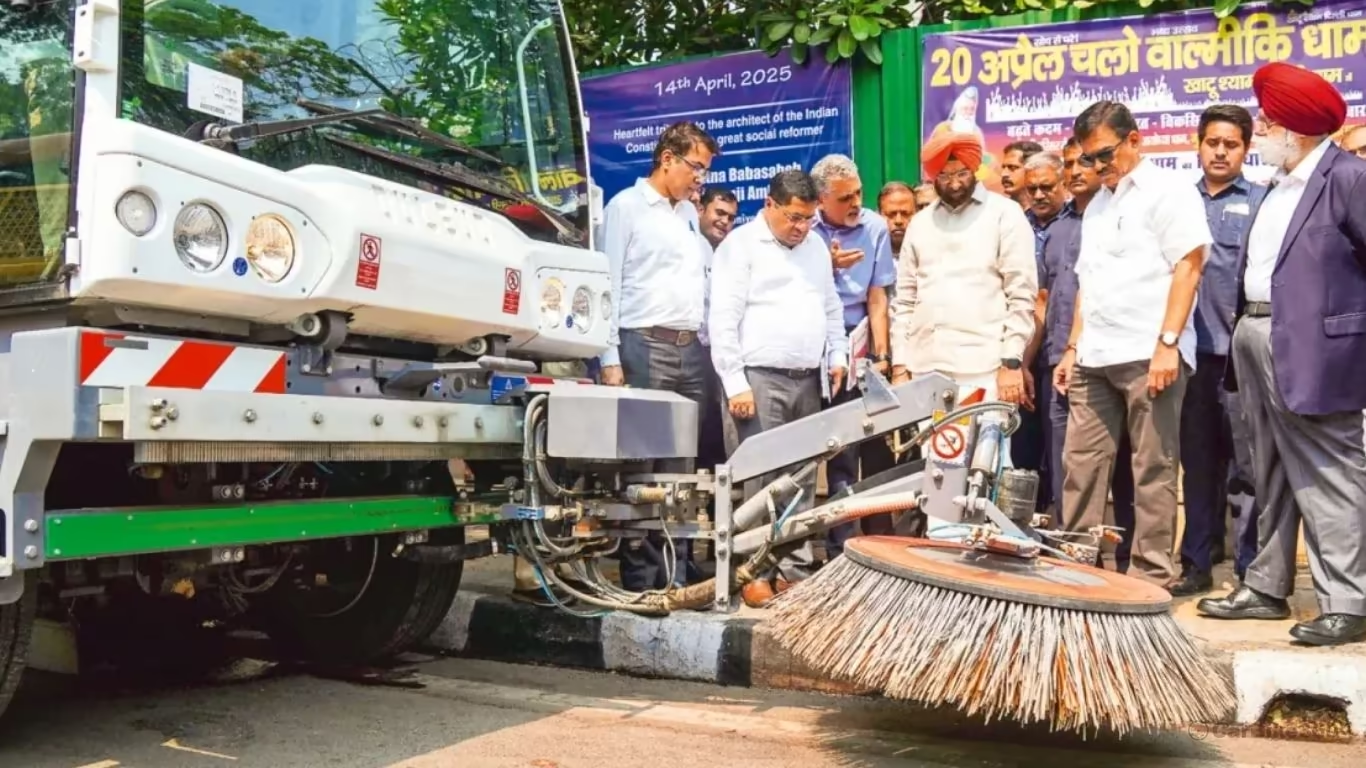
Environmental regulators and urban planners are introducing new measures to reduce road and construction dust in the National Capital Region. These actions will affect municipal demand for commercial vehicles and future road design guidelines. At the Clean Air Dialogues, organized by the Commission for Air Quality Management Resource Lab and the Raahgiri Foundation, officials stated that resuspended road and infrastructure dust accounts for up to one-third of Delhi's fine particulate pollution during summer.
Key Highlights
- CAQM identifies a shortage of mechanical sweepers as a key issue for Delhi's air quality.
- Municipal campaigns in Karol Bagh cleared 78 km of roads and removed 112 metric tonnes of dust.
- Panel recommends end-to-end street design to eliminate exposed soil and reduce dust.
- Financial planning for road projects will now include dust mitigation and waste disposal costs.
Mechanical Sweeper Shortage and Procurement
The panel identified a shortage of heavy-duty mechanical sweepers in municipal fleets as a key operational challenge. Addressing this gap is a short-term priority. This focus on mechanization is likely to trigger new municipal procurement cycles for specialized commercial vehicles and heavy equipment suppliers. In the Karol Bagh Zone, the Municipal Corporation of Delhi recently used mechanical fleets to clear 78 kilometers of roads. These efforts removed 112 metric tonnes of legacy dust and 87 metric tonnes of debris.
To maintain these operations, the CAQM is setting up data-driven monitoring systems. These frameworks will enforce accountability among civic agencies for road maintenance and dust suppression. The goal is to ensure consistent and measurable progress in reducing airborne dust.
Street Design and Urban Planning Changes
The dialogues also highlighted the need for long-term changes in urban transport corridors. Experts explained that road dust often results from poorly designed street edges with exposed soil. The panel recommended moving to end-to-end street design, which would eliminate open soil using systematic paving or integrated vegetation. This approach would reshape street edges and rights-of-way, affecting urban transit, micro-mobility, and future autonomous vehicle systems.
These changes in street design will require adjustments in how urban infrastructure is planned and maintained. The new guidelines aim to reduce dust at the source and create cleaner, more efficient transport corridors across the metropolitan area.
Financial and Regulatory Shifts
There will also be changes in the financial planning for infrastructure projects. Representatives from the Centre for Science and Environment emphasized that dust mitigation and scientific waste disposal costs must be included in the initial financial planning and tendering of all future road and infrastructure projects. This regulatory shift is intended to ensure that dust control measures are built into projects from the start, rather than added later.
These combined operational, design, and financial measures are expected to have a significant impact on municipal procurement, urban planning, and air quality management in Delhi and the wider National Capital Region.
CarBike 360 Says
The CAQM’s focus on increasing mechanical sweeper deployment alongside smarter street design marks a practical step toward reducing dust pollution in Delhi. By addressing both infrastructure gaps and operational inefficiencies, the initiative aims to deliver long-term improvements in urban air quality, making city roads cleaner and healthier for residents while setting a benchmark for other pollution-affected regions.


You May Like





Find your perfect car

Budget

Brand

Body Type

Fuel

Mileage

More
Latest Car Videos


Top Auto News of the Week | Hyundai i20 Leak, Honda ZR-V, Tata Sierra EV, Skoda EV & More!

Talking about new Honda City and upcoming ZR-V SUV with Honda India’s Kunal Bahl!

2026 Honda City Launched in India - Better than VW Virtus, Hyundai Verna & Skoda Slavia?

Weekly Auto & EV Wrap-Up: Luxury Launches, AI Tech & Big Industry Updates!
Other Car News
Listen to Car Audios