ELECTRIC
CEAT boosts R&D investment to Rs 240 crore to drive tyre innovation
 Add CarBike360 on Google
CEAT has increased its R&D budget to Rs 240 crore, aiming to enhance tyre innovation, testing infrastructure, and product performance across segments.

Jul 28, 2026 07:18 am IST
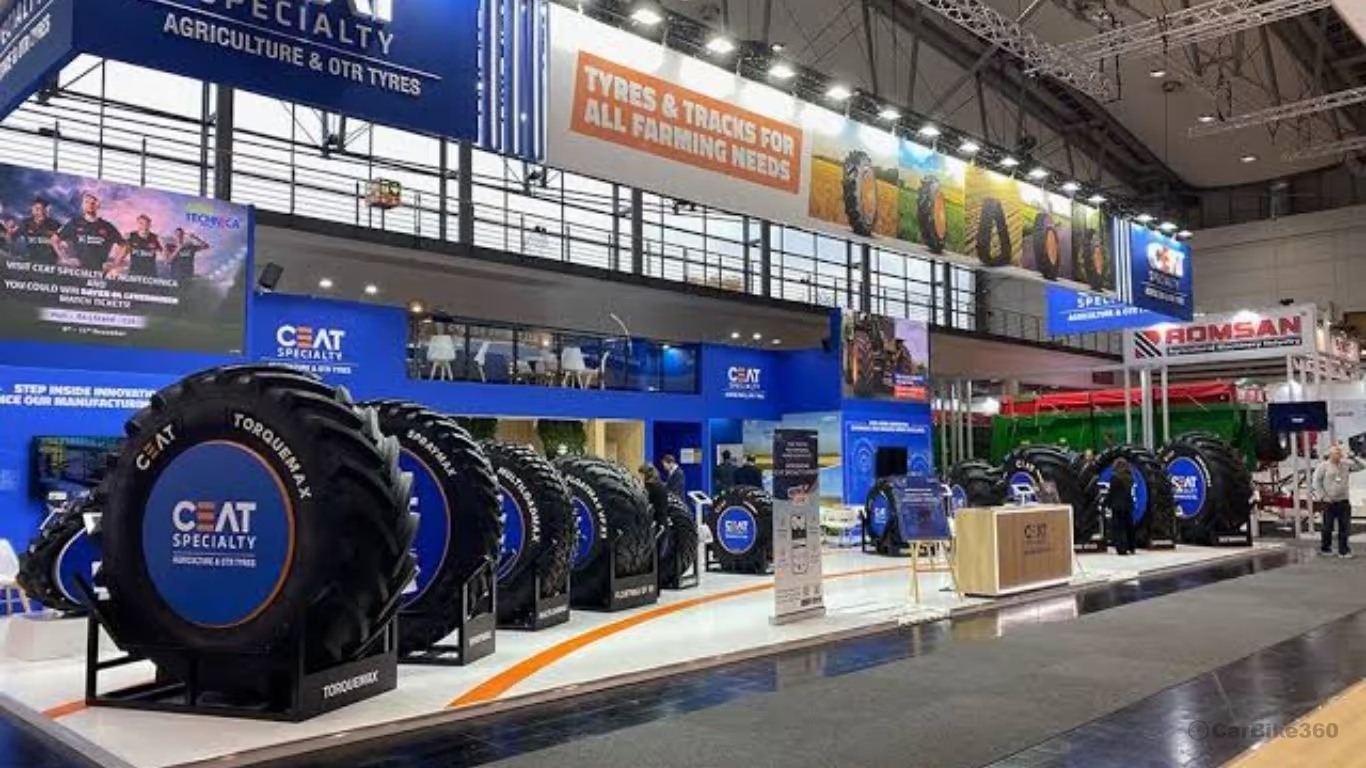
CEAT Ltd has raised its research and development (R&D) expenditure to Rs 240 crore for FY 2025-26, up from Rs 224.30 crore in the previous year. The company disclosed these figures in its Integrated Annual Report 2025-26, highlighting a continued focus on innovation-led growth.
Key Highlights
- CEAT increased R&D expenditure to Rs 240 crore for FY 2025-26 from Rs 224.30 crore last year.
- R&D spend as a share of net sales was 1.56 percent in FY26 compared to 1.72 percent in FY25.
- The company introduced three sustainable tyre innovations and achieved a 30 percent reduction in time-to-market.
- New Ambernath Compound Laboratory established for speciality tyre innovation and testing.
- Digital tools and AI are used to improve efficiency and product development cycles.
R&D Expenditure and Innovation Metrics
According to the Board's Report and financial statements, CEAT's total R&D expenditure for FY26 reached Rs 24,046 lakh. This included Rs 9,587 lakh in capital expenditure and Rs 14,459 lakh in revenue expenditure. In FY25, the total R&D spend was Rs 22,430 lakh, with Rs 7,972 lakh as capital and Rs 14,458 lakh as revenue expenditure.
R&D spending as a share of net sales was 1.56% in FY26, compared to 1.72% in FY25. Over the past eight years, this ratio has ranged from 1.3% to 1.85%, while the absolute rupee amount has steadily increased.
CEAT reported an R&D workforce intensity of 10.30% for FY26 and a cumulative patent filing count of 214. The company was granted 8 new patents during the year and had 214 active R&D projects. Revenue from new product development (NPD) reached USD 317 million, and innovation efforts generated Rs 105 crore in technical economy.
CEAT achieved a 30% reduction in time-to-market due to innovation and digitalisation. The company introduced three sustainable product innovations: Circl 50, Circl 90, and Sustainmax.
New Facilities and Testing Capabilities
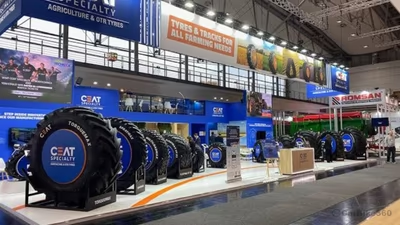
In September 2025, CEAT established the R&D Ambernath Compound Laboratory. The company described this as a centre of excellence for innovation, material characterisation, and product validation in the speciality tyre sector. The facility covers off-the-road (OTR), agricultural, and industrial applications, rubber tracks, and solid tyres. Integrated compounding and rubber-testing infrastructure at the site enhances development efficiency and speeds up time-to-market for specialised products.
CEAT also extended its Tyre Testing Centre, improving its ability to simulate field performance and market-failure conditions in a laboratory setting. This enables earlier issue identification, faster corrective action, and fewer field claims. The centre conducts durability, footprint, stiffness, and deflection assessments.
The company strengthened its Commercial Vehicle Tyre Testing Infrastructure by adding India's first Scania 460 G 4x2 prime mover with an advanced SUPER engine. CEAT called this a strategic investment to enhance R&D and align product development with global standards. The new asset supports faster tyre testing and homologation for international markets like Europe and the USA and helps reduce development timelines and costs.
Digitalisation and Advanced Tools
CEAT's R&D centres use advanced digital tools, simulation technologies, and Gen AI to develop safer, longer-lasting, and energy-efficient tyres. Machine learning models are used across R&D to increase efficiency and reduce development cycle time. The company collaborates with a digital partner to convert hand-drawn tyre sketches into rendered images and 3D models. A fully digitalised new product development workflow operates on PLM software. The company also uses RUBY, an R&D knowledge management hub, as part of its digital engineering and R&D capabilities.
Also Read: CEAT shares fall 9.3% after Q1 FY27 profit slumps despite revenue growth
CarBike 360 Says
CEAT’s increased investment in research and development signals a clear push toward future-ready mobility solutions. By focusing on advanced testing, durability, and innovation, the company aims to strengthen its competitive edge in both domestic and global markets. This strategic move not only enhances product quality but also aligns with evolving consumer demands and industry standards.


You May Like





Latest Tyre Videos


Other Tyre News


Listen to Tyre Audios