ELECTRIC
Ethanol production economics in India, Brazil and the US: Key factors and outlook
 Add CarBike360 on Google
A clear look at the cost drivers, market structure, and policy trends shaping ethanol production in three major global markets.

Jun 26, 2026 06:24 am IST
Published On
Jun 26, 2026 05:00 am IST
Last Updated On
Jun 26, 2026 06:24 am IST
India has rapidly expanded its ethanol production ecosystem to support its blending program. However, the economics of ethanol production in India differ from those in Brazil and the United States. Krishna Mohan Puvvada, Regional President for the Middle East, India, and Africa at Novonesis, explains that these differences arise from feedstock choices, plant scale, engineering maturity, and process efficiency.
Key Highlights
- India's ethanol production costs remain higher than Brazil's and the US's due to feedstock and plant scale differences.
- Brazil uses sugarcane, and the US relies on corn while India employs a diverse feedstock mix.
- Efficiency improvements in engineering and biotechnology are key to India's future ethanol competitiveness.
- India generates 350 million tonnes of agricultural residue annually that could support second-generation ethanol.
Key Factors Influencing Ethanol Economics
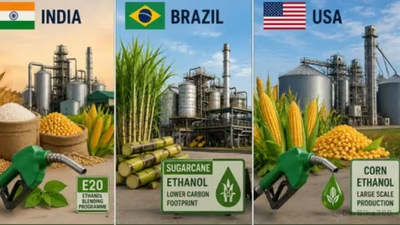
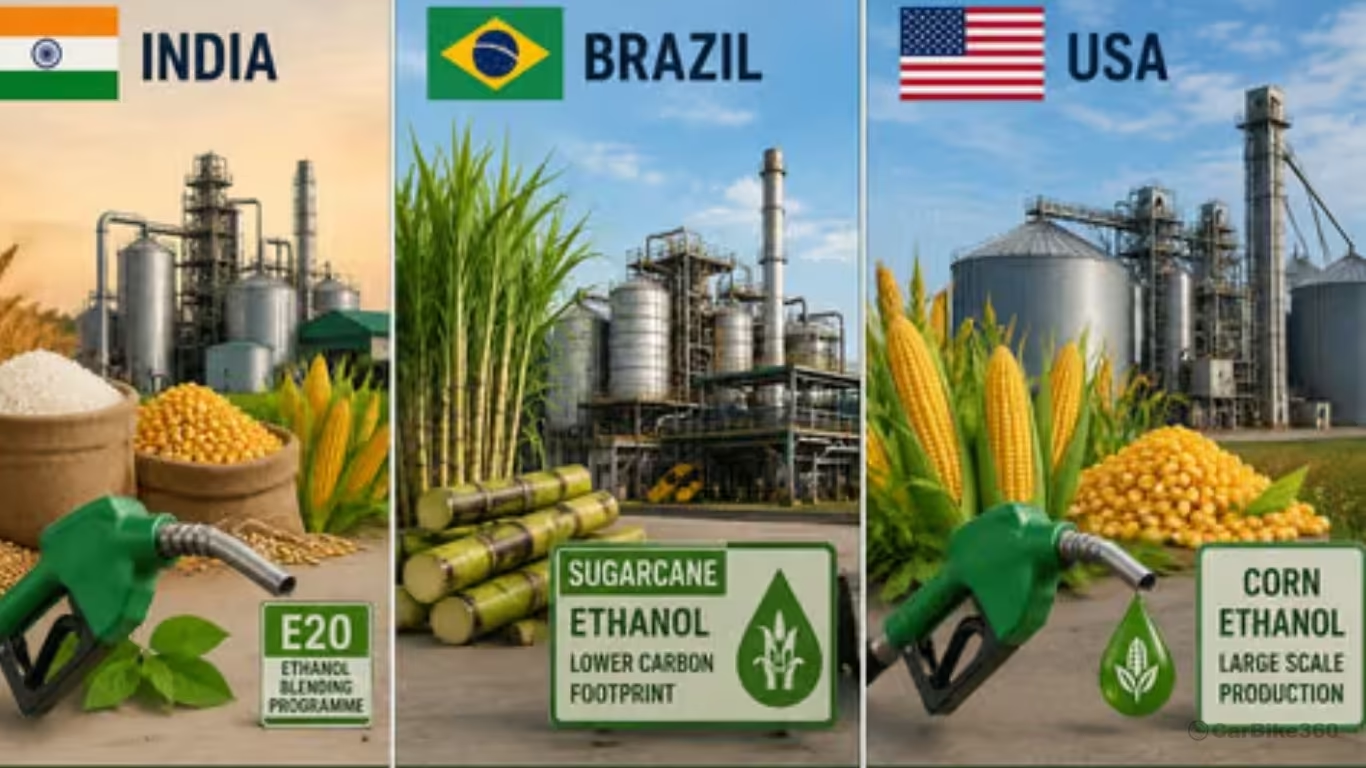
Puvvada states that Brazil produces ethanol at the lowest cost, followed by the US and then India. He emphasizes that this is not due to technological lag in India but rather to structural differences developed over decades. Brazil relies mainly on sugarcane, while the US uses corn. India uses a diverse mix, including rice, maize, damaged food grains, and increasingly, agricultural residues.
Feedstock selection is a primary factor affecting production costs. Brazil and the US benefit from large, integrated production facilities, while India's industry remains fragmented with many smaller plants. Larger facilities enjoy economies of scale, and automation is more common in the US. In India, plants often operate with low capital expenditure and higher operational costs, affecting overall efficiency.
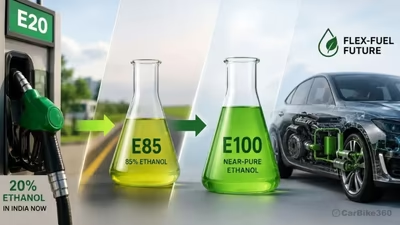
Puvvada notes that India's ethanol industry has established the agricultural base, policy support, and infrastructure needed for higher blends beyond E20 fuel. However, improving production economics will become the industry's next major challenge.
Engineering, Efficiency, and Future Competitiveness
Engineering philosophy also shapes cost differences. Indian plants typically focus on low initial investment but face higher ongoing expenses. Production economics depend on feedstock prices, plant design, operating efficiency, and long-term engineering choices. Biotechnology adoption, such as enzyme use, is at similar levels across India, Brazil, and the US.
Puvvada highlights that future competitiveness will depend on efficiency improvements. Advances in yeast technology can increase ethanol yield by over 2% from the same feedstock. Improved enzyme systems can add another 0.5-1% in conversion efficiency without major infrastructure changes. Larger engineering upgrades could bring Indian plants closer to the efficiency levels seen in Brazil and the US.
In first-generation ethanol plants, enzymes and yeast make up about 3-4% of conversion costs. Even small efficiency gains can significantly impact profitability. For second-generation ethanol, enzymes account for 20-30% of conversion costs. Enzyme performance has improved over two decades, and manufacturing costs have declined, making the technology more competitive. Puvvada expects further cost reductions as production volumes and technology maturity increase, similar to trends in semiconductors and solar energy.
India's Biomass Potential and Broader Considerations
India produces around 350 million tonnes of agricultural residue each year. Much of this biomass remains underutilized and could support second-generation ethanol production. Puvvada argues that discussions about 2G ethanol should consider not only production costs but also factors like greenhouse gas emissions, air quality, sustainability, energy security, and India's net-zero goals.
Looking ahead, Puvvada believes India's progress will depend on producing ethanol more efficiently rather than simply increasing output. Feedstock optimization, larger plants, better engineering, and ongoing advances in biotechnology will shape how closely India's production economics align with those of Brazil and the US.
Also Read: India expands ethanol fuel use with E85 and E100 regulations
CarBike 360 Says
Ethanol production economics in India, Brazil, and the US will continue to be shaped by feedstock availability, policy support, and refining efficiency. Brazil’s sugarcane advantage, the US corn-based scale, and India’s blending push each create a different cost structure. As clean fuel mandates strengthen and technology improves, ethanol should remain a key part of the global energy transition.


You May Like






Latest Lubricant Videos


Other Lubricant News


Listen to Lubricant Audios