ELECTRIC
India-UK FTA implemented on July 15, British car prices set for a major changes
 Add CarBike360 on Google
The India-UK FTA implementation marks a significant shift in automotive trade, potentially reducing import duties on British cars and making premium models more accessible to Indian buyers.

Jul 15, 2026 10:51 am IST
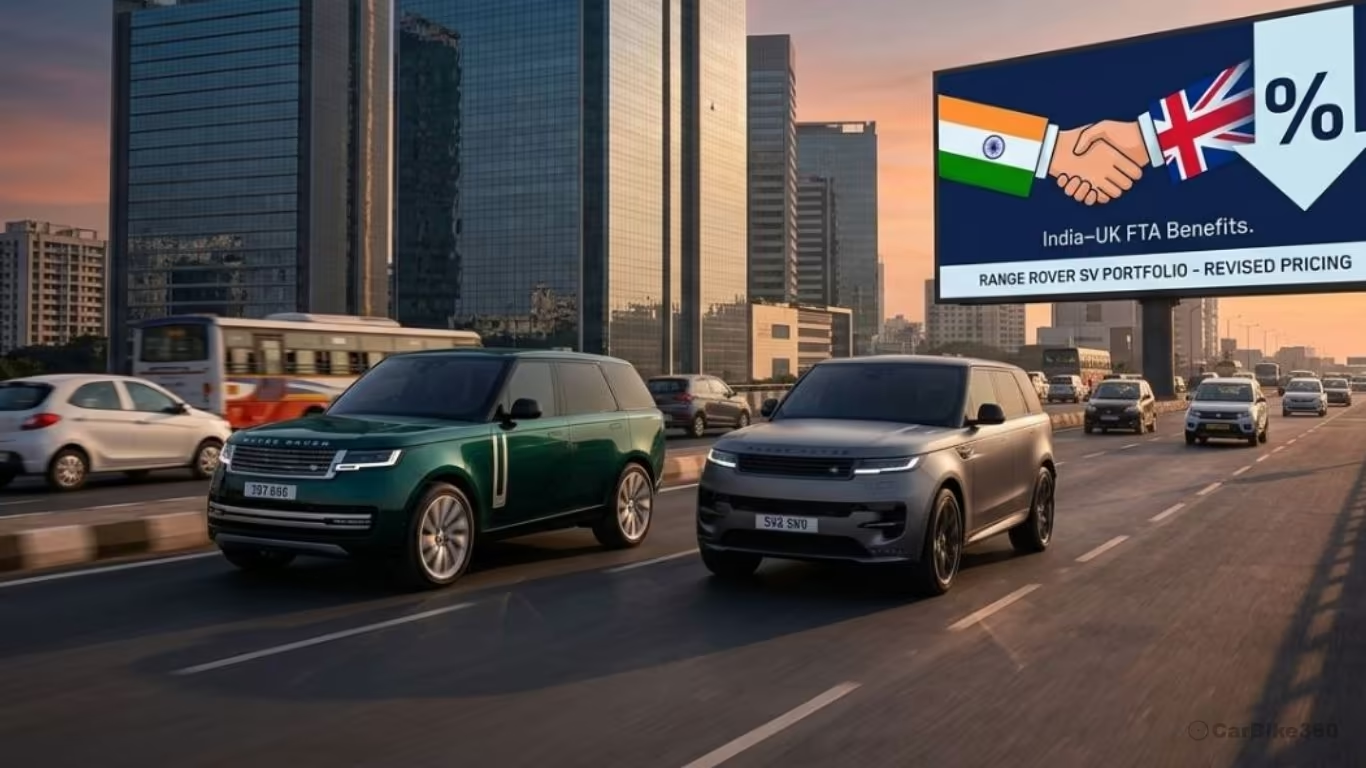
The India–UK Comprehensive Economic and Trade Agreement (CETA) officially came into effect on July 15, 2026. This agreement opens the gate for the world's biggest consumer markets to Indian manufacturers. With such beneficial trade deals between the two nations, many premium sales and services of British heritage will get cheaper for the Indian buyers.
Beyond strengthening bilateral commerce and trade, the agreement is expected to reshape India's premium automotive market by lowering import barriers, expanding business opportunities, and improving consumer choice over the coming years, starting from 2026.
FTA: Free Trade Agreement Explained
FTA is an abbreviation of 'Free Trade Agreement', under which two countries can decide to reduce or remove the import duties and other trade barriers to improve the diplomatic relations overseas. Now that the India-UK FTA has recently come into force, several British premium services and products might get cheaper for Indian buyers.
For car buyers and automobile manufacturers alike, this is more than a policy announcement. The agreement introduces phased tariff reductions on British-built vehicles, encourages greater investment, simplifies trade and opens fresh opportunities for both Indian exporters and UK automotive brands.
A Landmark Trade Deal for the Automotive Industry
The UK is providing duty-free access to approximately 99% of Indian exports, covering the entire vehicle portfolio that is sold on the Indian mainland. For the automobile market, this deal came as a green flag to its honourable Indian customers. Several British-origin automotive OEM brands might become cheaper under the India-UK FTA rule and are scheduled to reduce the price of the automotive components in the near future.
What Changes Does It Bring for Imported Cars?
The FTA's biggest advantage may be for premium British vehicles. Under the agreement, customs duties on eligible UK-built cars will be reduced in phases and within agreed quotas. Large imported petrol and diesel vehicles, which previously attracted import duties of around 110%, will see significantly lower tariffs over time, making several luxury models considerably more affordable than before.
Immediate Tariff Drops
Vehicle Category | New Import Duty | Old Import Duty | Units |
Petrol (over 3,000cc) + Diesel (over 2,500cc) | 30% | 110% | 10,000 |
Petrol (1,500cc - 3,000cc) + Diesel (up to 2,500cc) | 50% | 66% | 5,000 |
Petrol up to 1,500cc | 50% | 66% | 5,000 |
- However, not every model will receive an immediate price reduction. For large-engine passenger vehicles, the customs duties and tariffs will be reduced by about 30% in the first year, compared to the gradual normal import duty of 10%.
- While the agreement came into effect, in the first year of implementation, the import duty on petrol vehicles with engines above 3,000cc and diesel vehicles with engines above 2,500cc will fall to under 30% from 110%, which will be limited to 10,000 units.
- Some petrol vehicles with engines between 1,500cc and 3,000cc and diesel vehicles with engines up to 2,500cc will have access to a 50% duty, from 66% under the quota of 5,000 vehicle units.
- At last, petrol vehicles which have power units up to 1,500cc will offer 50% import duty with on first 5,000 limited units under quota
Which Car Brands Stand to Benefit?
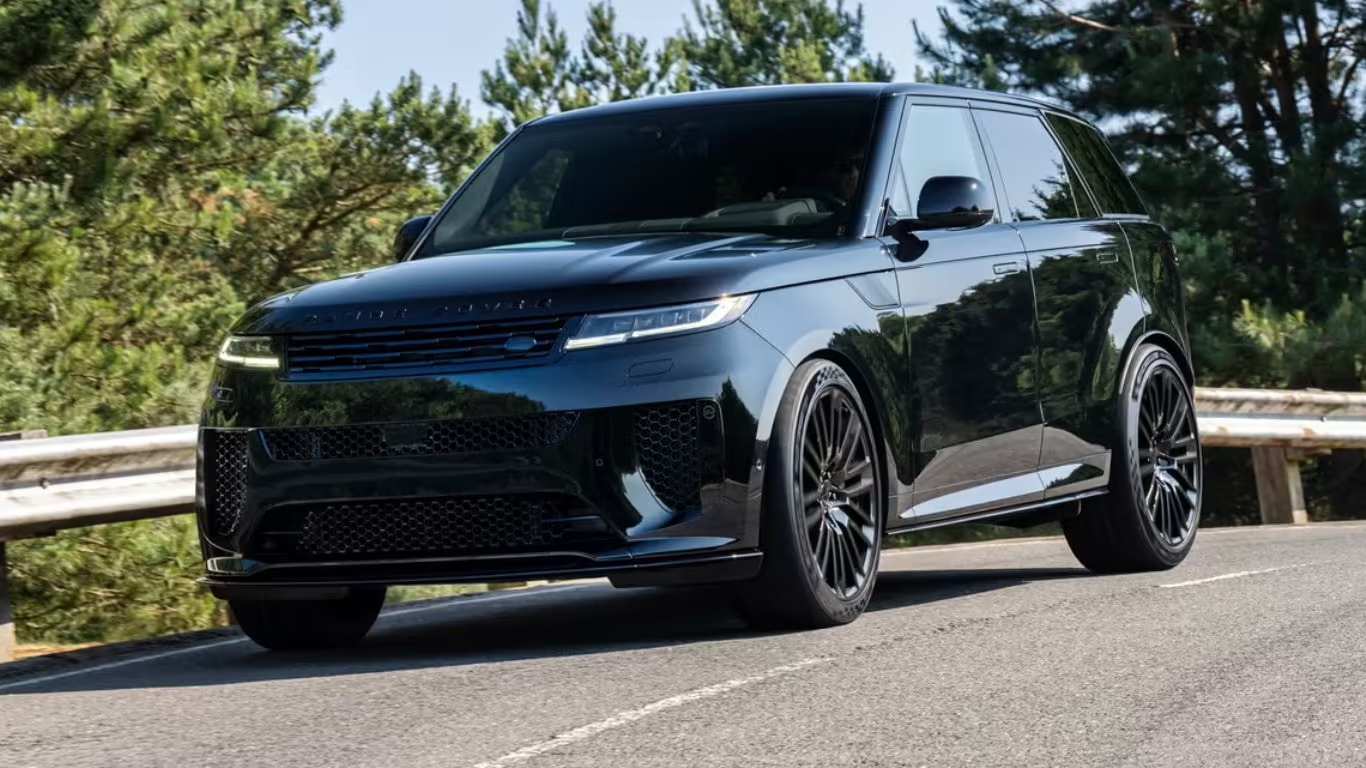
Jaguar Land Rover (JLR)
Jaguar Land Rover is expected to be among the biggest beneficiaries of the agreement. The British brand was the first to announce price reductions for several models which were imported as CBUs in India. Popular models such as the Range Rover, Range Rover Sport and Defender from the UK could become more competitively priced as tariff reductions take effect.
- The Land Rover Range Rover SV and the Range Rover Sport SV were the first to reduce the price for the Indian customers.
- The Price of the Land Rover Range Rover SV was reduced to Rs 3.50 crore from Rs 4.25 crore, a Rs 75 lakh cut.
- The Land Rover Range Rover Sport SV will offer, at a price of Rs 2.75 crore to Rs 2.35 crore, a direct reduction of Rs 40 lakh.
McLaren
McLaren is one of the British racing prodigies that sold some sports cars, such as the McLaren 750S Spider and the McLaren 750S Coupe, in India. Both these models will now reduce their prices after the implementation of the India-UK FTA deal.
- The McLaren 750S Spider is expected to reduce its price from 8.78 crore to Rs 5.46 crore, a reduction of Rs 3.32 crore for the Indian buyers.
- The McLaren 750S Coupe will now be sold at the ex-showroom price of Rs 4.94 crore, down from Rs 7.94 crore.
- McLaren GT will now be priced at Rs 3.83 crore from Rs 6.15 crore, a reduction of Rs 2.32 crore in India.
Rolls-Royce, Bentley and Aston Martin
Ultra-luxury manufacturers, including Rolls-Royce, Bentley, and Aston Martin, are also expected to reduce their prices as per the FTA rules. These brands currently face extremely high import duties that significantly inflate retail prices in India. Lower duties are expected to reduce acquisition costs, making these vehicles relatively more accessible to high-net-worth Indian buyers.
Advantages for Indian Customers?
The agreement offers several long-term advantages for buyers:
- Potential reduction in prices of eligible imported British luxury cars.
- Greater model availability as manufacturers gain confidence in expanding their portfolios.
- Improved competition in the premium vehicle segment.
- Better access to advanced automotive technologies and safety features.
- Stronger after-sales investment as brands expand their Indian operations.
CarBike 360 Says
With the India-UK FTA now in force, the Indian automotive market is set for a notable transformation, especially in the premium segment. Reduced tariffs could make British cars more competitively priced, attracting a wider audience. As pricing structures evolve, buyers and manufacturers alike will be watching closely to gauge long-term benefits and market response.


You May Like


Find your perfect car

Budget

Brand

Body Type

Fuel

Mileage

More
Latest Car Videos



Other Car News
Listen to Car Audios