ELECTRIC
NITI Aayog showcases India electric mobility vision at Berlin summit
 Add CarBike360 on Google
India presents its forward-looking electric mobility strategy on a global stage, emphasizing innovation, policy support, and sustainable transportation growth.

By Priya Thakur
Jun 17, 2026 10:52 am IST
Published On
Jun 17, 2026 10:00 am IST
Last Updated On
Jun 17, 2026 10:52 am IST
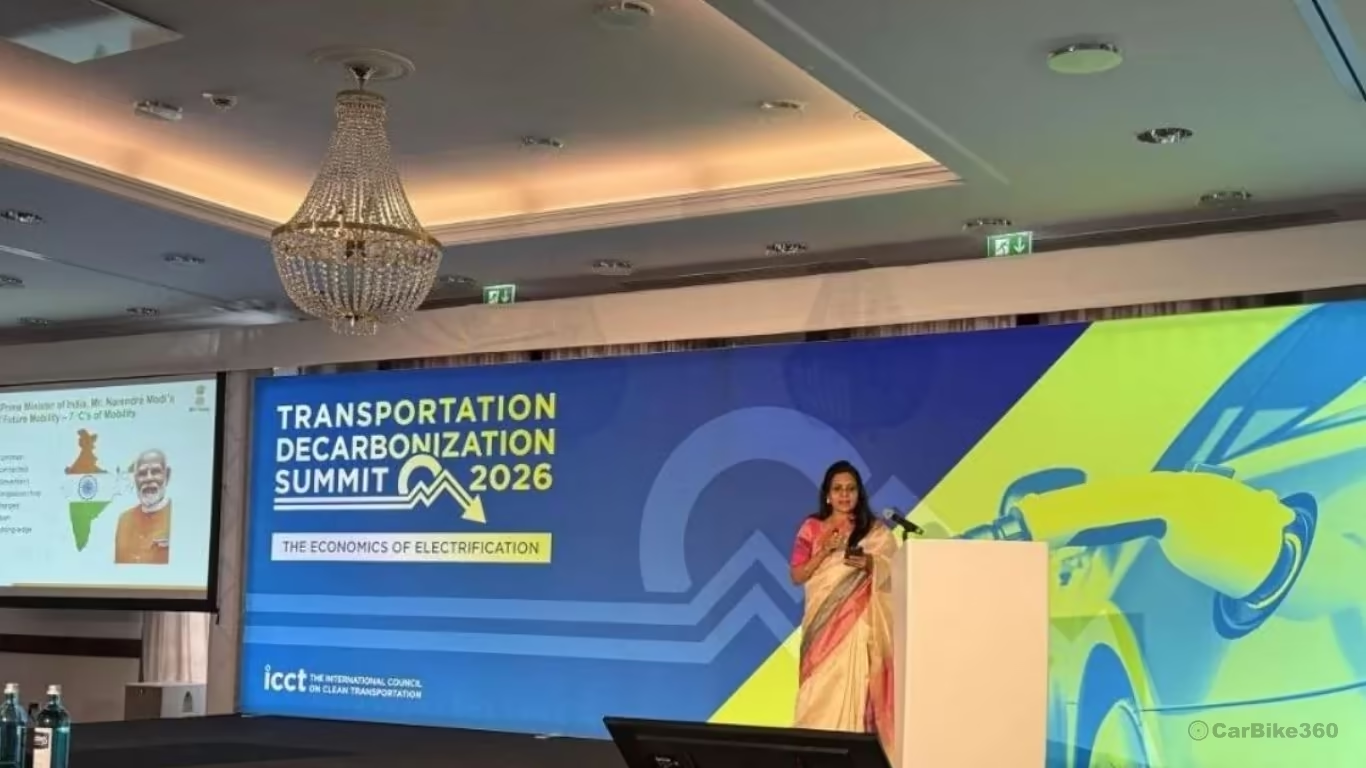
India is advancing its electric vehicle (EV) transition with a focus on energy security, decarbonization, and industrial growth. At the Transportation Decarbonization Summit 2026 in Berlin, NITI Aayog outlined the government’s multi-pronged approach to EV adoption. Archana Mittal, Program Director for Electric Mobility and Infrastructure Connectivity at NITI Aayog, presented key policy measures, manufacturing incentives, and infrastructure plans supporting this shift.
Key Highlights
- NITI Aayog presented India's EV strategy at the Transportation Decarbonization Summit in Berlin
- Government initiatives include FAME, PM E-DRIVE, and PLI schemes to boost manufacturing and innovation
- ₹127 crore approved for Delhi charging infrastructure, aiming for 32000 charging points by 2028
- Industry outlook includes new launches, cost savings, and expanded powertrain options for key models
Policy Initiatives and Incentives
Mittal explained that India’s EV policy framework has evolved since the launch of the Faster Adoption and Manufacturing of Electric Vehicles (FAME) program in 2015. This initiative, along with subsequent schemes such as PM E-DRIVE and PM eBus Sewa, has broadened support across vehicle segments. The government aims to encourage domestic manufacturing, foster innovation, and develop robust charging infrastructure through these programs.
The Production Linked Incentive (PLI) schemes play a significant role in this strategy. These schemes are designed to boost local manufacturing of automotive components and batteries. By reducing import dependence, the government seeks to strengthen the domestic supply chain and generate employment opportunities.
India is also investing in battery and critical mineral supply chains. Strategic partnerships and targeted investments are helping to secure essential resources for the growing EV sector.
Charging Infrastructure and Urban Expansion
Addressing barriers to EV adoption, Mittal highlighted the government’s focus on expanding charging infrastructure. She cited the recent approval of ₹127 crore for public charging stations in Delhi. This funding is expected to increase the city’s charging network to nearly 32,000 points by 2028. Such developments aim to make EV usage more accessible and practical for urban residents.
The summit, organized by the International Council on Clean Transportation (ICCT), examined the economics of electrification and the role of government policy in supporting zero-emission transport. Discussions also covered how these efforts can enhance manufacturing competitiveness and energy security.
CarBike 360 Says
India’s presentation at the Berlin Summit reinforces its commitment to becoming a global leader in electric mobility. With strong policy backing, growing infrastructure, and a focus on sustainability, the country is steadily accelerating its EV transition. NITI Aayog’s roadmap not only signals intent but also positions India as a key player in shaping the future of clean and efficient transportation worldwide.


You May Like



Find your perfect car

Budget

Brand

Body Type

Fuel

Mileage

More
Latest Car Videos


Top Auto News of the Week | Hyundai i20 Leak, Honda ZR-V, Tata Sierra EV, Skoda EV & More!

Talking about new Honda City and upcoming ZR-V SUV with Honda India’s Kunal Bahl!
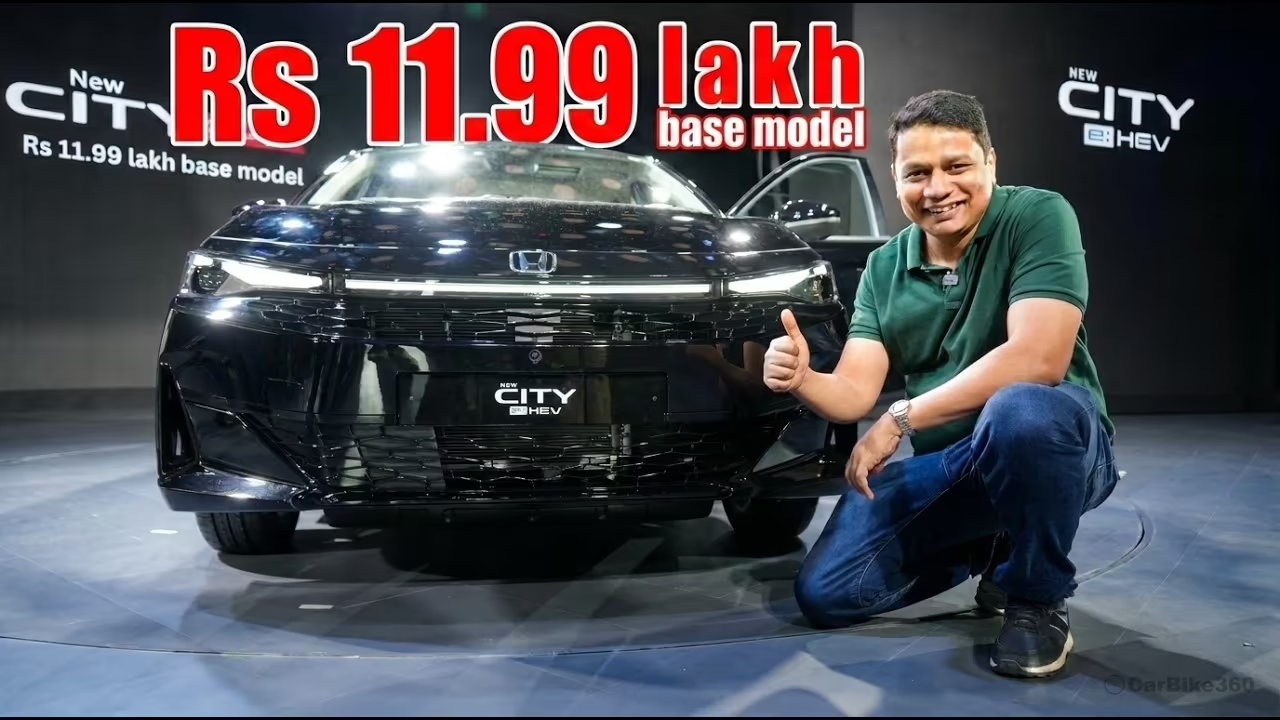
2026 Honda City Launched in India - Better than VW Virtus, Hyundai Verna & Skoda Slavia?

Weekly Auto & EV Wrap-Up: Luxury Launches, AI Tech & Big Industry Updates!
Other Car News
Force Motors rolls out 200,000th Mercedes-Benz engine in India
Jaguar Land Rover focuses on North America and Personalisation strategy for Growth
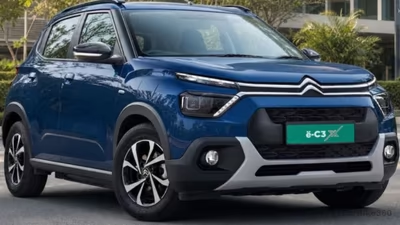
Citroen launches 2026 Citroen eC3X electric hatchback in India at a more affordable price

Jaguar Land Rover targets £1.7 billion cost cuts to boost profitability
Listen to Car Audios