ELECTRIC
Tata Motors plans 2 new nameplates, 4 facelifts to drive growth in FY27
 Add CarBike360 on Google
Tata Motors is preparing an aggressive product strategy for FY27, including two all-new models and four updated vehicles to strengthen its market position.

May 19, 2026 05:25 am IST
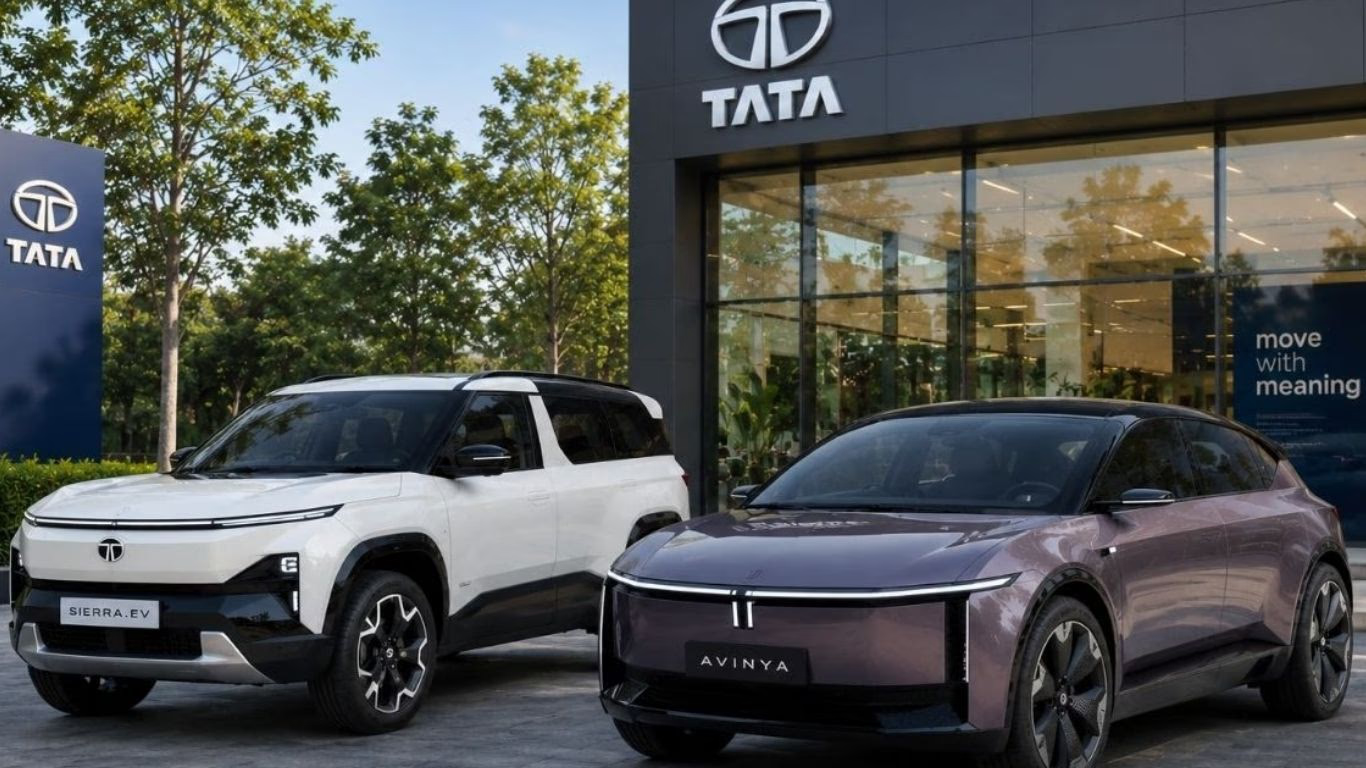
Tata Motors Passenger Vehicles Ltd. is preparing for significant product launches in FY27. The company will introduce two new nameplates and four facelifts each in its internal combustion engine (ICE) and electric vehicle (EV) segments. This strategy aims to sustain growth that outpaces the broader passenger vehicle industry, following a record performance in FY26.
Key Highlights
- Tata Motors to launch two new nameplates and four facelifts in FY27
- Company targets industry-beating growth with strong product pipeline and supply ramp-up
- FY26 saw record annual volumes of 6.42 lakh units and 92,000 EVs sold
- Nexon and Punch ranked among top three passenger vehicle models in H2FY26
- Tata Motors aims to increase EV production by 10 percent starting this month
FY27 Product Plans and Market Outlook
Shailesh Chandra, managing director and CEO of Tata Motors Passenger Vehicles Ltd., described FY27 as an “intense product action year.” The company expects to benefit from the full-year impact of several models launched in the second half of FY26. These include the Sierra, new Punch, Harrier EV, Punch EV, and petrol versions of the Harrier and Safari.
Chandra stated that the company’s main challenge in FY27 will be on the supply side. Tata Motors is focusing on ramping up production at its own plants and at supplier facilities. The automaker expects demand to remain strong throughout the year.
According to Chandra, the first two months of FY27 have shown strong demand momentum. This is supported by the GST 2.0-led recovery that began in the latter part of FY26. He estimates passenger vehicle industry growth at around 10% for FY27. Growth is likely to be stronger in the first half due to a low base, with some moderation expected in the second half.
Chandra noted that growth could vary by one to two percentage points, depending on fuel prices and commodity costs. However, he said the GST-led price reduction has created enough room to maintain consumer sentiment.
FY26 Performance and Key Models
Tata Motors increased its product launches in FY26, especially in the second half. The company introduced the new Sierra, petrol versions of Harrier and Safari, the new Punch, and expanded its EV lineup with Harrier.ev and Punch.ev. Chandra said the company will see the full-year impact of these launches in FY27.
During H2FY26, the Nexon and Punch ranked first and third, respectively, among all passenger vehicle models in the industry. Tata Motors also achieved strong growth in hatchbacks, supported by updates to the Tiago and Altroz in 2025.
One of Tata Motors’ immediate priorities is to ramp up production of the Sierra. The model has received strong market response, but supply has been limited due to challenges at some suppliers, particularly in engine casting. The company has taken corrective actions, including adding suppliers, to address these issues. The immediate goal is to surpass 10,000 units of Sierra production, with further increases planned.
The Sierra EV is expected to launch next quarter, requiring additional production capacity. Tata Motors expects EVs and CNG vehicles to remain key growth drivers in FY27. In FY26, the company sold 92,000 EVs, a 43% increase year-over-year, and maintained over a 40% share in the electric passenger vehicle market. CNG vehicles made up 27% of the portfolio, with sales exceeding 1.7 lakh units.
Financial Performance and Future Outlook
Tata Motors PV ended FY26 with record annual volumes of 6.42 lakh units, up over 15% year-on-year. This growth was nearly double the broader industry’s 8% increase. Q4FY26 volumes exceeded 2 lakh units for the first time, a 37% year-on-year rise. The company consolidated its number two position in Vahan market share during H2FY26, with the share crossing 14%.
For FY26, Tata Motors PV reported revenue from operations of Rs 58,465 crore, up from Rs 48,451 crore in FY '25. EBITDA reached Rs 4,061 crore, with a margin of 6.9%. EBIT margin improved to 1.4% from 0.9% a year earlier. In Q4 FY26, revenue stood at Rs 18,742 crore, EBITDA was Rs 1,770 crore, and EBITDA margin was 9.4%. EBIT margin was 4.7% for the quarter.
The company plans to increase EV production by about 10% from this month, with further ramp-up depending on supplier readiness. Chandra expects EV profitability to improve as battery and component costs decline, while ICE vehicle costs may rise due to stricter emission norms.
CarBike 360 Says
With a balanced mix of new nameplates and strategic facelifts, Tata Motors is clearly aiming to sustain momentum in an increasingly competitive market. This roadmap not only strengthens its current portfolio but also signals long-term intent in both ICE and EV segments, positioning the brand for steady growth and improved market share in FY27 and beyond.


You May Like



Find your perfect car

Budget

Brand

Body Type

Fuel

Mileage

More
Latest Car Videos


This Week in Auto | New Car & Bike Launches, EV Updates & Industry News

Top Auto News of the Week: Tata Sierra EV, BMW X6, E85 Fuel & More - Weekly Wrap

Top Auto News of the Week | Hyundai i20 Leak, Honda ZR-V, Tata Sierra EV, Skoda EV & More!

Talking about new Honda City and upcoming ZR-V SUV with Honda India’s Kunal Bahl!
Other Car News

Listen to Car Audios