ELECTRIC
ARAI's Investigation into Autonomous Driving: Toyota RAV4 Spotted with LiDAR Sensors Sparks Speculation on Self-Driving Future in India
 Add CarBike360 on Google
Toyota's LiDAR-equipped RAV4, a survey by ARAI, explores autonomous driving possibilities, reflecting the evolving tech landscape amid India's intricate traffic conditions.

By Robin Attri
Feb 22, 2024 11:56 am IST
Key Highlights
- Toyota RAV4 spotted in Pune with LiDAR sensors.
- ARAI is involved in testing for autonomous driving in Indian conditions.
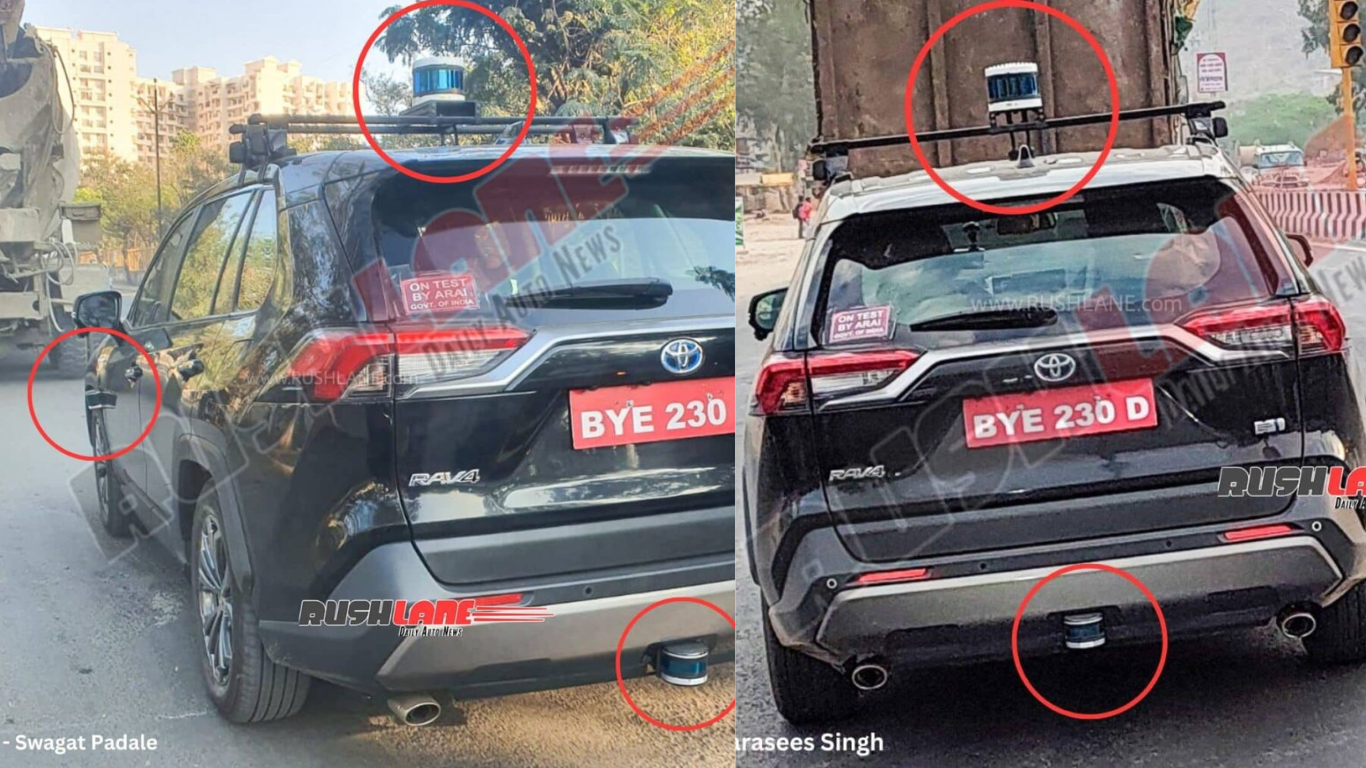
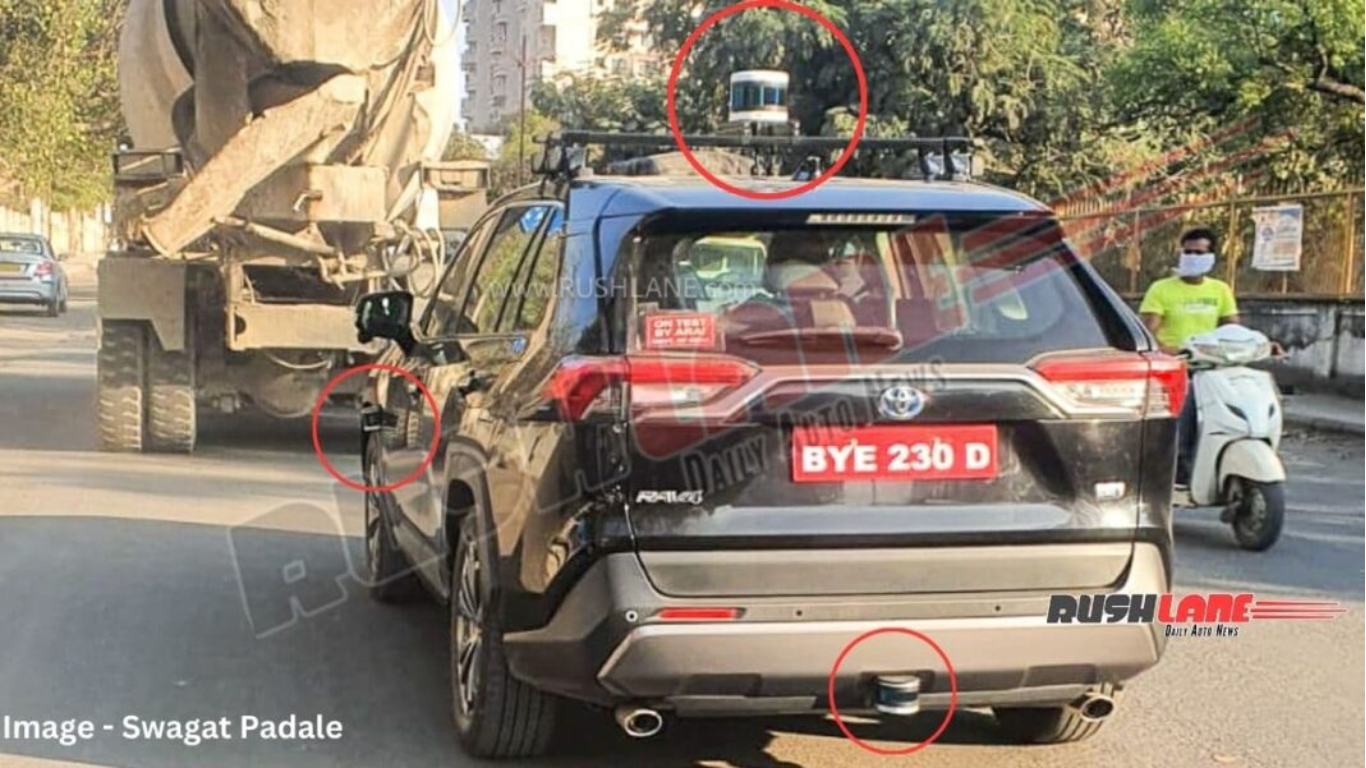
- Four LiDAR sensors were strategically placed on the vehicle.
- Minister Nitin Gadkari's reservations contrast with ARAI's proactive testing.
- LiDAR technology is crucial for real-time object detection and distance measurement.
In a recent sighting that has sparked speculation, test models of the Toyota RAV4 equipped with LiDAR sensors were spotted navigating through Pune’s urban landscape. The presence of these sensors suggests a collaborative effort between Toyota and the Automotive Research Association of India (ARAI) to assess the feasibility of autonomous driving in challenging Indian road conditions.
LiDAR-Equipped Test Mule Raises Eyebrows
The Toyota RAV4 test mule, uncovered and devoid of camouflage, featured at least four LiDAR sensors strategically placed across the vehicle. A conspicuous “ON TEST BY ARAI, GOVT OF INDIA” sticker on the rear windshield suggests ARAI's involvement, potentially repurposing a test mule from previous sightings to evaluate self-driving scenarios on Indian roads.
ARAI’s Tool for Real-Time Object Detection
LiDAR, or Light Detection and Ranging, is a technology well-known for depth measurement in consumer devices like Apple's iPhones and iPads. In the context of ARAI's testing, LiDAR serves the purpose of real-time object detection and efficient distance measurement. The rooftop-mounted LiDAR sensor appears to be the most potent among the sensors, emphasizing its role in tracking distant objects.
ARAI's Role in Autonomous Driving Research
While India's Minister Nitin Gadkari has expressed reservations about autonomous driving technology, ARAI's proactive testing with LiDAR raises curiosity. The organization may be gathering raw data from Indian traffic conditions to calibrate or develop self-driving algorithms. The real-time imaging facilitated by LiDAR sensors is crucial for path planning, guiding the car’s trajectory, and avoiding obstacles – aspects vital for autonomous driving technology.
Speculations on ARAI’s Testing Protocol
The purpose of ARAI's involvement remains speculative – whether they are conducting research on behalf of a client interested in autonomous driving in Indian conditions or if it's part of Toyota's standard testing protocol to collect global traffic behavioral data. Regardless, the outcomes of this testing will be closely watched, especially in light of Nitin Gadkari’s firm stance on the development of autonomous driving technology in India.
Also Read: 2024 Mahindra XUV700 TVC Unveiled: Comprehensive Insights into New Features
CarBike360 Says
In the intersection of technology and Indian roads, Toyota's LiDAR-equipped RAV4, under ARAI's scrutiny, unveils a promising venture into autonomous driving. Whether ARAI is pioneering research or Toyota's testing protocol, the outcome holds significance, echoing the evolving dynamics between cutting-edge technology and India's intricate traffic landscape.
Source: Rushlane


You May Like



Find your perfect car

Budget

Brand

Body Type

Fuel

Mileage

More
Latest Car Videos



Other Car News

Listen to Car Audios