

 ELECTRIC
Electric vs Petrol Scooter: Which Saves More Money in 2026?
 Add CarBike360 on Google
Confused between a petrol and electric scooter in 2026? Compare costs, range, performance, maintenance, and convenience to find the best option for your budget, riding needs, and lifestyle.

By Swati Tomar
Jun 01, 2026 12:26 pm IST
Published On
Jun 01, 2026 10:39 am IST
Last Updated On
Jun 01, 2026 12:26 pm IST
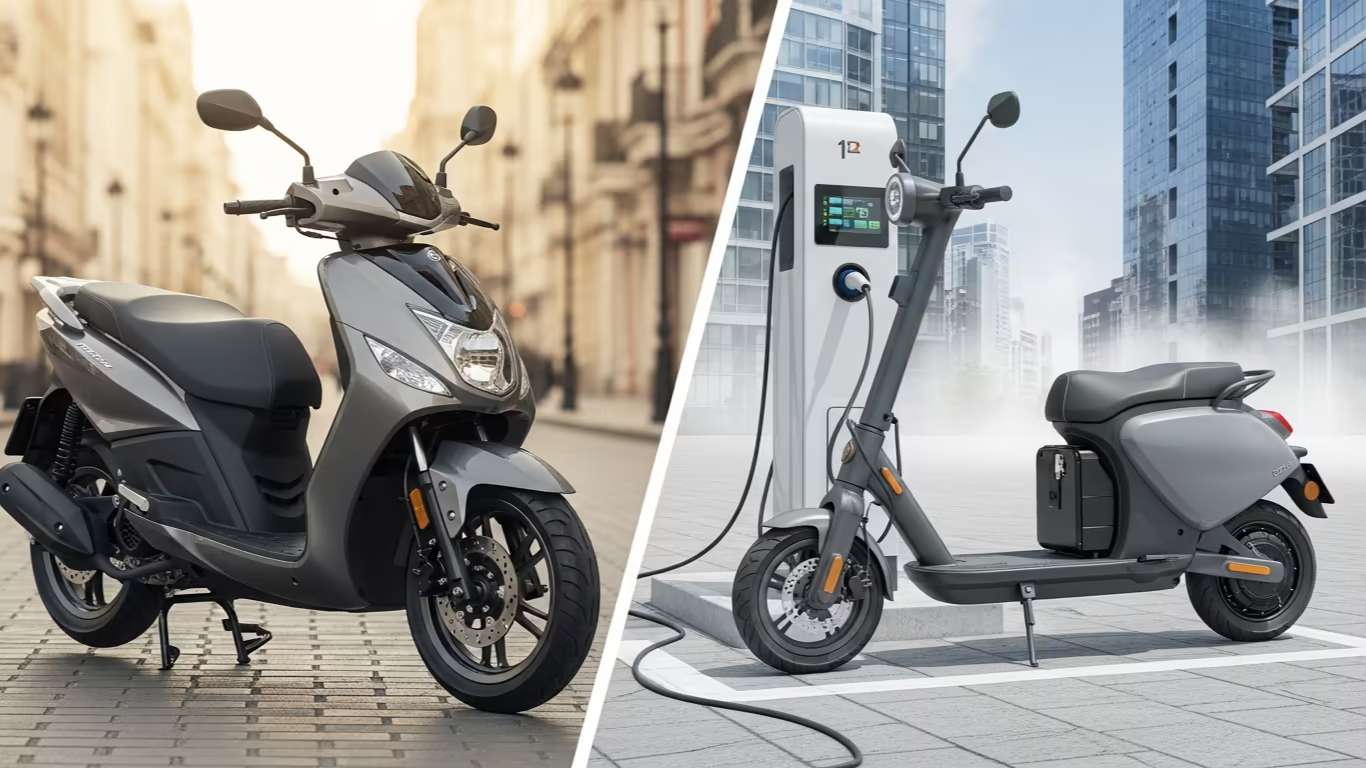
If you're planning to buy a scooter in 2026, one of the biggest questions you'll face is whether to choose an electric scooter or a petrol scooter. With rising fuel prices, increasing EV adoption, and rapid improvements in battery technology, many buyers are comparing the long-term costs of both options before making a decision.
While petrol scooters continue to offer proven reliability, extensive fuel availability, and strong long-distance capability, electric scooters are gaining popularity for their low running costs, reduced maintenance requirements, and eco-friendly operation. For daily commuters, the difference in ownership expenses can be substantial over time.
However, the purchase price is only one part of the equation. Factors such as electric scooter running costs, petrol scooter maintenance costs, range, charging convenience, resale value, and overall ownership experience all play a crucial role in determining which scooter offers better value.
In this detailed petrol vs electric scooter comparison, we break down costs, performance, practicality, and long-term ownership expenses to help you determine which option is the smarter investment in 2026.
Petrol vs Electric Scooter: Quick Comparison
Factor | Petrol Scooter | Electric Scooter |
Purchase Price | Lower | Higher |
Running Cost | Higher | Lower |
Maintenance | Moderate to High | Low |
Environmental Impact | Produces Emissions | Zero Tailpipe Emissions |
Refueling/Charging Time | 2–3 Minutes | 3–8 Hours |
Range | 200–350 km | 80–200 km |
Noise Levels | Higher | Very Low |
City Commuting | Good | Excellent |
Long-Distance Travel | Excellent | Moderate |
Government Incentives | Limited | Available in Many States |
How Much Does It Cost to Own an Electric Scooter vs a Petrol Scooter?
For most buyers, ownership cost is the deciding factor when choosing between a petrol scooter and an electric scooter.
Initial Purchase Price
Petrol scooters generally have a lower upfront cost. Popular models such as the Honda Activa 125, TVS Jupiter, and Suzuki Access 125 are available at competitive prices due to mature manufacturing processes and established supply chains.
Electric scooters usually cost more because of lithium-ion batteries, advanced electronics, and connected technologies. However, the price gap has narrowed significantly in recent years as battery costs continue to decline.
Which Is Cheaper: Electric Scooter Running Cost or Petrol Scooter Fuel Cost?
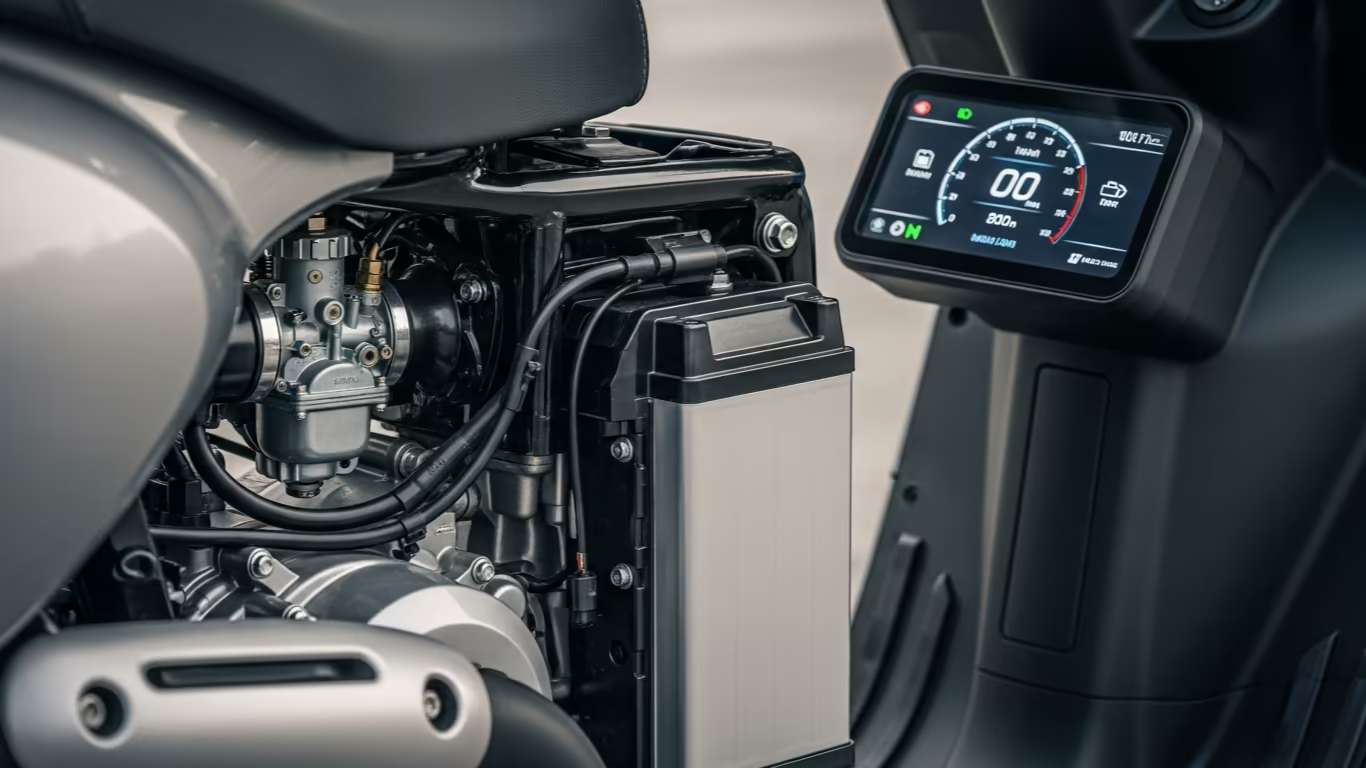
When it comes to daily operating expenses, electric scooters have a significant advantage.
A typical electric scooter consumes around 3–4 units of electricity per full charge. Depending on local electricity rates, a complete charge usually costs between ₹15 and ₹40.
In comparison, a petrol scooter delivering 45–50 kmpl may require fuel worth ₹220–₹250 to cover a similar distance.
Average Cost Per Kilometer
Vehicle Type | Estimated Running Cost |
Petrol Scooter | ₹2.0–₹2.5/km |
Electric Scooter | ₹0.20–₹0.50/km |
For riders covering 30–50 km daily, the savings from an electric scooter can add up to tens of thousands of rupees over several years.
Petrol Scooter Maintenance Cost vs Electric Scooter Maintenance Cost
Petrol scooters require routine maintenance such as:
Engine oil changes
Air filter replacements
Spark plug servicing
CVT maintenance
Exhaust inspections
Electric scooters eliminate many of these requirements because they have fewer moving parts. Maintenance is typically limited to brakes, tyres, suspension components, and occasional software updates.
As a result, electric scooter ownership costs are generally lower over the long term.
Also read: How Indian households can beat rising energy costs with EVs and rooftop solar
Performance Comparison: Electric Scooter vs Petrol Scooter
Acceleration and Torque
One of the biggest electric scooter benefits is instant torque. Electric motors deliver maximum power from the moment the throttle is opened, resulting in quicker acceleration and smoother performance in city traffic.
Petrol scooters offer gradual power delivery and consistent performance across a broader speed range.
Top Speed and Highway Performance
Petrol scooters continue to have an advantage when it comes to long-distance riding and highway cruising. Their ability to maintain higher speeds for extended periods makes them more suitable for intercity travel.
Electric scooters perform exceptionally well in urban environments but may experience reduced range during high-speed riding.
Riding Comfort
Electric scooters provide a quieter and smoother riding experience thanks to minimal vibrations and near-silent operation. This makes them particularly attractive for daily city commuting.
Electric Scooter Benefits vs Petrol Scooter Advantages
Environmental Impact
One of the key reasons many buyers choose electric scooters is their lower environmental impact.
Petrol scooters emit:
Carbon dioxide (CO₂)
Nitrogen oxides (NOx)
Hydrocarbons
Particulate matter
Although modern BS6 engines are cleaner than older generations, they still contribute to air pollution and greenhouse gas emissions.
Electric scooters produce zero tailpipe emissions, making them a cleaner transportation option.
Carbon Footprint
The overall carbon footprint of an electric scooter depends on how the electricity is generated. As India continues expanding renewable energy sources such as solar and wind power, the environmental advantages of electric scooters are expected to increase further.
Noise Pollution
Petrol scooters generate engine and exhaust noise that contributes to urban noise pollution. Electric scooters operate almost silently, creating a more comfortable riding experience and quieter city environment.
Range and Convenience: Electric Scooter or Petrol Scooter?
Petrol Scooter Range and Refueling Convenience
Petrol scooters continue to offer unmatched convenience for long-distance riders.
Key advantages include:
Nationwide fuel availability
Refueling in under three minutes
Consistent long-range capability
Most petrol scooters can travel between 200 and 350 km on a full tank.
Electric Scooter Range and Charging Infrastructure
Electric scooter range varies depending on battery size, rider behavior, and traffic conditions.
Most modern electric scooters offer:
80-150 km real-world range
Up to 200 km in premium variants
Charging times generally range from:
3-5 hours using fast chargers
6-8 hours using standard chargers
While home charging remains the most common charging method, public charging infrastructure is expanding rapidly across major Indian cities.
Government Incentives and EV Benefits
Government policies continue to support electric mobility through:
Purchase subsidies
Reduced registration charges
Lower road tax
State-specific EV incentives
These benefits can significantly reduce the effective purchase price of an electric scooter, making it more affordable for buyers.
Meanwhile, stricter emission regulations continue to increase development and compliance costs for petrol-powered vehicles.
Which Scooter Is Best for Daily Commute in 2026?
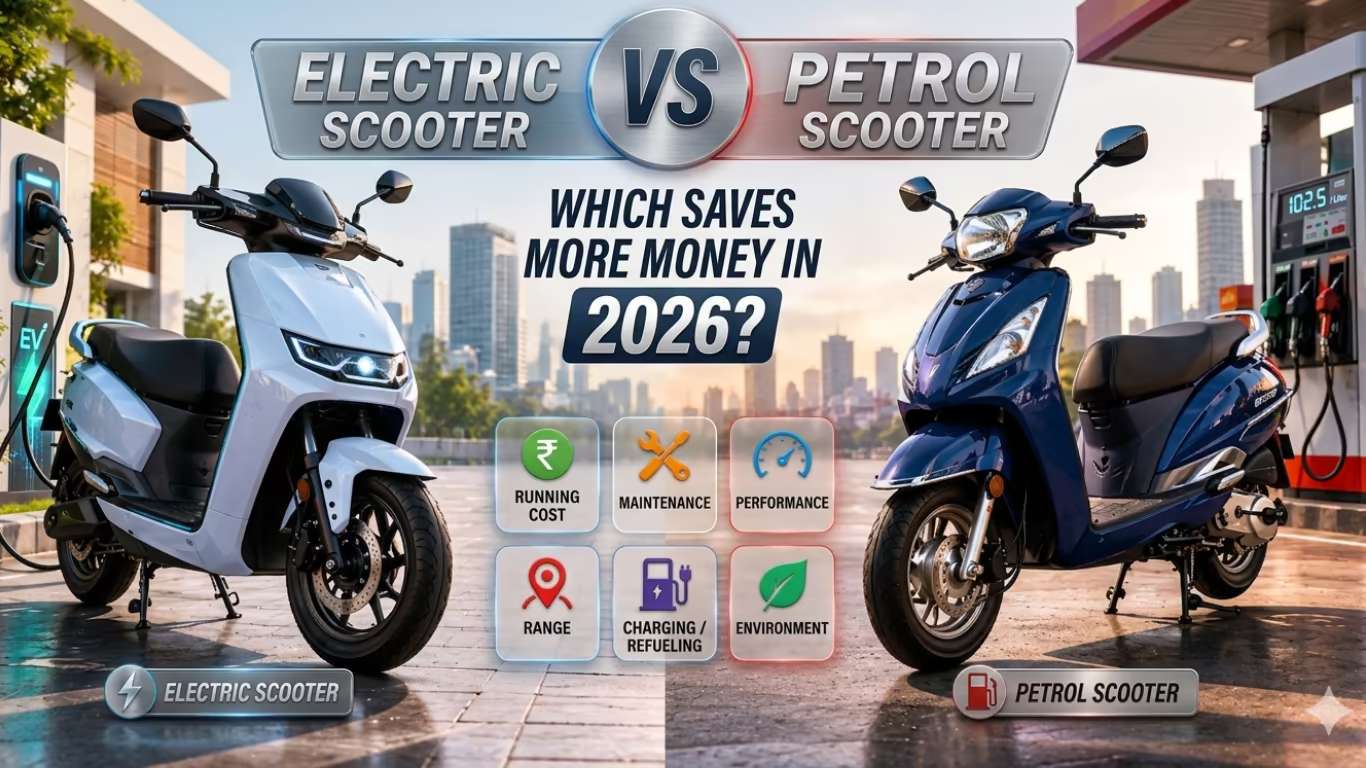
The right choice depends largely on your riding habits.
Choose a Petrol Scooter If:
You frequently travel long distances.
You require quick refueling.
Charging infrastructure is limited in your area.
You prefer a lower initial purchase price.
Choose an Electric Scooter If:
Most of your riding is within city limits.
You want lower running costs.
Environmental sustainability is important to you.
You have access to home charging.
You prefer low-maintenance ownership.
Frequently Asked Questions
Is an electric scooter cheaper to run than a petrol scooter?
Yes. Electric scooters typically cost 70-90% less per kilometer to operate compared to petrol scooters due to lower charging and maintenance costs.
How long does an electric scooter battery last?
Most lithium-ion batteries are designed to last between 5 and 8 years or approximately 50,000-100,000 kilometers, depending on usage and charging practices.
Which scooter is best for daily city commuting?
Electric scooters are generally considered the best scooter for daily commuting because of their lower operating costs, instant torque, quiet operation, and zero tailpipe emissions.
Are electric scooters worth buying in 2026?
For most urban riders, electric scooters offer excellent value thanks to their lower running costs, reduced maintenance expenses, and growing charging infrastructure.
Which scooter is cheaper to maintain?
Electric scooters are usually cheaper to maintain because they have fewer moving parts and do not require engine oil changes, spark plug replacements, or exhaust system maintenance.
Final Verdict: Petrol vs Electric Scooter in 2026
For most city riders, electric scooters offer better long-term savings than petrol scooters. Their lower running costs, reduced maintenance requirements, and environmental benefits make them an increasingly attractive choice for daily commuting.
However, petrol scooters still remain the better option for riders who frequently travel long distances, require fast refueling, or live in areas where charging infrastructure is limited.
Ultimately, the choice between an electric scooter and a petrol scooter comes down to your daily usage patterns, budget, and convenience requirements. If your riding is primarily urban, an electric scooter is likely to deliver the strongest long-term value in 2026. If range and refueling flexibility are your top priorities, a petrol scooter remains a practical and dependable choice.


You May Like


Find your perfect car

Budget

Brand

Body Type

Fuel

Mileage

More
Other Articles


Listen to Audios


Vihan AI - Your Car assistant
Ask me anything about cars, prices, and comparisons.