ELECTRIC
Delhi EV Policy 2.0 emerges as benchmark for Indian states says ASSOCHAM
 Add CarBike360 on Google
ASSOCHAM President highlights Delhi EV Policy 2.0 as a guiding framework for states aiming to accelerate electric vehicle adoption and build a strong EV ecosystem.

By Priya Thakur
Jul 02, 2026 06:30 am IST
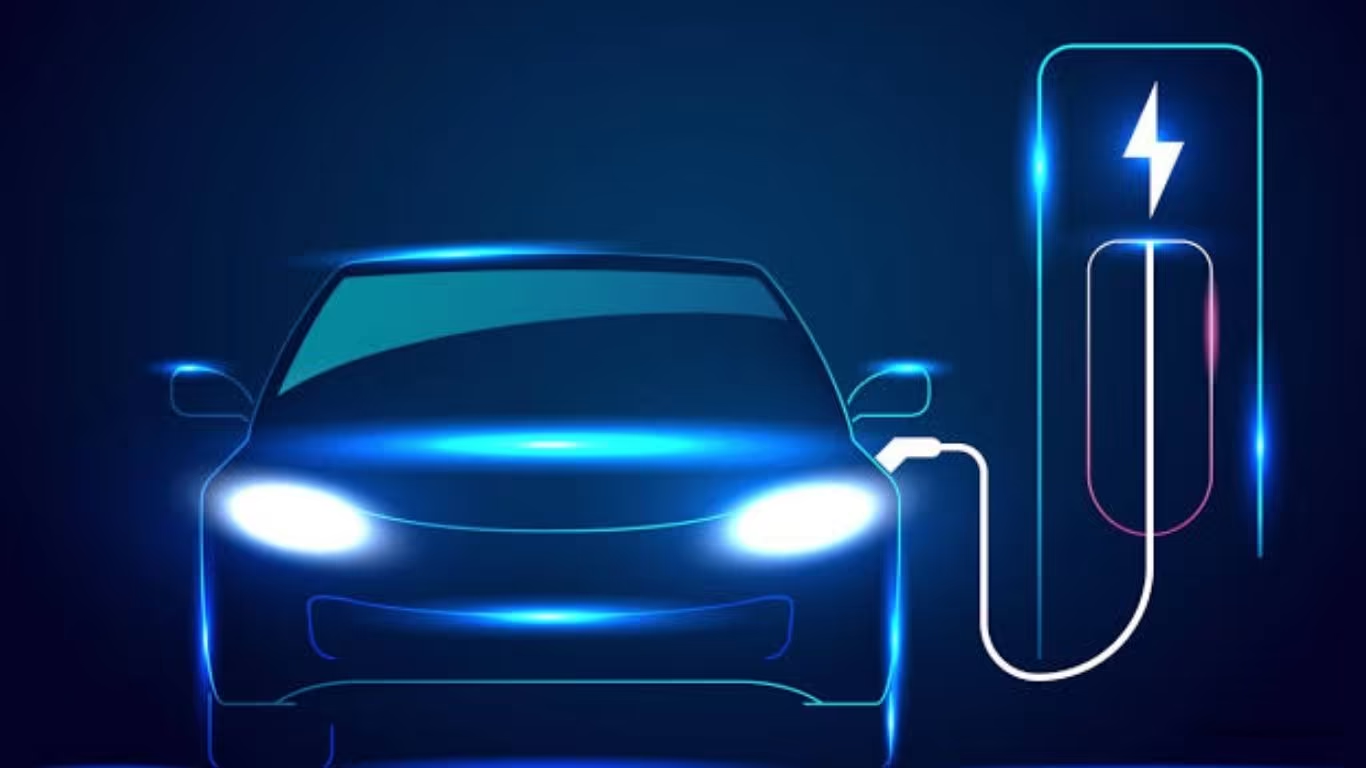
The Delhi government's newly implemented EV Policy 2.0 could serve as a model for other states aiming to transition to cleaner transportation, according to ASSOCHAM President Nirmal Minda. Speaking at ASSOCHAM's National Conference on electric mobility, Minda highlighted the policy's potential to guide India's shift towards sustainable mobility solutions.
Key Highlights
- Delhi EV Policy 2.0 may guide other states in adopting cleaner transportation.
- The policy includes incentives for electric vehicles and expanded charging infrastructure.
- ASSOCHAM President highlights the need for industry and government collaboration.
- National schemes like PLI and PM E-Drive support electric mobility growth.
Delhi EV Policy 2.0 Overview
The Delhi EV Policy 2.0 offers purchase incentives for eligible electric vehicles and aims to expand the charging infrastructure across the city. The policy also includes a phased ban on the registration of certain new internal combustion engine vehicle categories, starting as early as next year. Minda stated that these measures could help position Delhi as a leading green mobility hub and provide a blueprint for other states to follow.
The policy's focus on incentives and infrastructure is designed to accelerate electric vehicle adoption in the capital. By encouraging cleaner transportation options, the Delhi government aims to reduce air pollution and support India's broader environmental goals.
National Policy Initiatives and Industry Response
Minda commended the central government's efforts to strengthen India's electric mobility ecosystem. He cited initiatives such as the PM E-Drive scheme, Production Linked Incentive (PLI) schemes for automobiles, and Advanced Chemistry Cell (ACC) batteries, and the rapid expansion of charging infrastructure. According to Minda, these measures are providing a strong push to the sector and laying the groundwork for future growth.
He emphasized that electric mobility represents more than a technological change. It offers opportunities for industrial growth, innovation, energy security, environmental stewardship, and global competitiveness as India works towards its Viksit Bharat 2047 vision. Minda noted that closer collaboration between industry and government will be essential to strengthen India's manufacturing ecosystem and enhance global competitiveness.
ASSOCHAM's Alignment with National Goals
Minda explained that ASSOCHAM 2.0 is aligned with the Viksit Bharat 2047 vision. The organization's focus areas include Make in India, ease of doing business, MSME growth, digitalization, and sustainability. He said that ASSOCHAM will continue to engage with government ministries through sector-specific councils to support the electric mobility sector.
CarBike 360 Says
Delhi EV Policy 2.0 is rapidly shaping up as a blueprint for nationwide EV adoption, with its strong focus on incentives, infrastructure, and awareness. As highlighted by ASSOCHAM, its success could encourage other states to replicate similar frameworks. This momentum is expected to accelerate India’s transition toward cleaner, more sustainable mobility in the coming years.


You May Like





Find your perfect bike

Brand

Budget

Body Type

Fuel

Mileage

More
Latest Bike Videos





Other Bike News

Listen to Bike Audios