ELECTRIC
Government clarifies E20 fuel policy, not an experiment amid media reports
 Add CarBike360 on Google
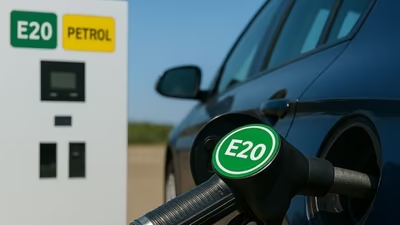
Amid recent media speculation, the government has reaffirmed that E20 fuel adoption is a strategic policy decision aimed at reducing emissions and fuel imports, not a trial phase.

Jul 01, 2026 11:44 am IST
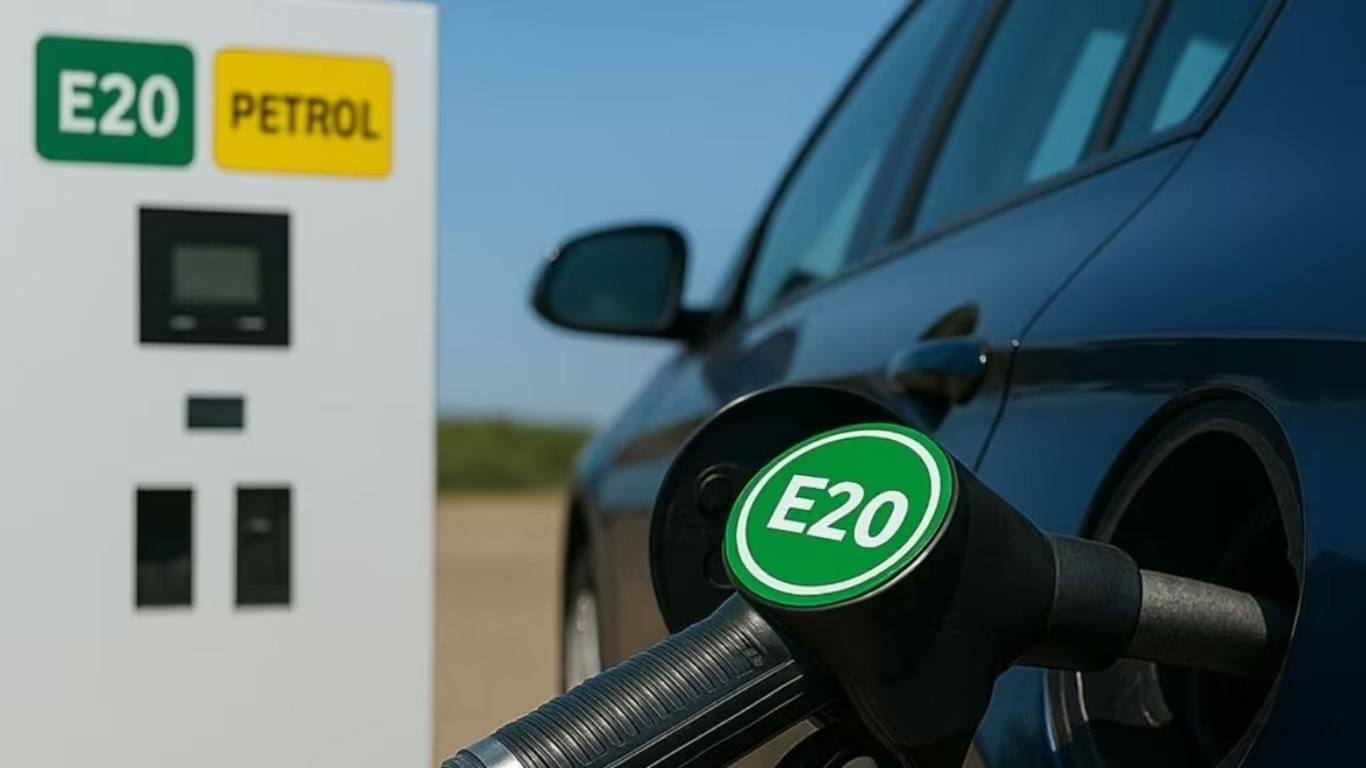
The central government has clarified that E20 is a national policy initiative, not an experiment, following media reports on 30 June 2026. These reports claimed the attorney general told the Supreme Court that E20 was an experiment with impact results expected next year. The attorney general's office has stated these claims are false and misrepresent court proceedings.
Key Highlights
- Government confirms E20 is a national policy initiative, not an experiment
- The attorney general's office disputes media reports about E20's experimental status
- BIS has notified standards for ethanol blends up to E30
- Manufacturers like Honda have adapted vehicles for E20 compliance
- Challenges remain for older vehicles and fuel economy with higher ethanol blends
E20 Policy and Official Clarifications
According to the government, ethanol blending through E20 is a formal policy, not a trial. The attorney general's office emphasized the need for accurate reporting on central policies. The current Supreme Court case concerns the allocation of ethanol to oil marketing companies (OMCs), not the ethanol blending policy itself. The Bureau of Indian Standards (BIS) has also notified standards for blends up to E30, indicating a long-term commitment to ethanol blending.
CarWale, a prominent automotive news outlet, confirmed it did not publish any reports referring to E20 as an experiment. The government reiterated that E20 will remain in place as part of its broader fuel strategy.
Industry Adaptation and Challenges
Automotive manufacturers in India have already adapted to the E20 standard. For example, Honda prepared for the transition well in advance. The BIS notification for blends up to E30 serves as a preparatory measure for future increases in ethanol content. Any rise above the current baseline will require changes in vehicle components and electronic control unit (ECU) mapping.
Despite these preparations, challenges remain. Deploying compatible kits for existing vehicles that do not meet E20 standards is still difficult. Fuel economy also tends to decrease with higher ethanol blends. These issues highlight the need for careful management as the country moves toward higher ethanol content in fuel.
Future Directions for Ethanol and Mobility
The government sees the way forward as a combination of strategies. This includes optimizing ethanol rollout, incentivizing electric vehicles (EVs), and ensuring cost benefits reach consumers. Parallel efforts in these areas are necessary to address both environmental and economic concerns.
In summary, E20 is a confirmed national policy, not an experiment. The government and industry are working to address technical and economic challenges as India transitions to higher ethanol blends in transportation fuels.
Also Read: Ethanol production economics in India, Brazil, and the US: Key factors and outlook
CarBike 360 Says
The government’s clarification reinforces confidence in India’s transition toward cleaner mobility through E20 fuel adoption. By positioning it as a well-planned policy rather than an experiment, authorities aim to eliminate uncertainty among consumers and manufacturers. As implementation progresses, the focus will remain on infrastructure readiness, vehicle compatibility, and long-term environmental and economic benefits.


You May Like


Find your perfect bike

Brand

Budget

Body Type

Fuel

Mileage

More
Latest Bike Videos


Other Bike News

Hero MotoCorp unveils new Vida brand identity and expands electric mobility portfolio
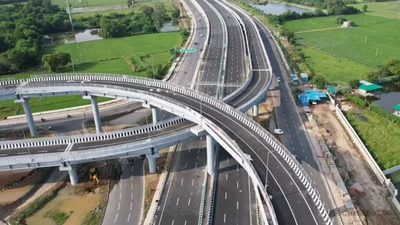
NHAI launches independent vetting framework for major bridge designs nationwide
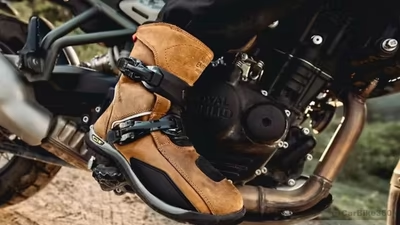
Royal Enfield introduces tan color option for Wanderer Waterproof riding boots in India
Veloce Aperion debuts with 1000cc eight cylinder two stroke engine with 277 HP
Listen to Bike Audios