ELECTRIC
ICEMA urges emission norm relief for defence construction equipment
 Add CarBike360 on Google
The construction equipment industry body ICEMA has appealed for relaxed emission norms for machines deployed in defence and strategic projects, highlighting the need for flexibility to support national security and infrastructure development.

Jul 17, 2026 09:16 am IST
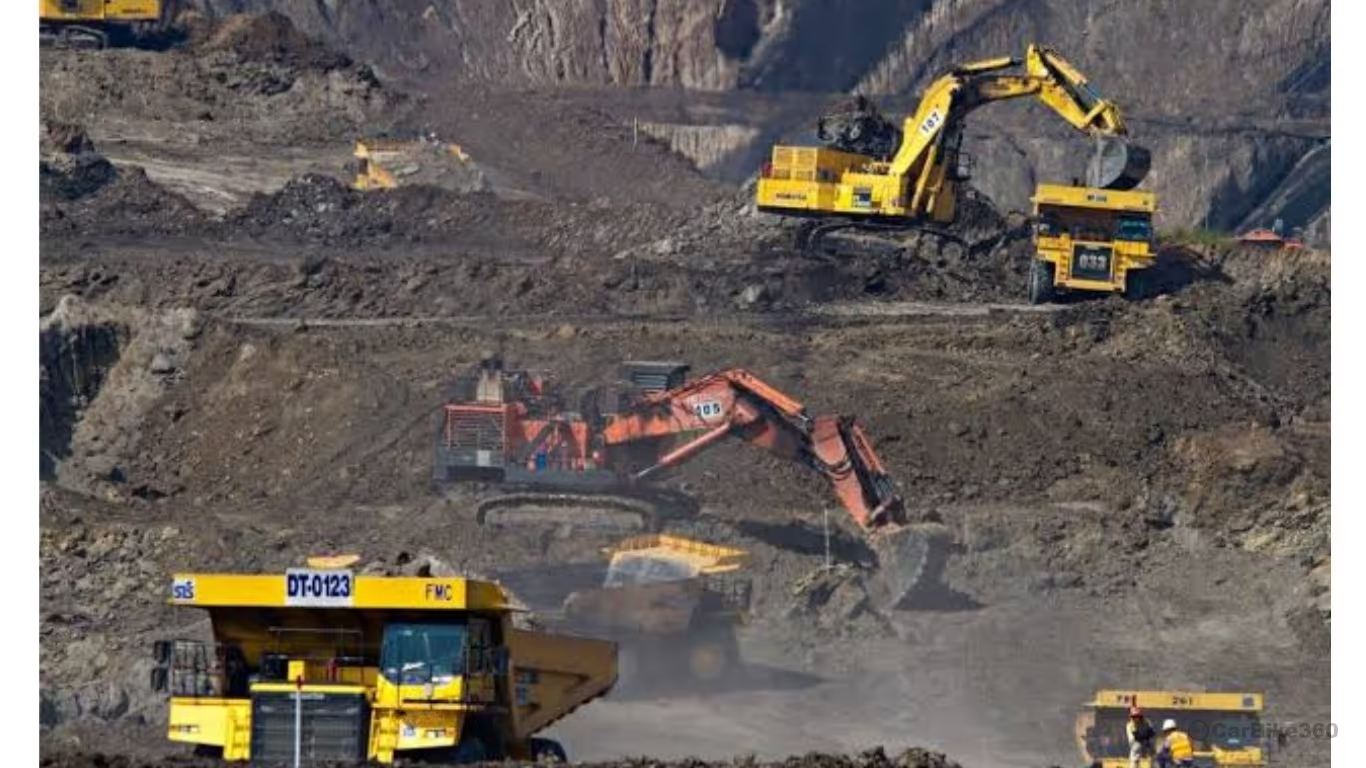
The Indian Construction Equipment Manufacturers' Association (ICEMA) has requested the Ministry of Road Transport and Highways to exempt construction machines used by the armed forces and the Border Roads Organisation (BRO) from new emission standards. ICEMA argues that the cleanest engines face the greatest challenges at high altitudes, where thin air affects performance.
Key Highlights
- ICEMA requests an emission norm exemption for defence and BRO construction equipment.
- Stage V emission standards increased equipment prices by 12 to 15 percent.
- Domestic construction equipment sales declined 7 per cent in FY ending March 2026.
- Exports rose 31.5 per cent, partially offsetting the domestic sales drop.
- ICEMA seeks regulatory clarity for off-road construction machinery.
Industry Request for Emission Norm Exemption
ICEMA, representing 95% of India's construction equipment makers, made its request during a meeting with Minister Nitin Gadkari. The association seeks exemption from Rule 115A of the Central Motor Vehicles Rules, which sets emission standards for construction equipment vehicles like excavators, bulldozers, cranes, and graders.
The industry body highlights that much of the BRO's work occurs at high altitudes, such as mountain passes and border regions, where oxygen levels are low. Diesel engines require a precise air-fuel mix for clean combustion. At high altitudes, reduced oxygen leads to incomplete combustion, lower engine output, and increased strain on equipment.
ICEMA states that the latest emission standard, CEV Stage V, could worsen these problems. Stage V engines use advanced exhaust after-treatment systems designed for normal conditions. At 14,000 feet, these systems may become unreliable, risking delays to critical infrastructure projects if equipment stalls.
The association notes that similar exemptions already exist for ordinary motor vehicles supplied to defence forces. ICEMA wants this principle extended to construction equipment used in defence and BRO projects to maintain operational readiness for national infrastructure.
Impact of Stage V Norms and Industry Sales
The timing of ICEMA's request follows the industry's first full year under Stage V norms. The transition increased equipment prices by 12 to 15%, contributing to a 7% decline in domestic sales for the financial year ending March 2026. Total industry sales dropped about 2% to 136,995 units. However, a 31.5% rise in exports helped offset the domestic slowdown.
ICEMA argues that Stage V machines are more expensive and less reliable in mountainous regions, making the exemption both commercially and operationally significant for manufacturers supplying the BRO and armed forces.
Regulatory Framework and Future Considerations
ICEMA also urged the ministry to clarify emission norms for off-road construction machinery, which currently lack a defined regulatory framework. The association claims this uncertainty delays technology investments and limits access to international markets.
The industry's preferred approach is clear, predictable norms for the general market, with exemptions where compliance is impractical. The government faces a balance between advancing clean-air regulations and supporting strategic infrastructure in challenging environments.
India adopted Stage V norms to align with European standards and strengthen its position as a global manufacturing and export hub. At the same time, the expansion of border infrastructure, especially in regions like Ladakh, Himachal Pradesh, Uttarakhand, Sikkim, and Arunachal Pradesh, remains a national priority.
An exemption would recognise the conflict between emission compliance and operational needs at high altitudes. It also raises questions about defining defence-related projects, preventing misuse of exempted machines, and whether better engineering could address performance issues in thin air.
During the meeting, ICEMA also requested the inclusion of construction equipment in the vehicle scrappage policy. The ministry's response will indicate how India plans to balance environmental goals with the demands of building infrastructure in remote areas.
Also Read: Euler Motors achieves positive net worth in FY26 with strong backing from Hero MotoCorp
CarBike 360 Says
ICEMA’s appeal highlights the balance policymakers must strike between environmental goals and national security priorities. While emission standards remain crucial, the industry argues that defence-linked projects demand operational flexibility. A calibrated, time-bound exemption could enable critical infrastructure development without significantly compromising sustainability objectives, ensuring both strategic readiness and responsible regulatory progression.


You May Like





Find your perfect car

Budget

Brand

Body Type

Fuel

Mileage

More
Latest Videos




Other News

Listen to Audios