ELECTRIC
Maruti Suzuki sees rising demand for factor-fitted CNG vehicles across segments
 Add CarBike360 on Google
Maruti Suzuki is witnessing a significant rise in demand for factory-fitted CNG vehicles, driven by increasing fuel prices and a shift toward cost-effective, eco-friendly mobility solutions across entry-level and premium segments.

Jul 27, 2026 12:15 pm IST
Maruti Suzuki reports a significant rise in demand for factory-fitted CNG vehicles, with interest now extending beyond value-focused buyers to those in higher-priced segments. Partho Banerjee, Senior Executive Officer for Sales & Marketing at Maruti Suzuki India, shared these insights with Autocar India.
Key Highlights
- Maruti Suzuki sees growing CNG demand across higher-priced segments.
- Underbody CNG tanks help maintain boot space and driving experience.
- Victoris SUV sees nearly 50 percent demand for the CNG variant.
- CNG vehicles now make up 22 percent of India's passenger vehicle sales.
- Maruti targets 9 lakh CNG vehicle sales in the current fiscal year.
Banerjee explained that CNG vehicles are no longer chosen solely for their lower running costs. Improvements in packaging, performance, and convenience have broadened their appeal. The introduction of underbody CNG tanks has played a key role by freeing up boot space and maintaining the driving experience.
Changing Customer Preferences
Banerjee noted that the customer profile for CNG vehicles has shifted. "Earlier, if a customer was opting for CNG, the perception was that he was trying to reduce the running cost. Now, with the underbody CNG, the profile of customers is changing. It has become an aspirational product," he said.
He added that customers no longer feel they are compromising by choosing CNG. With underbody tanks, drivers do not lose boot space and still benefit from lower total ownership costs. "You do not feel a difference when you drive it. You are not losing boot space, and at the same time you are reducing your total cost of ownership," Banerjee said.
Strong Demand for Victoris SUV
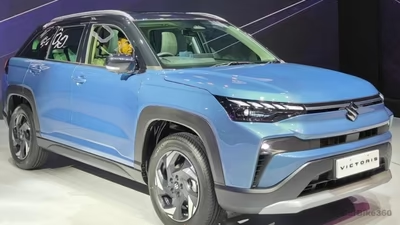
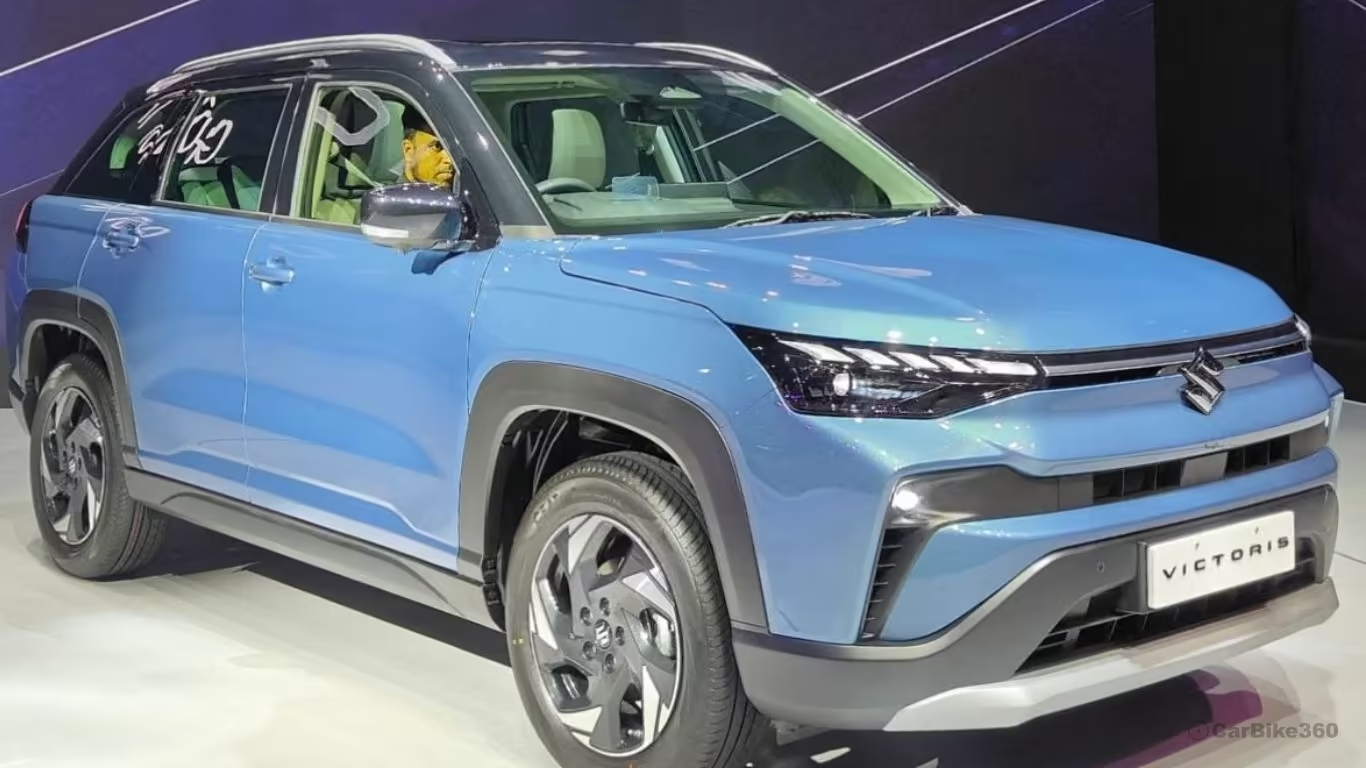
Maruti Suzuki highlighted the Maruti Victoris midsize SUV as a standout example. Nearly 50 percent of overall demand for this model now comes from the CNG variant. Banerjee described the acceptance of underbody CNG in the Victoris as "phenomenal", noting that the company is struggling to keep up with demand. " Almost 50 percent of the vehicles now have underbody CNG," he said.
Growth in the CNG Market
The surge in CNG vehicle interest aligns with broader trends in India’s passenger vehicle market. CNG-powered passenger vehicles recently crossed the 10-lakh annual sales mark. These vehicles now account for nearly 22 percent of total domestic passenger vehicle sales, making CNG the country’s second-largest fuel choice.
Maruti Suzuki currently offers 15 factory-fitted CNG models. The company aims to sell 9 lakh CNG vehicles in the current fiscal year, targeting 30 percent year-on-year growth. In the first quarter, CNG vehicle dispatches rose 58 percent to reach 2.2 lakh units.
Expanding Demand and Infrastructure
Banerjee said that demand is also growing in regions where CNG refuelling infrastructure is still developing. Dealers report that some buyers are purchasing CNG models before local stations are available, using petrol until CNG becomes accessible.
He attributed this trend to greater awareness of fuel price volatility and the ongoing expansion of CNG infrastructure. "If the product meets customer expectations, offers good drivability and lower running costs and the infrastructure is improving, there is no harm in switching from petrol to CNG," Banerjee said.
Also Read: 2026 Maruti Suzuki Brezza full price revealed with multiple engine options
CarBike 360 Says
Maruti Suzuki’s growing CNG portfolio highlights a clear shift in consumer priorities toward affordability and sustainability. With expanding availability across segments and improved technology, factory-fitted CNG models are becoming a mainstream choice. As fuel prices remain volatile, this trend is expected to strengthen further, reinforcing Maruti’s leadership in India’s alternative fuel vehicle market.


You May Like


Find your perfect car

Budget

Brand

Body Type

Fuel

Mileage

More
Latest Car Videos




Other Car News
Listen to Car Audios