ELECTRIC
Ola Electric faces downgrade amid falling sales and market share in FY26
 Add CarBike360 on Google
Ola Electric's FY26 has been turbulent: sales plummeted 47% MoM in Feb 2026 to 3,968 units, market share dipped under 6%, and ICRA issued a downgrade citing competition and losses.

Apr 30, 2026 06:19 am IST
Published On
Apr 30, 2026 04:01 am IST
Last Updated On
Apr 30, 2026 06:19 am IST
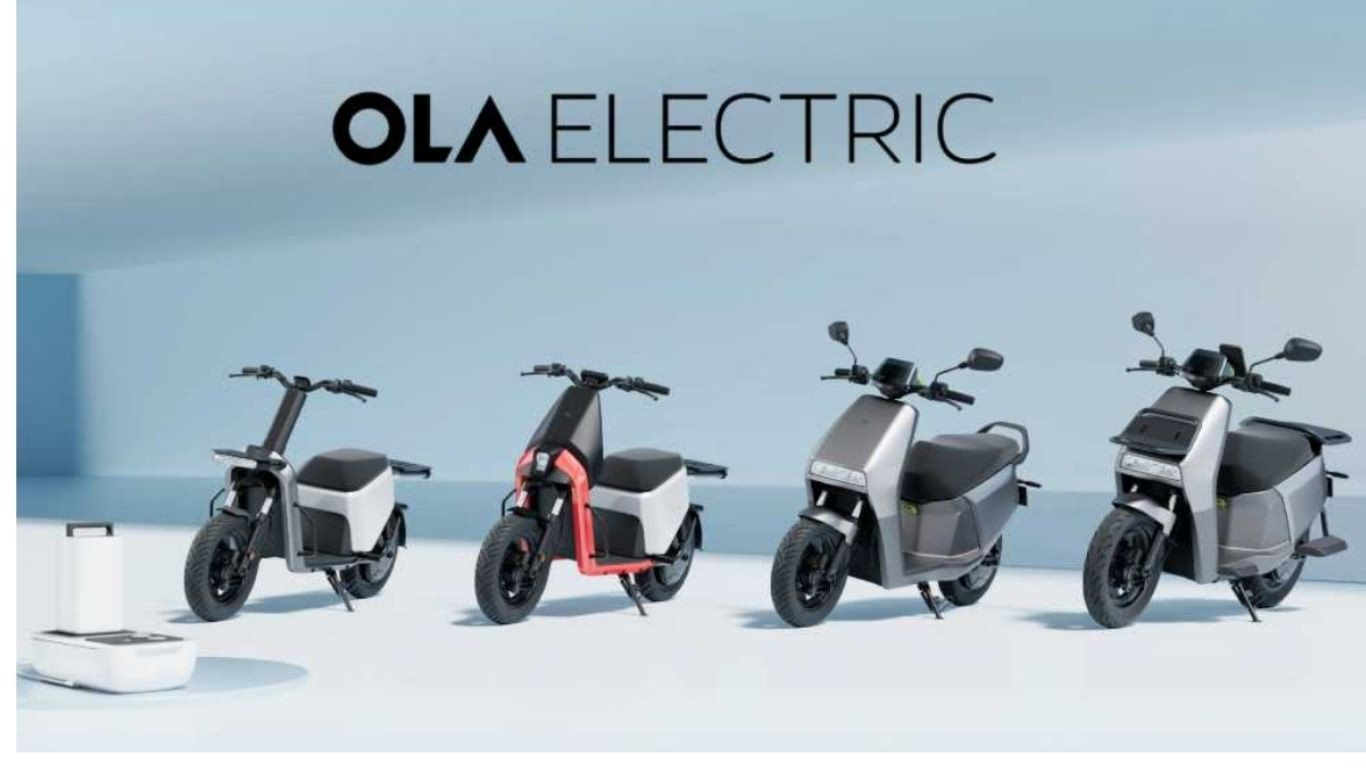
Ola Electric has been downgraded by a leading rating agency due to declining sales, ongoing losses, and a delayed path to profitability. The company has taken steps to improve unit economics and reduce costs, but these efforts have not offset the challenges. Ola Electric maintained its leadership in the electric two-wheeler (e2W) segment in FY2025. However, its market position weakened significantly in FY2026 as sales volumes dropped each quarter.
Key Highlights
- Ola Electric downgraded due to falling sales and delayed profitability
- Market share dropped from 22.1 percent to 5.4 percent within one year
- FY26 sales fell to 164000 units from 344000 units in FY25
- The company narrowed losses but revenue declined by 55 percent year on year
- ICRA cites competition and subsidy changes as key challenges
Market Share and Sales Decline
The rating agency cited increased competition in the electric vehicle (EV) sector and changes in government subsidies as major reasons for the downgrade. These factors have reduced demand and squeezed margins. The agency also highlighted issues specific to Ola Electric, such as a weakening brand image and service gaps, which have hurt its performance over the past year.
India's e2W market grew by nearly 22 percent year-on-year in FY26. Most legacy manufacturers and startups gained market share, while Ola Electric lost ground. In March, Ola Electric sold 10,118 vehicles, representing a 5.4 percent market share. This is a sharp drop from its 22.1 percent share in April 2025. For FY26, Ola Electric sold 164,000 vehicles, less than half the 344,000 units sold in FY25, according to government data from the Vahan portal.
The overall e2W market in India is still developing, with penetration at about 6.7 percent in FY2026. Legacy players now dominate the market, and new entrants like River are also increasing their share.
Financial Performance and Future Outlook
Ola Electric reduced its losses in the December quarter to ₹487 crore, compared to ₹564 crore in the same period last year. However, revenue from operations fell 55 percent year-on-year to ₹470 crore. The company cut costs by reducing staff, consolidating its network, and tightening controls. Despite these measures, the timing of breakeven depends more on a recovery in demand than further cost cuts, according to ICRA.
ICRA noted that Ola Electric saw some increase in sales volumes since March 2026. However, it remains uncertain if this recovery will last and lead to better operating leverage. The company is investing in cell manufacturing and stationary energy storage to support its localization strategy and reduce reliance on imports. These projects require significant capital and currently offer limited revenue visibility, posing near- to medium-term risks.
ICRA believes Ola Electric may attract funding for its cell manufacturing plans, given investor interest in advanced technologies. Successful fundraising will be crucial for stabilizing the battery business and improving its outlook. On Wednesday, Ola Electric shares closed at Rs 36.30 on the NSE, up 1.37 percent from the previous session. The company continues to face challenges as it navigates a changing market and competitive pressures.
Also Read: Ola electric subsidiary allots Rs 127.64 crore preference shares to group company
CarBike 360 Says
Ola Electric's FY26 downturn underscores the cutthroat EV two-wheeler arena, where sales crash, eroding market share below 6%, and ICRA's downgrade signals urgent reforms in service and costs. Yet, glimmers of March recovery hint at resilience. As subsidies evolve and rivals surge, Ola must innovate swiftly to reclaim dominance and assure investor faith in India's green mobility shift.


You May Like


Find your perfect bike

Brand

Budget

Body Type

Fuel

Mileage

More
Latest Scooter Videos



Other Scooter News
Listen to Scooter Audios