

 ELECTRIC
Tata Punch EV vs Citroen eC3: Which EV Wins in 2026?
 Add CarBike360 on Google
Discover why Tata Punch EV edges Citroen eC3 with superior range, power, and safety in this 2026 showdown—ideal for urban buyers seeking value-packed electric hatchbacks under Rs 13 lakh.

Mar 10, 2026 06:10 am IST
Published On
Mar 10, 2026 05:00 am IST
Last Updated On
Mar 10, 2026 06:10 am IST

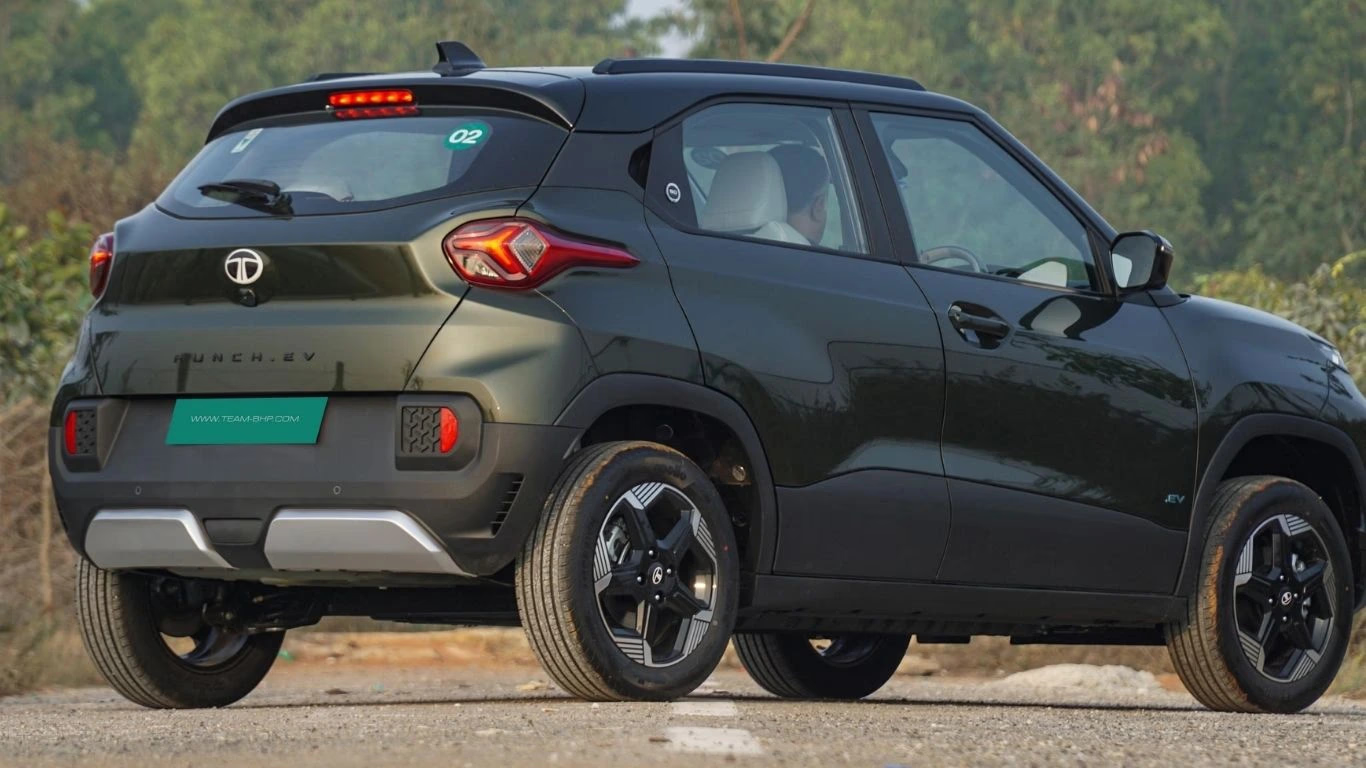
The Tata Punch EV received its first update in 2026 after launching in 2024. This update brought minor exterior and interior changes, as well as new electric powertrains. The Punch EV competes directly with the Citroen eC3 in the Indian electric vehicle market.
Key Highlights
- The Tata Punch EV received its first update in 2026 after launching in 2024.
- This update brought minor exterior and interior changes, as well as new electric powertrains.
- The Punch EV competes directly with the Citroen eC3 in the Indian electric vehicle market.
- The Punch EV now offers a Battery-as-a-Service (BaaS) plan.
The Punch EV now offers a Battery-as-a-Service (BaaS) plan. This plan allows customers to subscribe to the battery based on usage, reducing the starting price to Rs 6.49 lakh. The standard price without BaaS is Rs 9.69 lakh. In comparison, the Citroen eC3 does not offer a BaaS option. The Punch EV undercuts the eC3 by over Rs 3 lakh at the lower end and by almost Rs 1 lakh at the top end of the price range.
Design, Features, and Customisation

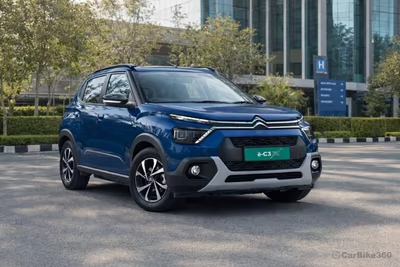
The Citroen eC3 is longer and has a greater wheelbase than the Punch EV. The eC3 offers seven dual-tone paint options, three roof colors, and 47 customization combinations through five packs. The Punch EV facelift provides all paint options with a black roof choice.
Feature-wise, the Punch EV stands out with all-LED lighting, leatherette upholstery, dual digital displays, ventilated front seats, six airbags, and a 360-degree camera. The eC3’s main advantage is auto up/down for all power windows. Both vehicles have adjustable headrests for all seats, wireless Apple CarPlay and Android Auto, electronic stability control, tire pressure monitoring, and a rear wiper with washer and defogger.
Performance and Range

Both EVs use a single electric motor. The Punch EV offers two battery pack options, while the eC3 has a single battery pack. The Punch EV delivers the highest power and torque in both its versions. The claimed range for the Punch EV reaches up to 468 km, while the eC3 achieved 232 km in a real-world test, close to its claimed figure.
Charging and Practicality
The Punch EV and eC3 both support 3.3 kW AC charging and 15A plug points. The eC3’s battery charges from 10 to 100 percent in 10.5 hours using a 15A plug. The Punch EV’s 30 kWh battery takes 9.4 hours, and its 40 kWh battery takes 13.5 hours for the same. With a 50 kW DC fast charger, both vehicles charge from 10 to 80 percent in about 56 minutes.
The Tata Punch EV’s compact size, advanced features, and competitive pricing make it a strong contender. The Citroen eC3 offers more space and customization but lags behind in features and battery options.
Conclusion
In the Tata Punch EV vs Citroen eC3 battle, the Punch EV claims victory with its longer 468 km range, punchier performance, 5-star Bharat NCAP rating, and BaaS affordability starting at Rs 6.49 lakh effective, perfect for India's city roads. If budget trumps features, eC3 delivers solid value.


You May Like



Find your perfect car

Budget

Brand

Body Type

Fuel

Mileage

More
Latest Car Videos


Top Auto News of the Week | Hyundai i20 Leak, Honda ZR-V, Tata Sierra EV, Skoda EV & More!

Talking about new Honda City and upcoming ZR-V SUV with Honda India’s Kunal Bahl!
2026 Honda City Launched in India - Better than VW Virtus, Hyundai Verna & Skoda Slavia?

Weekly Auto & EV Wrap-Up: Luxury Launches, AI Tech & Big Industry Updates!
Other Car News
Force Motors rolls out 200,000th Mercedes-Benz engine in India
Jaguar Land Rover focuses on North America and Personalisation strategy for Growth

NITI Aayog showcases India electric mobility vision at Berlin summit
Citroen launches 2026 Citroen eC3X electric hatchback in India at a more affordable price
Listen to Car Audios