ELECTRIC
Varroc expands into digital cockpits and EV electronics with TOLYY partnership
 Add CarBike360 on Google
Varroc’s collaboration with TOLYY marks a strategic move into advanced digital cockpit systems and EV electronics, aligning with the growing demand for connected, software-driven mobility solutions.

Jul 13, 2026 06:24 am IST
Varroc Engineering is broadening its focus beyond automotive lighting to digital cockpits, electric vehicle (EV) electronics, and localisation. CEO Dhruv Jain outlined this strategy as vehicles become more software-driven. The company aims to capture a larger share of the value in modern vehicles, where software, displays, sensors, and controllers play a central role.
Key Highlights
- Varroc expands from lighting into digital cockpits and EV electronics.
- TOLYY partnership enables localised display module production in India.
- Digital cockpit technology has 20-25 percent penetration in India.
- Over 65 percent of FY26 order intake came from EV customers.
- Varroc links new manufacturing investment to confirmed customer orders.
Varroc is moving into digital cockpits, advanced driver-assistance systems (ADAS), and electronics that manage EV systems. The strategy covers both high- and low-voltage vehicle systems and relies on local manufacturing, global engineering, and technology partnerships.
Expansion Beyond Lighting
Dhruv Jain, CEO of Varroc Business II, connects this shift to his earlier work with a US startup focused on camera-based fleet management and collision avoidance. That experience exposed him to connectivity, driver monitoring, and ADAS—areas now central to Varroc's business.
Varroc Business II operates around two main pillars: lighting for two- and four-wheelers and electronics mainly for passenger vehicles. On the high-voltage side, Varroc develops battery-management systems, inverters, DC-DC converters, onboard chargers, and residential wall chargers. On the low-voltage side, it works on infotainment, digital cockpits, ADAS, telematics, and body electronics.
Automakers are consolidating vehicle functions under common controllers, increasing the content suppliers can provide. Modern cockpit controllers now manage cameras, automated parking, driver monitoring, connected-car features, and safety alerts. Jain estimates that digital cockpit technology has reached only 20-25% penetration in India, leaving significant room for growth.
TOLYY Partnership and Localisation
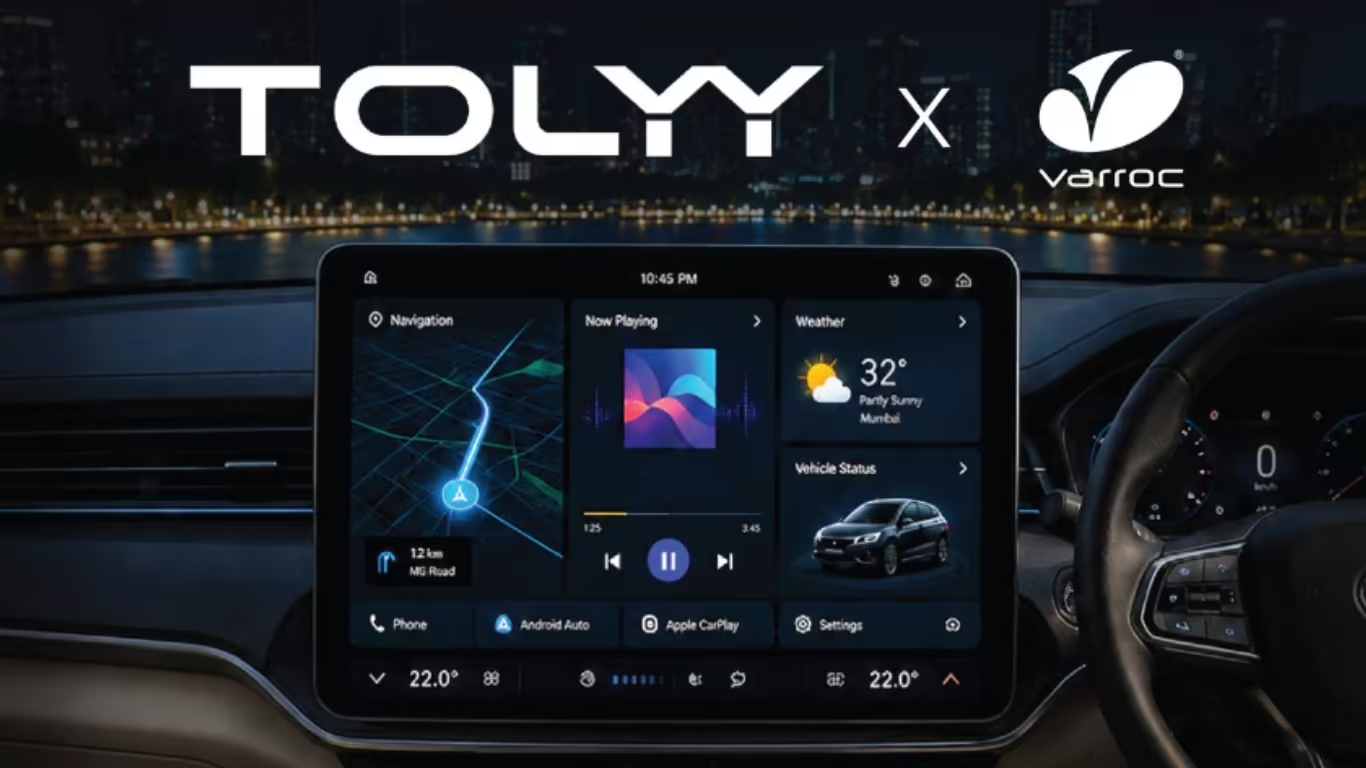
Varroc signed a strategic agreement with Suzhou TOLYY Optronics in June 2026 to supply digital cockpit displays for selected passenger and commercial vehicles. TOLYY will support Varroc with a flexible supply and localisation model, including fully integrated display modules and screen-only supply for local assembly in India.
This cooperation allows Varroc to integrate, validate, and manufacture advanced display solutions for various vehicle applications. The agreement supports local industrialisation and provides a platform to pursue customers in India, Europe, and North America. Jain said TOLYY's focus on localising display technology in India and its technology roadmap were key factors in the partnership.
The initial focus is the Indian digital cockpit market, but the companies may explore other regions. Local production will help Varroc reduce import duties and improve price competitiveness while giving more control over the supply chain amid global trade uncertainties.
Varroc has started delivering infotainment products in India, including controllers, display assemblies, cameras, and speakers. The company has also secured high-voltage electronics programmes from global EV manufacturers and received a wall-charger order for its Romanian operation.
Global Operations and Future Plans
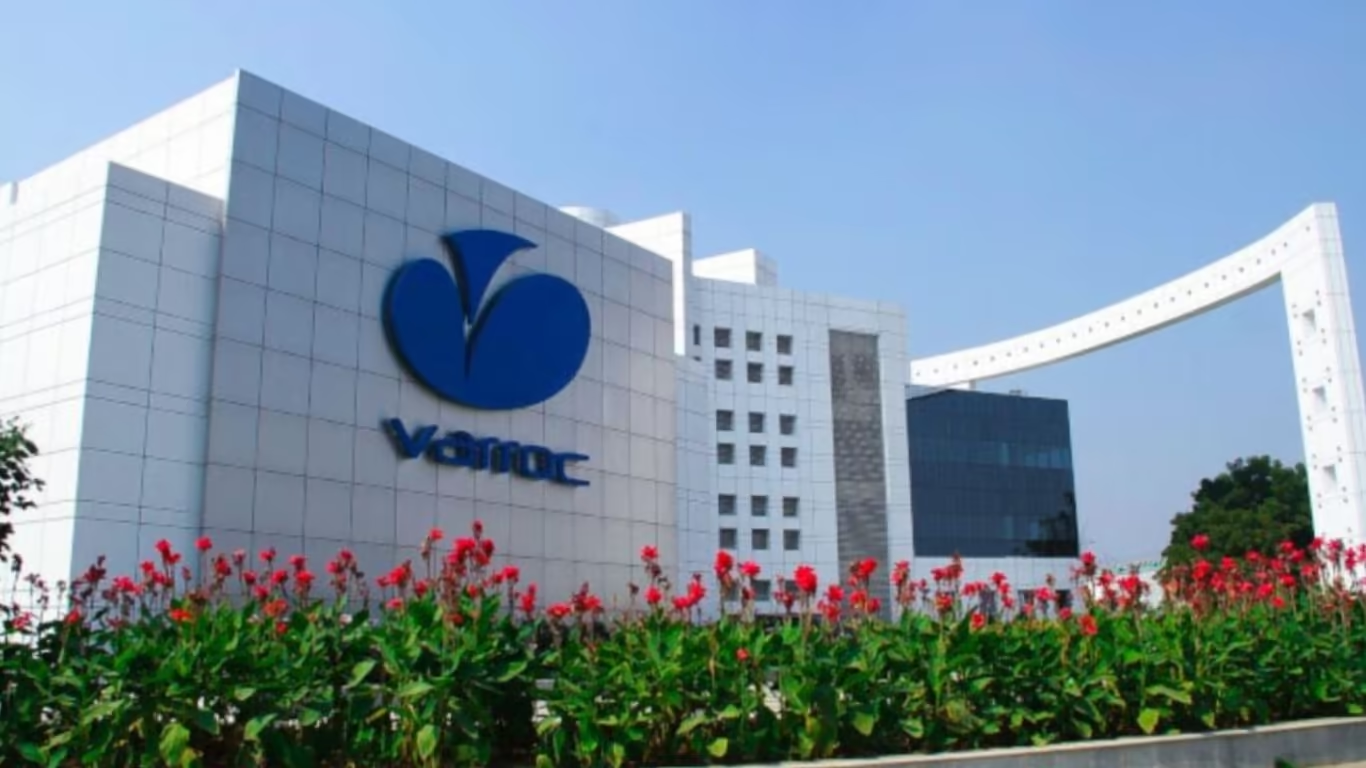
Varroc operates engineering centres in India, China, and Poland, with manufacturing in India, Romania, Vietnam, and Thailand. Romania is a hub for high-voltage electronics in Europe, while India combines engineering and cost-effective production. Vietnam and Thailand support lighting and electronics for Southeast Asia.
In FY26, over 65% of Varroc's record order intake, measured by annual peak revenue potential, came from EV customers. Four-wheelers and other segments accounted for 63% of new orders. Varroc adapts its role based on customer needs, acting as a manufacturing partner, joint developer, or system supplier.
Lighting remains a core business, with Varroc offering projector and LED lamps, adaptive systems, and high-definition lighting. These technologies require electronics, sensors, algorithms, and software, increasing overlap with the electronics segment. Jain said Varroc would only invest in new manufacturing capacity when backed by confirmed orders, reducing the risk of unused capacity.
Varroc's strategy is to increase its content per vehicle by advancing in lighting and electronics. The TOLYY agreement adds display technology and localisation, while existing infotainment and EV programmes support further growth. As vehicles become more connected and software-led, electronic systems are capturing a larger share of vehicle value.
Also Read: Tata Group prioritises cybersecurity and local battery production for EV growth
CarBike 360 Says
Varroc’s entry into digital cockpits and EV electronics through its TOLYY partnership highlights a clear shift toward future-ready automotive technologies. As vehicles become increasingly software-defined and connected, this move positions Varroc to capture emerging opportunities while strengthening its role in the evolving global mobility ecosystem.


You May Like




Find your perfect bike

Brand

Budget

Body Type

Fuel

Mileage

More
Latest Bike Videos





Other Bike News
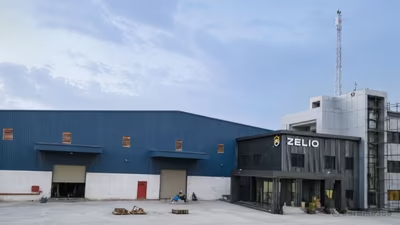
Zelio E-Mobility opens Coimbatore plant expands production capacity to 2,40,000 units
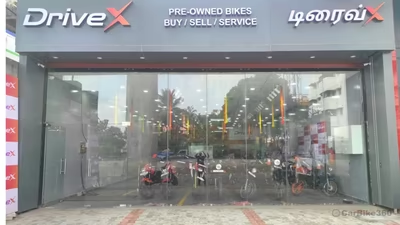
DriveX launches integrated RTO services for two-wheeler customers in Bengaluru and Chennai
Kawasaki Ninja ZX-6R gets free Ohlins steering damper worth Rs 83,000 till July 2026
India auto industry sees E20 push BMW tops luxury segment imports from China surge in FY26
Listen to Bike Audios