ELECTRIC
India auto industry sees E20 push BMW tops luxury segment imports from China surge in FY26
 Add CarBike360 on Google
India’s automotive sector evolves rapidly in FY26 with ethanol-blended fuel adoption, strong luxury car demand led by BMW, and increasing imports from China influencing market dynamics.

By Utsav Chaudhary
Jul 13, 2026 03:39 am IST
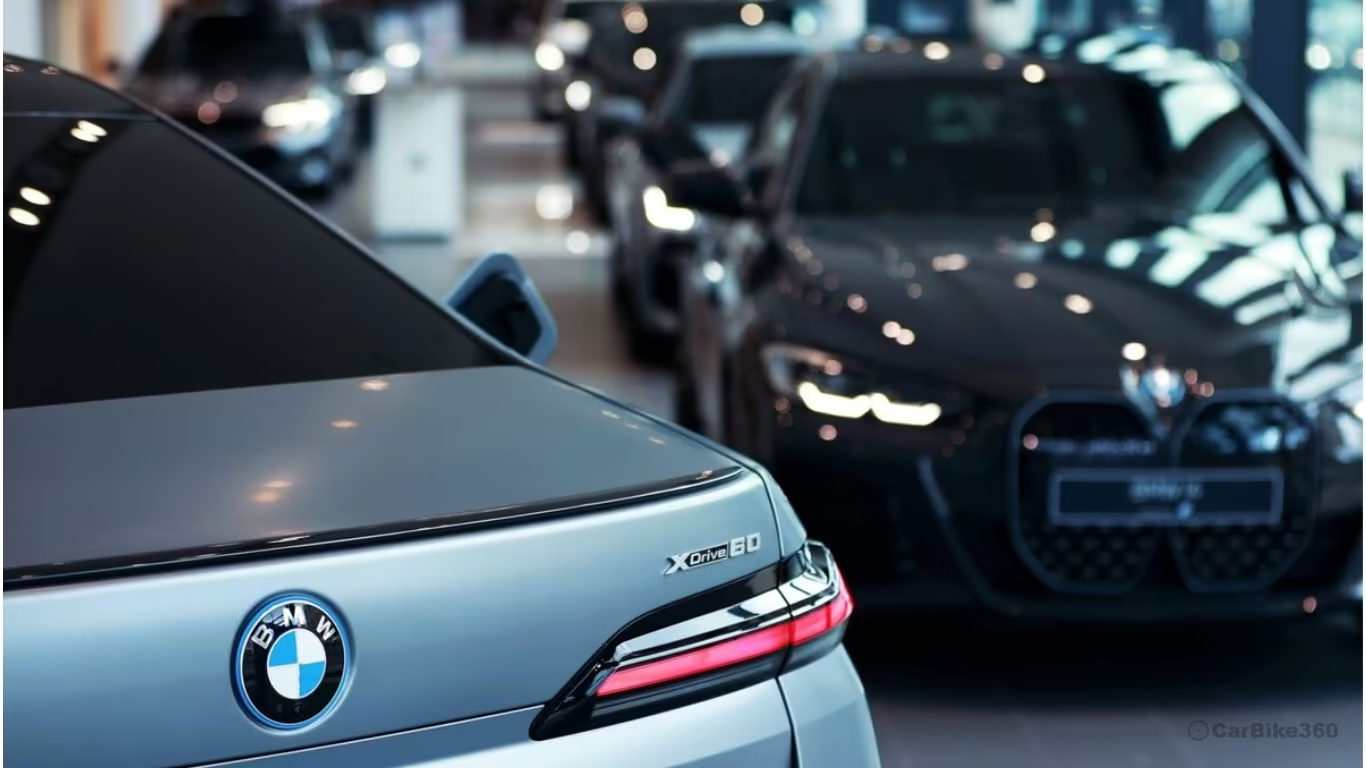
The Indian automotive sector experienced significant developments during the week of July 6-12, 2026. The government defended its E20 ethanol-blending policy, major automakers outlined growth plans, BMW overtook Mercedes-Benz in luxury car sales, and auto component imports from China increased further.
Key Highlights
- E20 petrol costs more than pure petrol at $70 per barrel of crude oil.
- BMW overtakes Mercedes-Benz as India's top luxury carmaker in H1 2026.
- India's auto component imports from China rise to 36 percent in FY26.
- Tata Motors targets tenfold passenger vehicle growth by FY31.
- EV registrations in June 2026 cross 3 lakh units with over 12 percent penetration.
E20 Policy and Fuel Market Changes
The Ministry of Petroleum and Natural Gas stated that E20 petrol, which contains 20% ethanol, can be more expensive to produce than pure petrol when global crude oil prices are around $70 per barrel. Maize-based ethanol is procured at Rs 71.86 per litre, excluding taxes and handling costs. The government emphasised that ethanol blending aims to reduce crude oil imports and limit exposure to global price fluctuations, rather than simply lowering petrol prices.
The Centre ruled out offering pure petrol, E10, and E20 simultaneously nationwide. Maintaining separate fuel streams at over 100,000 retail outlets would raise storage and handling costs. State governments were directed to act against fuel adulteration and supply chain lapses, as concerns about E20 compatibility grew among owners of older vehicles.
India’s ethanol production capacity increased from 421 crore litres in 2013-14 to 2,000 crore litres in 2026. The ethanol programme has helped save over Rs 1.90 lakh crore in foreign exchange by substituting more than 310 lakh metric tonnes of crude oil since 2014-15. It also avoided about 930 lakh metric tonnes of carbon dioxide emissions.
Automaker Strategies and Market Performance
Mahindra & Mahindra announced an “Attack Mode” strategy to accelerate investments despite global uncertainties. The company will expand artificial intelligence use across its businesses. Tata Motors Passenger Vehicles set a target for tenfold growth between FY20 and FY31, aiming for annual sales of over 1.2 million vehicles, six new nameplates, and more than 20 product interventions. Tata Motors and Jaguar Land Rover plan combined investments of Rs 2.6 lakh crore over five years, focusing on electrification and new technologies.
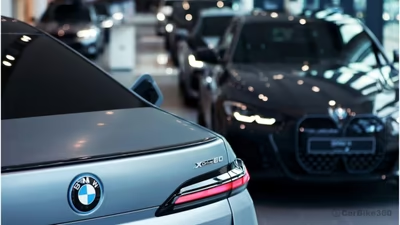
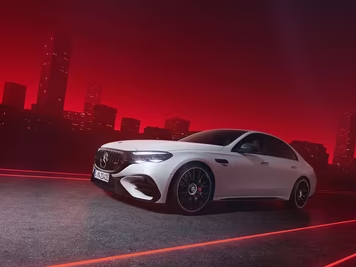
BMW Group India became the country’s largest luxury carmaker in the first half of 2026, registering 10,043 vehicles (including MINI), surpassing Mercedes-Benz’s 9,472 registrations. BMW’s luxury EV share rose to 26%, with 2,359 electric vehicles sold in the first half. Mercedes-Benz faced supply constraints but reported record sales for the second quarter and first half of 2026.
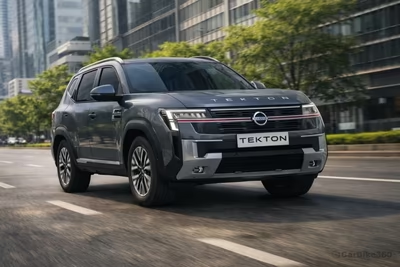
Other automakers also made moves. Nissan launched the Tekton midsize SUV, priced between Rs 10.49 lakh and Rs 18.59 lakh, but remains cautious about launching EVs before 2028. Honda is focusing on premium scooters and mid-capacity motorcycles. Hero expanded its Vida electric-scooter lineup, and Yamaha launched the Aerox E electric scooter and FZ Blue Flex motorcycle, compatible with E20-E85 fuels.
Auto Components, Imports, and Sales Trends
India’s auto component industry reported a record turnover of Rs 7.6 lakh crore ($85.9 billion) in FY26, up 12.7% year-on-year. However, the trade deficit widened to $1.37 billion as imports grew 13% to $25.4 billion, outpacing export growth of 5%. China’s share of component imports rose to 36%, up from 32% in FY25 and 30% in FY24. The Automotive Component Manufacturers Association (ACMA) highlighted labour shortages and the need for more durable materials due to higher ethanol blends.
Retail demand remained strong in June 2026. Two-wheeler sales reached a record 18.28 lakh units, up 21.22% year-on-year. Passenger vehicle sales hit 4.11 lakh units, a 28.63% increase. Electric vehicle registrations surpassed 3 lakh units, with EV penetration exceeding 12% for the first time.
Also Read: Renault India partners with IIT Kanpur for advanced aerodynamic vehicle testing
CarBike 360 Says
India’s auto industry is undergoing a pivotal transformation, driven by policy shifts like E20 fuel adoption, evolving consumer preferences, and global trade influences. While BMW’s dominance highlights strong luxury demand, rising imports from China indicate changing supply dynamics. As FY26 progresses, these trends will play a crucial role in shaping competitiveness, innovation, and long-term growth across the Indian automotive landscape.


You May Like


Find your perfect car

Budget

Brand

Body Type

Fuel

Mileage

More
Latest Car Videos




Other Car News
Listen to Car Audios