ELECTRIC
Ola S1 Z Review: Is This the Most Practical Ola Yet?
 Add CarBike360 on Google
The Ola S1 Z review explores a rugged, budget-friendly electric scooter priced at ₹59,999. It features a dual swappable battery system, rugged build, and a no-nonsense mechanical design.

By Swati Tomar
Jun 23, 2026 12:33 pm IST
Published On
Jun 23, 2026 12:33 pm IST
Last Updated On
Jun 23, 2026 12:33 pm IST
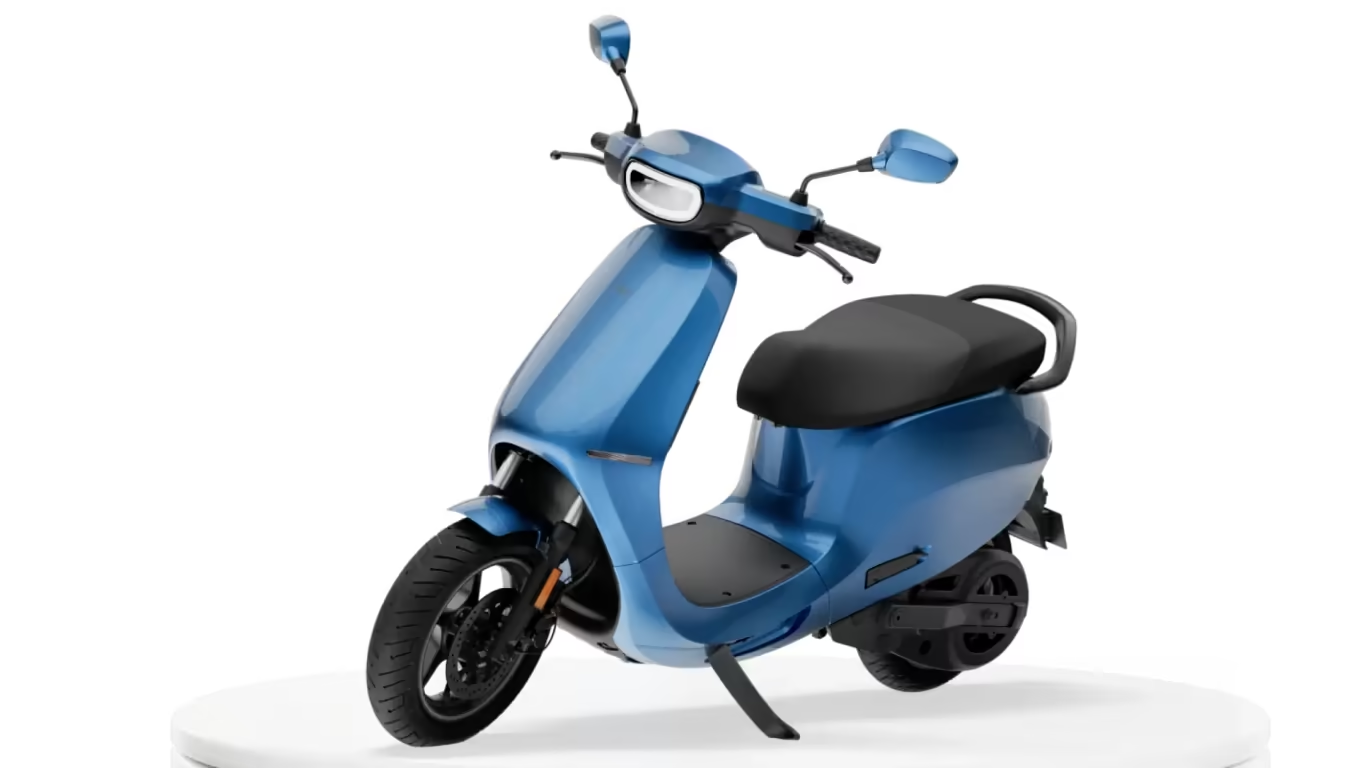
After 300 km navigating Pune’s chaotic roads—from the bumper-to-bumper crawl of Sadashiv Peth to the fast flyovers of the Katraj-Dehu bypass—my lower back has a few complaints, but my wallet is ecstatic. As an automotive tester who cringes at "smartphones-on-wheels" and prefers mechanical durability over buggy touchscreens, I fully expected Ola S1 Z to be a sluggish, heavily compromised experiment. Instead, its raw, no-frills functionality completely caught me off guard.
The S1 Z isn’t a futuristic gadget built to turn heads; it’s a tough, no-nonsense household appliance. By stripping away fragile tech gimmicks in favor of absolute mechanical simplicity, a basic digital dash, and genius dual 1.5 kWh swappable battery bricks, Ola has delivered a rugged commuter that fixes the urban charging crisis. It is, hands-down, the most rational and universally practical scooter the brand has ever built.
Key Specs at a Glance
Parameter | Specification | Real-World Test Reality |
Motor Wattage | 3 kW Peak (Hub Motor) | Peppy up to 50 km/h; tapers on inclines |
Battery Capacity | 3 kWh Total (Dual 1.5 kWh Packs) | Fully removable modular bricks |
Claimed vs Real Range | 146 km (Certified IDC) | 112–118 km (Mixed Normal/Eco Mode) |
Top Speed | 70 km/h | 67 km/h (GPS verified) |
Kerb Weight | ~106 kg (with both batteries) | Lightweight and easy to maneuver |
IP Rating | IP67 (Motor & Battery) | Handled water-logged streets reliably |
Tyre Size | 90/90-12 Front & Rear | Standard 12-inch alloys (not 14-inch as teased) |
Charging Time | ~5 Hours (0–80%) per pack | Dependent on using the portable charger |
Design & Build Quality
How does it look in the flesh? The S1 Z completely abandons the fluid, curvaceous language of the S1 Pro for a boxy, unapologetically utilitarian aesthetic. Built on a tough tubular steel and sheet metal underbelly, the body panels are matte plastic that feel far less prone to costly scuffs. It ditches the complex electronic seat latch for a reassuring, old-school physical key setup.
The biggest victory here is structural rigidity. Because it is a hub-motor chassis with no heavy mid-drive engine mounts, the frame feels light yet sturdy. The footboard/deck size is quite accommodating, engineered perfectly to handle commercial cargo or daily household groceries. However, the cost cuts are impossible to miss: the switchgear feels clicky and cheap, panel gaps around the front apron are uneven, and the seat cushioning slopes aggressively downward, forcing the rider to constantly slide forward during sustained testing.
Real-World Range & Battery
Can it actually free you from the charging grid? The core identity of the S1 Z revolves around its dual 1.5 kWh removable battery packs tucked under the floorboard. Tested with a 90 kg payload through varying traffic, the range results were highly consistent.
Eco Mode: Achieved 128 km of true range, but acceleration is painfully slow, capped at 40 km/h.
Normal Mode: The absolute sweet spot. It easily delivered 114 km while maintaining a solid 55 km/h cruising pace.
Sports Mode: Range plummeted to 82 km, with the system aggressively pulling back power once the battery dropped below 20%.
Regenerative braking has a mild, non-intrusive bite that pads the range by roughly 4–5% in heavy stop-and-go scenarios. The charge curve is flat; plugging a single dead brick into a standard household wall socket gets you to 80% in just under 5 hours, meaning a full dual-pack reset requires overnight charging or juggling two chargers.
Ride Comfort & Handling
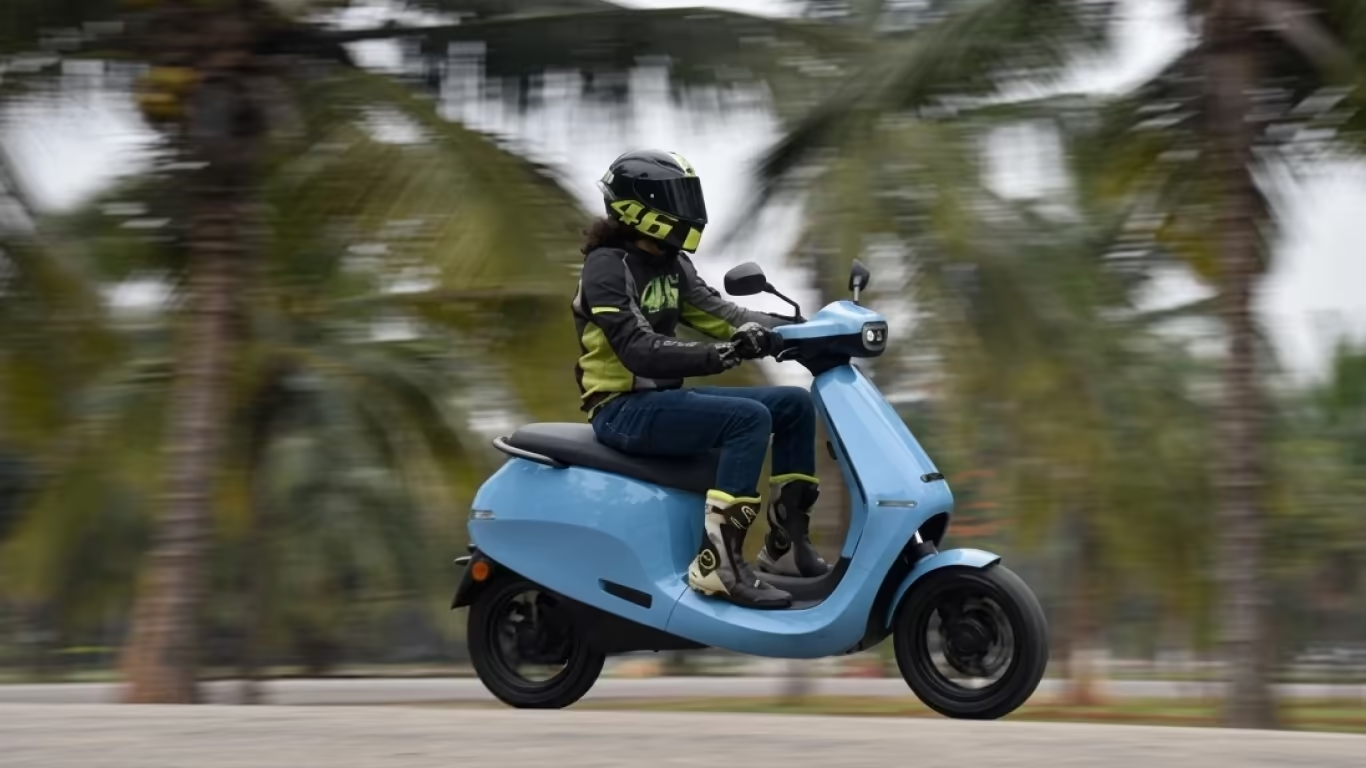
How does it handle India's unforgiving urban roads? Armed with conventional telescopic front forks and a basic rear monoshock, the S1 Z is explicitly tuned for maximum payload capacity rather than premium plushness. On smooth asphalt, the handling is remarkably nimble; the 12-inch wheels slice through tight traffic gaps with minimal effort, and the turning radius is exceptionally tight.
However, drop it onto a broken patch of tarmac, and the suspension stiffness becomes immediately apparent. Sharp potholes send a jarring shudder directly through the stiff chassis and straight into the rider's lower back. The deck vibration is low thanks to the hub motor, but poor footboard ergonomics—caused by the raised floorboard height accommodating the swappable battery trays—forces your knees into a slightly high, unnatural angle if you are taller than 5'10".
Braking Performance
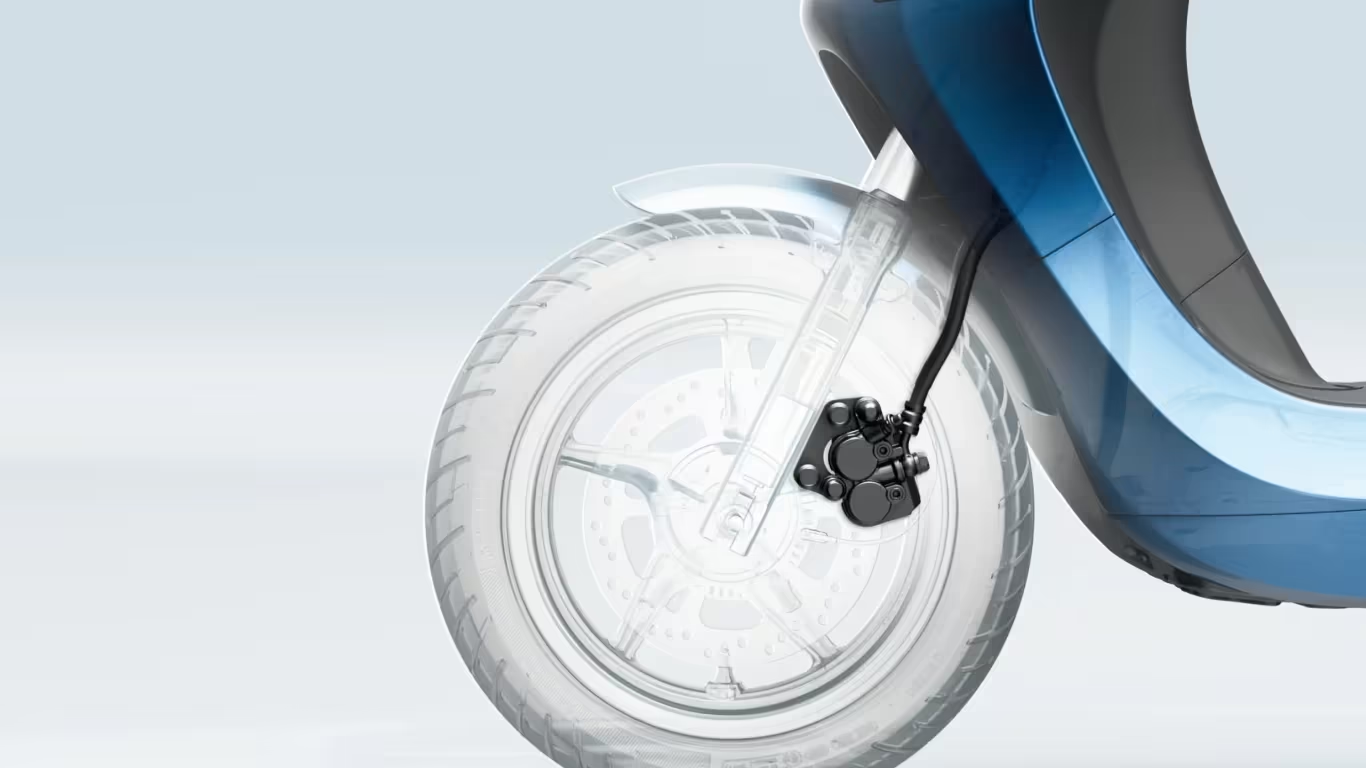
Does it have enough stopping power without disc brakes? To hit its razor-thin price target, Ola completely omitted disc brakes, fitting the S1 Z with a Combined Drum Brake System (CBS) on both ends.
Test Condition (60 to 0 km/h) | Stopping Distance | Braking Behavior |
Dry Asphalt | 19.8 Meters | Adequate, but requires high hand physical effort |
Wet Asphalt | 25.4 Meters | Early wheel lockups; heavily relies on CBS linking |
In dry conditions, the drum setup brings the 106 kg scooter to a halt adequately, but the lever modulation feels wooden. You have to squeeze both levers with significant muscle to drop velocity rapidly from its 67 km/h top speed. In the wet, the lack of a front disc or eABS becomes apparent; hard braking triggers early wheel lockups, relying heavily on the mechanical CBS link to distribute force and keep the scooter tracing a straight line.
Motor & Performance
The 3 kW hub-mounted motor delivers a linear, unglamorous surge of torque.
0–25 km/h: Brief, instant EV zip, taking just under 2.5 seconds.
0–40 km/h: Achieved in 4.9 seconds—peppy enough to outpace budget petrol scooters off the line.
The motor operates in near-total silence, completely free of the belt whine characteristic of the mid-drive S1 Pro. On flat roads, it sustains its 65+ km/h top speed effortlessly. However, its hill-climb capability is visibly modest. Attacking a steep flyover with a pillion passenger causes the motor to strain, forcing a drop in speed down to around 35–40 km/h as the controller manages thermal load. On the upside, even after an hour of continuous stress testing, heat dissipation was excellent with zero thermal throttling warnings.
App, Display & Smart Features
Does it lose out on tech to save on cost? The S1 Z completely swaps out the temperamental 7-inch touchscreen for a basic, highly readable segmented LCD dashboard. It is high-contrast and perfectly legible even under direct midday sunlight, cleanly displaying just the data essentials:
Battery: 84% | Speed: 52 km/h |
Ride Mode: Normal | Trip Meter: 24.5 km |
Smart features are stripped down to a reliable baseline. The vehicle connects via a basic smartphone app over standard Bluetooth, allowing for remote locking/unlocking and basic turn-by-turn navigation alerts on the dash. Because there is no heavy operating system running in the background, dashboard lag is non-existent, and OTA updates are rare, focused purely on motor controller optimization rather than flashy software additions.
Lighting & Safety Features
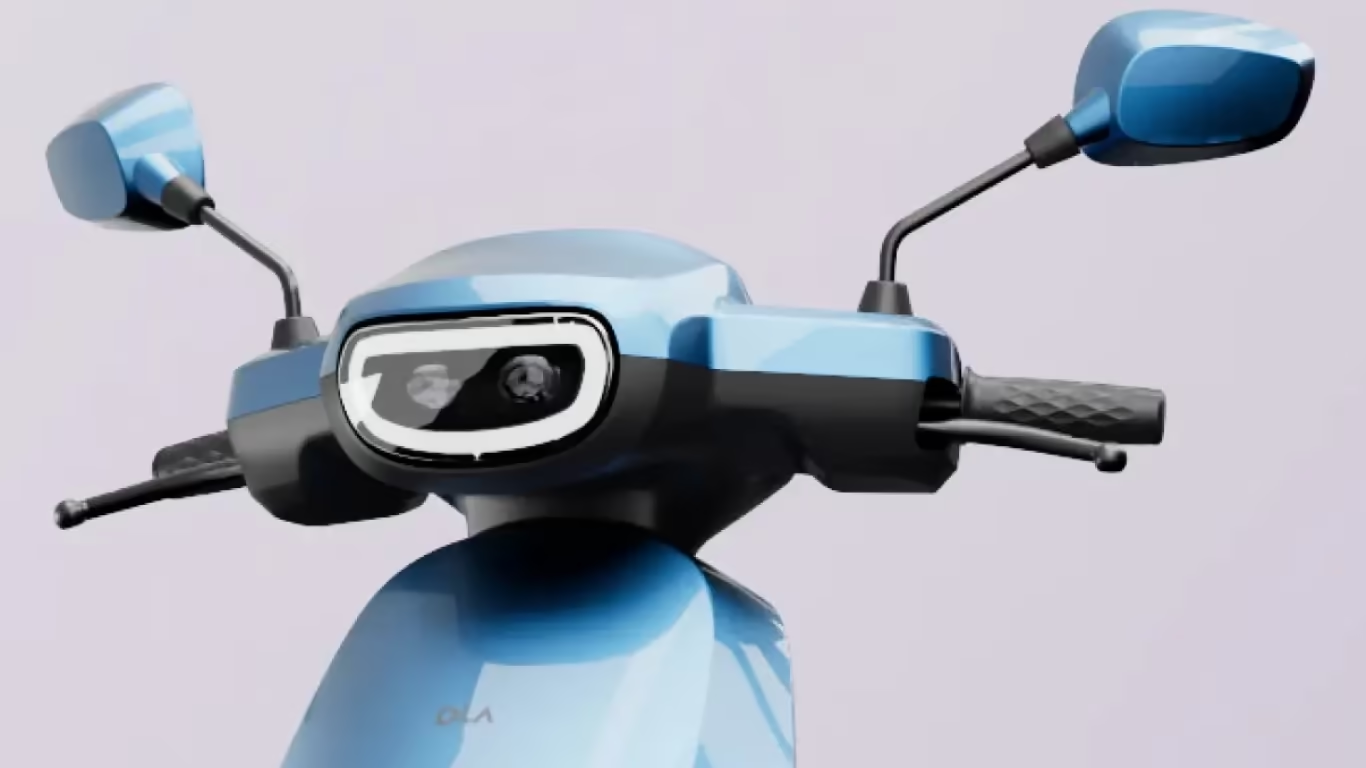
Up front, the iconic robot-face LED headlamp returns, offering an impressive, wide beam throw with a strong center hotspot that cuts through unlit city streets cleanly. The rear LED tail-lamp assembly is large and highly visible to trailing traffic, flanked by bright, crisp LED indicators.
The side profile includes mandatory regulatory reflectors, and the horn is plenty loud to command attention in noisy urban traffic. A critical software safety feature includes an automated speed limiter that safely caps the vehicle to 25 km/h when the battery drops into its critical reserve zone (below 10%), ensuring you aren't abruptly stranded.
Portability & Daily Usability
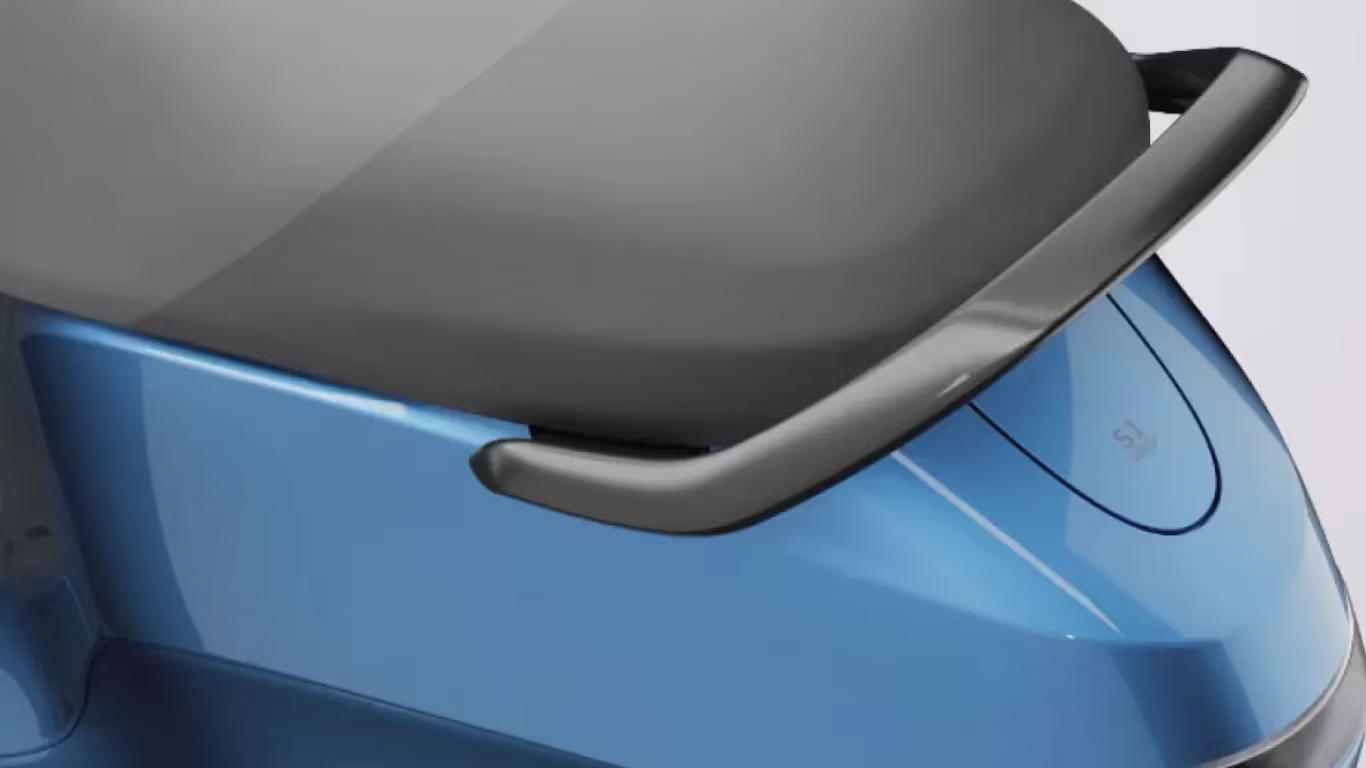
The S1 Z is an absolute workhorse for the daily grind. Its compact, narrow body dimensions make it incredibly easy to park in tightly packed public basements. Waterproofing is solid; the IP67-rated battery bays under the floorboard remained bone-dry even after wading through deep, water-logged streets.
Under-Seat Component | Space Allocation | Real-World Impact |
Battery Bay 1 | Occupied (1.5 kWh Pack) | Non-negotiable for dual-battery range |
Battery Bay 2 | Occupied (1.5 kWh Pack) | Non-negotiable for dual-battery range |
Remaining Boot Volume | 12 Liters Only | Fits a half-face helmet or your charger, but nothing more |
However, the swappable battery architecture severely cripples storage. With both 1.5 kWh packs occupying their slots under the seat floor, the remaining boot space is restricted to a tight 12 liters—just enough for a basic half-face helmet or your charging brick, but nothing more. Ola combats this by providing a heavy-duty front luggage hook and an optional front apron phone mount bracket for delivery navigation.
Value for Money & Competition
Starting at ₹59,999 (ex-showroom), the S1 Z offers an incredible price-to-feature ratio for a specific type of buyer. It undercuts almost every major premium electric scooter by nearly half the cost.
VS. TVS iQube (Base): The iQube feels significantly more premium, offers better suspension comfort, and a front disc brake, but costs nearly double and features a fixed battery.
VS. Honda Activa 6G (Petrol): The Activa offers infinite quick-refueling convenience and bulletproof resale value, but the S1 Z completely destroys it on daily running costs (₹0.15/km vs ₹2.5/km for petrol).
Pros, Cons & Final Verdict
Pros
True Infrastructure Solution: Dual 1.5 kWh removable batteries allow independent apartment charging.
Unbeatable Economics: Sub-60k entry price with incredibly low running costs.
Mechanical Reliability: No fragile touchscreens or software glitches to leave you stranded.
Nimble City Handler: Lightweight chassis combined with instant hub-motor response.
Cons
Stiff Ride Quality: Rigid suspension transfers harsh pothole bumps directly to the rider.
Basic Braking: Twin drum brakes require high hand effort and lack sharp bite.
Compromised Storage: Dual batteries eat up the under-seat bay, leaving only 12L of space.
Ergonomic Fatigue: Sloping seat cushion and high floorboard cause fatigue over long distances.
Who it's for: The Ola S1 Z is the ultimate budget tool for urban renters, students, and commercial delivery riders who have no ground-floor charging infrastructure and want to eliminate their petrol bill.
Would I buy it? If I lived in a high-rise apartment complex without a dedicated parking plug and needed a pure, low-cost daily utility appliance for short 30 km office commutes—yes, absolutely. But if my daily route involved broken highways or required plush pillion comfort, I would willingly save up more cash for an option with a more compliant suspension and a front disc brake.
CarBike Verdict
The Ola S1 Z is a highly practical, entry-level choice for budget-conscious urban commuters and students. Starting at just ₹59,999, its standout feature is the dual swappable battery system, which eliminates charging downtime and can even function as a home inverter.
While its top speed is capped at 70 km/h and it relies entirely on basic drum brakes, its unmatched affordability and utility make it an exceptionally compelling value proposition for daily city riding.


You May Like


Find your perfect bike

Brand

Budget

Body Type

Fuel

Mileage

More
Other Scooter Expert Reviews
Listen to Scooter Audios