ELECTRIC
FADA pushes for 150 EV charging stations and dealer inclusion in Delhi's EV policy 2026
 Add CarBike360 on Google
The Federation of Automobile Dealers Associations (FADA) has proposed installing 150 public EV charging stations in Delhi, offering to fund them in partnership with the government.

Apr 18, 2026 07:26 am IST
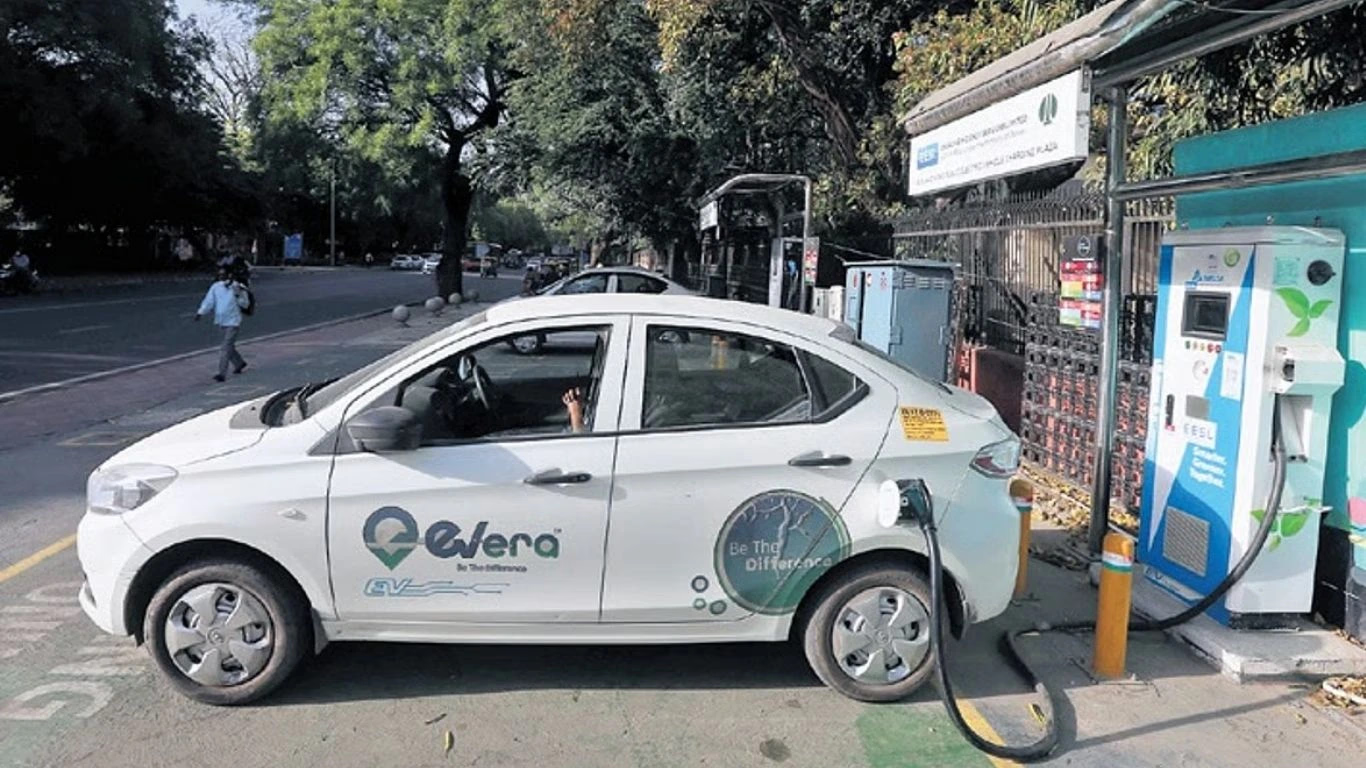
The Federation of Automobile Dealers Associations (FADA) has proposed direct investments in Delhi’s electric vehicle (EV) ecosystem. FADA aims to position automobile dealers as active partners in the city’s transition to electric mobility, not just as retail outlets.
Key Highlights
- FADA proposes to set up 150 public EV charging stations across Delhi
- Dealers offer to fund infrastructure and establish vehicle scrappage centres in the city
- Delhi automobile dealers contribute Rs 7,150 crore annually to government revenues
- FADA seeks inclusion in Delhi's EV policy framework for active dealer participation
Dealers Seek Role in EV Policy
FADA President C. S. Vigneshwar spoke at an industry event, emphasizing the need for an enabling and inclusive shift to EVs. He highlighted that dealer networks serve as the last-mile interface with customers. Vigneshwar referred to the recent draft of Delhi’s EV policy, stating that the industry supports the transition. However, he stressed that enablement should precede enforcement and that policy intent must align with on-ground realities.
FADA Delhi Chairperson Shailendra Gupta presented several investment-led proposals. He signaled the dealer community’s willingness to contribute directly to building the EV ecosystem. Gupta announced that FADA has proposed setting up 150 public EV charging stations across Delhi. The association is ready to fund this infrastructure in partnership with the government.
Proposals for Infrastructure and Ecosystem
Gupta also stated that FADA is willing to establish vehicle scrappage centers in the city. These centers would address the current shortage of such infrastructure and comply with regulatory norms. In addition, FADA expressed readiness to develop dedicated auto zones. These zones would feature integrated infrastructure, including internal roads, solar power systems, water treatment, and effluent management facilities. The dealer ecosystem would develop and fund these projects.
The proposals coincide with FADA’s request for the Delhi government to include dealer participation in the broader EV policy framework. Gupta pointed out that Delhi’s automobile dealers contribute about Rs 7,150 crore annually to government revenues. This includes Rs 2,650 crore from motor vehicle tax and Rs 4,500 crore via GST. The sector also supports large-scale employment across the retail network.
Call for Policy Alignment and Support
FADA reiterated its support for the EV transition. The association is willing to take on a larger role if policy frameworks enable such participation and align with practical realities. The proposals reflect the dealer community’s intent to support Delhi’s EV goals through direct investment and infrastructure development.
Also Read: RideAsia EV 2026 to highlight innovation, partnerships, and growth in India’s EV ecosystem
CarBike 360 Says
As FADA's proactive proposals for 150 EV charging stations and dealer inclusion gain momentum, Delhi stands poised for a balanced EV revolution. By prioritizing infrastructure, skilling, and policy stability, this collaboration promises cleaner mobility without compromising livelihoods. The capital's auto ecosystem is set to lead India's sustainable transport future, driving economic growth alongside environmental gains.


You May Like






Find your perfect bike

Brand

Budget

Body Type

Fuel

Mileage

More
Latest Bike Videos





Other Bike News
Listen to Bike Audios