ELECTRIC
Tata Motors targets strong growth with FY31 revenue and volume goals
 Add CarBike360 on Google
Tata Motors has revealed its long-term FY31 strategy, aiming for significant revenue growth, increased production volumes, and a stronger push in electric and global markets.

Jun 23, 2026 10:32 am IST
Published On
Jun 23, 2026 10:01 am IST
Last Updated On
Jun 23, 2026 10:32 am IST
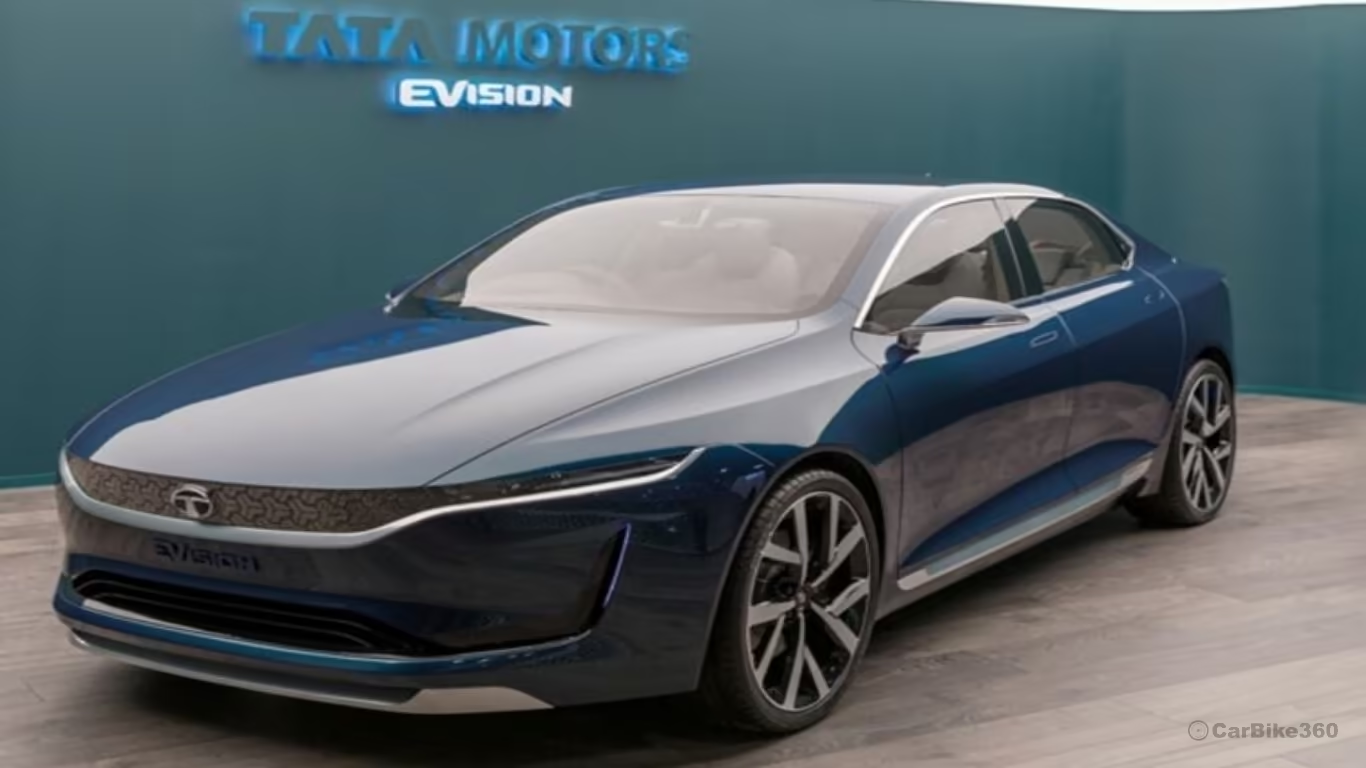
Tata Motors Passenger Vehicles aims to more than double its annual volumes by FY31. The consolidated group targets Rs 6 lakh crore in revenue and a 10% EBIT margin by the same year. The company plans to boost revenue from Rs 58,500 crore in FY26 to Rs 1.4 lakh crore by FY31. This growth will come from new products, multiple powertrains, and cost reductions.
Key Highlights
- Tata Motors PV targets Rs 1.4 lakh crore revenue and over 1.2 million units by FY31
- The group aims for Rs 6 lakh crore consolidated revenue and 10 percent EBIT margin by FY31.
- Record 641,586 vehicles sold in FY26, with strong growth in CNG and electric vehicles.
- JLR plans five new product launches and a £26 billion revenue target for FY27.
Financial Targets and Growth Plans
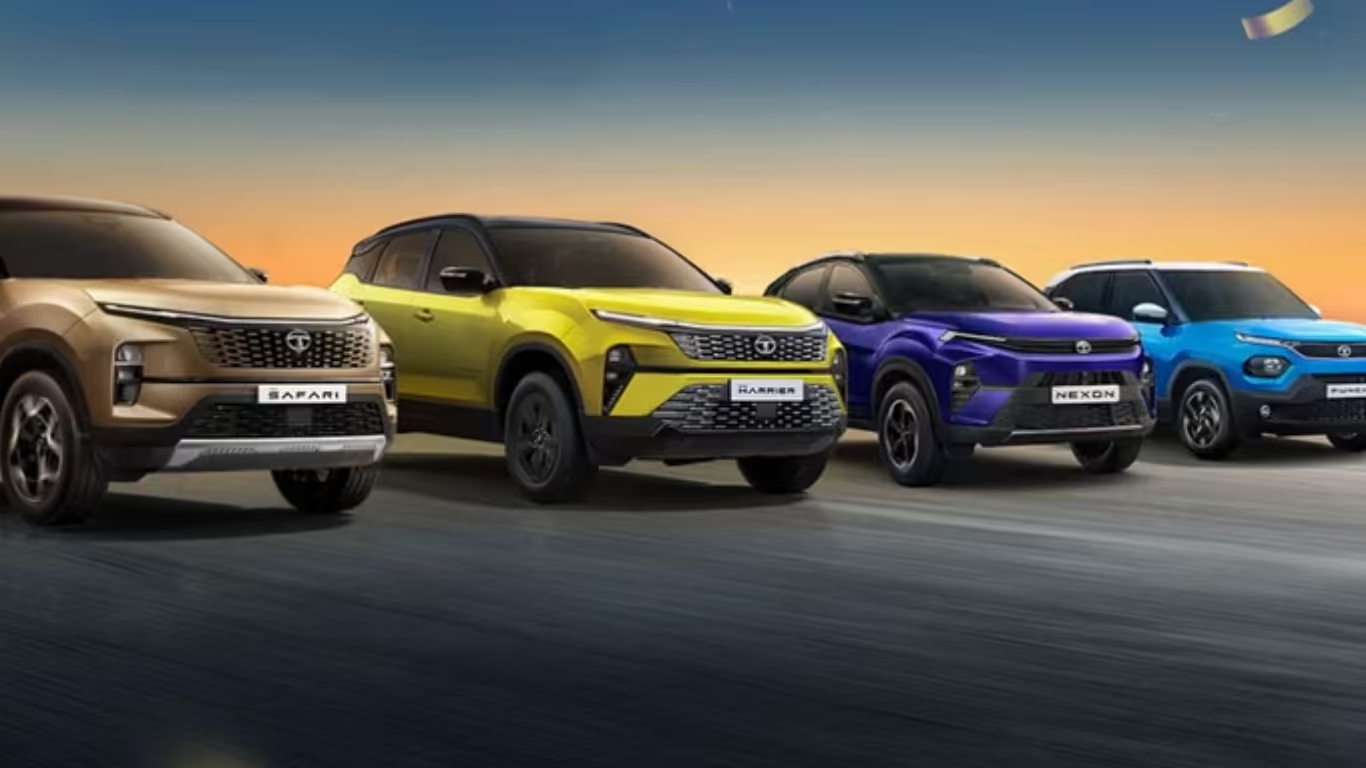
Tata Motors PV has set an EBITDA margin target of 10% and an EBIT margin above 5% by FY31. Profit before tax and exceptional items is expected to rise more than fivefold from FY26 to FY31. As an intermediate goal, revenue should exceed Rs 1.15 lakh crore by FY29. The company aims for an 8% EBITDA margin and a 4% EBIT margin in FY29, after the expiry of PLI scheme benefits.
In FY26, the EBITDA margin stood at 6.9% but was about 5% without PLI benefits. Profit before tax and exceptional items is expected to grow more than threefold by FY29. Tata Motors PV plans to generate over Rs 10,000 crore in cumulative free cash flow by FY29. Planned investment totals Rs 37,500-40,000 crore through FY29, with capital expenditure at about 7% of revenue. Spending will rise in the early years to create capacity and support new products.
Consolidated Group Objectives
At the group level, including Jaguar Land Rover (JLR), Tata Motors targets over Rs 5 lakh crore in revenue by FY29 and Rs 6 lakh crore by FY31. The group aims for a 7% EBIT margin and profit before tax and exceptional items above Rs 30,000 crore by FY29. By FY31, the EBIT margin target is 10% with profit before tax and exceptional items over Rs 50,000 crore. The group expects to become net debt-free by FY29 and to generate significant free cash flow.
In FY26, consolidated revenue was Rs 3.36 lakh crore, with profit before tax and exceptional items at Rs 2,519 crore. The previous year saw lower volumes and operational disruptions at JLR. Tata Motors PV expects to outpace the Indian passenger vehicle industry's growth in FY27, supported by new launches, updates, and a broader powertrain range. SUVs, CNG vehicles, and EVs will drive growth.
Volume Expansion and Market Share
Tata Motors PV sold a record 641,586 vehicles in FY26, up 15% from the previous year. This growth was nearly double the 8% expansion of the overall industry. The company became India's second-largest passenger vehicle manufacturer in the second half of FY26. It sold over 1.7 lakh CNG vehicles and more than 92,000 EVs, maintaining over 40% share in the electric passenger vehicle market.
The company expects annual volumes to rise from 6.4 lakh in FY26 to over 1.2 million units by FY31. This will require adding more than 6 lakh units over five years. Growth will come from market expansion, entry into new segments, and increased CNG and EV sales. The Indian passenger vehicle market is estimated to grow from 47 lakh units in FY26 to 64 lakh units by FY31. EVs could account for nearly half of the incremental volumes, with CNG vehicles contributing another 35%.
Strategic Priorities and Technology

Tata Motors PV plans to expand its addressable market to over 80% of the industry by FY31. It targets a share above 25% in each segment it enters. The company will use new nameplates, more powertrain options, and regular model updates to fill portfolio gaps and strengthen existing products. Five priorities for the next five years include double-digit growth, capital efficiency, technology development, resilience, and strategic partnerships.
Technology focus areas are battery-electric vehicles, efficient internal-combustion engines, software-defined vehicles, advanced driver-assistance systems, and artificial intelligence. The company will also improve manufacturing resilience, cybersecurity, sustainability, and digital systems. Strategic partnerships will cover products, technologies, components, and manufacturing.
Global Integration and JLR Plans
Tata Motors PV aims to become an integrated global automobile company over the next five years. Its mainstream brands will remain India-focused but expand into select overseas markets. JLR's luxury brands will continue in advanced economies. Both businesses will seek synergies in batteries, suppliers, software, digital technology, and sales. They have started sharing manufacturing infrastructure at the Panapakkam plant in Tamil Nadu.
JLR targets revenue of about £26 billion, a 4% EBIT margin, and breakeven operating cash flow for FY27. The luxury division plans to launch five products in two years, including the Range Rover Electric and a new Jaguar model. Tata Motors expects product expansion, technology sharing, cost control, and stronger cash generation to support its growth as a global automobile group.
Also Read: Tata Motors expands AI-Integration across engineering, manufacturing, and customer support
CarBike 360 Says
Tata Motors’ FY31 roadmap reflects a clear intent to scale operations, strengthen its EV portfolio, and expand its global footprint. With a strong focus on innovation, sustainability, and market adaptability, the company appears well-positioned to capitalize on emerging opportunities. If executed effectively, this strategy could reinforce Tata Motors’ standing as a leading force in both domestic and international automotive markets.


You May Like


Find your perfect car

Budget

Brand

Body Type

Fuel

Mileage

More
Latest Car Videos


Top Auto News of the Week | Hyundai i20 Leak, Honda ZR-V, Tata Sierra EV, Skoda EV & More!

Talking about new Honda City and upcoming ZR-V SUV with Honda India’s Kunal Bahl!
2026 Honda City Launched in India - Better than VW Virtus, Hyundai Verna & Skoda Slavia?

Weekly Auto & EV Wrap-Up: Luxury Launches, AI Tech & Big Industry Updates!
Other Car News
Listen to Car Audios