ELECTRIC
Tata Group prioritises cybersecurity and local battery production for EV growth
 Add CarBike360 on Google
Tata Group is accelerating its EV ambitions by investing in cybersecurity infrastructure and domestic battery manufacturing, aiming to enhance data protection, reduce dependency on imports, and support India’s growing electric vehicle ecosystem.

By Priya Thakur
Jul 09, 2026 04:07 am IST
Tata Group is intensifying its focus on risk management and localisation in its automotive businesses. Chairman N. Chandrasekaran has identified execution, supply chain disruptions, and cybersecurity as key risks for the Group’s next phase of mobility strategy.
He addressed shareholders, noting that a recent cyber incident at Jaguar Land Rover (JLR) was resolved. However, he emphasised that cybersecurity now represents an industry-wide challenge requiring ongoing investment, not just one-time solutions.
Key Highlights
- Tata Group chairman flags execution supply chain and cybersecurity as key risks for automotive strategy.
- Battery subsidiary Agratas to begin local cell production in 2027 for JLR and Tata Motors.
- Cybersecurity is now treated as a strategic priority with increased board-level oversight.
- Local battery supply aims to reduce import dependence and stabilise EV pricing.
- BMW Group India EV sales rose 78 per cent in the first half of 2026.
Cybersecurity as a Strategic Priority
Chandrasekaran’s comments highlight that Tata Group is treating cyber resilience as a strategic priority. Cyberattacks on manufacturing plants, IT systems, or connected vehicle platforms can quickly impact operations, customer trust, and financial results. In response, Tata Motors and JLR are increasing safeguards across manufacturing systems, corporate IT, and software-driven vehicle architectures.
The growing use of connectivity, over-the-air updates, and cloud-based services has expanded exposure to cyber risks. This trend is pushing automakers worldwide to allocate more resources to security, monitoring, and incident response. Tata Group’s approach aligns with global practices, but recent remarks suggest more explicit board-level oversight of cyber readiness.
Localisation and Battery Supply Chain
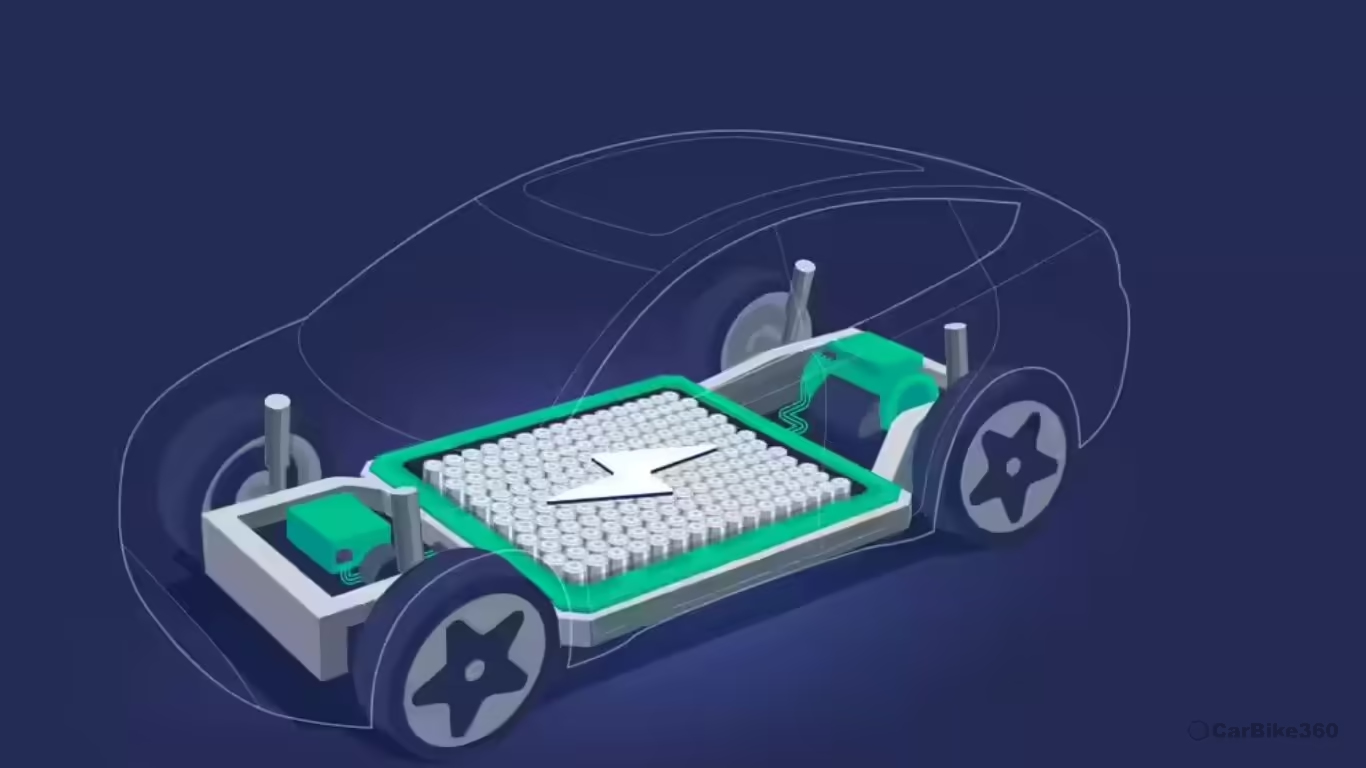
On the supply side, Chandrasekaran identified battery subsidiary Agratas as central to Tata Group’s localisation strategy. Agratas is scheduled to start production in 2027, with initial battery cells intended for both JLR and Tata Motors. This move aims to reduce reliance on imported batteries and limit exposure to commodity and currency fluctuations. It also seeks to improve control over a critical input as electric vehicle (EV) volumes increase.
Local battery production is vital for Tata’s cost and margin objectives in the EV sector. As Tata Group expands its electric vehicle portfolios in India and at JLR, having competitive, in-house cell capacity is expected to stabilise pricing and improve long-term economics.
The localisation initiative is part of broader efforts to increase domestic sourcing of key components and diversify supply chains. This comes as geopolitical and tariff risks continue to reshape global supply flows. Tata Group’s focus on cyber defence, execution risk, and battery localisation, along with ongoing global expansion, indicates a strategy designed for resilience and adaptability as the company accelerates its automotive ambitions.
Industry Context and Market Trends
The luxury carmaker has also cautioned that varying state-level incentives could affect consumer behaviour and encourage customers to alter purchase decisions. Average price increases of 2.7% on SUVs and 2% on commercial models have been implemented to offset rising commodity costs. Meanwhile, BMW Group India reported a 78% increase in electric vehicle sales between January and June 2026, strengthening its position as the country’s largest luxury EV seller.
Also Read: Tata Motors targets FY28 growth with IVECO deal and digital expansion
CarBike 360 Says
Tata Group’s dual focus on robust cybersecurity and localised battery production signals a forward-looking EV strategy built on resilience and trust. By safeguarding connected vehicle ecosystems while strengthening domestic supply chains, the company is positioning itself to lead India’s electric mobility transition with greater reliability, scalability, and long-term sustainability.


You May Like





Find your perfect car

Budget

Brand

Body Type

Fuel

Mileage

More
Latest Car Videos





Other Car News

Listen to Car Audios