Loading..

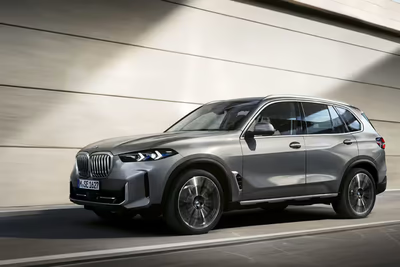
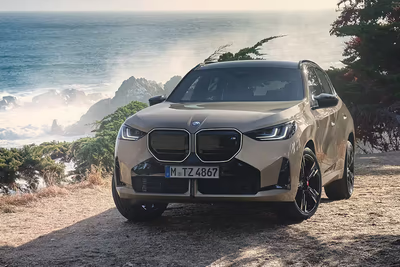
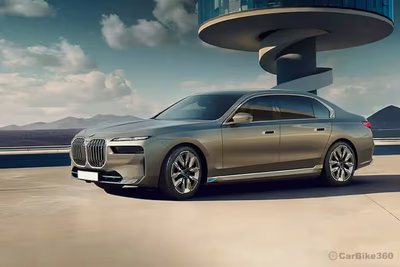
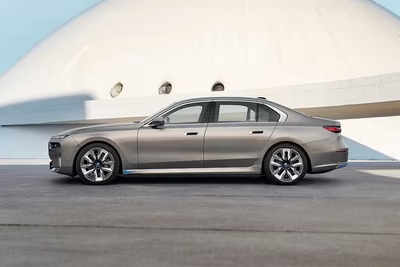
बीएमडब्ल्यू वर्तमान में भारत में 22 कार मॉडल पेश करता है, जो ग्राहकों की विभिन्न जरूरतों को पूरा करते हैं। इस लाइनअप में 9 SUV, 4 Coupe, 8 Sedan शामिल हैं, साथ ही उन ग्राहकों के लिए 9 इलेक्ट्रिक कारें भी उपलब्ध हैं जो स्वच्छ मोबिलिटी की ओर बढ़ना चाहते हैं।
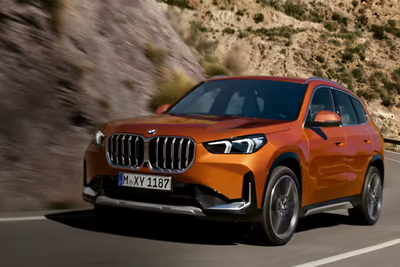
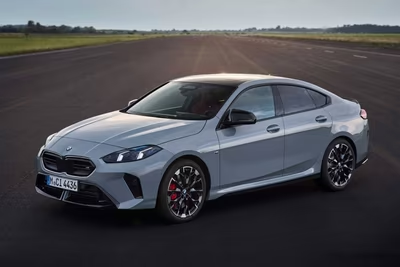
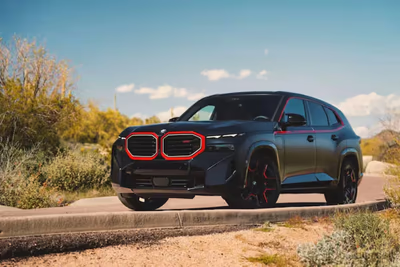
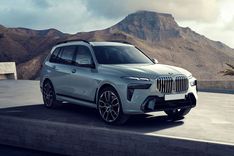
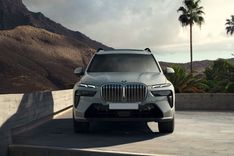
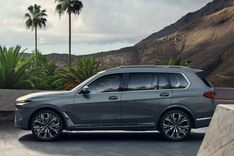
बीएमडब्ल्यू कार की कीमत 37.18 लाख रुपये से 2.17 करोड़ रुपये के बीच है। बीएमडब्ल्यू के सबसे सस्ते मॉडल बीएमडब्ल्यू एक्स1 की कीमत 37.18 लाख रुपये है और सबसे महंगे मॉडल बीएमडब्ल्यू एम8 की कीमत 2.17 करोड़ रुपये से शुरू होती है। बीएमडब्ल्यू देश में 19 कार मॉडल पेश करती है, जिसमें एसयूवी/एमयूवी सेगमेंट में 8 कारें, सेडान सेगमेंट में 6 कारें, कूप सेगमेंट में 4 कारें और कन्वर्टिबल सेगमेंट में 1 कार शामिल हैं। बीएमडब्ल्यू के पास भारत में नई आने वाली कारें भी हैं। बीएमडब्ल्यू, जिसे बवेरियन मोटर वर्क्स (जर्मन में बेयरिस्चे मोटरन वर्क) के रूप में भी जाना जाता है, एक जर्मन लक्जरी ऑटोमोबाइल निर्माण कंपनी है जिसकी स्थापना वर्ष 1916 में हुई थी। म्यूनिख में अपने मुख्यालय के साथ, कंपनी ने वर्ष 2006 में भारत में अपनी पहली उपस्थिति दर्ज की। ब्रांड की भारतीय शाखा का मुख्यालय गुरुग्राम में है और इसका विनिर्माण संयंत्र चेन्नई में स्थित है। बीएमडब्ल्यू इंडिया स्पोर्ट्स कारों के साथ सेडान से लेकर एसयूवी तक कारों की एक विस्तृत श्रृंखला पेश करती है। मॉडल लाइन-अप में X1, X3, X4, X5, X7, 3 सीरीज, 5 सीरीज, 7 सीरीज, 3 सीरीज GT, और 6 सीरीज GT शामिल हैं। M और Z श्रेणी के कार मॉडल, जिसमें M2 प्रतियोगिता, M4 कूप, M5 प्रतियोगिता, M760 Li और Z4 शामिल हैं, CBU कारें देश में आयात की जाती हैं। मिनी, प्रीमियम छोटी कार ब्रांड भी मोटरराड डिवीजन की तरह बीएमडब्ल्यू इंडिया डिवीजन के तहत काम करती है। बीएमडब्ल्यू की योजना बिल्कुल नए बीएमडब्ल्यू एक्स6, बीएमडब्ल्यू आई8 रोडस्टर और बीएमडब्ल्यू 8 सीरीज जैसे मॉडल लॉन्च करने की है।बीएमडब्ल्यू की कीमत ₹45.80 Lakh से शुरू होती है, जो इसके सबसे किफायती मॉडल बीएमडब्ल्यू 2 सीरीज ग्रैन कूप 2025 के लिए है। वहीं प्रीमियम सेगमेंट में, ₹2.55 Cr तक कीमत जाती है, जो बीएमडब्ल्यू xm के लिए है और यह बीएमडब्ल्यू का फ्लैगशिप मॉडल है। इसके अलावा, लोकप्रिय मॉडलों में बीएमडब्ल्यू x4 m40i शामिल है, जिसकी कीमत ₹91 Lakh से शुरू होती है।
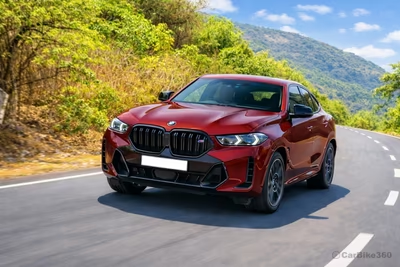
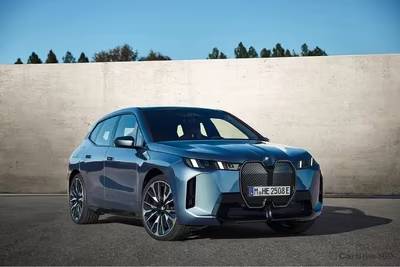
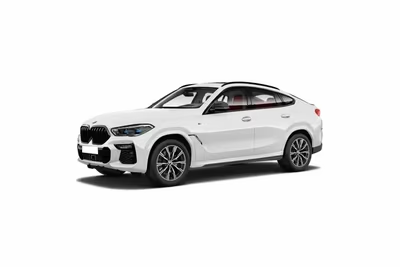
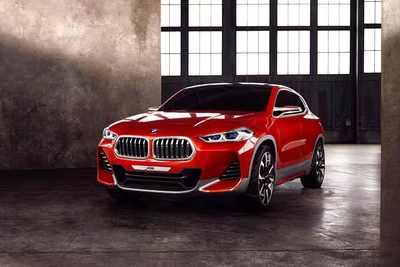
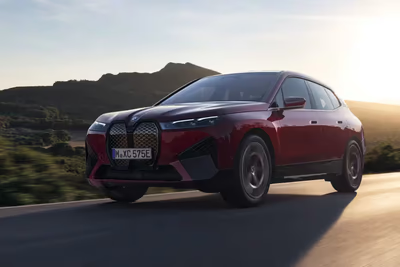
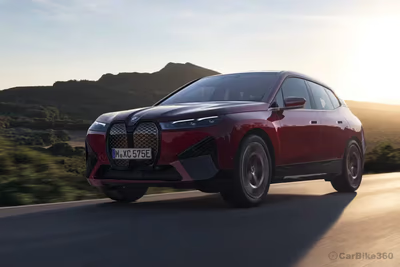
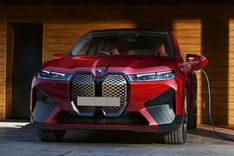
आने वाले समय में, बीएमडब्ल्यू भारत में 8 नई कारें लॉन्च करने की तैयारी में है — BMW iएक्स फेसलिफ्ट, बीएमडब्ल्यू एक्स6 फेसलिफ्ट, बीएमडब्ल्यू एक्स2 — जो भारतीय बाजार में इसकी मौजूदगी को और मजबूत करेंगी।
नई दिल्ली में बीएमडब्ल्यू कारों की एक्स-शोरूम कीमत ₹45.80 Lakh से शुरू होकर ₹2.55 Cr तक जाती है।
| मॉडल | कीमत (एक्स-शोरूम) | उपलब्धता प्रारंभ |
|---|---|---|
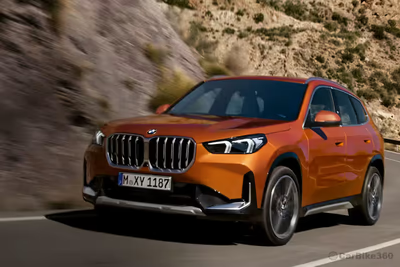
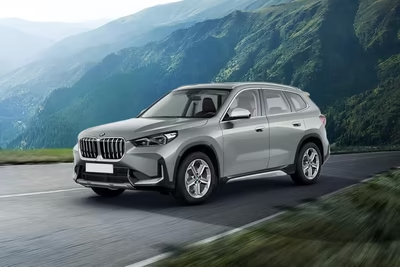
| बीएमडब्ल्यू X1 | ₹50.90 Lakh | 28-Jan-2023 |
| बीएमडब्ल्यू 2 सीरीज ग्रैन कूप 2025 | ₹45.80 Lakh | 17-Jul-2025 |
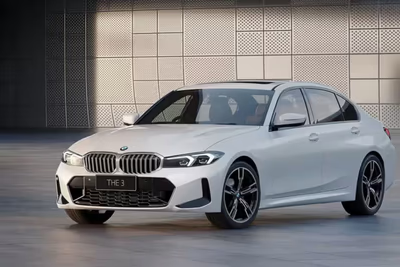
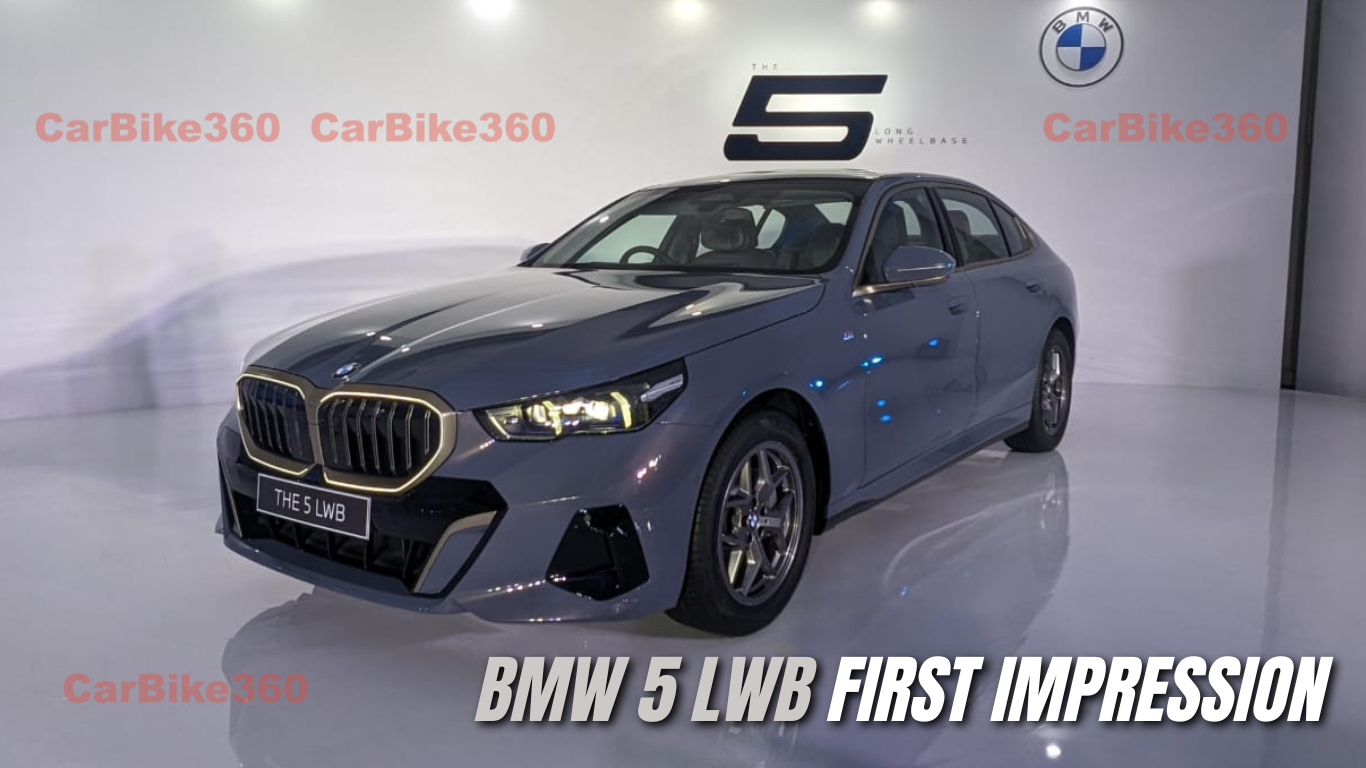
| बीएमडब्ल्यू 3 सीरीज़ LWB | ₹60.55 Lakh | 28-Feb-2025 |


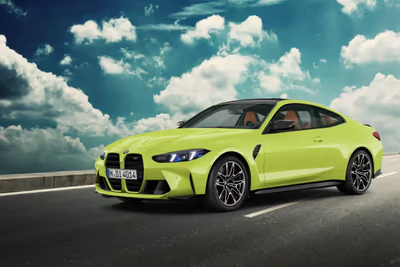
The automotive world is buzzing as the BMW M240i Coupe takes the top spot in the competitive sports coupe segment, confirmed by the latest round of independent car reviews. This powerful machine from BMW, known for its commitment to high-performance vehicles, now commands the attention of drivers seeking a thrilling experience.
With its robust engine and precise handling, the M240i is clearly outperforming its rivals, setting new benchmarks for speed and agility. Car experts highlight its impressive acceleration and dynamic driving feel, marking it as the definitive leader in its class. This recent surge to the forefront signals a significant shift, challenging other car makers to rethink their strategies in the pursuit of automotive excellence.
The sports coupe market remains a vital area for car makers, combining swift performance with attractive design. This segment often appeals to buyers seeking an engaging driving experience along with a degree of everyday practicality. Vehicles in this class must strike a careful balance between raw power, agile handling. Passenger comfort to stand out among competitors. The competition is fierce, with manufacturers continually striving to offer models that captivate drivers and critics alike.
BMW has a long history of producing cars known for their driving dynamics and performance. The M240i is a key model in the company's lineup, serving as a crucial link between standard BMW models and the higher-performance M cars. It aims to offer a thrilling experience that is both exciting for enthusiasts and suitable for daily use. This strategic positioning allows the M240i to attract a broad range of buyers who appreciate performance without the extreme focus of a full M model.
The BMW M240i has garnered significant attention in recent Car reviews, with many experts highlighting its impressive overall capabilities. It is frequently described as an all-round sports coupe star, delivering a compelling package of power, handling. Practicality. Reviews consistently praise its ability to offer a fun driving experience without sacrificing comfort, making it a strong contender in its class. The latest evaluations underscore the M240i's ability to combine high performance with refined road manners.
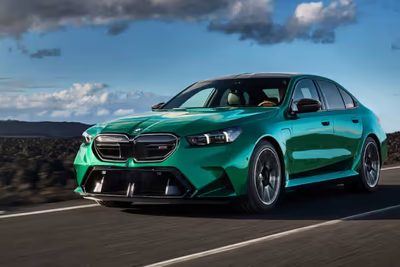
Also Read: BMW M5 Expected Launch Date, Specification, Features, and More
At the heart of the BMW M240i is BMW's highly regarded B58 3.3-liter turbocharged inline-six petrol engine. This powerful engine produces around 382 to 386 horsepower and 500 to 540 Newton-meters of torque, depending on the specific model year and market updates. Paired with an eight-speed automatic transmission, the M240i can accelerate from 0 to 100 kilometers per hour in as little as 4.3 seconds, with some earlier tests showing 0-60 mph times as quick as 3.6 seconds.
On the road, the M240i is noted for its agile and engaging behavior. It features a well-balanced chassis, offering precise steering and excellent body control. While some reviewers have noted that steering feedback can be limited, the car's overall composure and grip provide drivers with confidence, especially on winding roads. The standard xDrive all-wheel-drive system, which is standard in many regions, provides strong traction and a rear-wheel-drive bias in dry conditions, enhancing the driving experience. Adaptive suspension, often available, further improves ride comfort by effectively managing road imperfections.
Automotive journalists and expert car reviews consistently highlight the M240i's broad appeal. Many commend its ability to serve multiple purposes, from thrilling weekend drives to comfortable daily commutes.
"The BMW M240i is one of the only small coupes left on the market... It's a near-perfect all-rounder: it's fast, comfortable, handles very well, it's practical for a coupe, and it's fully loaded with standard features."
"BMW's straight-six is one of the best engines on the market today. There's a ton of torque from very low in the rev range. It pulls hard all the way up to its 7000-rpm redline." The car's ability to feel larger than its size in terms of refinement is also noted.
"When it is throttled back, this compact BMW feels like a much grander car than its market positioning dictates. It's remarkably smooth, and it's near-silent at lower revs. It's therefore a comprehensively exceptional all-round display from the M240i."
While the car is largely praised, some reviewers mention areas for improvement. Concerns include the car being larger and heavier than its predecessors. The lack of a manual gearbox option. The rear seats, as expected for a coupe of this size, are often described as tight for adults. Despite these points, the overall sentiment in Cars Reviews remains overwhelmingly positive, emphasizing its strong performance and versatile nature.
The interior of the M240i is described as driver-focused, with high-quality materials such as leather upholstery and soft-touch surfaces throughout. Standard features often include a 12. 3-inch digital driver's display, a 14. 9-inch touchscreen with Apple CarPlay and Android Auto. Supportive sports seats.
The BMW M240i occupies a distinctive space in the sports coupe segment. It is often compared to its more powerful sibling, the BMW M2, with many car reviews suggesting it offers nearly all the M2's performance at a more accessible price point and with greater daily usability. Some even question if the M2 is truly necessary for most drivers, given the M240i's capabilities. In comparison to other sports coupes, the M240i frequently outshines rivals such as the Mercedes-AMG CLA 35 and Audi S3 Saloon in terms of driving enjoyment and engine character.
While cars like the Toyota Supra might be lighter and sportier in some aspects, the M240i is praised for its unique blend of performance, luxury. Everyday practicality, often being a more refined option than a Ford Mustang GT or Nissan Z. It presents a compelling package that is hard to match in its segment, reinforcing its dominant position in many car reviews.
The strong performance of the BMW M240i in recent car reviews has had a notable impact on both potential buyers and the broader automotive industry. For consumers, these positive evaluations highlight the M240i as a top choice for those seeking a high-performance coupe that also offers comfort and practicality for daily use.
The consistent praise from experts helps to build confidence and attract more buyers to the model. In the industry, the M240i's success reinforces BMW's reputation for engineering outstanding performance vehicles. Its ability to command such positive attention in a competitive segment may encourage other manufacturers to reassess their own offerings, potentially leading to further innovation in the sports coupe market.
This strong showing also positions BMW well for future model releases, as consumer trust and brand perception are enhanced by such positive critical reception.
The positive reception of the BMW M240i in various car reviews indicates a bright future for this model and for BMW's approach to performance vehicles. The company continues to refine its engines, with recent updates to the B58 engine further boosting power and efficiency for models like the M240i. This commitment to continuous improvement suggests that BMW aims to maintain its strong presence in the performance segment. The M240i serves as a testament to BMW's ability to deliver compelling driving machines that cater to a wide audience, blending performance with usability effectively.
Bayerische Motoren Werke AG (BMW) is one of the most iconic and respected names in the automotive world, synonymous with luxury, performance, and innovation. Founded in 1916 in Germany, BMW started as an aircraft engine manufacturer before evolving into a global leader in premium automobiles and motorcycles. Known for its engineering precision and cutting-edge designs, BMW embodies the slogan, “The Ultimate Driving Machine.”
Early Years: From Aircraft Engines to Automobiles
BMW began in 1916 as an aircraft engine manufacturer, with a focus on producing powerful, reliable engines during World War I. After the war, the Treaty of Versailles prohibited Germany from making aircraft engines, leading BMW to pivot to producing motorcycles in 1923 and eventually automobiles in 1928.
The BMW R32, their first motorcycle, showcased the company’s engineering excellence with its iconic flat-twin “boxer” engine. In 1928, BMW acquired the Eisenach factory and launched its first car, the BMW 3/15, based on the Austin 7.
1930s: Expansion and Racing Success
The 1930s were transformative for BMW as it began building its reputation for luxury and performance. Iconic models like the BMW 328 Roadster, a lightweight sports car, won acclaim for their innovative engineering and racing success, including a win at the Mille Miglia in 1940.
BMW also continued producing aircraft engines during this period, which became a cornerstone of its expertise in high-performance engineering.
Post-War Recovery: Reinventing the Brand
World War II had a devastating impact on BMW. Its factories were destroyed, and the company was banned from producing automobiles and aircraft engines. To survive, BMW temporarily manufactured household goods, bicycles, and kitchen equipment.
By the 1950s, BMW returned to car production with luxury sedans like the BMW 501 and compact models like the Isetta bubble car, which helped the company recover financially. However, it was the launch of the BMW 700, a compact, sporty car, that truly revitalised the brand.
1960s: The Birth of the New Class
The 1960s marked a turning point for BMW with the introduction of the Neue Klasse (New Class) series. This range of sporty sedans, including the BMW 1500 and later the BMW 2002, established BMW as a leader in combining performance, practicality, and luxury.
The New Class models also introduced BMW’s signature kidney grille design and cemented its reputation for driver-focused vehicles. This era laid the foundation for BMW’s iconic 3 Series, which debuted in 1975.
1970s: Growth and Innovation
In the 1970s, BMW expanded globally and introduced some of its most legendary models. The launch of the BMW 5 Series (mid-size luxury sedans) in 1972, followed by the BMW 3 Series (compact executive cars) in 1975, set new benchmarks in their segments.
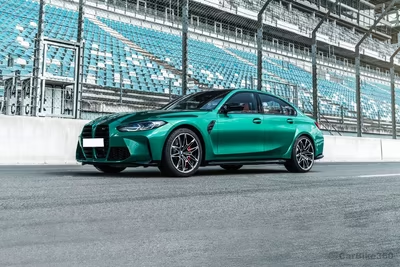
In 1978, BMW entered the high-performance market with the BMW M1, a mid-engine sports car developed by the newly established BMW M Division. The M Division would go on to produce iconic performance vehicles like the BMW M3 and BMW M5, becoming synonymous with speed, precision, and track-ready engineering.
1980s-1990s: A Global Powerhouse
The 1980s saw BMW solidify its position as a global luxury brand. Iconic models like the BMW 7 Series, a flagship luxury sedan, and the BMW Z1, a futuristic roadster, reflected the brand’s innovative spirit. The company also focused on motorsports, winning numerous championships in touring car racing.
In the 1990s, BMW introduced the first-generation BMW X5, marking its entry into the SUV market. This model combined luxury and practicality with BMW’s hallmark driving dynamics, creating the Sports Activity Vehicle (SAV) category.
BMW also acquired Rolls-Royce Motor Cars in 1998, further establishing its dominance in the luxury automobile market.
2000s: Technology and Sustainability
The 2000s were defined by BMW’s focus on technology, design, and sustainability. The brand introduced advanced features like iDrive, a revolutionary infotainment system, and Efficient Dynamics, a suite of technologies aimed at reducing fuel consumption and emissions.
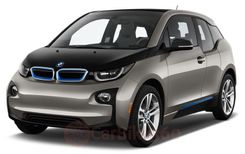
BMW also launched its BMW i sub-brand, dedicated to electric mobility and sustainability. The BMW i3, an all-electric compact car, and the BMW i8, a plug-in hybrid sports car, showcased the brand’s commitment to innovation and eco-friendly design.
2010s: Expanding the Portfolio
In the 2010s, BMW expanded its lineup to cater to diverse customer needs. The introduction of the BMW X Series SUVs, including the compact BMW X1 and the luxurious BMW X7, allowed the brand to dominate the premium SUV market.
BMW also continued to refine its high-performance vehicles, with the BMW M2, M4, and M8 earning accolades for their track-ready performance. Meanwhile, the company invested heavily in autonomous driving technology and connected car features, making BMW vehicles smarter and safer.
2020s: Embracing Electric Mobility
In the 2020s, BMW has committed to an electric future. The brand has introduced the BMW i4, an electric Gran Coupé, and the BMW iX, a luxury electric SUV. By 2030, BMW aims to have fully electric versions of its core models, including the 3 Series and 5 Series, and achieve carbon neutrality across its operations.
BMW’s commitment to sustainability extends to production, with its factories increasingly using renewable energy and recycled materials.
BMW in India
BMW entered the Indian market in 2006 and quickly became a leading luxury car brand. Offering models like the BMW 3 Series, 5 Series, and X Series SUVs, BMW caters to Indian customers seeking premium vehicles with world-class performance.
The company has also introduced locally assembled models to make luxury cars more accessible in India. With the launch of the BMW iX and BMW i4, BMW is bringing its electric revolution to the Indian market, appealing to environmentally conscious buyers.
Conclusion
From its beginnings as an aircraft engine manufacturer to its position as a global leader in luxury automobiles, BMW’s journey has been defined by a relentless pursuit of innovation and excellence. With its rich legacy of engineering precision, iconic designs, and a forward-looking approach to sustainability, BMW continues to deliver vehicles that offer unparalleled driving pleasure and shape the future of mobility.